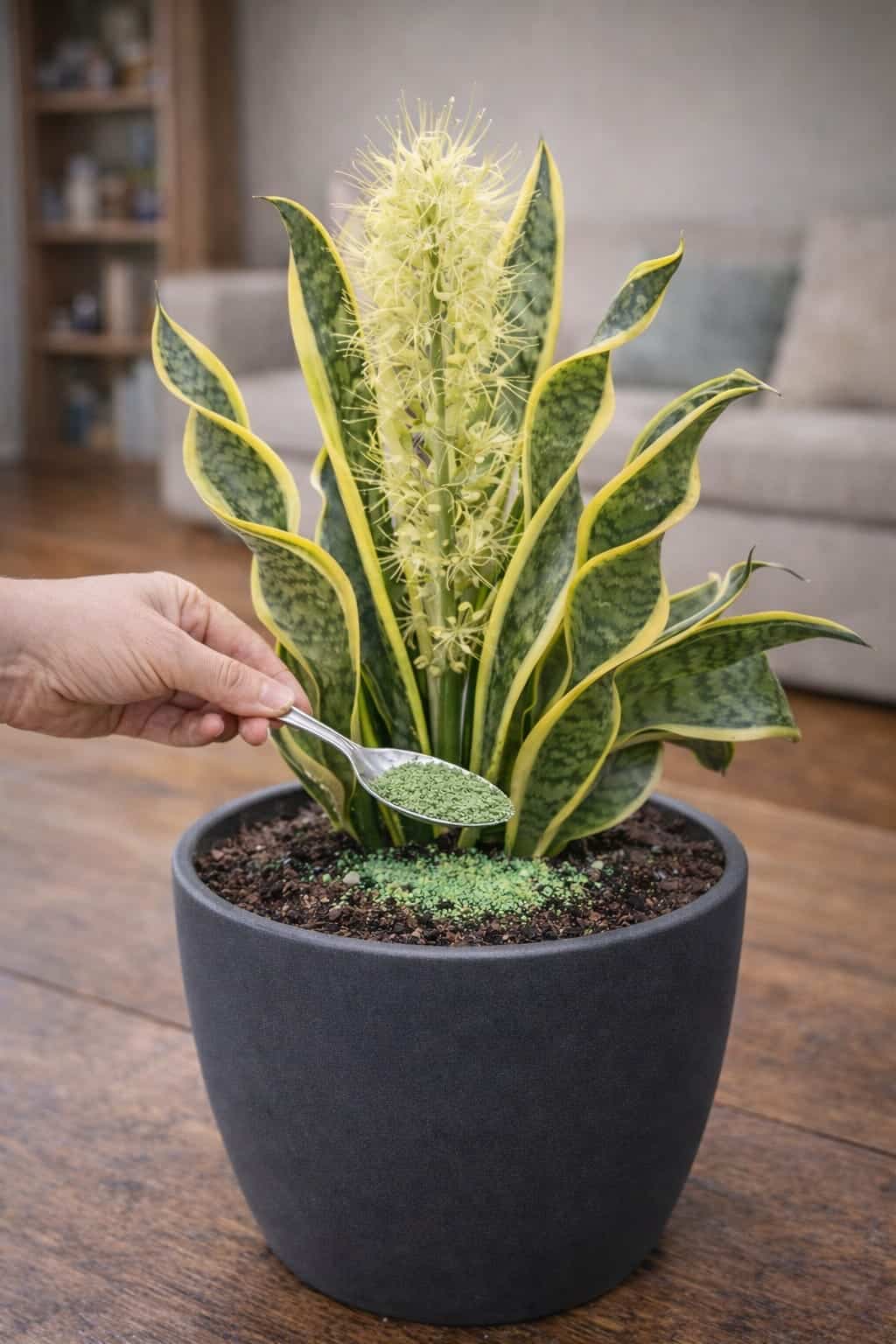
Discover why gardeners use slow‑release green fertilizer pellets on snake plants – to provide steady nutrients, prevent burn, and encourage pups. Safe application tips and common mistakes inside.
Let’s be honest: snake plants (Sansevieria, now Dracaena) are famous for their resilience, architectural leaves, and ability to thrive with minimal care. They survive low light, irregular watering, and general neglect. But even though these plants are hardy, experienced gardeners know that small adjustments in feeding routines can significantly influence how well they grow – from producing more pups (offsets) to developing deeper green, upright leaves.
Recently, many plant enthusiasts have started experimenting with tiny green fertilizer pellets, like the ones shown in the image. These slow‑release granules are sprinkled lightly onto the soil and gradually release nutrients over time. When used correctly, they provide a steady supply of nutrients without overwhelming the plant – and the results can be surprising.
In this guide, you’ll learn what these green pellets are, how to use them safely, why snake plants respond well to slow‑release feeding, common mistakes to avoid, and the ideal conditions for strong, healthy growth. Plus, you’ll get a printable checklist and answers to frequently asked questions.
Let’s dive in.
🌿 What Are the Tiny Green Pellets?
The green pellets seen in the image usually represent slow‑release fertilizer granules designed for houseplants. Unlike liquid fertilizers that deliver nutrients quickly (and can burn roots if overused), these pellets break down gradually when watered, releasing small amounts of nutrients over several weeks or months.
Key Characteristics of Slow‑Release Pellets
Feature Benefit for Snake Plants
Release nutrients slowly Prevents nutrient spikes and root burn
Reduce risk of fertilizer burn Gentle on sensitive roots
Require fewer applications Convenient – apply once every few months
Provide balanced nutrition Usually contain nitrogen, phosphorus, potassium, and trace minerals
Because snake plants grow slowly, this gentle feeding method works particularly well. A single application in spring can support steady growth throughout the summer without the need for constant feeding.
🌱 Why Snake Plants Respond Well to Slow‑Release Pellets
Snake plants are not heavy feeders. In their native dry environments, they survive on minimal nutrients. However, a small amount of balanced nutrition can encourage stronger leaves, more vigorous growth, and the production of new pups (offsets) around the base.
Benefits of Using Slow‑Release Pellets on Snake Plants
· Steady nutrient supply – no sudden spikes that can stress the plant.
· Encourages pup production – light feeding supports rhizome growth.
· Improves leaf color and firmness – nitrogen promotes deep green, upright leaves.
· Reduces the risk of over‑fertilizing – slow release is more forgiving.
· Convenient for busy plant owners – apply once, forget for months.
Pro tip: Slow‑release pellets are especially useful for snake plants in bright light, where they grow faster and benefit from a little extra nutrition.
💧 How Gardeners Use Pellet Fertilizer on Snake Plants – Step by Step
If using pellet fertilizer, experienced growers typically follow these steps. The key is moderation – less is always more with snake plants.
Step‑by‑Step Application
- Choose the right pellets – look for a balanced slow‑release fertilizer (e.g., 10-10-10 or 14-14-14) labeled for houseplants or succulents. Avoid high‑nitrogen lawn fertilizers.
- Sprinkle a small amount across the soil surface – about ½ to 1 teaspoon for a 6‑inch pot.
- Avoid placing pellets directly against the plant base – keep them near the edges of the pot.
- Spread evenly around the pot – this ensures balanced nutrient distribution.
- Water the plant lightly – water activates the slow nutrient release.
- Apply during active growth seasons – spring and summer are best. Do not feed in fall and winter.
- Reapply only as directed – most slow‑release pellets last 2–6 months. Do not apply more frequently.
What to Avoid
· Adding too much fertilizer – more pellets do not equal more growth. Over‑feeding can burn roots and cause leaf damage.
· Allowing pellets to pile near the crown – keep them away from the center of the plant.
· Feeding during winter dormancy – the plant rests and cannot use nutrients.
· Using on already stressed plants – fix watering or light issues first.
Pro tip: If you’re unsure, use half the recommended dose. Snake plants prefer under‑feeding to over‑feeding.
Continue to Page 2
Continue to page 2 for more details about this article and the key points many readers miss on the first page.