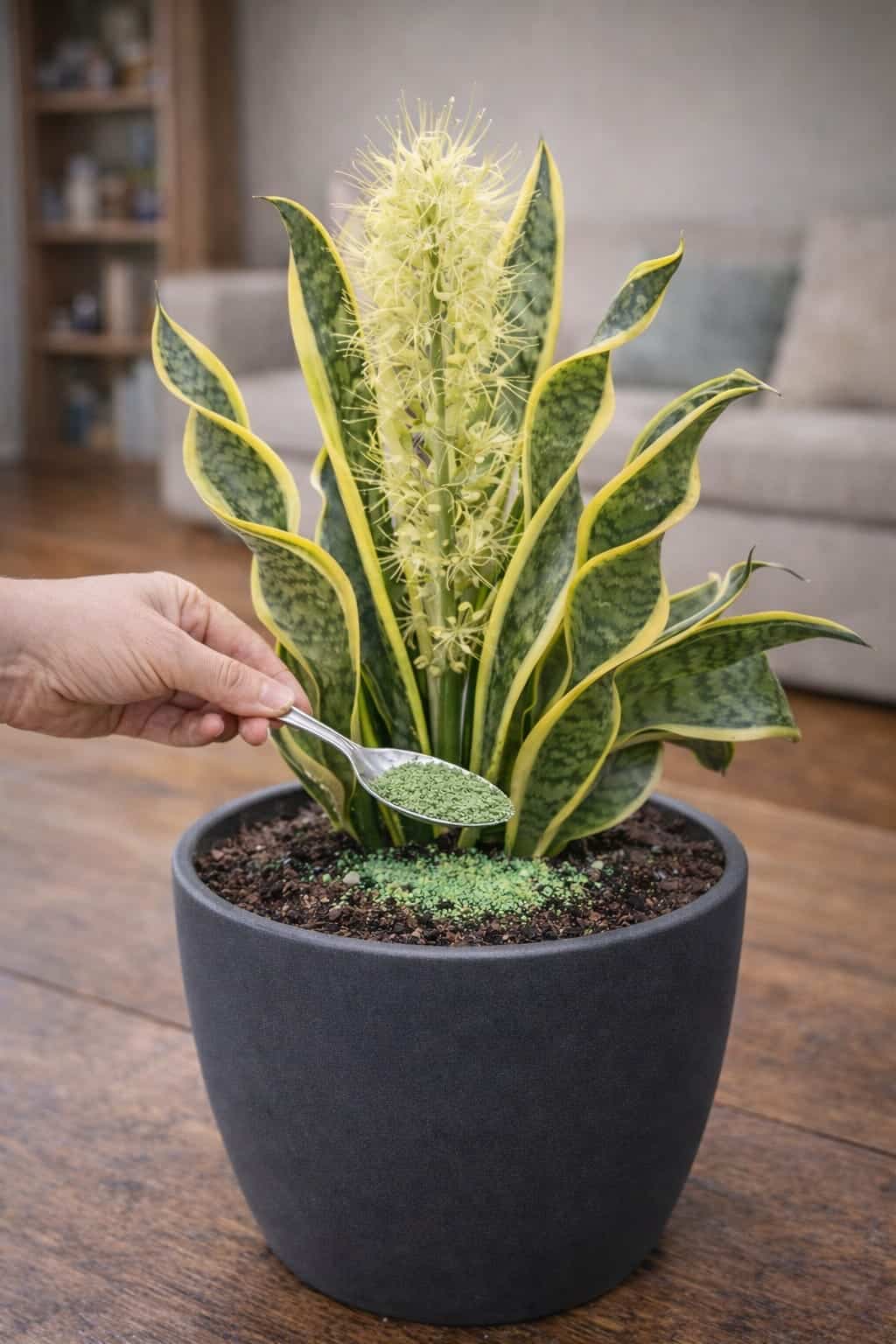
❌ Common Snake Plant Feeding Mistakes (Even with Pellets)
Even hardy plants can suffer from improper feeding. Avoid these common mistakes.
Mistake Why It’s Harmful Correct Approach
Adding too much fertilizer Burns roots, causes brown leaf tips Use half the recommended dose.
Watering too frequently Leaches nutrients too quickly, can cause rot Water only when soil is completely dry.
Using heavy soil that retains moisture Pellets release too fast, roots suffocate Use well‑draining cactus/succulent soil.
Feeding during winter dormancy Nutrients accumulate, can burn roots Feed only in spring and summer.
Allowing fertilizer to pile near the crown Concentrated nutrients can damage the plant base Spread pellets evenly near pot edges.
Snake plants thrive best with minimal intervention. A light feeding once or twice a year is plenty.
🪴 What Helps Snake Plants Grow Stronger (Beyond Pellets)
Pellets can help, but they are only a small part of the picture. For a truly healthy, robust snake plant, focus on these fundamentals.
Ideal Conditions for Snake Plants
Factor Ideal Condition Why It Matters
Light Bright, indirect (east/west window) Encourages strong, upright leaves and faster growth
Soil Fast‑draining cactus/succulent mix (add perlite) Prevents root rot
Watering Infrequent – let soil dry completely Protects roots, mimics natural dry cycles
Feeding Light seasonal feeding (spring/summer) Supports gradual growth and pups
Pot size Slightly snug – not too large Encourages pups and prevents overwatering
Healthy root systems naturally produce new shoots called pups, which grow around the base of the plant. Pellets can support this process, but light, soil, and water are more important.
How to Choose the Right Slow‑Release Pellets for Snake Plants
Not all pellets are created equal. Here’s what to look for:
Feature What to Look For
N‑P‑K ratio Balanced (e.g., 10-10-10, 14-14-14) – equal or close to equal numbers
Release duration 3–6 months (avoid “quick release” or “instant” granules)
Label “For houseplants,” “for succulents,” or “slow‑release”
Avoid High‑nitrogen lawn fertilizers (e.g., 30-10-10) – too strong for snake plants
Pro tip: Some popular brands include Osmocote Plus, Miracle‑Gro Shake ‘n Feed for succulents, and Jobe’s Organics slow‑release pellets.
Troubleshooting – Signs You’re Using Pellets Incorrectly
Symptom Likely Cause Solution
Brown leaf tips Over‑fertilizing or salt buildup Flush soil with water; reduce pellet amount.
White crust on soil Excess fertilizer salts Scrape off; flush soil; use fewer pellets next time.
Yellowing leaves Overwatering (more common) or nutrient imbalance Check soil moisture; reduce watering.
No growth after feeding Not enough light or too cold Move to brighter spot; check temperature.
Pellets still visible after months Soil too dry; pellets need moisture to activate Water more consistently (but not overwater).
Frequently Asked Questions (FAQs)
Q: What are snake plant pups?
A: They are new baby plants growing from underground rhizomes. Pups can be left to create a fuller cluster or separated to propagate new plants.
Q: How often should snake plants be fertilized?
A: Usually once or twice during the growing season (spring and summer). Slow‑release pellets applied once in spring often last the whole season.
Q: Can snake plants survive in low light?
A: Yes, but growth becomes slower, and they may not produce pups. For best health, provide bright indirect light.
Q: Why are my snake plant leaves turning yellow?
A: Often caused by overwatering. Check soil moisture. If soil is wet and leaves are yellow, root rot may have started. Over‑fertilizing can also cause yellowing.
Q: Do snake plants need large pots?
A: No – slightly root‑bound plants often grow better and produce more pups. Choose a pot that is only 1–2 inches larger than the root ball.
Q: Can pellet fertilizer replace liquid fertilizer?
A: Yes – slow‑release pellets provide steady nutrition and are more convenient. However, they work slowly. Liquid fertilizer acts faster but requires more frequent application.
Q: Should pellets touch the leaves?
A: No – keep fertilizer on the soil. Pellets on leaves can cause burns or attract pests.
Q: Do snake plants like humidity?
A: They tolerate normal indoor humidity well. High humidity is not necessary, but very dry air may cause brown tips.
Q: When should snake plants be repotted?
A: Every 2–3 years or when roots fill the pot (growing out of drainage holes). Repot in spring with fresh, well‑draining soil.
Q: What’s the biggest snake plant mistake?
A: Overwatering combined with poor drainage. This is the #1 killer of snake plants. Let the soil dry completely between waterings.
Printable Snake Plant Care Checklist (with Slow‑Release Pellets)
☐ Place in bright, indirect light (east/west window)
☐ Use a pot with drainage holes (terracotta preferred)
☐ Fill with fast‑draining cactus/succulent soil (add perlite)
☐ Water only when soil is completely dry (check with finger)
☐ Water deeply, then empty saucer
☐ Do not water again for 2–4 weeks (depending on light)
☐ Apply slow‑release pellets once in spring (½–1 tsp for 6‑inch pot)
☐ Spread pellets evenly near pot edges, away from crown
☐ Water lightly after applying to activate
☐ Do not feed in fall/winter
☐ Wipe leaves with damp cloth monthly
☐ Repot every 2–3 years when root‑bound
☐ Remove dead or yellow leaves at base
Final Thoughts – Gentle Feeding, Strong Growth
Tiny green slow‑release pellets can be a convenient, effective way to provide steady nutrition to your snake plant – without the risk of over‑fertilizing. Used correctly, they support healthier leaves, stronger roots, and more pups.
But remember: pellets are a supplement, not a substitute for good care. The real keys to a thriving snake plant are:
· Bright, indirect light – more light = stronger growth.
· Well‑draining soil – cactus mix with perlite.
· Infrequent watering – let soil dry completely.
· A snug pot – slightly root‑bound encourages pups.
· Light feeding – once or twice a year is plenty.
If your snake plant is struggling, don’t reach for pellets first. Check the light, soil, and watering. Once those basics are right, a few slow‑release pellets can give it a gentle nudge – but they’re never the cure.
With patience and the right care, your snake plant will reward you with strong, upright leaves and maybe a few new pups to share.
Now it’s your turn! Have you tried slow‑release pellets on your snake plant? What results did you see? Drop a comment below – I’d love to hear your experience.
And if you found this guide helpful, share it with a friend who loves snake plants. Pin it for later, and subscribe to our newsletter for more practical plant care.
Stay dry, stay bright, and watch your snake plant thrive. 🌿✨