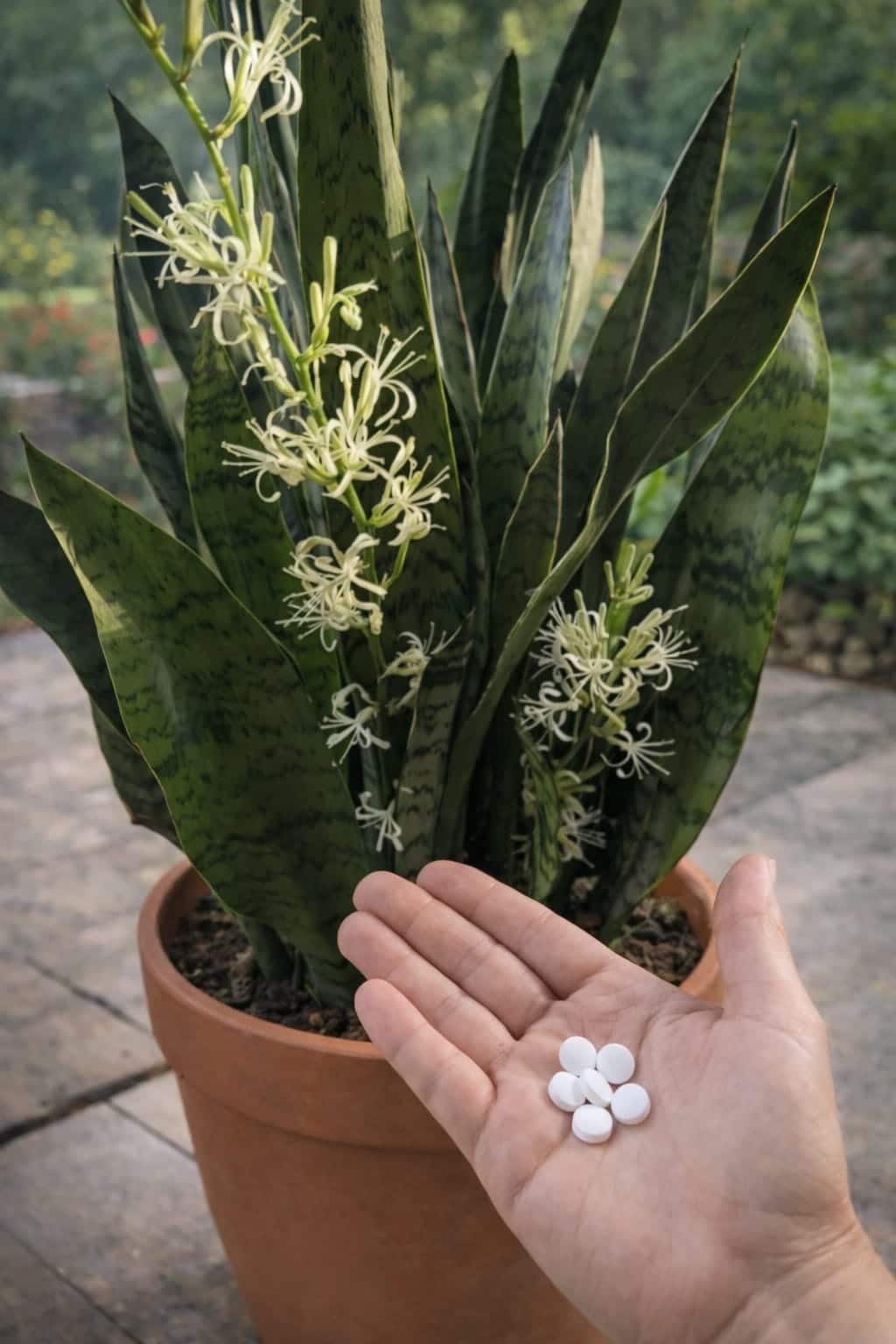
Can snake plants really bloom? Yes – with rare, fragrant flowers. Learn how to use slow‑release fertilizer tablets safely, plus the real secrets: bright light, maturity, root crowding, and careful watering.
Let’s be honest: snake plants (Sansevieria, now Dracaena) are famous for being tough, stylish, and easy to grow. Their upright, sword‑shaped leaves fit perfectly into modern interiors, and they survive low light, irregular watering, and general neglect. But what many people do not realize is that these resilient plants can also produce rare, fragrant flowers under the right conditions.
You may have seen images of “pills” or tablets being added to the soil, with claims that they magically trigger blooms. The idea is simple: give the plant a slow, steady nutrient boost. But here is the truth:
👉 No pill can force a snake plant to bloom by itself.
Blooming happens when the plant is mature, slightly stressed, and growing in the right environment. Still, the right fertilizer tablets can help support that process.
In this complete guide, I’ll answer the most common questions: Can snake plants really bloom? What are those “pills” people use? What actually makes a snake plant flower? And how can you safely use fertilizer tablets to encourage those rare, sweet‑smelling blooms?
Let’s separate the viral hype from the horticultural reality.
Can Snake Plants Really Bloom? Yes – But It’s Rare
Yes, a mature snake plant can send up tall flower stalks with clusters of small white or cream flowers. These blooms are often sweet‑smelling, especially in the evening, with a fragrance reminiscent of jasmine or hyacinth. The flowers emerge on a long, slender spike that rises from the center of the leaf cluster.
However, indoor blooming is rare. Many snake plant owners go years – even decades – without seeing a single flower. That’s why people get so excited when it happens. Blooming is a sign that the plant is mature, healthy, and experiencing the right combination of environmental triggers.
What Are the “Pills” People Use in Snake Plant Soil?
In viral posts, you’ll often see small white tablets or “pills” being inserted into the soil near snake plants. These are not medicine. They are typically:
· Slow‑release fertilizer tablets – designed for houseplants, these release nutrients gradually over weeks or months.
· Plant food spikes – similar to tablets, they are pushed into the soil and dissolve slowly.
· Bloom‑support tablets – formulated with higher phosphorus to encourage flowering.
These products can help by feeding the plant gradually over time, without the risk of nutrient spikes that burn roots.
⚠️ Never use human medicine or random household tablets in the soil. Aspirin, vitamins, or other medications can poison the plant and kill beneficial soil microbes. Only use products labeled for plants.
What Actually Makes a Snake Plant Bloom? (The Real Secrets)
Forget the “magic pill” hype. Blooming is the result of several factors working together. Here’s what really matters.
- Bright Indirect Light – The #1 Trigger
Snake plants survive in low light, but blooming is much more likely in bright, filtered light. A sunny room with indirect exposure – an east or west‑facing window – gives the plant the energy it needs to produce flowers.
· Too little light: Dark green leaves, slow growth, no blooms.
· Too much direct sun: Leaf scorch, brown patches.
Pro tip: If your snake plant has been in a dark corner for years, move it gradually to a brighter spot over a few weeks.
- A Mature Plant
Young snake plants usually focus on leaf growth and producing pups (offsets). Blooming is more common when the plant is older and well established – typically 3–5 years or more. Patience is essential.
- Slight Root Crowding (Root‑Bound)
Snake plants often bloom when they are a little root‑bound. When roots fill the pot, the plant senses limited space and shifts energy toward reproduction – which includes flowering.
· Don’t repot too often – every 2–3 years is plenty.
· Choose a snug pot – only 1–2 inches larger than the root ball.
- Careful Watering – Slight Drought Stress
Overwatering is the fastest way to stop blooming potential. Snake plants store water in their thick leaves and rhizomes. Letting the soil dry out completely between waterings creates mild stress that can trigger flowering.
· Water deeply, then wait – only water when the top 2–3 inches of soil are bone dry.
· Frequency: Every 2–4 weeks, depending on light and temperature.
- Light, Balanced Feeding – Not Over‑Feeding
A slow‑release fertilizer tablet can help support stronger growth and possible bloom production, especially in spring and summer. But too much fertilizer – especially high‑nitrogen formulas – promotes leaf growth at the expense of flowers.
· Use a balanced fertilizer (e.g., 10-10-10 or 14-14-14) at half strength.
· Feed only during the growing season (spring and summer).
· Stop fertilizing in fall and winter – the plant rests.
Continue to Page 2
Continue to page 2 for more details about this article and the key points many readers miss on the first page.