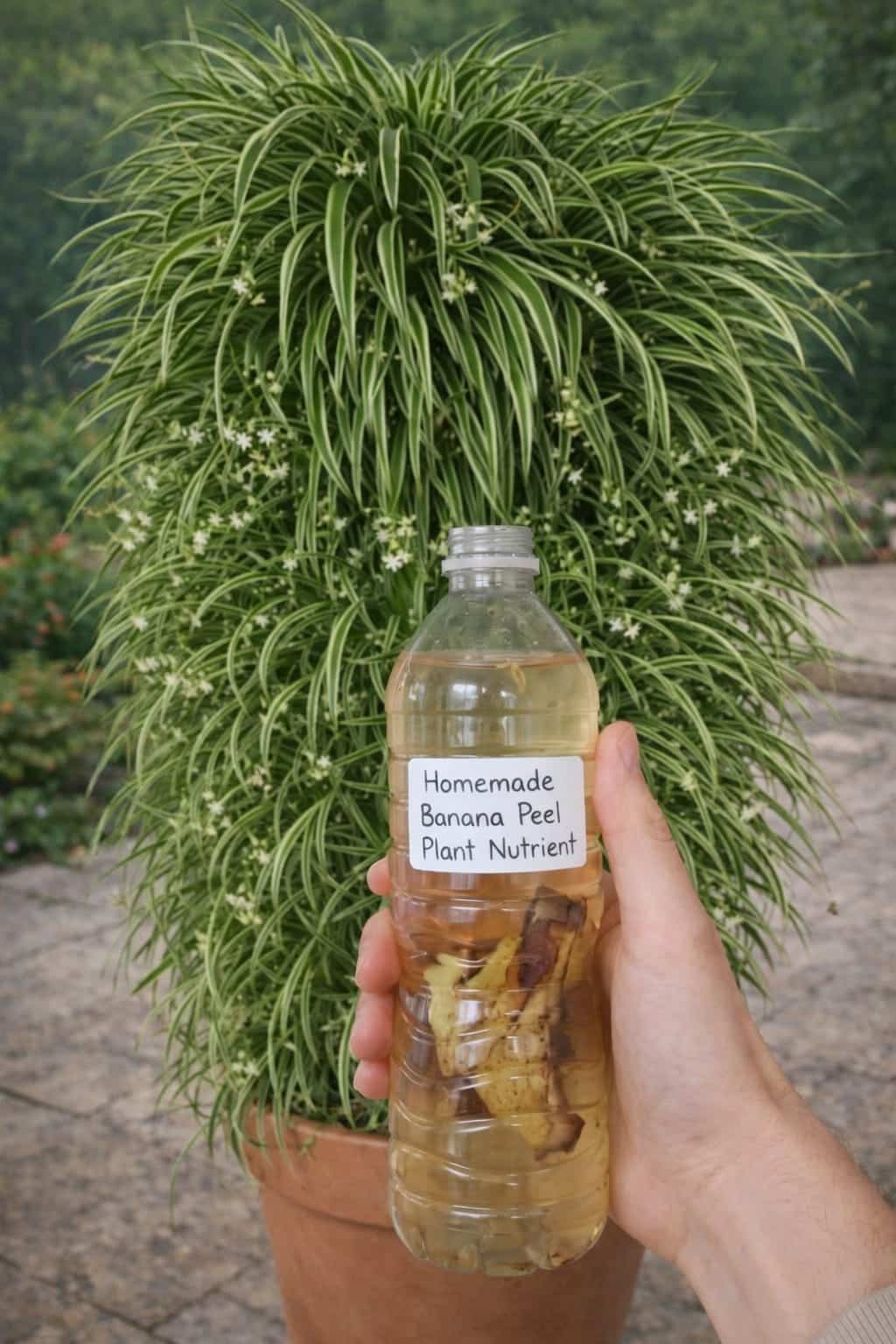
Can banana peel water really make your spider plant grow like crazy? Learn the science, safe, and the real secrets to a fuller, healthier, exploding spider plant. Natural plant tonic tips inside.
Let’s be honest: spider plants (Chlorophytum comosum) already have a reputation for being easy, forgiving, and fast‑growing. They are the kind of houseplant that can brighten a room, survive a little neglect, and still reward you with fresh green growth. But every now and then, you come across a plant that seems to go from “doing fine” to absolutely overflowing with life.
That is exactly what happened with my spider plant.
It was healthy, but nothing dramatic. It had decent color, a few new leaves here and there, and the usual graceful arching shape. Then I tried a simple homemade plant tonic that so many gardeners talk about: banana peel water.
And after that? It felt like the plant completely changed. New leaves kept coming, the center became thicker, the whole plant looked fuller, and before long it seemed like it would not stop growing.
So is banana peel water really a miracle trick, or is there more to the story?
Let’s break down what it is, why people use it, and how to use it the right way if you want a fuller, healthier spider plant.
Why Spider Plants Respond So Well to Good Care
Spider plants are naturally vigorous growers. When they get enough light, the right amount of water, and healthy roots, they respond quickly. That is why small changes in care can produce surprisingly visible results.
They especially love:
· Bright, indirect light – the #1 driver of growth.
· Light but consistent moisture – not soggy, not bone dry.
· Well‑draining soil – roots need air.
· Occasional feeding during active growth – a gentle nutrient boost.
If those basics are already in place, even a mild natural nutrient boost can make the plant look much more dramatic in a short time.
That is where banana peel water comes in.
What Banana Peel Water Actually Does
Banana peels are often used in homemade plant care because they contain nutrients plants can benefit from, especially:
· Potassium (K) – the big one. Supports stronger plant growth, helps with water uptake, and improves overall vigor.
· Phosphorus (P) – supports root development and energy transfer.
· Small amounts of magnesium and calcium – important for chlorophyll production and cell wall strength.
Potassium is the key here. For spider plants, that can mean:
· Stronger, thicker leaves.
· Better color (richer greens and brighter variegation).
· Fuller center growth.
· More active root support.
Banana peel water is basically a mild homemade nutrient soak. It is not instant magic, but it can act like a gentle supplement, especially for fast‑growing plants that appreciate a little extra potassium.
Why People Love This Trick
The reason this hack keeps spreading is simple: it is cheap, easy, and feels natural.
Instead of throwing banana peels away, people soak them in water and use the liquid on their plants. It feels sustainable, simple, and surprisingly effective. And when a fast‑growing plant like a spider plant gets a little extra support, the visual difference can be dramatic.
That is why people say things like:
· “My plant exploded!”
· “It became twice as full.”
· “I suddenly got so many new leaves.”
In some cases, that is because the banana peel water helped. In other cases, it is because the gardener also improved the plant’s overall care routine at the same time. Usually, it is a bit of both.
How to Make Banana Peel Water (Step by Step)
The process is simple. You don’t need any special equipment.
Basic Method
- Cut banana peels into small pieces – about 1–2 inches. The smaller the pieces, the more surface area for nutrient extraction.
- Place them in a jar or bottle – use 1–2 peels per quart of water.
- Fill with water – room‑temperature, preferably filtered or dechlorinated.
- Let them soak for 24 to 48 hours – longer soaks (up to a week) can lead to fermentation and unpleasant odors. A short soak is usually enough for a mild homemade tonic.
- Strain the liquid – remove all solid pieces. You want only the water.
- Use the water on your spider plant soil – pour around the base, avoiding the leaves and crown.
Pro tip: If the liquid smells rotten or overly fermented, do not use it. Make a fresh batch.
Continue to Page 2
Continue to page 2 for more details about this article and the key points many readers miss on the first page.