Orchids are one of the most elegant indoor plants you can grow. A blooming orchid instantly makes a room feel calmer, cleaner, and more refined. Its glossy green leaves, sculptural roots, and graceful flower spike create a display that looks expensive even when the plant is sitting on a simple table near a window. But orchids can also worry homeowners because their roots are exposed, their potting mix looks unusual, and their care routine is different from ordinary houseplants.
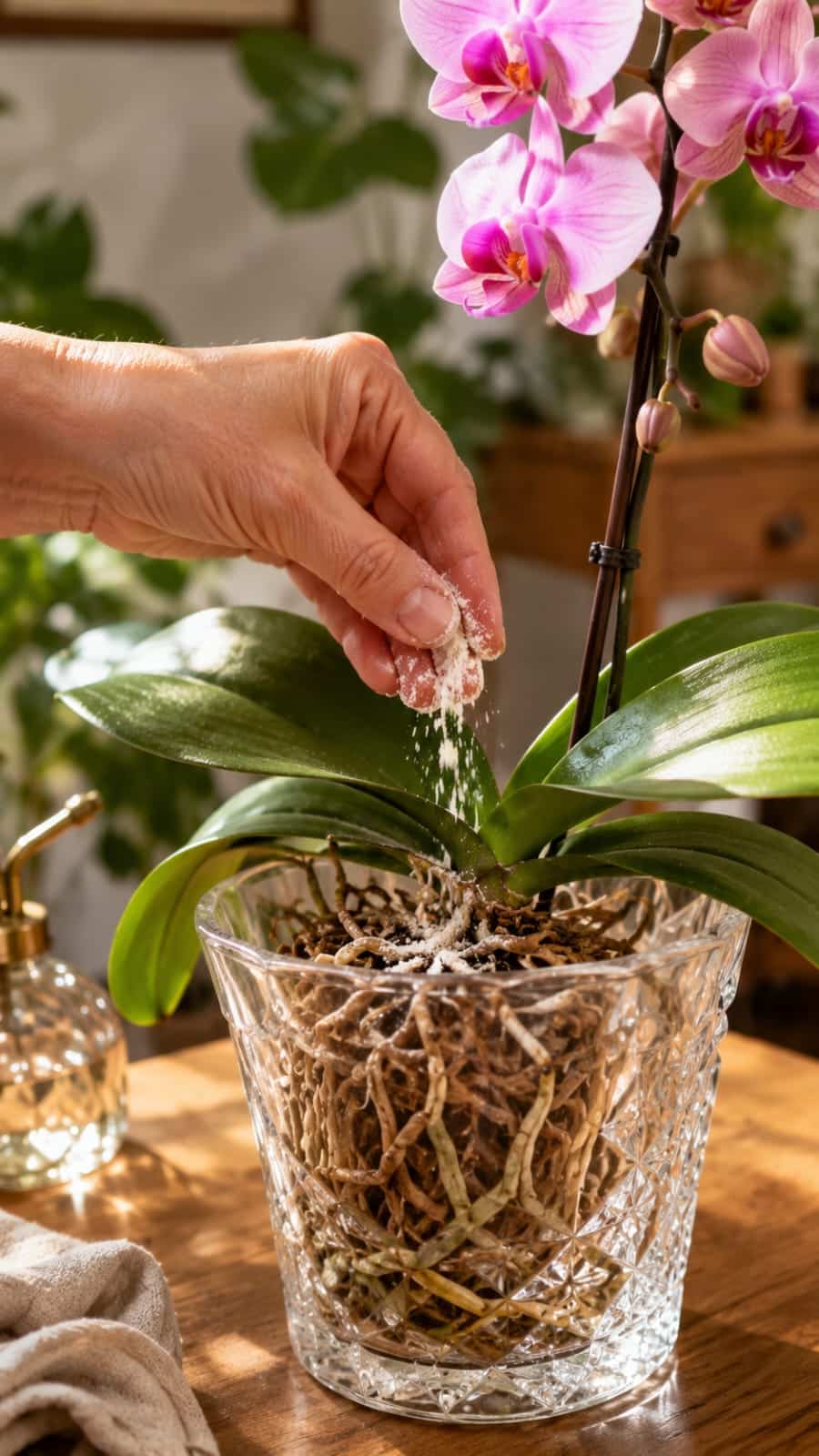
In the image, a beautiful pink orchid is growing in a clear decorative container filled with chunky orchid bark and visible roots. A hand is sprinkling a fine white powder around the root zone near the base of the plant. This kind of scene suggests a popular orchid-care trick: using a light dusting of a dry, plant-safe powder to help keep the surface cleaner, discourage pests, and support a fresher root environment.
The safest interpretation of this fine white powder is food-grade diatomaceous earth or a very fine orchid-safe mineral dust used sparingly on the dry surface of the bark. Some people also use finely ground eggshell powder for calcium, but that is not the best choice for pest control and should not be poured heavily around orchid roots. For the specific purpose of keeping the surface cleaner and less inviting to tiny crawling pests, food-grade diatomaceous earth is usually the more practical option.
However, this trick must be used carefully. Orchids are not regular soil plants. Their roots need air. Their bark must drain quickly. Their crown must stay dry. Their roots should never be buried under thick powder, wet paste, or kitchen leftovers. A tiny dusting can be part of a smart orchid routine, but a heavy layer can trap moisture, look messy, and stress the plant.
The goal is not to “feed” the orchid with white powder. The goal is to lightly refresh the dry bark surface and create a less comfortable environment for pests such as fungus gnats, crawling insects, or small surface pests. The real secret to orchid health is still bright indirect light, fresh orchid bark, correct watering, good drainage, and clean roots.
What Is the White Powder Being Sprinkled on the Orchid?
The white powder in the image looks like a fine dry dust. For safe orchid care, the best option is food-grade diatomaceous earth. Diatomaceous earth is a natural powder made from fossilized microscopic algae called diatoms. It is commonly used by gardeners as a dry surface dust because it can help discourage certain small crawling pests when it remains dry.
It is important to use only food-grade or garden-labeled diatomaceous earth. Do not use pool-grade diatomaceous earth on plants. Pool-grade products are processed differently and are not suitable for indoor plant care.
This powder is not fertilizer. It does not make orchid blooms appear overnight. It does not replace orchid fertilizer. It does not heal rotten roots. Its main value is as a dry, light, surface-level helper for cleaner bark and pest prevention.
Why Orchid Roots Need Special Care
Most common indoor orchids, especially Phalaenopsis orchids, are epiphytes. In nature, they often grow attached to trees rather than buried in dense soil. Their roots are adapted to cling, breathe, absorb moisture quickly, and then dry again.
This is why orchids are usually grown in bark, not regular potting soil. Bark allows air to move around the roots. When you water, the roots become green and hydrated. Then the bark slowly dries, allowing oxygen back into the root zone.
If orchid roots stay wet for too long, they can rot. If the bark breaks down and becomes compacted, roots may suffocate. If food scraps or thick powders are added, the pot can become stale, sour, or moldy. That is why any powder trick must be light, dry, and occasional.
What This White Powder Trick May Help With
A light dusting of food-grade diatomaceous earth may help keep the top layer of orchid bark drier and less inviting to certain pests. It may also help homeowners maintain a cleaner root zone by encouraging them to inspect the plant regularly.
This trick may help with:
- Discouraging fungus gnats on the dry bark surface
- Reducing small crawling pests around the root zone
- Keeping the top bark layer looking cleaner
- Drying the surface slightly between waterings
- Supporting a broader pest-prevention routine
- Encouraging regular root inspection
But the powder works best when it stays dry. If you sprinkle it and immediately water the plant, it loses much of its dry surface effect until it dries again.
What This Trick Cannot Do
This white powder is not a miracle cure. It cannot replace proper orchid care.
It cannot:
- Fix rotten roots
- Heal dead roots
- Make an orchid bloom instantly
- Replace balanced orchid fertilizer
- Save an orchid in old sour bark
- Correct overwatering
- Fix crown rot
- Repair sunburned leaves
- Clean roots that are already mushy or diseased
If your orchid is weak, yellowing, or losing roots, check the roots and potting medium first. Do not simply sprinkle powder over a deeper problem.
Important Warning: Do Not Use Random White Powders
Many white powders look similar in a photo, but they are not the same. Some can harm orchids.
Do Not Use Salt
Salt can burn roots and damage the orchid. Never sprinkle salt on orchid bark.
Do Not Use Flour
Flour can turn pasty when wet and may encourage mold. It is not an orchid treatment.
Do Not Use Powdered Sugar
Sugar can attract ants, gnats, and mold. It should never be added to orchid bark.
Do Not Use Laundry Powder
Cleaning powders can be toxic to plants and unsafe indoors.
Be Careful With Baking Soda
Baking soda contains sodium and can affect plant roots if used carelessly. It is not recommended as a general orchid root powder.
For this trick, use only a known plant-safe product such as food-grade diatomaceous earth, and use it sparingly.
How to Use the White Powder on Orchids Safely
Step 1: Check That the Orchid Bark Is Dry
Apply the powder only when the bark surface is dry. If the roots are green and the bark is damp, wait. Diatomaceous earth works best as a dry dust.
Step 2: Remove Dead Material
Before applying anything, clean the pot. Remove dead roots, old flower pieces, dried leaves, and loose decaying bark from the surface. A clean orchid pot is always healthier.
Step 3: Use a Tiny Pinch
Use only a small pinch. The image shows a visible sprinkle for visual effect, but in real care, less is better. You do not need to cover the roots in white powder.
Step 4: Sprinkle Around the Bark Surface
Apply lightly around the top bark surface and near problem areas, but avoid packing powder into the crown or tightly between leaves.
Step 5: Avoid Heavy Root Coating
Orchid roots should be able to breathe. A little dust on dry bark is fine, but do not cake the roots in powder.
Step 6: Do Not Water Immediately
Leave the powder dry for a few days if pest control is the goal. Water only when the orchid is actually due for watering.
Step 7: Reapply Only If Needed
After watering, some powder may wash down into the bark. Reapply lightly only if pests are still present and the bark surface has dried again.
How Much Powder Should You Use?
For a small to medium orchid pot, use only a pinch or about 1/8 teaspoon. For a larger orchid, use no more than 1/4 teaspoon at a time. The bark should not look covered in snow. The powder should be barely visible once lightly spread.
If your orchid roots, crown, and leaves are heavily white, you used too much. Brush off the excess gently with a dry soft brush.
Should You Put the Powder on Orchid Leaves?
No. Focus on the bark surface and root zone. Orchid leaves should stay clean so they can absorb light. If powder lands on the leaves, wipe it away gently with a soft dry cloth or barely damp cloth.
Do not sprinkle powder on flowers or buds. Orchid blooms are delicate and can look damaged or dusty if powder lands on them.
Should You Put Powder on the Orchid Crown?
Avoid the crown. The crown is the central point where the leaves meet. Moisture or debris trapped in this area can lead to crown rot. Powder should not be pushed into the crown or leaf joints.
If powder accidentally falls into the crown, remove it gently with a dry brush.
When Not to Use This Trick
Do not use the white powder trick if the orchid is already suffering from root rot or if the bark is wet and stale.
Avoid it when:
- The bark is damp
- The roots are mushy
- The pot smells sour
- The orchid has crown rot
- The plant was recently overwatered
- The plant was just repotted
- The room is very humid and still
- You cannot avoid breathing in the dust
- You are unsure what the powder is
If the orchid is seriously weak, repotting into fresh bark may help more than powder.
Continue to Page 2
Continue to page 2 for more details about this article and the key points many readers miss on the first page.