How to Tell If Your Orchid Roots Are Healthy
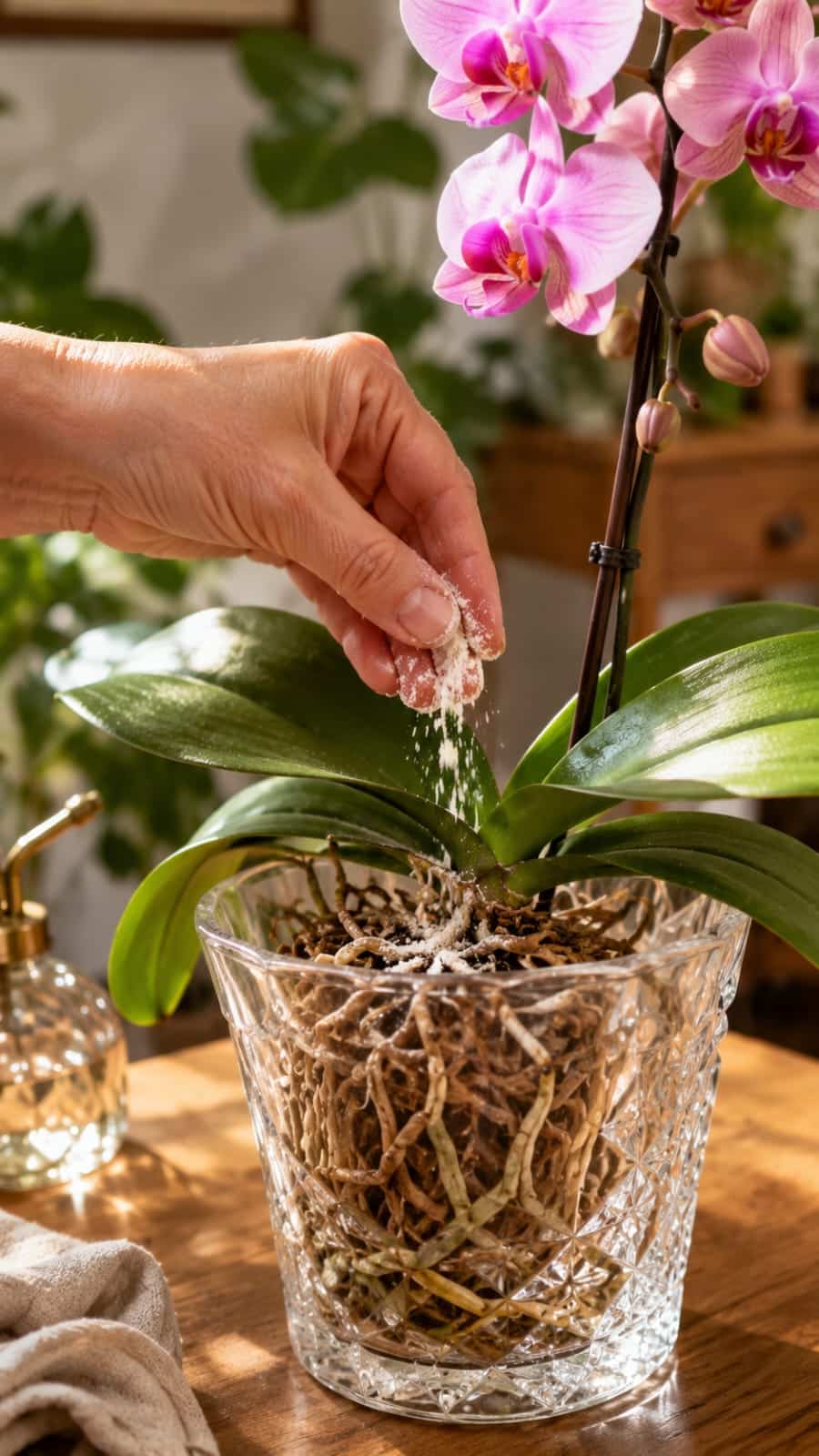
The orchid in the image has many visible roots. Some appear dry and tan, while the leaves and flowers look healthy. Orchid roots can vary in color depending on moisture and age.
Healthy orchid roots are usually:
- Firm
- Silvery when dry
- Green when wet
- Plump, not hollow
- Attached firmly to the plant
Unhealthy roots may be:
- Black
- Mushy
- Hollow
- Slimy
- Bad-smelling
- Collapsing when touched
If roots are mushy, powder will not fix them. They must be trimmed and the orchid may need fresh bark.
How to Fix an Orchid With Bad Roots
If your orchid has root problems, follow a recovery routine before using any powder.
Step 1: Remove the Orchid From the Pot
Gently slide the orchid out of its container. Be careful with healthy roots attached to the pot.
Step 2: Remove Old Bark
Shake away old bark. If it smells sour or feels soft and broken down, throw it away.
Step 3: Trim Rotten Roots
Use clean scissors to cut away black, mushy, or hollow roots. Keep firm roots, even if they are pale.
Step 4: Repot in Fresh Orchid Bark
Use chunky orchid bark in a pot with excellent drainage and airflow.
Step 5: Wait Before Using Powder
Let the orchid settle. Do not immediately add powders, tonics, or fertilizer to a stressed root system.
Best Potting Medium for Orchids
Orchids usually grow best in a chunky, airy medium. A good orchid mix may include:
- Orchid bark
- Perlite
- Charcoal
- Coconut husk chips
- Sphagnum moss in small amounts, depending on conditions
The right mix depends on your home. If your room is dry, a small amount of moss can help retain moisture. If your room is humid, bark-heavy mixes are safer.
Why the Clear Pot Is Useful
The clear container in the image makes the orchid roots visible. This is useful because orchid roots give important watering clues.
A clear pot helps you see:
- Whether roots are green or silvery
- Whether the bark is damp or dry
- Whether roots are healthy or rotting
- Whether the plant needs repotting
- Whether condensation is still inside the pot
If you are new to orchids, clear pots make watering much easier.
How to Water Orchids Correctly
Watering is more important than any powder trick. Most orchid problems come from watering too often or letting water sit around the roots.
Simple Orchid Watering Method
- Check the roots through the clear pot.
- Water when roots look silvery and bark is mostly dry.
- Pour water through the bark until it drains freely.
- Let the pot drain completely.
- Never let the orchid sit in standing water.
- Keep water out of the crown.
After watering, roots should turn green. Then they should gradually dry back to silver.
How Often Should You Water an Orchid?
There is no perfect schedule for every home. Some orchids need water once a week. Others need water every 10 to 14 days. It depends on temperature, humidity, light, pot size, and bark type.
Water when:
- Roots are silvery
- Bark feels mostly dry
- The pot feels lighter
- There is little condensation inside the pot
Wait when:
- Roots are still green
- Bark is damp
- The pot feels heavy
- Condensation is visible
Can This Powder Help Fungus Gnats?
Yes, a dry dusting of food-grade diatomaceous earth may help as part of a fungus gnat routine. Fungus gnats like moist organic material. If the top bark layer stays damp, they may appear.
To reduce fungus gnats:
- Let the bark dry properly between waterings
- Remove decaying plant material
- Use yellow sticky traps for adults
- Apply a thin layer of food-grade DE to dry bark
- Improve airflow
- Repot if the bark is old and decomposing
The powder helps most when the surface is dry. If the pot stays wet all the time, the gnat problem will continue.
Can This Powder Help Mealybugs?
It may help slightly with crawling stages, but mealybugs usually need direct treatment. They hide in leaf joints, under leaves, and around flower spikes.
For mealybugs:
- Isolate the orchid.
- Use a cotton swab dipped in rubbing alcohol.
- Touch visible mealybugs directly.
- Wipe gently.
- Repeat every few days.
- Check nearby plants.
Do not rely only on powder for mealybugs.
Can This Powder Feed Orchids?
No. Diatomaceous earth is not a complete orchid fertilizer. Orchids still need balanced feeding during active growth.
Use a proper orchid fertilizer diluted to a weak strength. Many orchid growers prefer “weakly, weekly” feeding, but for casual indoor care, a diluted orchid fertilizer every few weeks during active growth is often enough.
Do not fertilize a stressed orchid with damaged roots. Let it recover first.
Can You Use Eggshell Powder Instead?
Finely ground eggshell powder is sometimes used by plant owners because eggshells contain calcium carbonate. However, eggshell powder breaks down slowly and is not a quick orchid treatment. It also does not work like diatomaceous earth for pests.
If using eggshell powder, use only a tiny amount and keep it on the bark surface. Do not pack it around roots. For pest-related care, food-grade diatomaceous earth is usually more appropriate.
Can You Use Cinnamon Instead?
Cinnamon is often used by orchid growers as a dry powder on cut areas because it can help dry wounds. However, cinnamon is brown, not white, and it should be used carefully. It can dry plant tissue, so it should not be spread all over healthy roots.
Use cinnamon only on cut stems or trimmed areas, not as a general root-zone coating.
How to Keep Orchid Roots Cleaner Without Powder
You do not need powder to keep orchid roots healthy. The best root-cleaning routine is simple:
- Use fresh bark
- Water only when needed
- Let water drain completely
- Remove dead roots during repotting
- Keep the crown dry
- Provide airflow
- Use clear pots for monitoring
- Avoid food scraps in the pot
Powder is optional. Clean habits matter more.
Signs the Orchid Is Responding Well
After using a light powder dusting, watch the orchid over several weeks.
Good signs include:
- No sour smell
- No mold increase
- Roots remain firm
- Leaves stay glossy
- Flowers remain fresh
- Gnats decrease
- New root tips appear
Signs You Should Stop Using the Powder
Stop using it if you notice:
- Powder clumping into wet paste
- Mold on the bark
- Sour smell
- Roots becoming mushy
- Leaves drooping after watering
- Dust coating flowers or leaves
- The pot surface becoming messy and crusted
If this happens, remove excess powder, let the bark dry, and consider repotting if the medium is stale.
Quick Safe Recipe Card
Fine White Powder Orchid Root-Zone Refresh
You Need
- Food-grade diatomaceous earth
- Small dry spoon or clean fingertips
- Dry orchid bark
- Soft brush
Steps
- Make sure the powder is food-grade diatomaceous earth.
- Wait until the bark surface is dry.
- Remove dead leaves, old flowers, and decaying bark pieces.
- Take only a tiny pinch of powder.
- Dust lightly over the dry bark surface.
- Avoid the orchid crown, flowers, and leaves.
- Do not coat roots heavily.
- Do not water immediately.
- Let the powder stay dry for a few days.
- Reapply only if pests remain after the bark dries again.
Short Caption for This Trick
Smart homeowners are using a tiny dusting of food-grade diatomaceous earth on orchid bark to help keep the root zone cleaner and less inviting to pests. The safe method is simple: wait until the bark is dry, remove dead debris, sprinkle only a pinch on the bark surface, and keep it away from the crown, leaves, and flowers. Never use salt, flour, sugar, or unknown white powders on orchids. This trick can support cleaner roots, but real orchid health comes from fresh bark, bright indirect light, good drainage, and careful watering.
Frequently Asked Questions
What is the white powder being sprinkled on the orchid?
The safest option is food-grade diatomaceous earth, used lightly on dry bark to help discourage pests and keep the surface cleaner.
Can I sprinkle baking soda on orchid roots?
It is not recommended. Baking soda contains sodium and can stress roots if used carelessly.
Can white powder make orchids bloom?
No. Orchid blooms depend on healthy roots, bright indirect light, proper watering, and stable care.
Should I put powder on orchid leaves?
No. Keep powder off the leaves and flowers. Focus only on the dry bark surface.
Does diatomaceous earth work when wet?
It works best when dry. If it gets wet, it becomes less effective until it dries again.
How often should I use it?
Use only when needed, usually for pest prevention. Do not apply it every week unless there is an active issue.
Can I use eggshell powder instead?
Eggshell powder is not the same. It breaks down slowly and does not work like diatomaceous earth for pests.
Can I use cinnamon on orchid roots?
Cinnamon may be used sparingly on cut areas, but it should not be spread all over healthy roots because it can dry tissue.
What should I do if my orchid roots are rotten?
Remove the orchid from the pot, trim mushy roots, discard old bark, and repot in fresh orchid mix. Powder will not fix rot.
What is the best way to keep orchid roots healthy?
Use fresh bark, water only when roots are silvery and bark is dry, let the pot drain fully, keep the crown dry, and provide bright indirect light.
Final Thoughts
The fine white powder trick can be useful for orchids when it is done correctly. A tiny dusting of food-grade diatomaceous earth on dry bark may help keep the surface cleaner and less inviting to pests. It can be especially helpful if fungus gnats or small crawling pests are appearing around the pot.
But orchids are sensitive to poor airflow, wet bark, and trapped moisture. Do not use heavy powder. Do not coat the leaves. Do not pack powder around the crown. Do not use unknown kitchen powders. And never use this trick as a substitute for proper care.
The real secret to beautiful orchids is simple: fresh bark, clean roots, careful watering, bright indirect light, and patience. The white powder is only a small optional helper. When used lightly and safely, it can support a cleaner root zone. When combined with good orchid care, it helps your plant stay fresh, elegant, and bloom-ready indoors.