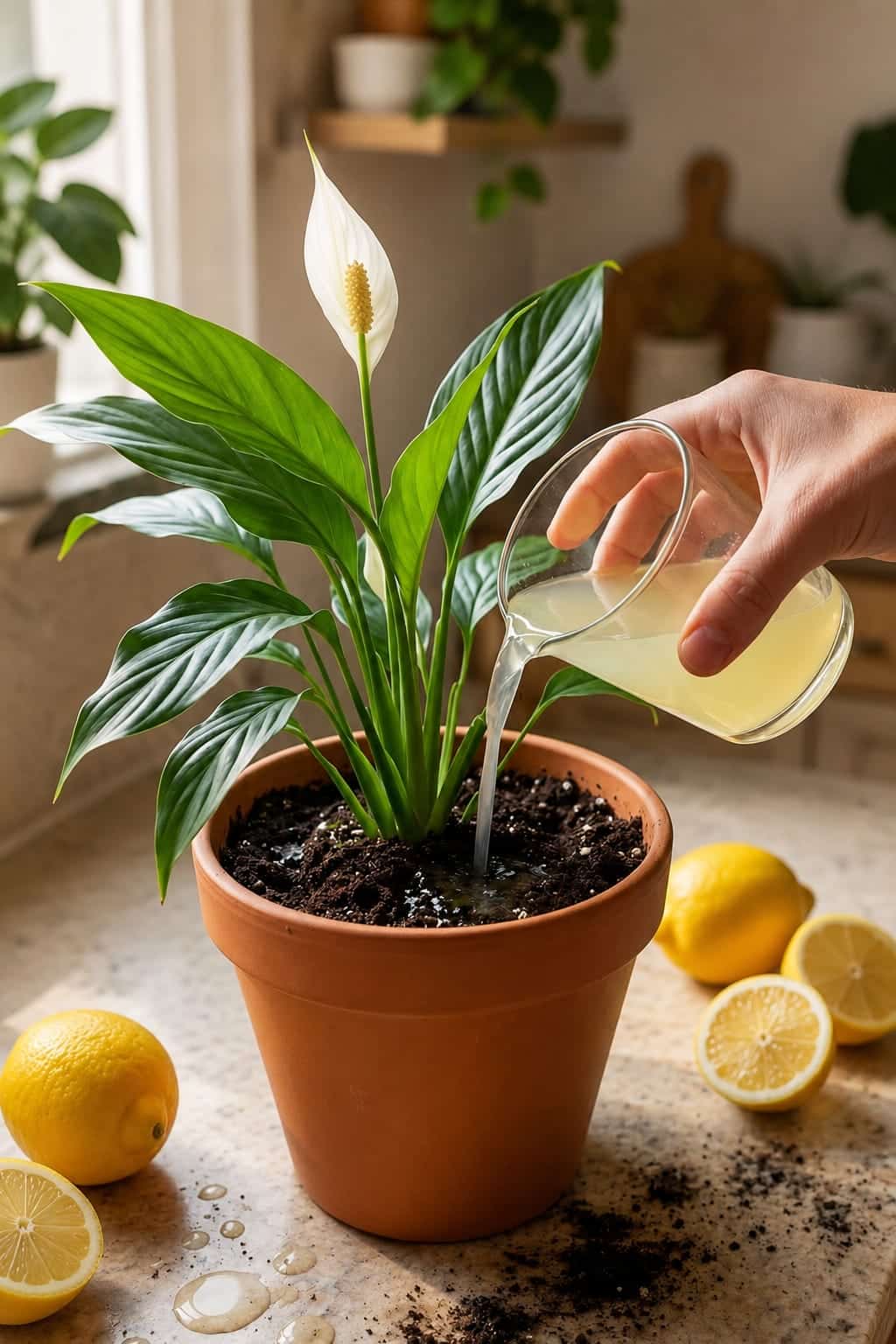
Peace lilies are one of the most loved indoor plants because they bring a clean, calm, elegant feeling into the home. Their glossy green leaves look fresh all year, and their white blooms make even a simple room feel softer and more peaceful. A healthy peace lily can sit near a bright window, on a side table, in a hallway, or beside a sofa and instantly make the space feel more alive.
But many homeowners notice the same problem after a few months: the peace lily stays alive, but it stops looking impressive. The leaves may become smaller. The plant may stop producing white blooms. The soil may look tired. The leaves may droop more often. The whole plant may seem stuck, almost as if it is surviving instead of growing.
That is why simple peace lily “growth hacks” are so popular. In the image, someone is pouring a pale yellow liquid into the soil while lemons sit nearby. The message says “Peace Lily Growth Hack” and “Watch It Grow Taller.” This suggests a lemon-water style trick that many plant lovers talk about online. The idea is that a very mild, slightly acidic kitchen tonic can freshen the soil and help a peace lily absorb nutrients more comfortably.
However, this trick must be used carefully. Peace lilies are not citrus trees. They do not need strong lemon juice poured into their soil. Too much lemon can make the soil too acidic, irritate roots, and cause leaf stress. The safe version of this trick is not pure lemon juice. It is a very diluted lemon peel water or mild lemon-rice water tonic, used rarely, only when the plant is already due for watering.
When used gently, this type of tonic can be part of a healthy peace lily routine. It may help refresh the soil, support greener leaves, and encourage better growth when combined with the real essentials: bright indirect light, proper watering, good drainage, clean leaves, and occasional balanced fertilizer.
What Is the Lemon Peace Lily Growth Hack?
The lemon peace lily growth hack is a simple homemade plant-care method where a weak lemon-infused water is used as an occasional soil refresh. The goal is not to feed the plant heavily. The goal is to lightly freshen the root zone and support a slightly acidic environment that peace lilies generally prefer.
Peace lilies usually grow best in a mildly acidic to neutral potting mix. Many indoor plants can struggle when tap water, fertilizer salts, or old potting mix slowly make the soil less comfortable over time. A very weak lemon tonic may help refresh the top layer of soil, but only if it is diluted properly.
The important word is weak. The liquid should look like pale lemon water, not lemonade. It should not contain sugar. It should not contain pulp. It should not smell strong. It should not be used every week.
The safest version uses lemon peel rather than a lot of lemon juice. Lemon peel gives a light citrus infusion without making the water extremely acidic. A few drops of juice can be added, but only in a large amount of water.
Why Peace Lilies Like Gentle Care
Peace lilies are tropical plants. They like warmth, humidity, bright indirect light, and evenly moist soil. They are not succulents, so they should not be kept bone dry for long periods. But they also should not sit in wet, heavy soil. Their roots still need oxygen.
This is where many people make mistakes. When a peace lily droops, the first reaction is often to pour in more water. Sometimes that is correct. A thirsty peace lily can droop dramatically and then recover after watering. But if the soil is already wet and the plant is drooping, the problem may be root stress from overwatering.
A homemade tonic should never be poured into already wet soil. It should be used only when the plant actually needs watering. Otherwise, even a gentle trick can become a problem.
What This Lemon Tonic May Help With
A diluted lemon tonic may support a peace lily in a few small ways. It can help refresh stale soil, encourage a more mindful watering routine, and provide a very light acidity boost when used occasionally.
This trick may help:
- Freshen the top layer of soil
- Support a mildly acidic root environment
- Encourage fuller leaf growth when combined with good light
- Help the plant look cleaner and more cared for
- Support occasional blooming by improving the overall care routine
- Reduce the dull, tired look that comes from neglected soil
But this trick is not magic. It will not make a peace lily double in size overnight. It will not fix root rot. It will not force flowers in a dark corner. It will not replace fertilizer completely.
What This Hack Cannot Do
Many online plant hacks sound dramatic, but peace lilies respond best to steady care. Lemon water alone cannot solve every problem.
This hack cannot:
- Save rotten roots
- Repair brown leaf tips
- Make old yellow leaves green again
- Force blooms without enough light
- Replace proper fertilizer forever
- Fix a pot with no drainage
- Stop drooping caused by soggy soil
- Correct severe pest problems
- Make the plant grow taller without healthy roots
If your peace lily is weak, always diagnose the real cause first. The tonic is only a support step.
Important Warning: Do Not Pour Straight Lemon Juice on Peace Lilies
This is the most important part of the trick. Straight lemon juice is too strong for peace lily roots. It can make the soil overly acidic and may stress the plant. It can also irritate damaged roots and create more yellowing or drooping.
Never pour:
- Pure lemon juice
- Lemonade
- Sugary lemon drinks
- Bottled sweetened lemon juice
- Concentrated citrus cleaner
- Fermented lemon mixtures
The safe version is a very diluted lemon peel water. Think of it as a whisper of lemon, not a citrus bath.
The Safe Lemon Tonic Recipe for Peace Lilies
This recipe is gentle enough for occasional use. It is designed for a healthy peace lily that is already growing in a pot with drainage.
Ingredients
- 1 small strip of fresh lemon peel
- 4 cups room-temperature water
- Optional: 2 to 3 drops of fresh lemon juice
- A clean jar or cup
- A strainer
Step 1: Wash the Lemon
Wash the lemon well before using the peel. This helps remove dust, wax, or residue from the outside. Since the peel will sit in water, it should be clean.
Step 2: Use Only a Small Piece of Peel
Cut a small strip of lemon peel. Avoid using a large amount. More lemon does not mean better growth. For peace lilies, gentle is always safer.
Step 3: Soak the Peel Briefly
Place the peel in 4 cups of room-temperature water. Let it sit for 30 minutes to 1 hour. Do not leave it overnight. A short soak creates a mild infusion without making the water too strong.
Step 4: Add Only a Few Drops of Juice
This step is optional. Add only 2 to 3 drops of lemon juice to the full 4 cups of water. Do not add a spoonful. Do not squeeze half a lemon into the water.
Step 5: Strain the Liquid
Remove the peel before using the water. Do not place lemon peel pieces in the pot. Food scraps can mold or attract pests.
Step 6: Use It Fresh
Use the tonic the same day. Do not store it for a week. Homemade plant liquids can spoil, especially if they contain organic ingredients.
How to Apply the Lemon Tonic Step by Step
Step 1: Check the Soil First
Touch the top inch of soil. If it still feels wet, do not use the tonic. Wait until the top layer feels slightly dry and the plant is actually ready for watering.
Step 2: Use a Small Amount
For a small peace lily, use about 1/4 cup. For a medium peace lily, use about 1/2 cup. For a large peace lily, use up to 1 cup. Do not flood the pot.
Step 3: Pour Around the Outer Soil
Pour the liquid around the soil surface, not directly into the tight center of the plant. Avoid splashing the leaves and flowers.
Step 4: Let the Pot Drain
If water drains out of the bottom, empty the saucer. Never let a peace lily sit in standing liquid.
Step 5: Watch the Plant for a Few Days
After using the tonic, watch for signs of stress. If the plant stays firm and healthy, it tolerated the treatment. If leaves droop, yellow, or the soil smells strange, stop using lemon tonic and return to plain water.
How Often Should You Use This Hack?
Use this lemon tonic only once every 6 to 8 weeks during active growth. Spring and summer are the best seasons. Do not use it every week. Do not use it every time you water.
Peace lilies need consistency more than constant tricks. Most waterings should be plain water. Fertilizer should be used separately and lightly.
Why Light Matters More Than Lemon Water
If your goal is more blooms, light is more important than lemon water. Peace lilies can survive in lower light, but they bloom better in bright indirect light. A plant sitting in a dark corner may produce leaves but few flowers.
For more blooms, place the peace lily near a bright window where it receives soft, filtered light. Avoid harsh direct sun because it can burn the leaves.
Good light signs include:
- Strong upright leaves
- New leaf growth
- White blooms appearing
- Leaves that are deep green but not dull
- Less stretching toward the window
If your peace lily has not bloomed in months, move it to brighter indirect light before blaming the soil.
Why Watering Routine Matters
Peace lilies are famous for drooping when thirsty, but they should not be allowed to collapse repeatedly. Severe drooping stresses the plant. The best routine is to water when the top inch of soil begins to dry.
A good watering routine looks like this:
- Check the soil with your finger.
- Water when the top inch feels slightly dry.
- Water thoroughly until excess drains out.
- Empty the saucer.
- Wait until the top begins to dry again.
If the soil is always wet, roots may suffocate. If the soil gets bone dry for too long, the plant may droop and develop brown tips.
Best Soil for Peace Lilies
The best soil for peace lilies holds moisture but also drains well. Heavy soil can stay wet too long, while very dry soil can make the plant wilt quickly.
A simple peace lily mix:
- 2 parts indoor potting mix
- 1 part perlite
- 1 part fine orchid bark or coco chips
This creates a loose mix that holds some moisture while allowing air to reach the roots.
Why Drainage Is Essential
The pot in the image is terracotta, which can be helpful because terracotta allows moisture to evaporate through the sides. But drainage holes are still essential. A beautiful pot without drainage can trap water at the bottom and damage roots.
If your decorative pot has no drainage, keep the peace lily in a nursery pot inside it. Remove the nursery pot for watering, let it drain fully, then place it back inside the decorative container.
Continue to Page 2
Continue to page 2 for more details about this article and the key points many readers miss on the first page.