How to Make Peace Lily Leaves Fuller
Fuller leaves come from healthy roots, proper light, and steady watering. The lemon tonic can help only if the basics are already correct.
To grow fuller leaves:
- Place the plant in bright indirect light
- Keep soil lightly moist but not soggy
- Use a pot with drainage
- Wipe dust from leaves
- Feed lightly during spring and summer
- Remove yellow or damaged leaves
- Repot if the plant is root-bound
If your peace lily has only a few leaves, check whether it needs more light or a larger pot.
How to Encourage More Blooms
Peace lily blooms are not true petals. The white “flower” is a spathe, and the central spike is the spadix. These blooms appear when the plant has enough energy.
To encourage more blooms:
- Give bright indirect light
- Avoid deep shade
- Keep the plant warm
- Water consistently
- Use diluted fertilizer during active growth
- Remove old faded blooms
- Avoid overwatering
A lemon tonic may support soil freshness, but blooming depends mostly on light and overall plant health.
Should You Use Fertilizer Too?
Yes, but gently. Peace lilies benefit from balanced fertilizer during active growth. Use a diluted houseplant fertilizer at half strength once every 4 to 6 weeks in spring and summer.
Do not use fertilizer and lemon tonic at the same time. Keep them separate. For example:
- Month 1: Half-strength fertilizer
- Month 2: Plain water only
- Month 3: Mild lemon tonic once
- Month 4: Plain water or light fertilizer if needed
This prevents the soil from becoming overloaded.
Signs Your Peace Lily Likes the Routine
If your peace lily responds well, the improvement will be gradual. Look for steady growth, not overnight miracles.
Good signs include:
- Leaves stay firm
- New leaves appear
- Soil smells fresh
- No mold appears
- No fungus gnats appear
- Blooms last longer
- Plant looks upright and glossy
Signs You Should Stop Using Lemon Tonic
Stop using the tonic if you notice:
- Yellowing leaves after application
- Drooping while soil is wet
- Sour smell from soil
- Mold on soil surface
- Fungus gnats
- Brown edges worsening
- Soil staying wet too long
If this happens, flush the soil with plain water during the next proper watering and let the pot drain fully.
Common Peace Lily Problems and What They Mean
Drooping Leaves
Drooping usually means the plant is thirsty, but not always. Check the soil. If it is dry, water. If it is wet, the roots may be stressed.
Yellow Leaves
Yellow leaves can mean overwatering, old leaves naturally aging, poor drainage, or too much fertilizer.
Brown Tips
Brown tips are often caused by inconsistent watering, low humidity, fertilizer buildup, or minerals in tap water.
No Blooms
The most common reason is not enough light. Move the plant to brighter indirect light.
Small Leaves
Small leaves can mean low light, low nutrients, root crowding, or general stress.
Can You Put Lemon Slices in the Pot?
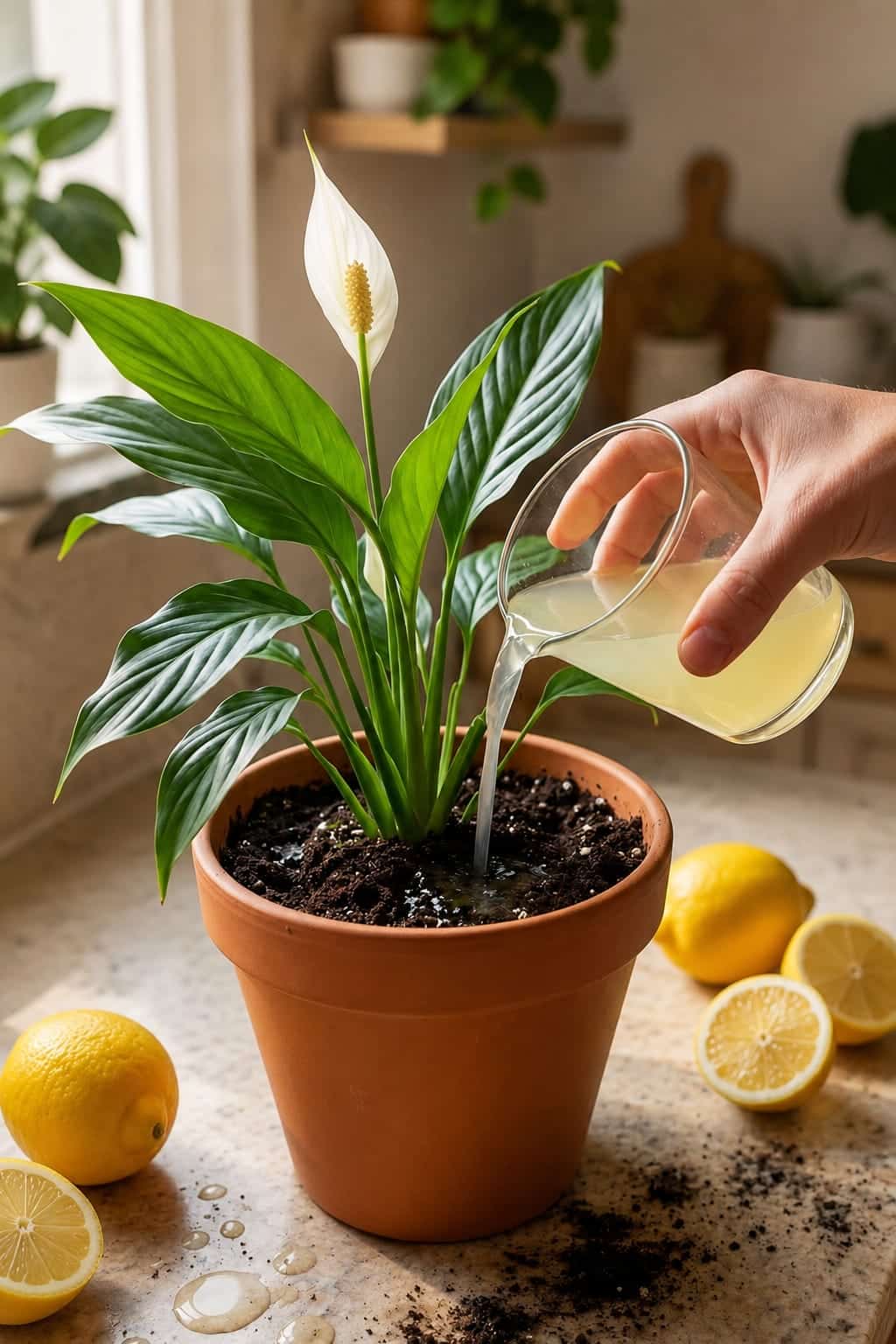
No. Do not place lemon slices directly on peace lily soil. They can mold, attract pests, and make the soil too acidic in one spot. The image shows lemons for visual effect, but the safe method is strained, diluted lemon peel water only.
Can You Spray Lemon Water on Peace Lily Leaves?
No. Lemon water can irritate leaves, especially in bright light. It may cause spotting or damage. To clean peace lily leaves, use plain water and a soft cloth.
Can Lemon Water Remove Soil Odor?
If your peace lily soil smells bad, do not cover the smell with lemon. Bad odor usually means the soil is too wet, compacted, or rotting. The real fix is better drainage, less watering, or repotting.
When to Repot a Peace Lily
Repotting may help more than any homemade hack if the plant is root-bound or the soil is old.
Repot if:
- Roots circle tightly around the pot
- Water runs straight through without soaking
- Soil smells stale
- The plant dries out too quickly
- Growth has slowed for a long time
- The plant is top-heavy
Choose a pot only one size larger. A pot that is too large can hold too much wet soil.
Quick Recipe Card
Gentle Lemon Peace Lily Growth Tonic
Ingredients
- 1 small strip lemon peel
- 4 cups room-temperature water
- Optional: 2 to 3 drops lemon juice
Instructions
- Wash the lemon well.
- Cut one small strip of peel.
- Soak the peel in 4 cups water for 30 minutes to 1 hour.
- Add only 2 to 3 drops of lemon juice if desired.
- Remove the peel and strain the liquid.
- Use only when the peace lily is due for watering.
- Pour a small amount around the soil.
- Let the pot drain fully.
- Use once every 6 to 8 weeks at most.
Short Caption for Social Media
Peace Lily Growth Hack 🌿🤍: Use a very mild lemon peel water tonic to freshen the soil and support fuller leaves. Soak one small strip of lemon peel in 4 cups of water for 30 minutes, strain it, and pour a small amount only when the plant is due for watering. Never use straight lemon juice or lemon slices in the pot. For more blooms, give your peace lily bright indirect light, good drainage, steady watering, and gentle feeding during spring and summer.
Frequently Asked Questions
Can lemon water help peace lilies grow?
A very diluted lemon peel water may help refresh the soil occasionally, but it will not replace proper light, watering, drainage, and fertilizer.
Can I pour straight lemon juice on my peace lily?
No. Straight lemon juice is too acidic and can damage roots. Always dilute heavily and use only a mild lemon peel infusion.
How often should I use lemon water on a peace lily?
Use it no more than once every 6 to 8 weeks during active growth.
Can lemon water make my peace lily bloom?
Not by itself. Peace lilies bloom best in bright indirect light with healthy roots and proper watering.
Can I put lemon slices on the soil?
No. Lemon slices can mold, attract pests, and create acidic spots in the soil.
Why is my peace lily not blooming?
The most common reason is low light. Move it to brighter indirect light and feed lightly during active growth.
Why are my peace lily leaves drooping?
Check the soil. If it is dry, water. If it is wet, the plant may be overwatered or suffering root stress.
Should I use fertilizer with this hack?
Yes, but separately. Use a balanced houseplant fertilizer at half strength during spring and summer. Do not use fertilizer and lemon tonic together.
Can I spray lemon water on the leaves?
No. Lemon water can damage or spot leaves. Clean leaves with plain water and a soft cloth.
What is the best way to grow fuller peace lily leaves?
Give bright indirect light, keep soil lightly moist but not soggy, use good drainage, wipe leaves clean, and feed lightly during active growth.
Final Thoughts
The lemon peace lily growth hack can be useful only when it is done gently. A weak lemon peel water tonic may freshen the soil and support a slightly acidic root environment, but it should never be treated like a miracle drink. Peace lilies do not need strong lemon juice, lemon slices, sugar, or sour homemade mixtures.
Use one small strip of lemon peel, plenty of water, and only a few drops of juice if desired. Strain the liquid. Apply it rarely. Use it only when the plant is due for watering. Let the pot drain fully. Then return to the real care routine that matters most.
For fuller leaves and more blooms, give your peace lily bright indirect light, a well-draining pot, steady moisture, clean leaves, and gentle fertilizer during active growth. When those basics are right, the lemon tonic can become a small refreshing boost—not the main reason your plant thrives.
With patience and careful care, your peace lily can grow taller, fuller, glossier, and more beautiful indoors, bringing that peaceful white-and-green elegance into your home for years.