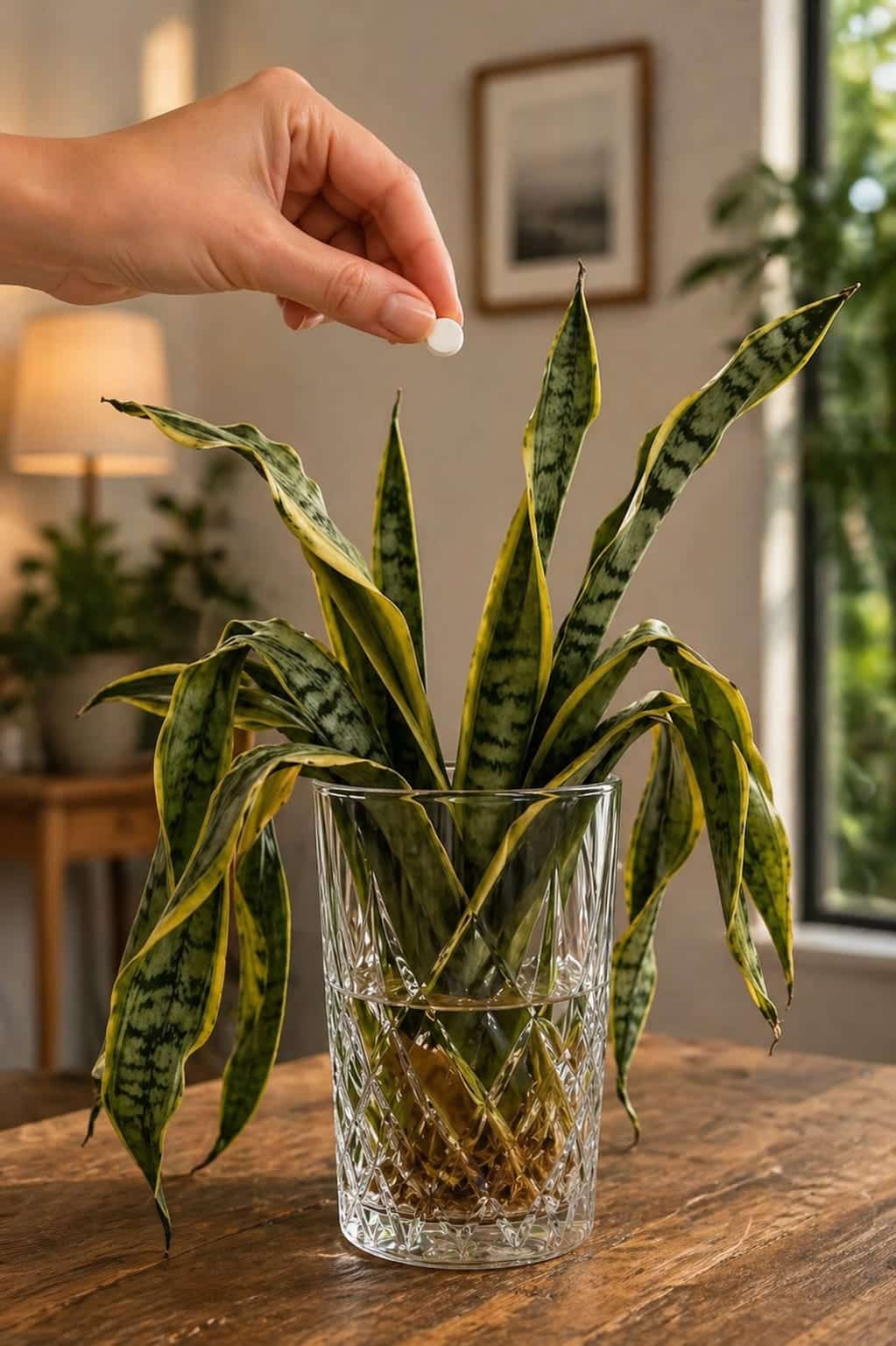
Scrolling through plant videos, you have probably seen this moment: a weak, droopy snake plant sitting in a glass of water, someone drops a small tablet into the water, and a promise flashes across the screen: “Watch it come back to life!” It feels like a secret hack — something simple, powerful, and almost instant. The plant in the “after” shot looks greener, firmer, and somehow resurrected.
It is no wonder these videos go viral. Everyone wants a quick fix for a struggling plant. But here is the truth: the tablet is not the real hero. In this guide, we will uncover what those tablets usually are, why the plant seems to recover, the real causes of a “dying” snake plant, and — most importantly — the proven, lasting ways to keep your Sansevieria healthy and thriving for years.
What You Are Actually Seeing in These Viral Videos
At first glance, the video tells a compelling story: a struggling plant, a tablet, and a miraculous recovery. But what is really happening is often much simpler: the plant is being rehydrated or repositioned, not magically healed.
Snake plants (Sansevieria, now Dracaena trifasciata) are incredibly resilient. They can look terrible — wrinkled, yellowing, or even leafless — and still recover quickly under the right conditions. If a snake plant is moved from dry soil to a glass of clean water, it will often perk up simply because it is finally receiving consistent moisture. The tablet is just a prop; the water did the work.
Additionally, many of these videos are edited. The “before” plant may have just been repotted, or its roots may have been trimmed off‑camera. The tablet is added for visual drama, but the real recovery came from proper hydration and root care.
What Are These “Tablets”? 🤔
In most viral videos, the tablet shown is rarely identified. It could be any number of substances, each with very different effects on plants. The most common possibilities include:
· Effervescent vitamin tablets (e.g., Vitamin C, B‑complex) – These dissolve quickly and fizz, which looks impressive on camera. However, human vitamins are not formulated for plants and can contain binders, sugars, or acids that harm roots.
· Aspirin – Salicylic acid is sometimes used to boost plant immunity, but it is not a fertilizer or root stimulant. Overuse can lower water pH and stress the plant.
· Fertilizer tablets – Slow‑release or water‑soluble plant food is the most likely beneficial tablet. A balanced fertilizer can provide nutrients, but in a small glass of water, a whole tablet is often far too concentrated.
· Random “plant food” pills – Some are legitimate; others are just baking soda or sugar tablets with no real benefit.
· Alka‑Seltzer or antacid tablets – These are not designed for plants and can introduce sodium, bicarbonate, or other chemicals that disrupt water chemistry.
Here is the problem: not all of these are safe for plants, and some can actually damage roots over time, especially in water setups where the solution does not drain away.
Why This Trick Can Be Misleading (And Even Risky) ⚠️
Dropping tablets into water can cause several issues, even if the plant seems to improve temporarily.
Potential risks include:
· Chemical imbalance in the water – Sudden changes in pH or mineral concentration can shock the roots.
· Root burn – Concentrated salts from fertilizer or vitamins can desiccate tender root tips.
· Bacterial growth – Sugars or organic binders in tablets can feed harmful bacteria, clouding the water and causing rot.
· Long‑term plant stress – Even if the plant perks up initially, repeated use can lead to decline.
And yet, the plant may still improve temporarily. Why? Because the real issue was something else. Let us look at what actually causes a snake plant to look “dying.”
The Real Causes of a “Dying” Snake Plant (Before You Try Any Tablet)
Most struggling snake plants are not dying from a lack of vitamins or mystery pills. They are suffering from common care mistakes. Fix these, and the plant will recover without any tablet.
- Overwatering (The #1 Killer)
Snake plants are succulents. They store water in their thick leaves and underground rhizomes. Overwatering leads to root rot, which causes leaves to become soft, mushy, and yellow.
· Signs: Leaves feel soft, base is mushy, soil stays wet for weeks.
- Poor Drainage
A pot without drainage holes or heavy, compacted soil traps water around the roots, suffocating them.
· Signs: Water sits on top of the soil, foul smell from the pot.
- Low Light
Snake plants tolerate low light but do not thrive in it. Without enough light, growth slows, leaves become weak, and the plant is more susceptible to rot.
· Signs: Leggy growth, pale leaves, very slow growth.
- Stress from Sudden Changes
Moving the plant from one environment to another (e.g., from a dark corner to bright sun) can cause temporary drooping or leaf damage.
· Signs: Leaves droop or curl after a move.
When you address these issues — by improving drainage, reducing watering, and providing bright indirect light — the plant will often recover on its own. No tablet needed.
Why the Plant Seems to Recover After Adding a Tablet (The Illusion)
Let us break it down honestly. The video shows a plant that was likely already in the process of recovering. Here is what typically happens behind the scenes:
· The plant is moved into water – Snake plants can root in water. If the plant was dehydrated, simply placing it in clean water will cause it to rehydrate and perk up. The tablet has nothing to do with it.
· Damaged roots may be trimmed off‑camera – Before filming, the creator may have removed rotten roots, leaving only healthy tissue. The tablet is then added for effect.
· Conditions improve – The water may be changed regularly, the plant may be moved to brighter light, or the temperature may be more favorable. The tablet gets the credit, but the environment did the work.
The tablet is a visual prop. The real recovery comes from addressing the underlying issues.
Continue to Page 2
Continue to page 2 for more details about this article and the key points many readers miss on the first page.