Snake plants are some of the most dependable indoor plants you can grow. They are bold, upright, sculptural, and surprisingly forgiving. Their sword-shaped leaves bring instant structure to a room, while their green patterns and yellow edges make them look decorative even without flowers. A healthy snake plant can sit beautifully on a table, floor, patio, shelf, or plant stand and still look fresh with very little attention.
But when a snake plant starts producing lots of small pups around the base, it becomes even more exciting. Those tiny new shoots make the plant look alive, active, and full of promise. They tell you the underground rhizomes are working, the roots are storing energy, and the plant is preparing to become thicker and more impressive over time.
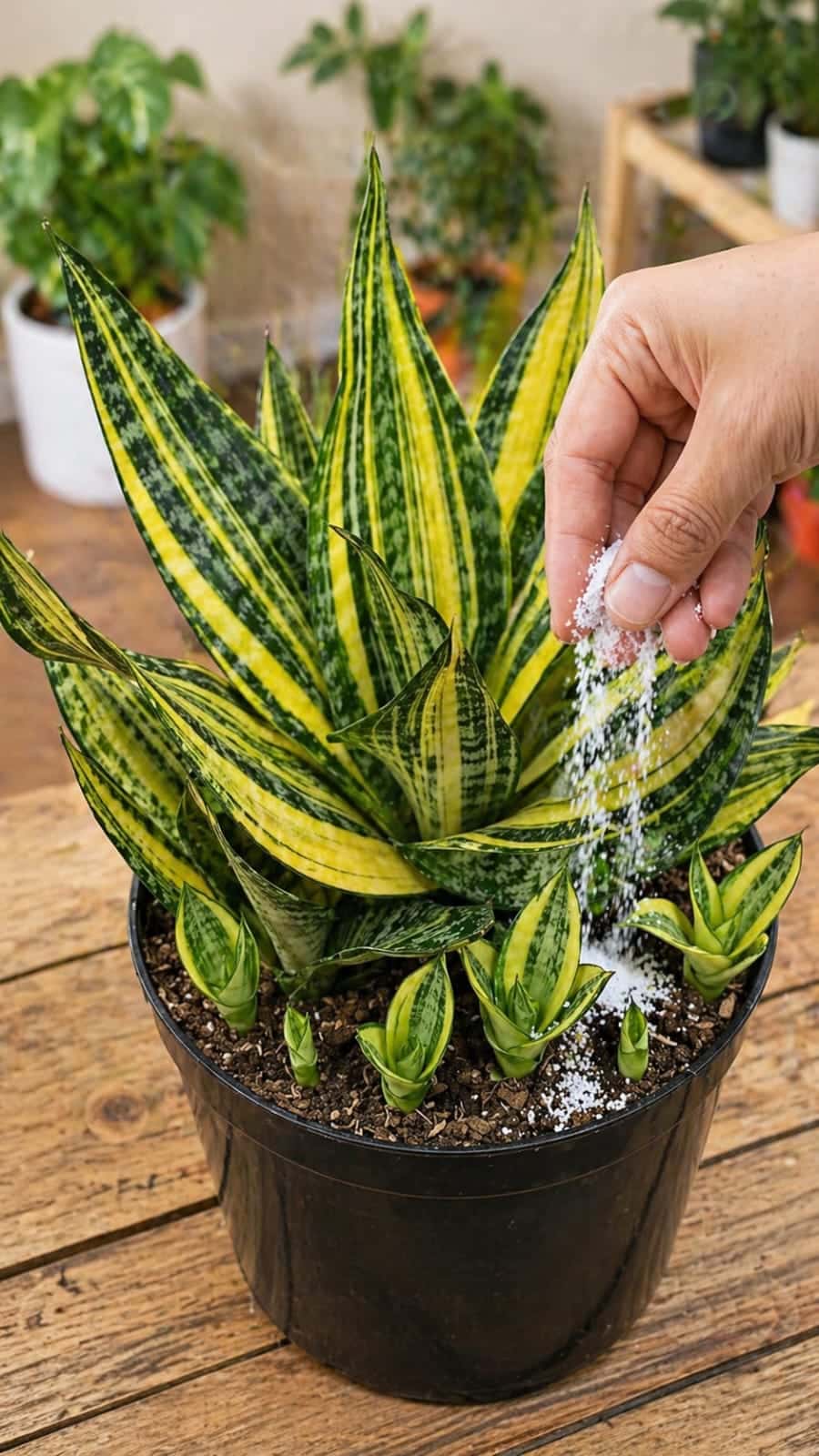
In the image, a hand is sprinkling a white crystal-like powder over the soil of a variegated snake plant. The plant is already full of color, with tall green-and-yellow leaves and many little pups rising from the soil. The white crystals fall around the young shoots, creating the look of a simple secret ingredient that wakes up the plant and helps it grow fuller.
This is often called the white crystal snake plant trick, the white sprinkle method, the mineral boost routine, or the Epsom salt snake plant trick. Some people use this idea as a way to lightly refresh the soil, support leaf color, and encourage stronger growth during the active season. The trick looks simple: sprinkle a small amount around the plant, water carefully, and let the roots receive a gentle boost.
However, snake plants are succulent-like plants. They store water in thick leaves and underground rhizomes. They do not like heavy feeding, salty buildup, wet soil, or constant homemade treatments. So the safe version of this trick is not about dumping handfuls of white crystals into the pot. It is about using a tiny amount, very rarely, and only when the plant is healthy and actively growing.
The white crystals in this trick are most commonly interpreted as Epsom salt, which is magnesium sulfate. Some gardeners use a very small amount of Epsom salt for houseplants because magnesium can support green leaf color when a plant is truly lacking it. Others use crushed eggshell powder, gypsum, or a gentle mineral amendment. But no white powder or crystal can replace the real basics: bright indirect light, fast-draining soil, correct watering, and a pot with drainage.
Used carefully, the white crystal trick can be a small seasonal support for a healthy snake plant. Used too heavily, it can create salt buildup and stress the roots. The secret is moderation.
What Is the White Crystal Snake Plant Trick?
The white crystal snake plant trick is an occasional soil-surface treatment where a tiny amount of white mineral material is added around the plant. The goal is to give the plant a gentle mineral refresh while supporting strong leaf color and active growth.
In most versions, the white crystals are Epsom salt. Epsom salt contains magnesium and sulfur. Magnesium is part of chlorophyll, which plants use in photosynthesis. This is why many gardeners connect Epsom salt with greener leaves. Sulfur is also used by plants in small amounts for growth processes.
But this does not mean every snake plant needs Epsom salt. Many plants already get enough magnesium from potting mix, water, and fertilizer. If you add too much, the soil can develop mineral buildup. Snake plants are not heavy feeders, so they do not need frequent mineral treatments.
The best way to use this trick is as a very light occasional supplement. A small pinch dissolved in water is usually safer than sprinkling a large amount dry over the soil. If you prefer the visual sprinkle method, use only a tiny amount and avoid piling it around the base of the leaves.
The trick should support a healthy plant, not rescue a sick one. If your snake plant is yellow, mushy, rotting, or sitting in wet soil, white crystals are not the answer. Fix the root problem first.
Why This Trick Looks So Convincing
The image is powerful because the plant already looks full and active. The tall leaves are colorful, the young pups are fresh, and the hand sprinkling white crystals creates a sense of secret care. It looks like one simple ingredient is responsible for the strong growth.
That is why this type of trick spreads so easily. It is visual, quick, and easy to understand. You see a white sprinkle, then you see a thriving snake plant. The connection feels obvious.
But plant growth is usually the result of many conditions working together. A snake plant produces pups because the rhizomes are healthy. The rhizomes are healthy because the soil drains well, the plant receives enough light, the pot is not constantly wet, and the plant has had time to grow.
The white crystal trick may support the process, but it is not the whole story. It is one small step inside a larger care routine.
The real value of the trick is that it encourages you to pay attention. You check the pups. You look at the soil. You think about feeding. You notice whether the plant is actively growing. That attention can help you care for the plant better overall.
What Are the White Crystals?
The white crystals can be interpreted in a few different ways. The safest and most common explanation is Epsom salt, used very lightly. But there are other possible white amendments people use around houseplants.
Epsom Salt
Epsom salt is magnesium sulfate. It is often used by gardeners as a magnesium supplement. For snake plants, it should be used rarely and weakly. Too much can create salt buildup.
Crushed Eggshell Powder
Eggshell powder is white and powdery rather than crystal-like. It contains calcium carbonate and breaks down slowly. It is not an instant fertilizer, but it can be used as a mild mineral addition.
Gypsum
Gypsum is calcium sulfate. It can add calcium and sulfur without strongly changing soil pH. It is more commonly used outdoors or in specific soil situations, not as a regular houseplant trick.
Perlite Dust or Mineral Top Dressing
Sometimes white particles in potting mixes are just perlite or mineral grit. These help drainage but are not meant to be sprinkled as fertilizer.
Commercial Plant Mineral Powder
Some plant products contain mineral blends. These should be used only according to the label.
For a simple home routine, the easiest version is a very diluted Epsom salt watering or a tiny amount of clean eggshell powder mixed into the topsoil. Never use random white kitchen powders such as sugar, flour, baking soda, cornstarch, powdered milk, or salt. These can harm the plant or attract pests.
Can Epsom Salt Help Snake Plants?
Epsom salt may help only if the plant needs magnesium. Magnesium supports chlorophyll, and chlorophyll is connected to green leaf color. If a plant is truly magnesium deficient, leaves may show pale areas or yellowing between veins. But snake plant variegation naturally includes yellow and green patterns, so it is easy to misread normal color as a deficiency.
A healthy variegated snake plant with yellow edges does not necessarily need magnesium. The yellow margins are natural. Adding Epsom salt will not turn those yellow edges green, and you would not want it to. The yellow edges are part of the plant’s beauty.
A small amount of Epsom salt can be used occasionally as a gentle mineral boost, but it should not become a regular habit. Snake plants grow slowly and use nutrients slowly. Too much mineral salt can build up in the soil and damage roots.
If you already use a balanced houseplant or succulent fertilizer, your plant may not need extra Epsom salt at all.
The Safest Epsom Salt Recipe for Snake Plants
The safest way to use Epsom salt is to dissolve it in water rather than leaving a pile of crystals on the soil. Dissolving helps spread it more evenly and reduces the risk of concentrated crystals sitting against roots or leaf bases.
Ingredients
- 1/4 teaspoon Epsom salt
- 1 gallon clean water
- A watering can
Instructions
- Add 1/4 teaspoon of Epsom salt to 1 gallon of water.
- Stir until fully dissolved.
- Use only when the snake plant soil is dry and ready for watering.
- Water the soil lightly and evenly.
- Let excess water drain completely.
- Empty the saucer after watering.
This is a weak solution, which is what snake plants prefer. Do not make it strong. Do not use it every week. Use it only once every two to three months during the growing season, if you use it at all.
If your plant is already healthy and growing, less is better.
The Sprinkle Version: How to Do It More Safely
The image shows the crystals being sprinkled directly onto the soil. If you want to copy the visual method, use a tiny amount. Think of it as dusting, not feeding heavily.
How to Sprinkle Safely
- Make sure the soil is dry.
- Use only a tiny pinch of Epsom salt for a small pot.
- For a large pot, use no more than 1/8 teaspoon sprinkled widely.
- Keep crystals away from the tight leaf bases and pups.
- Do not pile crystals in one spot.
- Water lightly later, only when the plant is ready.
- Do not repeat often.
The crystals should be scattered thinly. If you can see a thick white patch, you used too much. A concentrated pile can create a harsh spot in the soil when it dissolves.
For most indoor growers, the dissolved method is safer than the dry sprinkle method. But if you want the sprinkle effect, keep it extremely light.
Why You Should Not Use Table Salt
Never use table salt on a snake plant. Table salt is sodium chloride, and sodium can damage plant roots. It can build up in the soil and make it difficult for roots to absorb water properly.
Because table salt and Epsom salt are both white crystals, some people may confuse them. They are not the same. Epsom salt is magnesium sulfate. Table salt is sodium chloride. One may be used carefully as a mineral supplement. The other should stay out of houseplant soil.
If the white crystals are not clearly labeled as Epsom salt or a plant-safe amendment, do not use them.
Random white crystals can be dangerous for plants. Always know what you are applying.
Why You Should Avoid Baking Soda
Baking soda is another white powder often used in online plant tricks, but it is not a good regular treatment for snake plants. Baking soda contains sodium, and sodium buildup can stress roots. It also does not provide balanced plant nutrition.
Some gardeners use baking soda in very specific outdoor situations, but sprinkling it into a snake plant pot as a growth booster is not recommended. Snake plants do not need it.
If your goal is stronger growth, focus on light, soil, and proper watering. If your goal is a mineral supplement, Epsom salt at a very weak dose is more appropriate than baking soda.
Do not use baking soda just because it is white and easy to find in the kitchen.
Why You Should Avoid Sugar, Flour, and Cornstarch
Sugar, flour, and cornstarch should never be used as plant powders. They can attract pests, grow mold, and turn sticky when wet. They provide no useful balanced nutrition for snake plants.
Flour and cornstarch can form a paste on the soil surface. That paste can block airflow and trap moisture. Snake plants need the opposite: open, airy soil that dries between waterings.
Sugar can feed microbes and pests, creating odors and fungus gnats. It does not feed the plant in the way people imagine.
Keep kitchen powders out of snake plant pots unless they are known plant-safe amendments used correctly.
Why This Trick Should Be Used Only on Healthy Plants
The white crystal trick should not be used on a sick snake plant. If your plant has mushy leaves, yellow bases, rotten smell, or soil that stays wet, the problem is likely overwatering or root rot. Adding minerals will not fix that.
If your plant is dry, wrinkled, and neglected, it may need plain water first. If your plant is pale from low light, it needs brighter indirect light. If your plant is in heavy soil, it needs repotting into a gritty mix.
The white crystal trick is best for a healthy snake plant that is actively growing and already producing pups. In that situation, a tiny mineral boost may support the plant without overwhelming it.
Never use a supplement to cover up poor care conditions. Correct the basics first.
Why Snake Plants Produce Pups
The small shoots around the base in the image are snake plant pups. These pups grow from underground rhizomes. A rhizome is a thick, energy-storing structure beneath the soil. When the plant is healthy and conditions are right, the rhizome sends up new shoots.
Pups are a sign of an active plant. They often appear when the plant has enough light, healthy roots, and a suitable pot. A slightly snug pot can also encourage pups because the rhizomes push new growth upward.
The white crystal trick may support this process slightly, but it does not create pups by itself. Pups come from stored energy and good growing conditions.
If you want more pups, the main things to improve are light, soil, watering, and root health.
How to Encourage More Snake Plant Pups
If your goal is a full plant like the one in the image, focus on the conditions that help rhizomes grow.
Give Bright Indirect Light
Snake plants tolerate low light, but they grow better and produce more pups in bright indirect light. A plant in a dim corner may survive but stay almost unchanged for months.
Use Gritty Soil
Fast-draining soil protects the rhizomes from rot. Healthy rhizomes are more likely to send up pups.
Use a Pot With Drainage
Drainage holes are essential. Without drainage, water collects and can rot the roots.
Do Not Overwater
Let the soil dry between waterings. Snake plants prefer dry-down time.
Keep the Plant Warm
Warm indoor temperatures encourage growth. Cold conditions slow the plant down.
Feed Lightly
A weak fertilizer or rare mineral supplement during active growth can help, but do not overfeed.
Pups are not forced. They are encouraged through steady, correct care.
Best Soil for the White Crystal Trick
If you use any mineral supplement, the soil should drain well. Dense soil can hold salts and moisture around the roots. This increases the risk of stress.
A good snake plant mix can include:
- 2 parts cactus or succulent mix
- 1 part perlite or pumice
- 1 part coarse sand, fine bark, lava rock, or small gravel
This mix allows water and dissolved minerals to move through the pot instead of sitting around the roots. It also helps prevent rot.
If your soil is heavy, muddy, or slow to dry, do not use the white crystal trick yet. Repot first. Better soil will do more for your plant than any sprinkle.
Best Pot for a Snake Plant With Pups
A snake plant with many pups needs a pot that supports healthy root growth without staying wet too long. A pot with drainage holes is essential. Terracotta, plastic nursery pots, or ceramic pots with holes can all work.
The pot should not be enormous compared to the root system. Too much soil holds too much moisture. Snake plants often do well when slightly snug.
If pups are filling the pot, you can leave them for a fuller display or divide them later. Do not rush to separate every pup. A clustered snake plant can look beautiful and healthy.
If the pot becomes crowded, dries too quickly, or starts cracking from rhizome pressure, it may be time to repot or divide.
How to Water After Using White Crystals
If you sprinkle crystals on the soil, do not immediately flood the pot unless the plant is already due for watering. Snake plants should be watered only when the soil is dry.
When it is time to water, pour slowly around the soil surface. Avoid pouring directly into the leaf centers or small pup rosettes. Let the water drain completely from the bottom. Empty the saucer.
If you use the dissolved Epsom salt method, that watering counts as a normal watering. Do not water again until the soil dries fully.
The mineral trick should never become an excuse to water more often. Overwatering is much more dangerous than mild nutrient deficiency for snake plants.
How Often Should You Use the White Crystal Trick?
Use it rarely. For Epsom salt, once every two to three months during active growth is more than enough. Some snake plants may never need it at all.
Do not use it weekly. Do not use it every time you water. Do not combine it with strong fertilizer, banana peel tea, rice water, coffee, or other homemade treatments at the same time.
If you already fertilize lightly during spring and summer, you may not need Epsom salt. Too many supplements can create buildup.
Snake plants grow slowly and prefer simple care. A tiny occasional boost is enough.
Continue to Page 2
Continue to page 2 for more details about this article and the key points many readers miss on the first page.