Peace lilies are one of those plants that can make any home feel softer, fresher, and more peaceful. Their deep green leaves shine beautifully in the light, and their white flowers rise above the foliage like little flags of calm. A healthy peace lily looks elegant without being complicated, which is why it has become one of the most popular indoor plants for living rooms, offices, bedrooms, patios, and shaded garden corners.
But peace lilies can also be dramatic. They droop quickly when thirsty, yellow when stressed, stop blooming when light is too low, and sometimes look tired even when they are still alive. One day the leaves are glossy and upright, and a few days later the plant can look flat, dull, or lazy. This is why so many plant lovers search for simple home tricks that can wake up a peace lily and encourage it to grow fuller again.
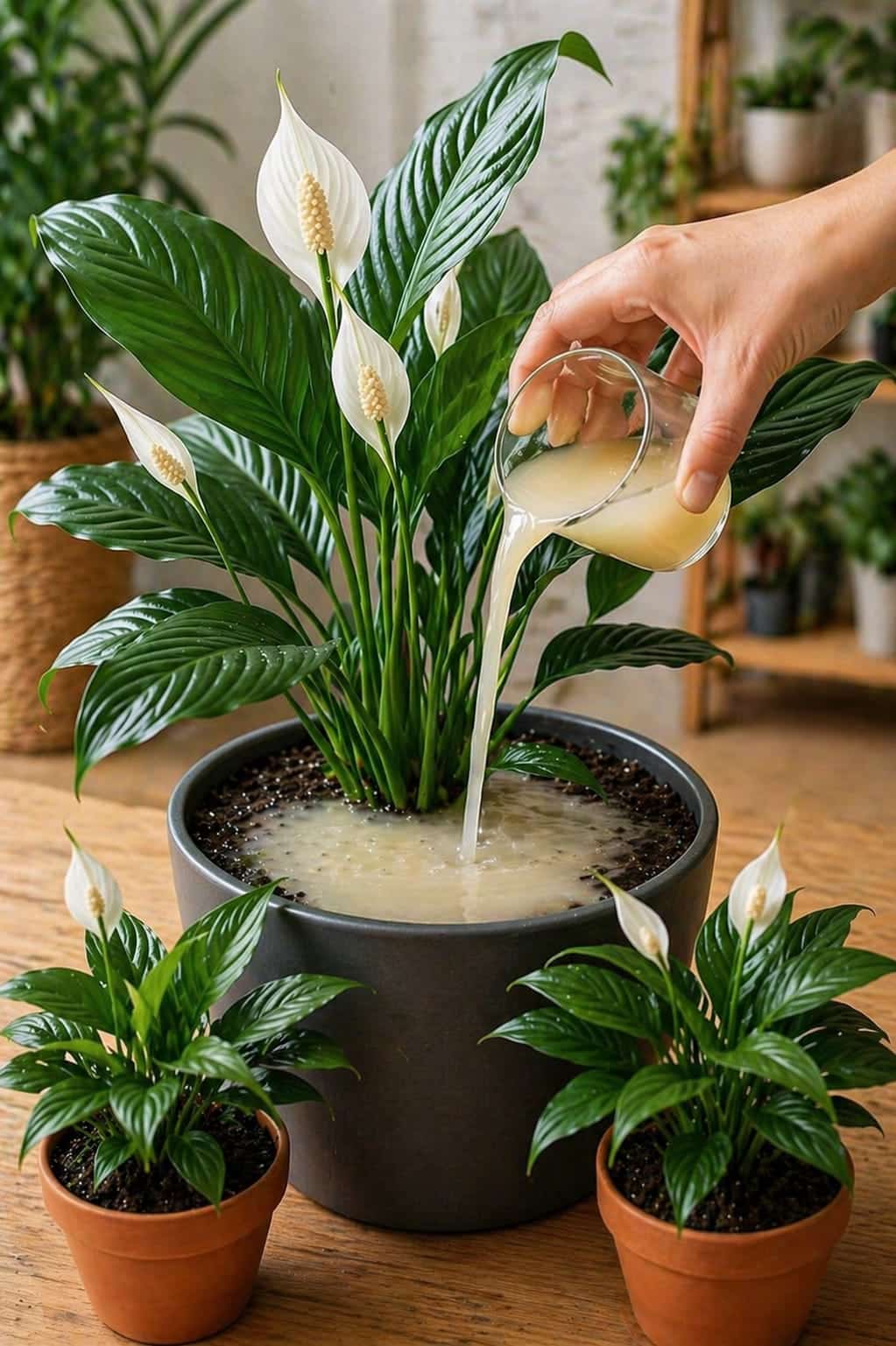
The image shows a beautiful version of one of those tricks: a creamy, milky-white liquid being poured into the soil of a lush peace lily. The plant is full, glossy, and blooming with white spathes. Smaller peace lilies sit nearby, suggesting that this white pour routine is used to keep the plants fresh, green, and flower-ready. The liquid looks rich and homemade, almost like a secret plant drink.
This trick is often called the milky rice water peace lily trick, the white pour method, the rice rinse bloom booster, or the creamy root drink. The idea is simple: you make a diluted cloudy liquid from rinsed rice, then use it occasionally as a gentle watering boost for peace lilies. It looks like milk, but the safer version is not milk. It is fresh diluted rice water.
Rice water has become popular in houseplant care because it is easy to make, inexpensive, and gives the feeling of recycling something useful instead of pouring it down the sink. When uncooked rice is rinsed, the water becomes cloudy from starch and tiny rice particles. Some plant owners use this mild liquid to refresh soil and support active growth.
However, peace lilies still need proper care more than they need any trick. Rice water will not magically force blooms overnight. It will not repair rotten roots. It will not turn yellow leaves green again. It works best as a light occasional support for a plant that already has decent light, healthy soil, and proper watering.
The secret is using the white pour correctly. It should be fresh, diluted, thin, and used only sometimes. It should never be thick, sour, fermented, sticky, or poured constantly into wet soil. When used the right way, this trick can become a satisfying part of your peace lily care routine and may help your plant look cleaner, greener, and more energized over time.
What Is the Milky Rice Water Peace Lily Trick?
The milky rice water peace lily trick is a homemade watering routine where fresh rice rinse water is diluted and poured into the soil of a peace lily. The water looks pale, cloudy, and creamy, which is why many people describe it as a white pour or milky plant drink.
The trick is based on the water left after rinsing uncooked rice. When rice is swirled in water, some starch and tiny particles wash off into the liquid. This makes the water cloudy. Instead of throwing it away, you can dilute it and use it as an occasional soil rinse for moisture-loving houseplants like peace lilies.
Peace lilies enjoy evenly moist soil, so they are better suited to this kind of trick than plants like snake plants, jade plants, or succulents. Still, they do not want thick liquid sitting around their roots. The rice water must be light and watery. It should soak into the potting mix easily and drain away from the bottom of the pot.
The goal is not to flood the plant. The goal is to give the root zone a gentle refresh while watering at the right time.
Think of the trick as a small addition to good care. The peace lily still needs bright indirect light, a pot with drainage, airy soil, and a stable watering routine. The rice water is a bonus, not the whole care plan.
Why Peace Lilies Respond So Visibly to Watering
Peace lilies are famous for reacting quickly to moisture. If the soil gets too dry, the leaves droop dramatically. The whole plant can look like it is collapsing. When watered correctly, it may perk up again within hours or by the next day.
This quick response is one reason white pour tricks look so impressive. If a thirsty peace lily receives any kind of proper watering, plain water or rice water, the improvement can be visible fast. The plant lifts its leaves, the stems become firmer, and the foliage looks fresher.
But not every drooping peace lily is thirsty. This is very important.
A peace lily can also droop from overwatering. If the soil is wet and the roots are damaged, the plant cannot absorb water properly even though there is plenty of moisture in the pot. In that case, adding more liquid, including rice water, can make the problem worse.
Before using the white pour trick, always check the soil. If the top inch is dry, the plant may be ready. If the soil is wet, wait and investigate further.
What Makes the White Pour Look So Powerful?
The white pour looks powerful because it is visual. Clear water disappears into the soil, but cloudy rice water spreads across the surface and creates the impression that the roots are receiving something rich and special. It looks more like a treatment than ordinary watering.
In the image, the peace lily is already large and blooming. The white liquid pools on the soil surface, making the plant look like it is being fed with a homemade bloom formula. Smaller peace lilies around the pot reinforce the idea that this method can be used to create more healthy plants.
The effect is dramatic, but the practical version should be more controlled. In real plant care, you do not want a thick layer of liquid sitting on top of the soil. You want a thin, diluted liquid that moves through the potting mix and drains properly.
The trick feels powerful because it turns watering into a ritual. You prepare the rice water, check the plant, inspect the soil, pour carefully, and pay attention. That attention can improve your plant care even more than the liquid itself.
Is the White Liquid Milk or Rice Water?
It may look like milk, but rice water is the safer choice for peace lilies. Straight milk is not recommended for regular houseplant watering. Milk can sour in soil, smell unpleasant, attract fungus gnats, and encourage mold. If too much dairy sits in a warm potting mix, it can quickly become a problem.
Rice water gives a similar milky appearance without using dairy. It is still organic and should be used carefully, but it is generally a better option than pouring actual milk into the pot.
If you see a plant trick showing a creamy white liquid, the safest way to recreate it is with fresh diluted rice rinse water, not milk, cream, yogurt, or any sweetened drink.
The liquid should look lightly cloudy, not thick. If it looks like cream or pancake batter, it is too concentrated for indoor plant use.
How to Make Safe Rice Water for Peace Lilies
The safest rice water is fresh, diluted, and made from rinsing uncooked rice. Avoid cooked rice water, fermented rice water, and any rice water that contains salt, oil, spices, or seasoning.
Ingredients
- 1/2 cup uncooked white rice
- 3 cups clean water for rinsing
- 3 cups extra clean water for dilution
- A bowl
- A strainer
- A watering cup or small jug
Instructions
- Place the uncooked rice in a clean bowl.
- Add 3 cups of clean water.
- Swirl the rice gently with your hand for 20 to 30 seconds.
- Strain the cloudy water into a separate container.
- Add 3 more cups of clean water to dilute it.
- Use the diluted liquid immediately.
- Throw away any leftover rice water instead of storing it.
The finished liquid should be pale and cloudy. It should pour like water. It should not smell sour. It should not feel sticky. If it seems too thick, add more water.
This is the simple version of the white pour trick that is most suitable for indoor peace lilies.
Why Fresh Rice Water Is Better Than Fermented Rice Water
Some plant tips recommend fermented rice water, but for indoor peace lilies, fresh rice water is usually safer. Fermented rice water can smell sour, attract small flies, and create mold if the soil stays damp. Indoor pots do not have the same airflow and microbial balance as outdoor garden beds, so fermented liquids can become unpleasant quickly.
Peace lilies already like moist soil. Adding fermented starch water to a moist indoor pot can create fungus gnat problems if used too often.
Fresh rice water gives you the gentle cloudy-water effect without the stronger smell and higher risk of fermentation. It is simple, mild, and easier to control.
If rice water smells like vinegar, alcohol, spoiled food, or sour liquid, do not use it. The safest plant trick is always the cleanest version.
How Often Should You Use Rice Water on Peace Lilies?
Use rice water once every four to six weeks during the growing season. For many peace lilies, that means spring and summer. During these months, the plant usually receives more light and warmth, so it can use moisture and nutrients more actively.
Do not use rice water every time you water. Peace lilies like moisture, but constant starchy liquid can create soil residue. Overuse may lead to mold, sour smells, or gnats.
Plain water should be used most of the time. Rice water should be an occasional boost.
If your peace lily is in low light, cold conditions, or slow winter growth, use rice water even less often or skip it completely until growth resumes.
When Is the Best Time to Use the White Pour?
The best time to use diluted rice water is when the top inch of soil feels dry and the plant is ready for watering. Peace lilies do not like drying out completely for long periods, but they also should not be watered while the pot is still wet.
Morning is the best time to water. The plant has the whole day to absorb moisture, and the soil surface has time to settle before night. This helps reduce the chance of fungal issues.
Use the white pour when the plant is healthy or only mildly tired. If the leaves are slightly drooping and the soil is dry, rice water can be used as that watering. If the plant is severely yellow, mushy, or sitting in wet soil, do not use the trick yet.
The right timing makes the difference between a helpful routine and a soggy mistake.
When Should You Avoid Rice Water?
Do not use rice water if the soil is already wet. Do not use it if the pot has no drainage. Do not use it if the plant smells sour. Do not use it if fungus gnats are already flying around the pot. Do not use it if mold is growing on the soil.
You should also avoid rice water if the peace lily is newly repotted and stressed. Give the roots time to settle before adding homemade liquids.
If leaves are yellowing from overwatering, rice water will not fix them. If roots are rotten, rice water can make things worse. If the plant is in a dark corner and refuses to bloom, rice water is less important than better light.
The white pour trick is for supporting healthy growth, not covering up root problems.
How to Apply Rice Water Correctly
The image shows a generous pour, with the cloudy liquid spreading across the surface. In real care, use a lighter hand. Peace lilies like moisture, but the pot should not become a swamp.
- Check the soil before watering.
- Use only fresh diluted rice water.
- Pour slowly around the soil surface.
- Avoid pouring directly onto the leaves or flowers.
- Stop when the soil is evenly moist.
- Let extra liquid drain from the bottom.
- Empty the saucer after watering.
- Wipe away any spills on the pot or table.
If the liquid pools on top for a long time, the soil may be compacted or already too wet. Healthy potting mix should absorb water gradually and allow excess to drain.
Do not leave rice water standing in the saucer. That can lead to sour smells and root stress.
Why Drainage Is Essential
A pot with drainage holes is important for every peace lily, but it becomes even more important when using homemade liquids. Rice water contains starch, and if it sits at the bottom of a pot with no escape, it can sour. The roots may sit in stale liquid, which can damage them.
If your decorative pot has no drainage holes, use it as a cover pot only. Keep the peace lily in a plastic nursery pot with holes, then place that inside the decorative pot. When watering, remove the inner pot, water it, let it drain fully, and then return it to the outer container.
Good drainage protects the roots. Healthy roots are what allow peace lilies to grow glossy leaves and blooms.
Can Rice Water Make Peace Lilies Bloom More?
Rice water alone cannot force a peace lily to bloom. The white flowers, which are actually spathes, appear when the plant has enough energy. That energy comes mainly from light, healthy leaves, and strong roots.
However, rice water may support a healthy plant as part of a larger blooming routine. If the peace lily already receives bright indirect light and proper care, an occasional mild rice water rinse can be a gentle boost during active growth.
The most important bloom factor is light. Many peace lilies survive in low light but do not flower well there. If your plant has beautiful leaves but no blooms, move it to a brighter indirect location.
Rice water can support the routine, but light powers the blooms.
Continue to Page 2
Continue to page 2 for more details about this article and the key points many readers miss on the first page.