Best Light for a Blooming Peace Lily
Peace lilies grow best in bright indirect light. They can tolerate lower light, which is why they are often used indoors, but blooming requires more brightness than simple survival.
A bright east-facing window is often ideal. A north-facing window can work if it is not too dim. A south or west window may be good if filtered by a sheer curtain. Avoid harsh direct afternoon sun, which can scorch the leaves.
If your peace lily is far from a window, it may stay green but rarely bloom. Moving it closer to light can make a bigger difference than any homemade trick.
After improving light, give the plant time. New blooms do not appear instantly, but the plant will gradually store more energy.
Best Soil for Peace Lilies
Peace lilies like soil that stays lightly moist but still has air pockets. Dense, heavy soil can hold too much water and suffocate the roots. Very gritty cactus soil may dry too quickly. The best mix sits between those extremes.
A good peace lily soil mix can include:
- 2 parts indoor potting mix
- 1 part perlite or pumice
- 1 part orchid bark or coco chips
- A small handful of worm castings if desired
This kind of mix holds moisture while allowing oxygen to reach the roots. It also drains well enough to prevent rice water or plain water from sitting too long.
If your peace lily soil smells sour, stays wet for many days, or has become compacted, repotting may help more than rice water.
How to Water Peace Lilies Normally
Peace lilies prefer evenly moist soil, but not constant wetness. Water when the top inch of soil feels dry. In warm bright conditions, this may happen more often. In cooler or darker conditions, it may take longer.
When watering, water thoroughly until excess drains from the bottom. Then empty the saucer. Do not let the plant sit in standing water.
If the plant droops and the soil is dry, water it. If the plant droops and the soil is wet, do not add more water. Check the roots and drainage.
Rice water should replace a normal watering occasionally. It should not be poured in addition to normal watering on the same day.
What If the Peace Lily Is Drooping?
A drooping peace lily can mean several things. Check the soil first.
If the soil is dry, the plant is probably thirsty. Water thoroughly with plain water or fresh diluted rice water if it is time for the trick. The plant may begin to lift within hours.
If the soil is wet, the plant may be overwatered. Roots may be damaged and unable to move water to the leaves. In this case, do not use rice water. Let the soil dry slightly, improve airflow, and inspect the roots if the plant continues to decline.
If the soil is neither very dry nor very wet, check for heat stress, cold drafts, root crowding, pests, or sudden light changes.
Drooping is a signal. Always read the soil before responding.
What If Leaves Are Yellow?
Yellow leaves will not turn green again. Once a peace lily leaf is fully yellow, it is best to remove it with clean scissors. Cut near the base of the stem.
Yellow leaves can happen because of overwatering, underwatering, age, low light, nutrient stress, or transplant shock. One older yellow leaf is normal. Many yellow leaves at once mean something is wrong.
Rice water will not repair yellow leaves. It may support future growth if the plant is otherwise healthy, but it cannot reverse tissue that has already declined.
Focus on the new leaves. If new leaves grow green and firm, the plant is improving.
Should You Remove Old Flowers?
Yes. Peace lily blooms eventually fade, turn green, brown, or droop. Once a bloom is no longer attractive, cut the flower stalk near the base. Removing spent blooms keeps the plant tidy and may help it direct energy into new growth.
Do not pull the stalk harshly. Use clean scissors or pruning shears. Also remove dead or damaged leaves.
A plant with old yellow leaves and fading blooms can look tired even if it is healthy. Cleaning it up makes it look fresher immediately.
Can Rice Water Replace Fertilizer?
No. Rice water is not a complete fertilizer. It may contain small amounts of starch and trace minerals, but it does not provide balanced nutrition in reliable amounts.
If your peace lily is actively growing, use a balanced houseplant fertilizer at half strength every four to eight weeks during spring and summer. Do not overfertilize, because peace lilies can be sensitive to salt buildup.
You can use rice water occasionally, but do not depend on it as the only feeding method if the plant needs nutrients.
Think of rice water as a mild homemade supplement, not a full plant food.
Can Rice Water Cause Mold?
Yes, if it is too thick, used too often, or poured into soil that stays wet. Rice water contains starch, and starch can encourage microbial growth on the soil surface. A little natural soil activity is normal, but fuzzy mold or sour smell is a warning.
To prevent mold, use fresh diluted rice water only. Do not use it weekly. Do not leave rice particles in the pot. Make sure the plant has good drainage and airflow.
If mold appears, stop using rice water. Scrape off the moldy surface layer and replace it with fresh potting mix. Let the top inch dry slightly before watering again.
The trick should keep the plant fresh, not make the pot smell like old food.
Can Rice Water Attract Fungus Gnats?
It can, especially if the soil stays damp and rice water is used too frequently. Fungus gnats like moist organic soil. Peace lilies already prefer more moisture than many houseplants, so it is important not to add too much starchy liquid.
If gnats appear, stop rice water immediately. Let the top layer of soil dry more between waterings. Use yellow sticky traps. Remove dead leaves and debris from the soil surface.
If the problem is severe, repot the peace lily into fresh airy soil.
Rice water should be occasional. Overuse turns a helpful trick into a pest invitation.
Can You Spray Rice Water on Peace Lily Leaves?
No. Rice water is better used on the soil, not as a leaf spray. Spraying it on leaves can leave a cloudy, starchy film. That film can attract dust, make leaves look dull, and possibly encourage spots.
Peace lily leaves should be cleaned with plain water. Use a soft damp cloth and wipe each leaf gently. Clean leaves absorb light better and look glossier.
If rice water splashes onto the leaves or blooms, wipe it off.
Keep the white pour in the soil zone only.
Can You Use Cooked Rice Water?
It is better not to use cooked rice water. Water from boiling rice can be much starchier than rinse water. It may also contain salt, oil, or seasonings if you added anything while cooking. Salted cooking water should never be used on houseplants.
Use only the water from rinsing uncooked rice. It is lighter, fresher, and easier to dilute.
If the liquid feels sticky or thick, do not use it. Peace lily roots need moisture and oxygen, not paste.
Can You Use Brown Rice Water?
Yes, but strain and dilute it well. Brown rice may release more particles than white rice. That does not mean it is better for houseplants. Stronger is not always safer.
Whether using white rice or brown rice, the final liquid should be light and watery. Use it fresh and occasionally.
If the water smells odd, throw it away.
Can You Use Rice Water on Small Peace Lilies?
Yes, but use less. Small peace lilies have smaller root systems and smaller pots, so they can become too wet more easily. Use a small amount of diluted rice water and make sure the pot drains well.
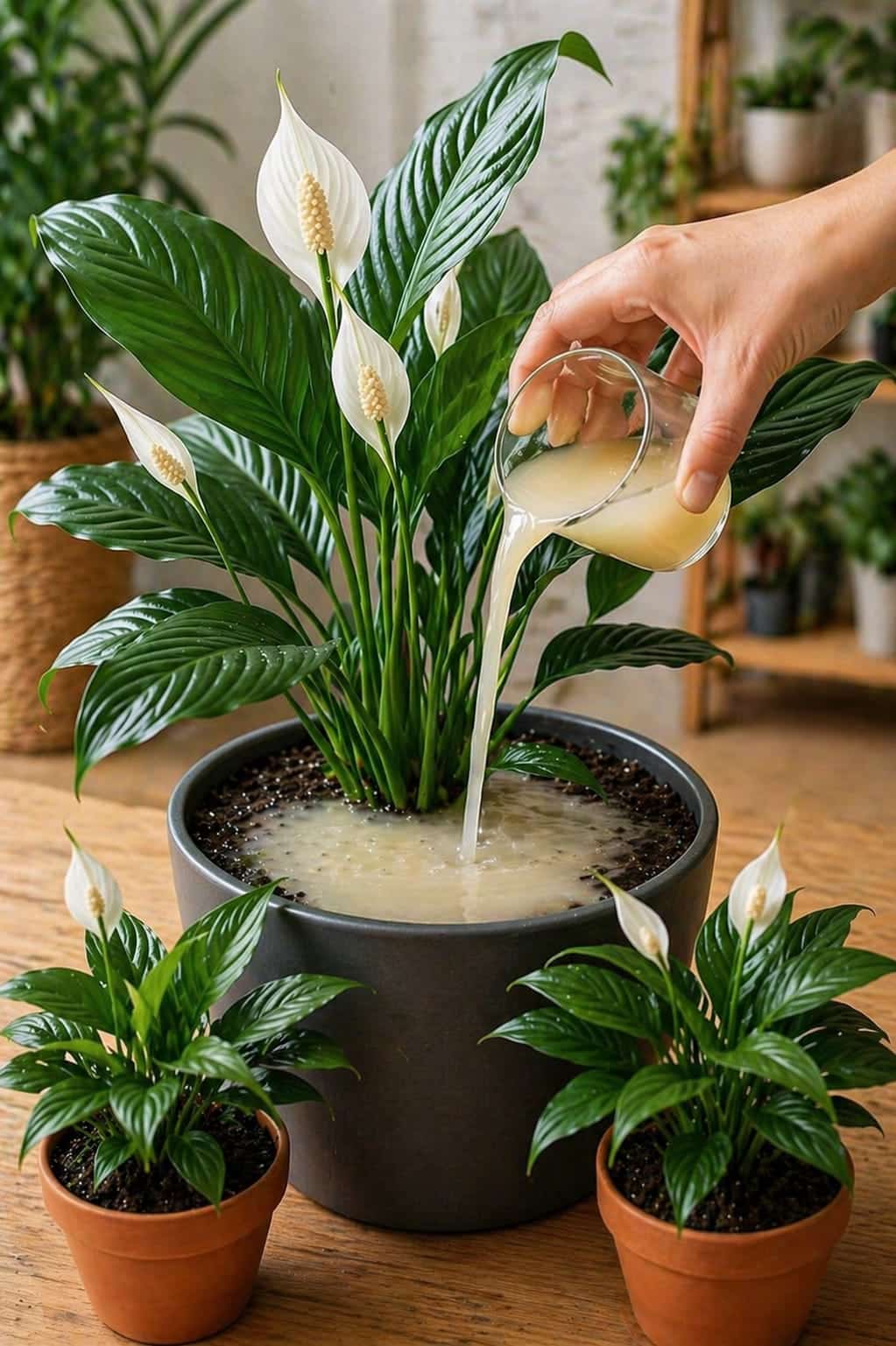
The two smaller peace lilies in the image would need much less liquid than the large central plant. Do not give every plant the same amount. Water according to pot size, soil moisture, and plant needs.
A small peace lily may need only a few tablespoons to lightly moisten the root zone.
How to Use Rice Water After Repotting
Do not use rice water immediately after repotting a stressed peace lily. Freshly disturbed roots are sensitive. Use plain water first and let the plant settle.
After a few weeks, if the plant is stable and growing, you can use diluted rice water occasionally. But if the plant is drooping from transplant shock, do not keep adding treatments. Give it gentle light, stable moisture, and time.
New soil often already contains nutrients. Extra homemade liquids may not be needed right away.
How to Revive a Tired Peace Lily With This Routine
If your peace lily looks tired, use the white pour trick only after checking the basics.
- Remove dead yellow leaves and old flowers.
- Check the soil moisture.
- If dry, water properly.
- If wet and sour, inspect the roots.
- Move the plant to bright indirect light.
- Make sure the pot drains.
- Use fresh diluted rice water only if the plant is ready for watering.
- Let excess drain away.
- Wait and watch the new growth.
This approach is much safer than pouring rice water into a plant without knowing what is wrong.
Why Light Matters More Than the White Pour
If you want a peace lily with lots of white blooms like the plant in the image, light is essential. Peace lilies can survive in lower light, but blooming takes energy. Without enough bright indirect light, the plant may keep producing leaves but very few flowers.
Move the plant closer to a bright window, but avoid harsh direct sun. Give it several weeks to adjust. If conditions improve, you may see stronger leaves and eventually more blooms.
Rice water can be a nice addition, but it cannot replace light. Light is the plant’s energy source.
Common Mistakes With the Rice Water Peace Lily Trick
Using It Too Often
Rice water should not be used every week. Once every four to six weeks during active growth is enough.
Using Thick Rice Water
Thick rice water can leave residue and encourage mold. Always dilute it.
Using Fermented Rice Water Indoors
Fermented rice water can smell and attract pests. Fresh rinse water is safer.
Pouring on Wet Soil
If the soil is already wet, do not add more liquid. Check for root problems instead.
Using Salted Cooking Water
Salt can damage roots. Use only unsalted uncooked rice rinse water.
Expecting Instant Blooms
Blooms take time and depend mostly on light and plant health.
Ignoring Drainage
Without drainage, rice water can become trapped and sour.
Signs the Trick Is Working
The best sign is steady healthy growth. Leaves should remain firm and glossy. The soil should smell fresh, not sour. There should be no gnats or mold. New leaves should emerge green and strong.
If the plant was mildly thirsty, it may perk up quickly after watering. If the plant is growing well over time, you may eventually see more blooms during the active season.
Do not judge the trick by one day. Peace lily blooms and new leaves take time. The goal is long-term improvement, not instant transformation.
Signs You Should Stop Using Rice Water
Stop using rice water if the soil smells sour, mold appears, fungus gnats show up, leaves yellow quickly, or the plant droops even though the soil is wet.
Return to plain water. Check drainage. Inspect roots if needed. Improve light and airflow.
Some plants simply do better with plain water and regular weak fertilizer. There is nothing wrong with skipping rice water if your plant does not respond well.
A Simple Peace Lily White Pour Routine
Here is a safe routine you can use:
- Keep the peace lily in bright indirect light.
- Use a pot with drainage holes.
- Water when the top inch of soil feels dry.
- Use plain water most of the time.
- Make fresh diluted rice water once every four to six weeks during spring or summer.
- Pour it onto the soil only.
- Avoid leaves and blooms.
- Let the pot drain completely.
- Empty the saucer.
- Stop if mold, gnats, or sour smell appears.
This keeps the trick gentle and useful without overwhelming the plant.
Frequently Asked Questions
What is the white liquid poured on peace lilies?
The safest version is fresh diluted rice water made from rinsing uncooked rice. It looks milky but should be thin and watery.
Is rice water good for peace lilies?
Fresh diluted rice water can be used occasionally as a mild supplement, but it is not a complete fertilizer and should not be overused.
Can I pour milk on my peace lily?
Straight milk is not recommended. It can sour, smell bad, attract pests, and cause mold. Rice water is safer.
How often should I use rice water?
Use it once every four to six weeks during active growth. Use plain water the rest of the time.
Can rice water make peace lilies bloom?
Rice water alone cannot force blooms. Bright indirect light, healthy roots, and proper watering are more important.
Can I use fermented rice water?
Fresh diluted rice water is safer indoors. Fermented rice water can attract pests and smell sour.
Can I spray rice water on leaves?
No. It can leave residue. Use it only on the soil.
Can I use cooked rice water?
It is better to use rinse water from uncooked rice. Do not use salted or seasoned cooking water.
Why is my peace lily drooping after rice water?
If the soil is wet and the plant droops, the roots may be stressed. Stop watering and check root health.
What matters more than rice water?
Bright indirect light, drainage, healthy roots, good soil, and consistent moisture matter much more than any homemade trick.
Final Thoughts
The milky rice water peace lily trick is popular because it looks simple, natural, and satisfying. A creamy white pour around a glossy peace lily feels like a secret homemade bloom booster, especially when the plant is already full of white flowers.
The safest way to copy this trick is to use fresh diluted rice rinse water, not milk. Rinse uncooked rice, collect the cloudy water, dilute it, and use it immediately. Keep the liquid thin and light. Use it only once every four to six weeks during active growth.
Rice water can be a gentle addition to peace lily care, but it is not a miracle cure. It will not repair yellow leaves, fix root rot, or force instant flowers. If your peace lily is drooping, check the soil first. If it is dry, water it. If it is wet, inspect the roots. If it refuses to bloom, improve the light.
The true secret to a beautiful peace lily is not one pour. It is a complete routine: bright indirect light, evenly moist but well-drained soil, a pot with drainage, clean leaves, old blooms removed, and occasional gentle feeding.
Use the white pour as a small seasonal boost, not a constant treatment. Keep it fresh, diluted, and occasional. Watch your plant’s response. If the soil stays clean and the leaves remain glossy, the routine may suit your peace lily well. If mold, gnats, or sour smells appear, stop immediately and return to plain water.
With patience and consistent care, your peace lily can grow into a lush, elegant plant with deep green leaves and peaceful white blooms that brighten your home year after year.