Snake plants are some of the most dependable houseplants you can grow indoors. Their upright leaves look bold and architectural, their green patterns add texture, and the yellow-edged varieties bring a clean decorative look to almost any room. They tolerate missed waterings, low light, dry indoor air, and beginner mistakes better than many other plants. That is why snake plants are often recommended for homes, apartments, offices, and busy plant owners.
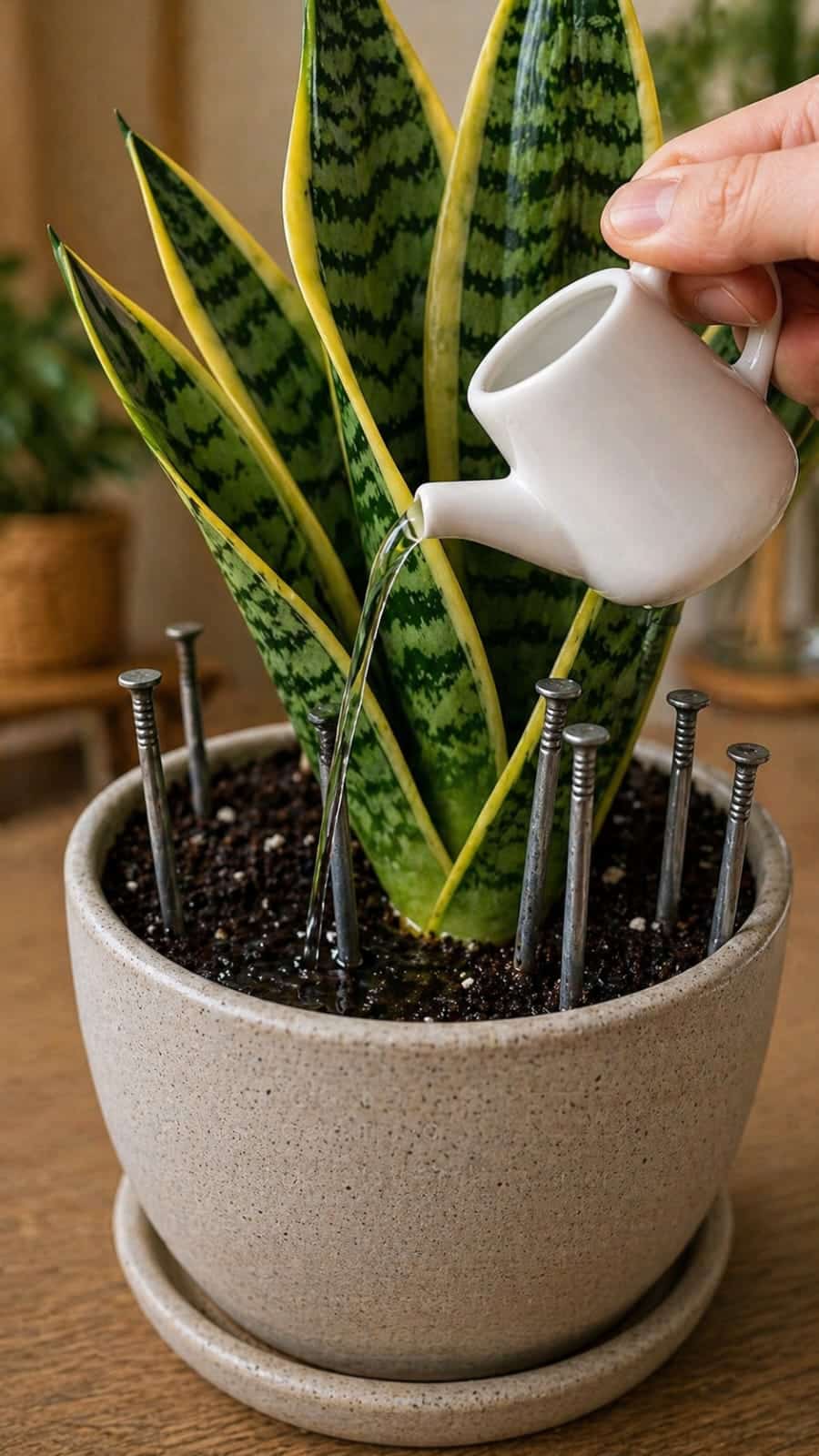
The image shows a dramatic and unusual snake plant care trick. A healthy snake plant sits in a ceramic pot, surrounded by several metal nails pushed upright into the soil. A small white watering can pours water into the pot near the nails. The setup looks like a secret mineral watering method, almost as if the nails are charging the soil with something powerful every time water touches them.
This trick is often called the nail watering snake plant trick, the iron nail houseplant hack, the rusty nail mineral method, or the metal stake watering trick. The idea behind it is simple: old nails are placed in the soil, then the plant is watered as usual. As the nails slowly age, some people believe they release iron into the soil, giving the snake plant a mineral boost and helping the leaves look greener and stronger.
It is an eye-catching trick because it uses something ordinary from the garage or toolbox and turns it into a plant-care secret. It feels old-fashioned, practical, and mysterious. But before copying the image exactly, there is one very important thing to understand: sticking random nails into a houseplant pot is not the safest or most reliable way to feed a snake plant.
Snake plants do not need nails to grow well. They need bright indirect light, a pot with drainage, well-draining soil, and careful watering. If a snake plant is yellowing, weak, or slow, the cause is usually watering, drainage, light, temperature, or root health. Nails will not fix root rot, soggy soil, poor light, or compacted potting mix.
However, there is a safer way to understand this trick. Instead of treating nails as a miracle fertilizer, you can use the idea as a reminder that snake plants sometimes need a small mineral boost, especially if they have been in the same pot for a long time. The safer version is to use proper diluted houseplant fertilizer or an iron supplement made for plants if iron deficiency is actually suspected. If you still want the visual look of the nail trick, you can use clean decorative metal plant stakes placed around the edge of the pot, but they should not be rusty, sharp, or crowded near the roots.
In this complete guide, you will learn what the nail watering snake plant trick is, why people use it, what the risks are, how to create a safer version, how to water snake plants correctly, what snake plants actually need, and how to keep the leaves upright, firm, and beautifully patterned without damaging the roots.
What Is the Nail Watering Snake Plant Trick?
The nail watering snake plant trick is a viral plant-care method where metal nails are inserted into the soil around a potted snake plant. The plant is then watered, and the moisture touches the nails. The belief is that the nails release small amounts of iron into the soil over time, which may help the plant grow stronger or greener.
The image shows this idea very clearly. Several nails stand upright in the pot, placed around the snake plant leaves. Water is being poured into the soil near them. The nails make the trick look mechanical, mineral-rich, and almost scientific.
In theory, iron is an important micronutrient for plants. Plants need iron for healthy chlorophyll production and strong green growth. When plants cannot access enough iron, leaves may become pale or yellow between the veins. This is called chlorosis.
But the problem is that nails are not a controlled plant supplement. They do not release nutrients in a predictable way. Some nails are coated, galvanized, painted, treated, or made from metal blends that are not ideal for soil. Sharp nails can damage roots, scratch pots, injure hands, and create rust stains. They can also make repotting more dangerous.
So while the idea looks interesting, the safe version is not to depend on random nails. The safe version is to understand the plant’s real needs and use proper plant products when nutrients are required.
Why This Trick Looks So Convincing
This trick looks convincing because it connects two ideas that seem to make sense. First, plants need minerals. Second, nails are made of metal. When water touches metal, rust can form. Rust is associated with iron. So it is easy to believe that watering around nails will naturally feed iron to the plant.
The visual effect is also strong. The nails look like little mineral rods planted into the soil. The water flowing around them makes the scene feel active, as if the soil is being infused with something special. The snake plant’s upright leaves make the image look even more powerful, because the plant already appears strong and healthy.
But plant nutrition is not that simple. Plants can only absorb nutrients in certain forms, and the soil’s pH, moisture level, microbial activity, and root health all affect nutrient availability. A rusty nail in a pot does not guarantee that the plant receives usable iron.
That does not mean the idea is completely meaningless. It simply means it is not precise. If your snake plant truly needs iron, a plant-safe iron supplement is more reliable than nails.
Can Nails Really Feed Iron to Snake Plants?
Nails may rust over time, and rust contains iron compounds. But whether that iron becomes available to a snake plant in a useful form is uncertain. Rust does not automatically equal plant food. In many potting mixes, iron can be present but not available because of soil pH or root issues.
Also, most healthy snake plants grown in fresh potting mix do not suffer from iron deficiency. They are usually more affected by overwatering than by a lack of iron. If a snake plant has yellow leaves, the first thing to check is not iron. It is soil moisture and root health.
If the plant is sitting in wet soil, yellowing may be caused by root stress. If the pot has no drainage, roots may be suffocating. If the plant is in a dark corner, leaves may weaken. If the soil is old and compacted, roots may not breathe well.
Adding nails does not solve those problems. In fact, watering more often around nails may make overwatering worse.
The Biggest Risk: Root Damage
The most obvious problem with pushing nails into a snake plant pot is root damage. Snake plants grow from underground rhizomes and roots. These rhizomes are thick, fleshy storage structures. If you push sharp nails into the soil, you may pierce or bruise roots and rhizomes.
A damaged rhizome can become vulnerable to rot, especially if the soil is wet. Snake plants are already sensitive to excess moisture, so root or rhizome wounds are not ideal.
The image shows several nails placed fairly close to the plant. In real life, that could be risky. The roots and rhizomes may be directly under that area. If nails are inserted blindly, they can injure the plant below the surface.
If you want to use any decorative stake or marker in a snake plant pot, place it near the outer edge of the pot and insert it gently. Do not push sharp objects deep into the root zone.
The Second Risk: Rust and Staining
Rust can stain pots, saucers, tables, floors, and soil. If rusty water drains out of the pot, it may leave orange-brown marks on the saucer or furniture. Terracotta, porous ceramic, wood, and fabric can absorb stains.
Rust can also make the pot look dirty rather than decorative. The image looks clean and styled, but real rusty nails in damp soil may not stay attractive. They can become messy over time.
If you use metal objects around plants, remember that water and metal can create stains. That is especially important indoors, where furniture and flooring are nearby.
The Third Risk: Unknown Metal Coatings
Not all nails are plain iron. Many nails are galvanized, coated, plated, painted, or treated for construction use. Some coatings are designed to resist rust, which defeats the purpose of the trick. Others may introduce materials you do not want in a houseplant pot.
Because you may not know exactly what a nail contains, it is better not to use random old nails in potting soil. This is especially true if you have pets, children, or if the pot sits on a dining table, kitchen counter, or living room surface.
Plant care should be simple and clean. Unknown metal objects add unnecessary uncertainty.
The Fourth Risk: Injury
Sharp nails sticking out of a pot can injure hands. You may forget they are there and reach into the soil to remove a dead leaf. A child or pet may touch them. During repotting, they can fall out or poke through a soil clump.
In the image, the nails are upright and exposed. This looks dramatic, but it is not practical for a home plant that people may touch. If you use decorative stakes, they should be blunt, smooth, and safe.
A plant trick is not worth a cut finger.
The Safer Version of the Nail Trick
The safer version of the trick is to avoid sharp nails and use controlled plant care instead. If you like the idea of mineral support, use a proper plant fertilizer. If you like the look of metal stakes, use smooth decorative plant stakes. If you are worried about iron deficiency, use an iron supplement made for plants.
Here is the safe approach:
- Do not push sharp nails into the root zone.
- Check the plant’s real condition first.
- Use a pot with drainage holes.
- Water only when the soil is dry.
- Use a well-draining snake plant mix.
- Fertilize lightly during active growth.
- Use plant-safe iron only if symptoms suggest deficiency.
- Use decorative metal stakes only around the outer edge if desired.
This gives you the idea of the trick without the unnecessary risks.
If You Still Want to Try a Nail-Inspired Display
If you want to recreate the look for decorative purposes, do it safely. Use smooth, clean, blunt metal plant markers or decorative stakes rather than sharp construction nails. Place them around the outer rim of the pot, not close to the leaf bases. Do not insert them deeply. Do not crowd the root zone.
Choose stainless steel or coated decorative stakes if you do not want rust stains. If the goal is purely visual, rust is unnecessary. A neat ring of decorative stakes can give the same structured look without damaging the plant.
Also, remove the stakes before repotting or checking roots. This keeps the process safe and simple.
What Snake Plants Actually Need
Snake plants do not need complicated tricks. They grow best when their basic needs are met. The most important factors are light, soil, pot drainage, watering, and temperature.
A healthy snake plant needs:
- Bright indirect light or moderate indoor light
- A pot with drainage holes
- Fast-draining soil
- Water only after the soil dries
- Warm indoor temperatures
- Occasional light feeding during spring and summer
- Very little fussing
Most snake plant problems come from too much care, not too little. Too much water, too much fertilizer, too many homemade treatments, and too much disturbance can harm the plant.
How to Water a Snake Plant Correctly
The image shows water being poured into the pot. Watering is the most important part of snake plant care. These plants store water in their leaves and rhizomes, so they do not need frequent watering.
Before watering, check the soil. The top may feel dry while deeper soil is still damp. Use your finger, a wooden skewer, or a moisture meter to check deeper into the pot. If the soil is still damp, wait.
When it is time to water, water thoroughly until excess drains out from the bottom. Then empty the saucer. Do not let the plant sit in standing water.
During warm bright months, you may water every two to three weeks. During winter or low light, you may water once a month or even less. The exact timing depends on your home.
Never water just because a nail trick says to. Water because the soil is dry and the plant needs it.
Why Overwatering Is the Real Enemy
Snake plants are often harmed by overwatering. Their roots need oxygen. When the soil stays wet for too long, oxygen becomes limited and roots begin to suffer. The rhizomes can rot, and the leaves may turn yellow, soft, or mushy.
People sometimes see yellowing leaves and assume the plant needs more nutrients. Then they add fertilizer, rice water, milk, powders, or other tricks. But if the true cause is wet soil, extra treatments only make things worse.
If your snake plant has yellow leaves, soft bases, or a bad smell from the soil, stop watering and inspect the roots. Nails will not help a plant that is rotting.
Best Soil for Snake Plants
Snake plants need a fast-draining soil mix. Regular indoor potting soil can hold too much moisture if used alone. A better mix includes gritty materials that create air pockets.
A simple snake plant mix can include:
- 2 parts cactus or succulent mix
- 1 part perlite or pumice
- 1 part coarse sand, fine bark, lava rock, or small gravel
This mix lets water pass through quickly and keeps the roots from sitting in soggy conditions. It also helps prevent rot after watering.
If your snake plant is in old compacted soil, repotting into a better mix will do far more than placing nails in the pot.
Why Drainage Holes Matter
A snake plant pot should have drainage holes. Without drainage, water collects at the bottom of the pot. The surface may look dry, but the bottom can stay wet for days. This hidden moisture can rot the roots.
If your decorative pot has no holes, use it as a cover pot. Keep the snake plant in a nursery pot with drainage, then place that inside the decorative container. Remove it for watering and let it drain fully before putting it back.
No nail trick can save a snake plant from a pot that traps water.
Continue to Page 2
Continue to page 2 for more details about this article and the key points many readers miss on the first page.