Best Light for Snake Plants
Snake plants are famous for tolerating low light, but tolerance is not the same as thriving. They grow stronger, firmer, and more colorful in bright indirect light. Variegated snake plants with yellow margins often keep their color better in brighter conditions.
Place your snake plant near an east-facing window, a bright north-facing window, or a filtered south or west window. Avoid sudden harsh direct sun if the plant has been in low light, because leaves can scorch.
If your snake plant is not growing, leaning, or producing weak leaves, light may be the issue. Nails cannot replace light.
Does a Snake Plant Need Iron?
Snake plants need iron in tiny amounts, like most plants. But true iron deficiency is not the most common snake plant problem indoors. If it does happen, the plant may show pale new growth with green veins, while older leaves may remain greener.
However, yellowing in snake plants is more often caused by overwatering, poor drainage, cold damage, or old leaves. Before assuming iron deficiency, check the basics.
If you truly suspect iron deficiency, use a plant-safe iron supplement according to the label. Do not rely on rusty nails. A proper supplement is more controlled and safer.
How to Tell Nutrient Deficiency from Overwatering
Nutrient deficiency and overwatering can both cause yellowing, but they look different.
Overwatering often causes soft, mushy, yellow leaves, especially near the base. The soil may feel wet, and the pot may smell sour. The plant may wobble because roots are rotting.
Nutrient deficiency usually appears as pale growth without mushiness. The plant may still be firm, but the color looks weak. New growth may be affected first depending on the nutrient.
If the plant is soft, wet, or smelly, do not fertilize. Fix the root problem first.
How to Feed a Snake Plant Safely
Snake plants are light feeders. They do not need frequent fertilizer. During spring and summer, you can feed once a month or every six to eight weeks with a diluted cactus, succulent, or balanced houseplant fertilizer.
Use half strength if the plant is indoors and growing slowly. Do not fertilize in winter if the plant is not actively growing. Do not fertilize a stressed or overwatered plant.
Too much fertilizer can burn roots or create salt buildup in the soil. More is not better.
A simple feeding routine is safer than experimental metal objects in the pot.
What to Do If Your Snake Plant Looks Weak
If your snake plant looks weak, start with a diagnosis. Do not immediately add nails, powders, or homemade liquids. Look at the plant carefully.
- Check if the soil is wet or dry.
- Check whether the pot has drainage.
- Look for soft leaf bases.
- Smell the soil for sour odor.
- Check if the plant is getting enough light.
- Inspect for pests.
- Consider when it was last repotted.
If the soil is wet, let it dry and inspect roots if needed. If the soil is bone dry and leaves are wrinkled, water thoroughly. If the plant is in very low light, move it gradually to a brighter spot. If the soil is compacted, repot.
Fix the cause first. Tricks come later, if at all.
How to Rescue an Overwatered Snake Plant
If your snake plant has been overwatered, act quickly.
- Stop watering immediately.
- Remove the plant from the pot.
- Shake away wet soil.
- Inspect roots and rhizomes.
- Cut away black, mushy, or smelly parts.
- Let healthy sections dry for a few hours.
- Repot in fresh dry well-draining soil.
- Use a pot with drainage holes.
- Wait several days before watering again.
If only some leaves are damaged, remove those leaves. If the rhizome is healthy, the plant can recover.
Do not place nails into a stressed root system. Let the plant heal.
Can Nails Prevent Pests?
No. Nails do not prevent common houseplant pests. Snake plants can occasionally get mealybugs, spider mites, or scale. Fungus gnats may appear if the soil stays too wet.
To prevent pests, keep the plant clean, avoid overwatering, remove dead material, and inspect leaves regularly. If pests appear, treat them directly with appropriate methods such as wiping with diluted alcohol for mealybugs or using insecticidal soap according to label directions.
Nails are not a pest-control method.
Can Nails Help Snake Plants Grow Pups?
No reliable evidence suggests that nails make snake plants produce pups. Pups grow from healthy rhizomes when the plant has enough energy and stable conditions.
To encourage pups, give the plant bright indirect light, a slightly snug pot, well-draining soil, and careful watering. Do not overpot. Snake plants often produce more pups when they are mature and comfortable.
A healthy root system creates pups. Nails are not necessary.
Can Rusty Nails Change Soil pH?
Rusty nails are sometimes believed to change soil chemistry. In a small houseplant pot, any effect is unpredictable. The potting mix, water quality, and fertilizer history matter more.
If soil pH is a concern, use a proper soil test. Do not guess based on leaf color alone. Many indoor plant problems look similar on the surface.
Snake plants are adaptable and usually do not require complex pH adjustments. Good drainage and proper watering matter far more.
Why the Nails in the Image Should Not Be Copied Exactly
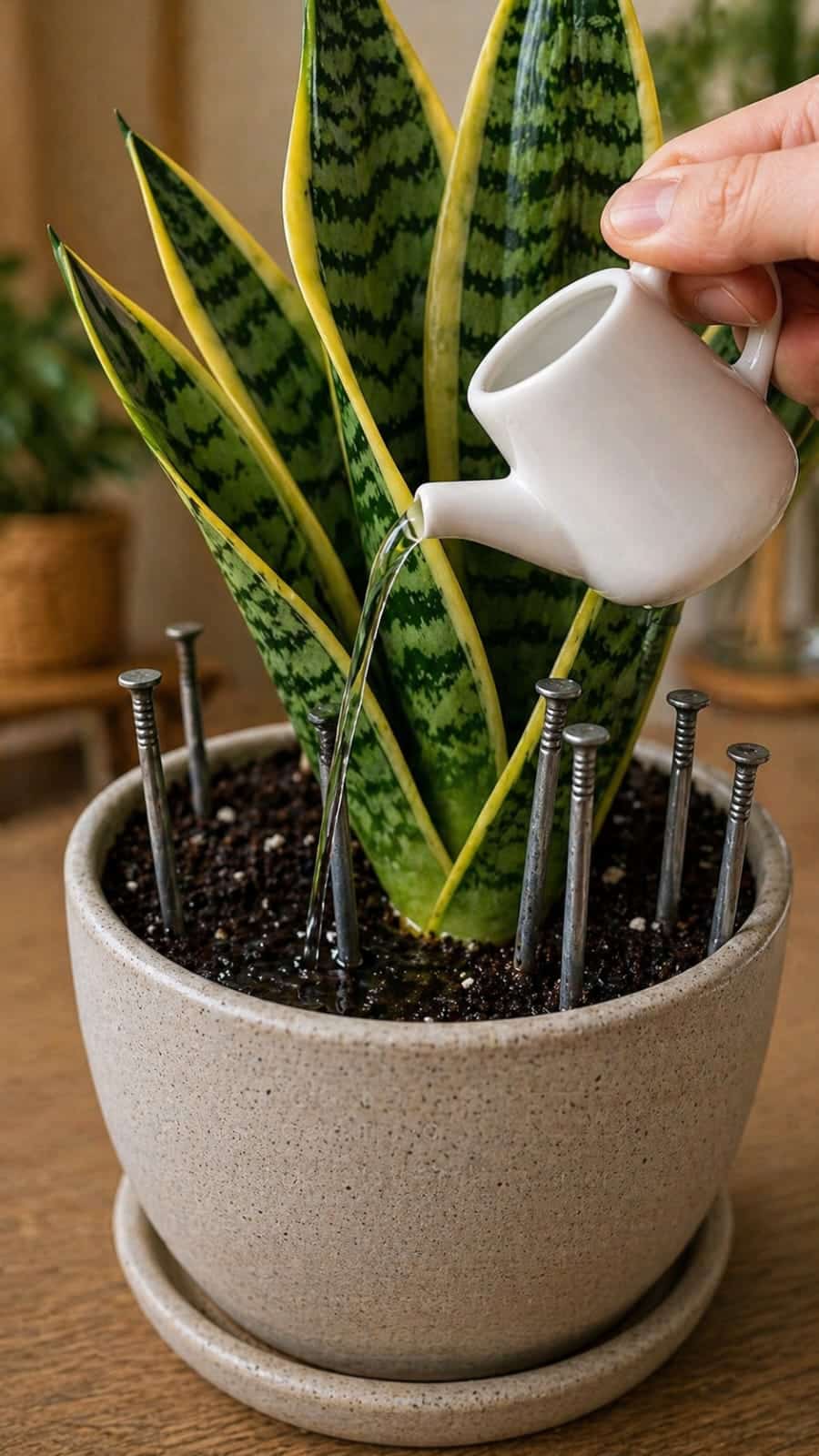
The image is visually interesting, but copying it exactly is not ideal. The nails are numerous, sharp, and close to the root zone. Water is being poured directly among them. This can create a pot that is harder to maintain and potentially dangerous to handle.
For real care, avoid putting many sharp metal objects into the soil. If you use one or two decorative stakes, keep them near the edge and make sure they are safe. Better yet, skip the nails and focus on correct watering.
Viral images often exaggerate plant tricks to make them look exciting. The safer version is usually much simpler.
A Better “Mineral Boost” Routine for Snake Plants
If you like the mineral idea behind the nail trick, use this safer routine:
- Repot old snake plants into fresh well-draining mix every few years.
- Water only when the soil is dry.
- Feed lightly with diluted houseplant fertilizer in spring and summer.
- Use a micronutrient or iron supplement only if needed.
- Flush the soil occasionally with plain water to reduce salt buildup.
- Keep the plant in bright indirect light.
This routine gives the plant real support without sharp objects or unpredictable rust.
How to Repot a Snake Plant Properly
Repotting can refresh a snake plant more effectively than most tricks. If the soil is old, compacted, or draining poorly, repotting gives the roots a better environment.
- Choose a pot with drainage holes.
- Use a pot only slightly larger than the root ball.
- Prepare a gritty, fast-draining mix.
- Remove the plant from the old pot.
- Inspect roots and rhizomes.
- Remove rotten or dead parts.
- Place the plant at the same depth as before.
- Fill around it with fresh mix.
- Wait a few days before watering if roots were cut.
Snake plants do not need frequent repotting. Every two to four years is often enough, depending on growth.
How to Keep Snake Plant Leaves Upright
Strong upright leaves come from good light, proper watering, and healthy roots. If leaves flop, the plant may be thirsty, overwatered, root-bound, or lacking light.
Check the base of the leaves. If they are soft and mushy, overwatering may be the issue. If they are wrinkled and the soil is dry, the plant may need water. If they lean toward the window, rotate the pot and increase light.
Do not use nails as leaf supports. If you need support, use smooth plant stakes and soft ties, but solve the underlying care issue too.
Can You Use Iron Water Instead of Nails?
Some people soak rusty nails in water and then use the water on plants. This is also not ideal. The concentration is unknown, and the water may contain rust particles or unwanted metal residues.
If a plant needs iron, use a product made for plants. It will have instructions and a controlled dose. Guessing with rusty water can cause more confusion than benefit.
For most snake plants, plain water is best.
Can You Use Steel Wool Instead?
No. Steel wool can rust quickly, break apart, and leave metal fragments in the soil. It can also create staining and handling hazards. It is not a good plant-care tool.
Keep construction materials out of houseplant soil unless they are specifically designed for gardening and are safe to use.
What About Iron-Rich Fertilizers?
Iron-rich fertilizers or micronutrient supplements can be helpful if a plant truly has iron deficiency. But they should be used carefully and only according to instructions. Too much iron or fertilizer can stress roots.
Before using iron, check whether the plant is actually deficient. If the leaves are yellow because of overwatering, iron will not help. If the roots are damaged, they may not absorb nutrients properly even if nutrients are present.
Healthy roots come first. Nutrients come second.
How to Clean Up If You Already Put Nails in the Pot
If you already placed nails in your snake plant pot, you can remove them safely.
- Wear gloves.
- Remove nails slowly one by one.
- Avoid pulling up roots.
- Check for rust stains or soil disturbance.
- Let the soil dry if it is wet.
- Inspect the plant over the next few weeks.
If the plant is healthy, you do not need to panic. Just remove the nails and return to normal care. If roots were damaged, avoid overwatering while the plant recovers.
How to Use Decorative Stakes Safely
If you like the look of upright metal elements in the pot, use plant-safe decorative stakes.
- Choose smooth, blunt stakes.
- Place them near the pot edge.
- Do not insert them deep into the root ball.
- Do not crowd the plant base.
- Remove them before repotting.
- Keep them clean and rust-free if indoors.
This gives you a styled appearance without turning the pot into a hazard.
Common Mistakes With the Nail Trick
Using Random Old Nails
Old nails may be rusty, coated, dirty, or unsafe. Do not place unknown metal objects into houseplant soil.
Using Too Many Nails
Several nails can damage roots and make watering or repotting difficult.
Placing Nails Close to the Plant Base
The rhizomes are near the base. Sharp objects can injure them.
Watering More Often Because of the Trick
Snake plants should be watered only when dry. Extra watering can cause rot.
Expecting Nails to Cure Yellow Leaves
Yellow leaves usually come from watering, drainage, light, or root issues.
Ignoring Drainage
A pot without drainage is a bigger problem than any nutrient concern.
Using Nails Instead of Fertilizer
If nutrients are needed, use proper plant fertilizer, not metal scraps.
Signs Your Snake Plant Is Healthy
A healthy snake plant has firm upright leaves, clear patterns, stable leaf bases, and no sour smell from the soil. New growth may appear as small shoots from the soil. The plant should feel secure in the pot and not wobble from rotted roots.
Healthy snake plants may grow slowly, especially indoors. Slow growth is normal. Do not assume slow growth means the plant needs a dramatic trick.
If the plant is firm and green, it is probably fine.
Signs Your Snake Plant Needs Help
Your snake plant may need help if leaves turn mushy, yellow from the base, collapse, smell bad, or develop dark wet spots. Wrinkled leaves can mean thirst, but they can also appear when roots are damaged and cannot absorb water.
Always check the soil and roots before deciding what to do. A plant with wet soil and yellow leaves needs a different solution than a plant with dry soil and wrinkled leaves.
Nails should not be the first response to plant stress.
A Safe Snake Plant Watering Routine
Use this simple routine instead of the nail trick:
- Place the plant in bright indirect light.
- Use a pot with drainage holes.
- Plant in fast-draining soil.
- Check the soil before watering.
- Water only when the soil is dry.
- Water thoroughly and let excess drain.
- Empty the saucer.
- Fertilize lightly during spring and summer.
- Keep the leaves clean.
- Repot only when needed.
This routine is boring compared with a viral nail trick, but it works better.
Frequently Asked Questions
What is the nail watering snake plant trick?
It is a viral method where nails are placed in the soil and watered around, based on the idea that nails may release iron as they rust.
Is it safe to put nails in snake plant soil?
It is not the safest method. Sharp nails can damage roots, cause injury, stain pots, and may contain unknown coatings.
Can rusty nails feed iron to plants?
Rusty nails may release iron compounds, but the amount and availability are unpredictable. Plant-safe iron supplements are more reliable.
Can nails fix yellow snake plant leaves?
No. Yellow leaves are usually caused by overwatering, poor drainage, cold damage, low light, or natural aging.
What should I use instead of nails?
Use proper diluted fertilizer or a plant-safe iron supplement only if needed. Focus first on watering, drainage, and light.
Can I use decorative metal stakes?
Yes, if they are smooth, clean, blunt, and placed near the edge of the pot without damaging roots.
How often should I water a snake plant?
Water only when the soil is dry. This may be every few weeks or less, depending on light, temperature, and pot size.
What soil is best for snake plants?
A fast-draining cactus or succulent mix with added perlite, pumice, bark, or coarse sand is best.
Do snake plants need fertilizer?
They need only light feeding during active growth. Too much fertilizer can harm them.
What matters more than the nail trick?
Drainage, dry-down time, bright indirect light, healthy roots, and proper soil matter far more.
Final Thoughts
The nail watering snake plant trick is one of those plant hacks that looks instantly interesting. A ring of metal nails around a strong snake plant, with water being poured between them, creates the feeling of a secret mineral treatment. It looks practical, old-fashioned, and powerful.
But snake plants do not need random nails in their soil to thrive. In fact, sharp nails can damage roots, create rust stains, introduce unknown metal coatings, and make the pot unsafe to handle. The idea behind the trick comes from the belief that nails release iron, but that process is not controlled or reliable.
If your snake plant truly needs nutrients, use proper plant fertilizer. If it shows signs of iron deficiency, use a plant-safe iron supplement according to the label. If it has yellow leaves, check watering, drainage, light, and root health first. Most snake plant problems come from too much moisture, not lack of metal in the soil.
The safer version of this trick is simple: skip the sharp nails, use good soil, water correctly, and feed lightly during active growth. If you like the visual style, use smooth decorative stakes around the pot edge instead of construction nails.
A snake plant grows best when its roots are left healthy and undisturbed. Give it a draining pot, gritty soil, bright indirect light, and time to dry between waterings. Keep the leaves clean, avoid overwatering, and do not overcomplicate the routine.
The real secret is not hidden in nails. It is in restraint. Snake plants reward simple care. With less fuss, better drainage, and careful watering, your plant can stay upright, patterned, and beautiful for years.