Peace lilies are among the most beloved indoor plants because they look elegant without demanding too much space. Their deep green leaves have a glossy, rippled texture, and their white spathes rise above the foliage like graceful flags. A healthy peace lily can soften a room, brighten a shelf, and make an indoor corner feel fresh and alive.
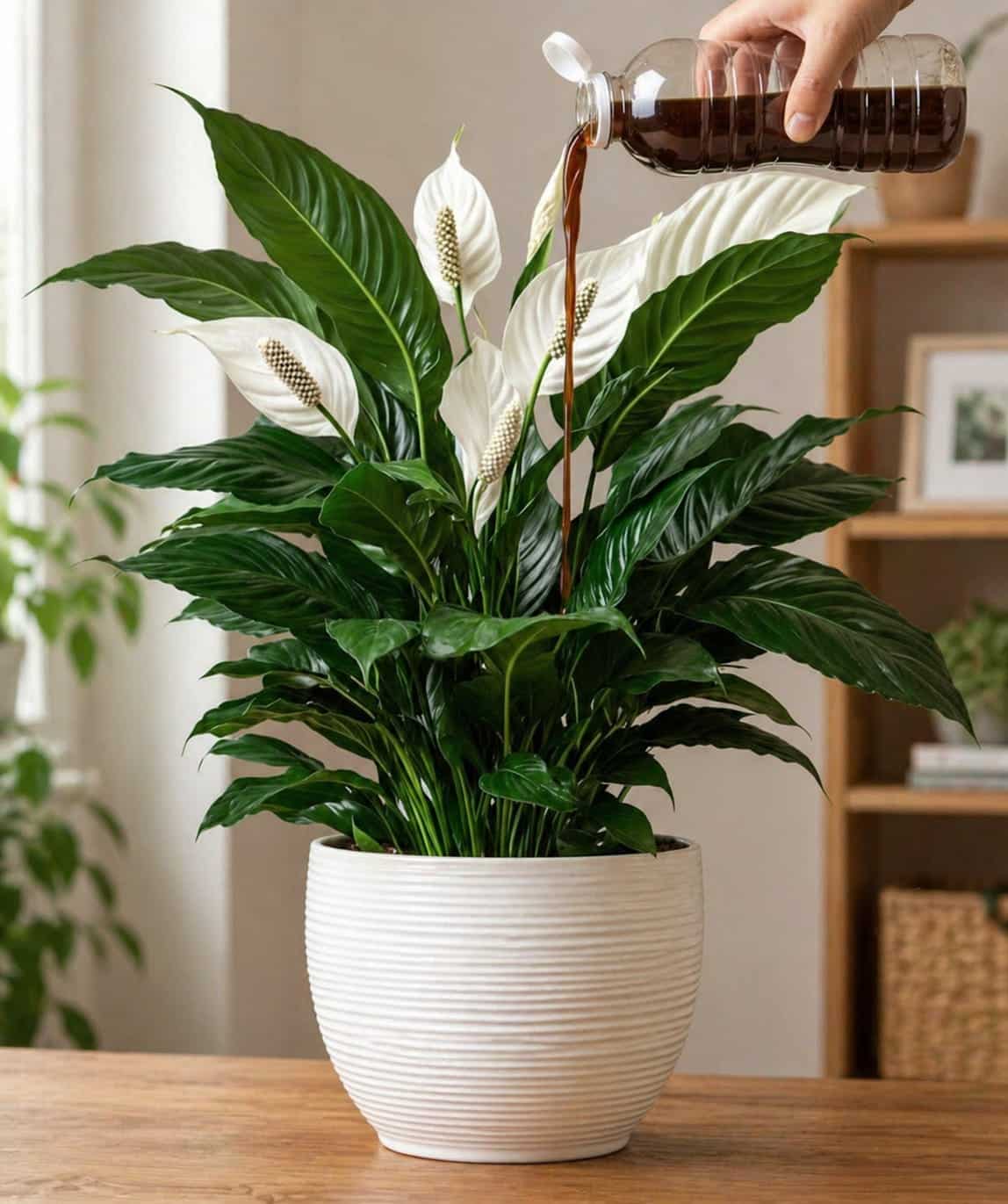
The image shows a lush peace lily in a white ribbed pot. The leaves are dark, shiny, and full, while several white blooms stand above the plant. A hand is pouring a dark brown liquid from a bottle into the center of the pot. The liquid looks like a rich homemade plant tonic, almost like compost tea, banana peel water, diluted coffee-colored fertilizer, or a natural root booster.
This trick is often called the brown pour peace lily method, the homemade bloom tonic, the compost tea peace lily trick, or the natural dark liquid root booster. It looks powerful because the brown liquid appears concentrated and earthy, as if it contains everything the plant needs to grow bigger leaves and more white flowers.
The safest version of this trick is not a strong, random kitchen liquid. Peace lilies are sensitive to overwatering, salt buildup, sour soil, and strong homemade mixtures. The best version is a very weak, freshly made organic rinse, such as diluted worm casting tea or weak banana peel water, used only occasionally when the plant is actively growing.
The brown pour should never replace proper watering, good drainage, bright indirect light, fresh soil, or balanced fertilizer. It can be a small supporting step, but the real secret behind a blooming peace lily is steady care.
In this guide, you will learn what the brown liquid peace lily trick is, how to make a safer version, how often to use it, what mistakes to avoid, and how to keep your peace lily producing glossy leaves and elegant white blooms indoors.
What Is the Brown Pour Peace Lily Trick?
The brown pour peace lily trick is a homemade plant-care method where a diluted brown liquid is poured into the soil of a peace lily. The liquid is usually meant to act as a gentle soil refresher or mild nutrient boost.
In many viral-style images, the liquid looks very dark and strong. In real care, it should be much weaker. Peace lilies do not need thick organic liquid poured into their pots. A strong mixture can create bad smells, attract fungus gnats, keep the soil too wet, and damage roots.
The safe version should look like weak tea, not syrup, sludge, or coffee concentrate. It should be fresh, strained, diluted, and used only when the plant actually needs watering.
This trick is best for a healthy peace lily that is already growing. It is not a cure for root rot, severe yellowing, wilting from soggy soil, or a plant that has been kept in poor light for months.
What Is the Brown Liquid?
The brown liquid in the image can be interpreted safely as a weak organic plant tonic. The best options are diluted worm casting tea, very weak compost tea, or lightly diluted banana peel water.
Worm casting tea is usually the safest homemade choice because it is mild and less sugary than fruit-based mixtures. Banana peel water is popular, but it must be used carefully because it can sour if left too long. Coffee is not the best choice for peace lilies because it can affect soil conditions and may create residue if used often.
The liquid should never contain sugar, salt, milk, oil, vinegar, alcohol, spices, or leftover food. It should not smell fermented. If it smells sour, rotten, or unpleasant, do not pour it into a houseplant pot.
The Safest Brown Tonic Recipe for Peace Lilies
The safest version is a weak worm casting tea. It gives the brown color and gentle soil-refresh effect without being too rich.
Ingredients
- 1 teaspoon worm castings
- 2 cups clean water
- A jar or cup
- A strainer or cloth
- Extra water for dilution
Instructions
- Add 1 teaspoon of worm castings to 2 cups of water.
- Stir gently.
- Let it sit for 1 to 2 hours.
- Strain the liquid well.
- Dilute the strained liquid with another 2 cups of clean water.
- Use it immediately.
The finished liquid should be light brown, like weak tea. It should not be thick or muddy. If it looks too dark, add more water.
A Gentle Banana Peel Version
Banana peel water is another common brown plant tonic. It is often promoted as a potassium-rich homemade booster. For peace lilies, it must be very weak and fresh.
Ingredients
- A small 2-inch piece of banana peel
- 2 cups clean water
- A jar
- A strainer
- Extra water for dilution
Instructions
- Chop the banana peel into small pieces.
- Soak it in 2 cups of water for 12 to 24 hours.
- Strain out every piece of peel.
- Dilute the liquid with at least 2 more cups of clean water.
- Use it right away.
Do not ferment banana peel water for days. Do not use it if it smells sour. Old banana water can attract gnats and make indoor soil unpleasant.
How to Apply the Brown Pour Safely
The most important rule is simple: only apply the brown tonic when the peace lily actually needs water. If the soil is already wet, do not add more liquid.
- Check the top inch of soil with your finger.
- If it still feels wet, wait.
- If it feels slightly dry, prepare a weak fresh tonic.
- Pour slowly onto the soil, not over the leaves or flowers.
- Stop when the soil is evenly moist.
- Let excess liquid drain from the bottom of the pot.
- Empty the saucer after watering.
Do not pour the liquid into the leaf crown or directly onto the white blooms. Peace lilies prefer moisture at the roots, not sticky or stained foliage.
How Often Should You Use It?
Use the brown pour rarely. Once every four to six weeks during spring and summer is enough. During fall and winter, use it even less or skip it entirely if the plant is not actively growing.
Peace lilies do not need constant homemade tonics. Most waterings should be plain water. If you use a proper houseplant fertilizer, you may not need homemade tonic at all.
Using the brown pour too often can cause soil buildup, fungus gnats, sour odor, or overwatering problems.
Can This Trick Make a Peace Lily Bloom?
The brown pour cannot force a peace lily to bloom by itself. Peace lily blooms depend mostly on light, plant maturity, nutrients, and root health.
A peace lily kept in a dark corner may produce beautiful leaves but few or no blooms. A plant in bright indirect light is much more likely to produce white spathes. Proper feeding during active growth can also help, but overfeeding can damage the plant.
The brown tonic may support flowering indirectly if the plant is healthy and slightly nutrient-depleted, but it is not an instant bloom button. The plant in the image is blooming because it appears mature, well-lit, and healthy overall.
Why Bright Indirect Light Matters Most
Peace lilies tolerate lower light, but they bloom best in bright indirect light. This is one of the biggest reasons a peace lily may stop flowering indoors.
Place your peace lily near a bright window where it receives filtered light. An east-facing window is often excellent. A north-facing window can work if it is bright. A south or west window may be too harsh unless filtered by a curtain.
If the leaves are dark green but the plant never blooms, it may need more light. Move it gradually to a brighter spot.
No homemade tonic can replace light.
How to Water Peace Lilies Correctly
Peace lilies like evenly moist soil, but they do not like sitting in soggy conditions. They are more moisture-loving than snake plants or succulents, but their roots still need air.
Water when the top inch of soil begins to feel dry. Water thoroughly until excess drains out, then empty the saucer. Do not let the pot sit in standing water.
Peace lilies often droop dramatically when thirsty. They usually perk up after watering, but repeated wilting can stress the plant. Try to water before the plant collapses completely.
When using the brown pour, treat it as a watering. Do not water with plain water first and then add tonic on top. That can overwater the plant.
Best Soil for Peace Lilies
Peace lilies need soil that holds moisture but still drains well. Dense, heavy soil can suffocate the roots. A mix that stays wet for too long can cause yellow leaves and root rot.
A good peace lily mix can include:
- 2 parts quality indoor potting mix
- 1 part perlite or pumice
- 1 part orchid bark or fine bark
- A small amount of coco coir if extra moisture retention is needed
This creates a balance between moisture and airflow. If your peace lily soil is compacted, sour-smelling, or slow to dry, repotting will help more than any brown liquid trick.
Why Drainage Holes Are Essential
A peace lily pot should have drainage holes. Without drainage, water collects at the bottom and can rot the roots. The plant may wilt even though the soil is wet because damaged roots cannot take up water properly.
If your decorative pot has no holes, use it as a cover pot. Keep the peace lily in a nursery pot with drainage, water it separately, let it drain, and then place it back inside the decorative container.
The brown pour should never be used in a pot with no drainage.
Can the Brown Pour Fix Yellow Leaves?
No brown tonic can turn yellow peace lily leaves green again. Yellow leaves are already damaged or aging. The best thing to do is remove them and correct the cause.
Common causes of yellow leaves include overwatering, underwatering, low light, old leaves, poor drainage, fertilizer burn, cold drafts, or compacted soil.
If the soil is wet and leaves are yellowing, do not add more liquid. Check the roots and let the soil dry slightly. If the soil is dry and the plant is drooping, water normally.
Can It Make Leaves Glossier?
The brown pour may support general plant health, but glossy leaves mostly come from proper hydration, clean foliage, and good light. Peace lily leaves naturally shine when they are healthy.
To keep leaves glossy, wipe dust away with a soft damp cloth. Avoid leaf shine products, oils, milk, or sugary sprays. These can clog leaf surfaces and attract dust.
Clean leaves absorb light better and make the plant look fresher.
Can It Help a Drooping Peace Lily?
Only if the peace lily is drooping because it is thirsty and the soil is dry. In that case, a weak brown tonic can act as a watering. But if the plant is drooping because the roots are rotting in wet soil, adding more liquid will make things worse.
Always check the soil before watering. Peace lilies can droop from both too little and too much water. The soil tells you which problem you have.
Continue to Page 2
Continue to page 2 for more details about this article and the key points many readers miss on the first page.