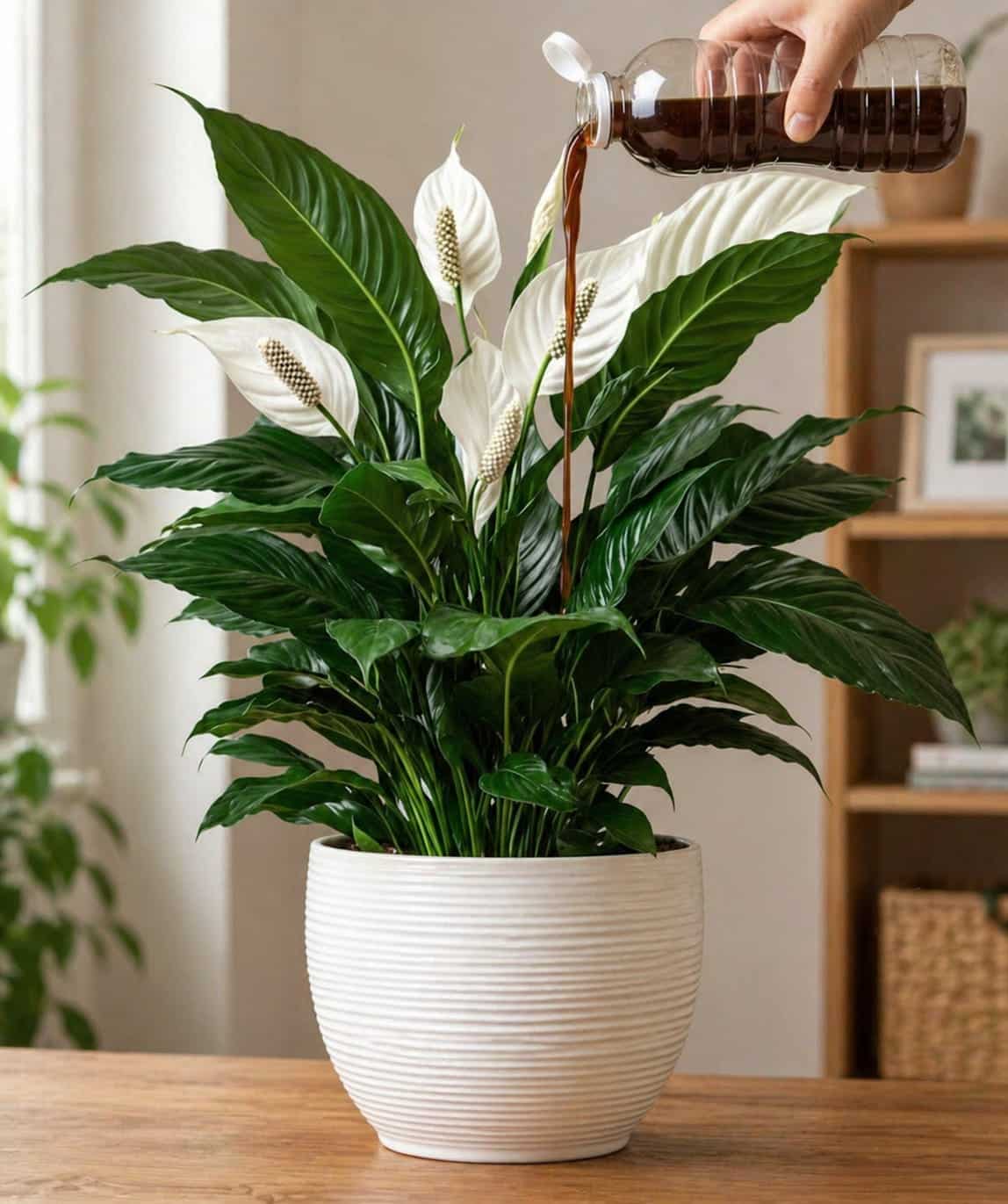
Can It Replace Fertilizer?
No. Homemade brown tonics are not complete fertilizers. They may contain small amounts of nutrients, but they do not provide a balanced, reliable feeding program.
For regular growth and blooming, use a balanced houseplant fertilizer during spring and summer. Use it at half strength if your plant is indoors and growing moderately. Do not fertilize a stressed plant or one with damaged roots.
The brown pour can be an occasional extra, but fertilizer is more predictable.
When Not to Use the Brown Pour
Do not use the brown pour if the plant is already wet, if the pot lacks drainage, if fungus gnats are present, or if the soil smells sour. Also avoid using it on a newly repotted plant until the roots settle.
Skip it during cold, low-light months when the plant is growing slowly. Organic liquids are more likely to sit in the soil during winter, which can create problems.
Do not use it as a rescue treatment for root rot. Root rot requires removing damaged roots and repotting in fresh soil.
Signs the Trick Is Being Used Safely
The brown pour is being used safely if the plant remains firm, the leaves stay glossy, the soil smells fresh, and the pot dries at a normal pace. No mold, gnats, sticky residue, or sour odor should appear.
New leaves may emerge healthy and green over time. Blooms may appear if light and nutrition are suitable.
The result should be subtle and steady, not dramatic overnight change.
Signs You Should Stop Immediately
Stop using the brown pour if you notice fungus gnats, mold, sour smell, sticky soil, yellowing after watering, mushy stems, or persistent drooping in wet soil.
These signs suggest too much moisture or organic buildup. Return to plain water, allow the soil to dry slightly, and check whether the plant needs repotting.
A Complete Peace Lily Bloom Routine
For more reliable blooms, use this routine:
- Place the peace lily in bright indirect light.
- Use a pot with drainage holes.
- Grow it in airy, moisture-retentive soil.
- Water when the top inch of soil begins to dry.
- Empty the saucer after watering.
- Wipe leaves regularly.
- Feed lightly during spring and summer.
- Remove old yellow leaves and spent blooms.
- Use the brown tonic only occasionally.
- Repot when the soil becomes compacted or roots are crowded.
This routine does far more for blooms than any single homemade liquid.
Common Mistakes With the Brown Pour Peace Lily Trick
Using a Strong Concentrate
The liquid should be weak and diluted. Strong organic mixtures can sour indoors.
Using It Too Often
Once every four to six weeks during active growth is enough.
Pouring It on Wet Soil
Only use it when the plant needs watering. Wet soil plus more liquid can cause root problems.
Using Coffee or Sugary Liquids
Coffee, sweet tea, soda, syrup, and molasses are not good choices for peace lilies.
Ignoring Light
A peace lily needs bright indirect light to bloom well. A dark corner will limit flowers.
Leaving Water in the Saucer
Standing water can rot the roots. Always drain fully.
Expecting Instant Blooms
Peace lily blooms take time and depend on overall care.
Frequently Asked Questions
What is the brown liquid being poured on the peace lily?
It can be interpreted as a weak homemade plant tonic, such as diluted worm casting tea, weak compost tea, or diluted banana peel water.
Can I use coffee on a peace lily?
It is better not to use coffee regularly. It can create residue, affect the soil, and encourage pests if used incorrectly.
Will the brown pour make my peace lily bloom?
Not by itself. Blooms depend mostly on bright indirect light, healthy roots, proper watering, and balanced feeding.
How often should I use the brown tonic?
Once every four to six weeks during active growth is enough. Use plain water the rest of the time.
Can I use banana peel water?
Yes, but only if it is fresh, strained, diluted, and not fermented. Use it rarely.
Can I use compost tea?
Yes, but it should be very weak, clean, strained, and used immediately.
Should I pour it over the leaves?
No. Pour only onto the soil. Keep leaves and white blooms clean.
What if my peace lily is drooping?
Check the soil. If dry, water. If wet, do not add more liquid; check for root problems.
Why are my peace lily leaves yellow?
Yellow leaves can come from overwatering, underwatering, low light, poor drainage, old leaves, or fertilizer issues.
What is the best way to get more peace lily flowers?
Give bright indirect light, steady watering, good drainage, and light fertilizer during active growth.
Final Thoughts
The brown pour peace lily trick looks rich, natural, and exciting. A dark homemade liquid flowing into the soil beneath glossy leaves and white blooms makes it seem like the plant is receiving a secret boost. It is easy to see why this kind of plant-care image catches attention.
But peace lilies do not need strong homemade liquids to thrive. They need balanced care. Bright indirect light, evenly moist but well-drained soil, clean leaves, and gentle feeding are the real keys to growth and blooming.
The safest brown pour is a weak, fresh, diluted tonic such as worm casting tea or mild banana peel water. It should be used only occasionally, only when the plant needs watering, and only in a pot with drainage. It should never smell sour, never be thick, and never be used as a cure for root rot.
Used carefully, the brown pour can be a pleasant plant-care ritual. Used too often or too strongly, it can create gnats, mold, odor, and soggy soil.
Keep the trick gentle. Keep the roots healthy. Give the plant light. Water with care. Feed lightly during the growing season. With the right routine, your peace lily can reward you with deep green leaves, graceful white blooms, and the calm indoor beauty that makes this plant such a favorite.