ZZ plants are among the most stylish and dependable houseplants you can grow. Their thick upright stems, glossy oval leaves, and deep green color make them look polished in almost any space. They can sit in a living room, office, patio corner, shaded balcony, or bright indoor plant shelf and still look elegant with very little attention.
But even though ZZ plants are known for being easy, they are also slow. A ZZ plant may look the same for months. Then suddenly, a fresh green shoot appears from the soil and slowly opens into a new stem. This slow growth habit makes people search for simple ways to wake the plant up, protect the roots, and keep the leaves looking shiny and healthy.
That is where the turmeric powder ZZ plant trick comes in.
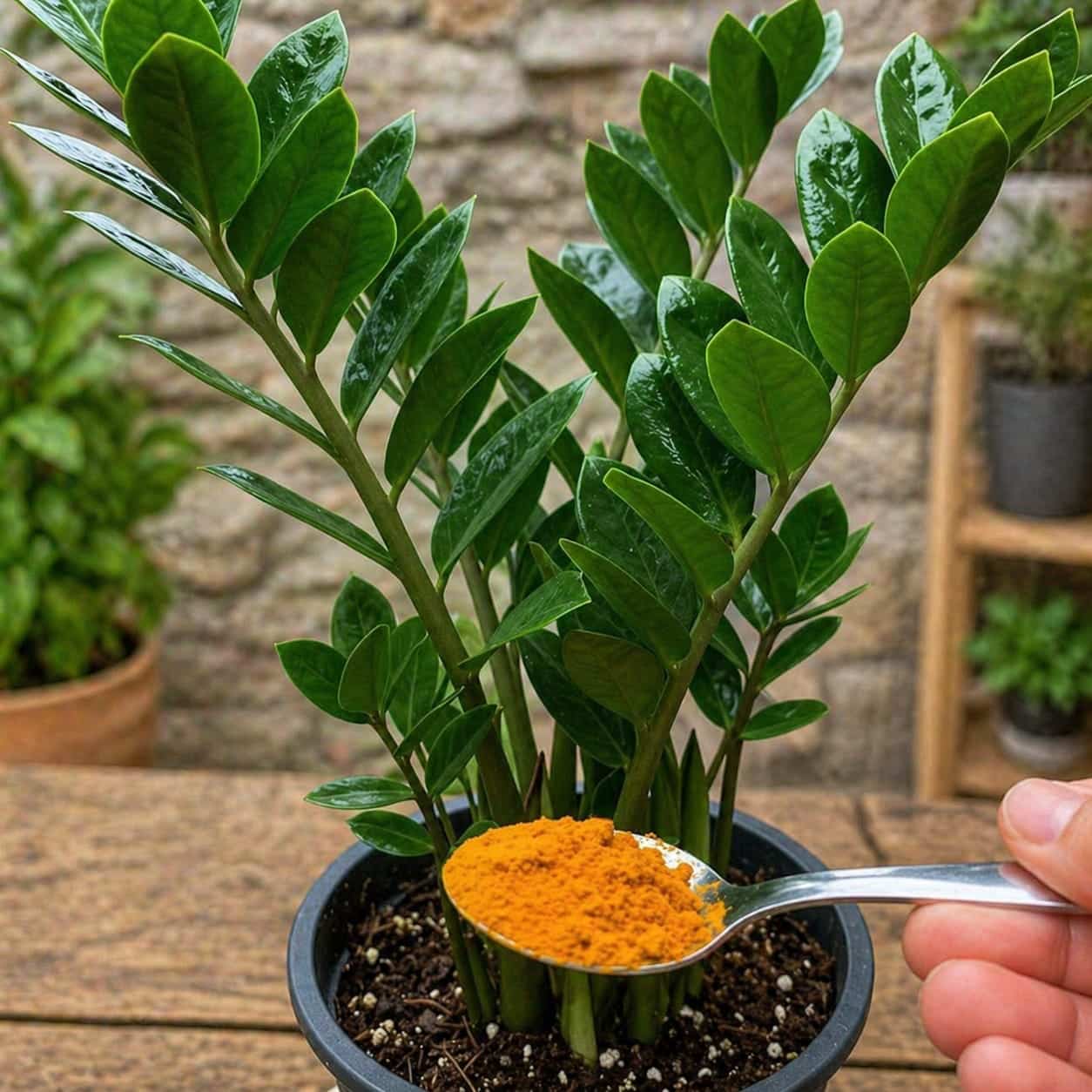
In the image, a healthy ZZ plant is growing in a black pot. The leaves are glossy and upright, and the soil looks airy with little white perlite pieces. A hand is holding a spoonful of bright orange-yellow powder close to the soil. The powder looks like turmeric, a common kitchen spice known for its strong golden color. The scene suggests a simple plant-care method: adding a tiny amount of turmeric powder around the base of a ZZ plant to refresh the soil and support healthier growth.
This trick is often called the turmeric sprinkle method, the golden powder ZZ plant trick, the natural root-protection trick, or the turmeric soil refresh routine. The idea is simple: turmeric is used in tiny amounts around the soil surface or around a cut area to help keep the plant environment cleaner and discourage unwanted fungal problems.
However, the important word is tiny.
ZZ plants do not need heavy feeding. They do not like soggy soil. They do not want thick layers of kitchen powders sitting around their roots. Their underground rhizomes store water, which makes them drought-tolerant, but also vulnerable to rot if the pot stays too wet. Turmeric can be useful as a light soil-surface dusting in specific situations, but too much can create a messy layer, hold moisture, stain surfaces, and interfere with normal soil airflow.
Used carefully, the turmeric trick can become a small part of a good ZZ plant routine. Used carelessly, it can become just another overdone houseplant hack.
In this complete guide, you will learn what the turmeric powder ZZ plant trick is, why people use it, how to apply it safely, when to avoid it, how to care for ZZ plant roots, and what really helps this plant grow full, glossy, and strong indoors.
What Is the Turmeric Powder ZZ Plant Trick?
The turmeric powder ZZ plant trick is a simple routine where a very small amount of turmeric powder is sprinkled on the soil surface or used near a cut or damaged area of the plant. The goal is not to fertilize the plant heavily. Turmeric is not a complete plant food. Instead, the trick is usually used as a natural soil-refresh or cut-care method.
Many plant owners use turmeric powder because it has a long-standing reputation as a natural cleansing ingredient. In plant care, people often use a tiny dusting on cut stems, cut rhizomes, or small wounds after pruning or division. The bright powder makes the treated area look sealed and protected.
For ZZ plants, this can be especially appealing because the plant grows from thick underground rhizomes. These rhizomes are the heart of the plant. If they rot, the whole plant suffers. If they stay firm and healthy, the plant can keep producing new shoots over time.
The turmeric trick is best understood as a light protective touch, not a miracle growth booster. It may help keep a small cut area dry and clean, but it will not force new stems overnight. The real growth comes from healthy rhizomes, bright indirect light, careful watering, and well-draining soil.
Why ZZ Plants Need Root Protection
ZZ plants are tough because they store water in their rhizomes. These rhizomes look like thick bulbs or small potatoes under the soil. They help the plant survive dry periods, missed waterings, and lower indoor humidity.
But this same storage system creates one major weakness: too much moisture.
If the potting soil stays wet for too long, the rhizomes can rot. Rotten rhizomes become soft, dark, and sometimes smelly. Once rot spreads, stems may yellow, collapse, or turn mushy at the base.
That is why any ZZ plant trick must be used with dryness and airflow in mind. A powder should not be piled thickly around the base. A liquid should not be poured into already damp soil. A homemade treatment should never replace proper drainage.
The turmeric trick can fit ZZ plants only when it is used lightly. A tiny sprinkle may help with surface freshness or cut care, but the real protection comes from keeping the root zone airy and letting the soil dry between waterings.
Why Turmeric Looks So Powerful in Plant Photos
Turmeric has a strong golden-orange color, so it immediately catches the eye. When placed on a spoon near dark potting soil and glossy green leaves, it creates a striking contrast. The plant looks rich, healthy, and cared for. The powder looks like a secret ingredient.
This is one reason turmeric plant tricks are popular online. The image is simple and dramatic. A spoonful of orange powder near a plant looks like an easy answer to a complicated problem.
But plant care is rarely about one ingredient. A healthy ZZ plant looks good because its roots are firm, the soil drains well, the plant gets enough light, and it is not overwatered. Turmeric may play a small supporting role, but it is not the full reason the plant thrives.
Think of turmeric as a tiny finishing touch, not the foundation. The foundation is still basic ZZ plant care.
Is Turmeric a Fertilizer?
No. Turmeric is not a complete fertilizer for ZZ plants. It does not provide balanced nitrogen, phosphorus, potassium, and trace minerals in the way a proper houseplant fertilizer does.
If your ZZ plant needs feeding, a diluted balanced houseplant fertilizer during the growing season is more reliable. ZZ plants do not need much fertilizer, but a light feeding in spring or summer can support steady growth.
Turmeric powder should not be used as a main nutrient source. Adding more turmeric will not make the plant grow faster. In fact, too much powder can create a surface layer that traps moisture, stains the pot, or becomes messy when watered.
The turmeric trick is better described as a soil-care or cut-care trick, not a feeding trick.
When Turmeric Powder May Be Useful
Turmeric powder may be useful in a few specific ZZ plant situations.
After Cutting a Damaged Stem
If you prune a yellow or damaged ZZ stem, a tiny dusting of turmeric near the cut area may help keep the spot dry. The key is to use only a small amount and avoid creating a wet paste.
After Dividing Rhizomes
When dividing a ZZ plant, you may cut through thick rhizomes. Some growers like to dust the cut surfaces lightly with turmeric and let them dry before replanting. This is one of the more sensible uses of the trick.
On Minor Surface Soil Issues
If the top of the soil looks a little stale, a tiny sprinkle may be used as part of a refresh routine, but it should not replace removing old debris or improving airflow.
As a Visual Reminder to Water Less
Because turmeric stains and moves when wet, using it can remind you not to overwater. If the powder stays dry and light, the soil is drying properly. If it becomes muddy and clumped, the pot may be staying too wet.
These are limited uses. Turmeric is not needed weekly and should not be dumped into the pot by the spoonful.
When You Should Not Use Turmeric on ZZ Plants
Do not use turmeric if the soil is already wet or sour-smelling. Do not use it if the plant has serious root rot. Do not use it as a heavy top dressing. Do not mix it into the whole pot of soil. Do not use it every week. Do not combine it with other kitchen tricks like cinnamon, coffee, rice water, milk, baking soda, or sugar.
Also avoid turmeric if your plant is already healthy and you have no reason to apply it. A ZZ plant does not need constant treatments. Sometimes the best care is doing less.
If your ZZ plant is declining, identify the cause first. Yellow stems are often caused by overwatering. Wrinkled stems may be caused by underwatering or root problems. No new growth may be caused by low light. Turmeric will not solve those issues by itself.
Use turmeric only when it has a purpose.
How to Use Turmeric Powder Safely on a ZZ Plant
The safest way to use turmeric is as a tiny dusting, not a spoonful. The image shows a full spoon of powder, but in real plant care, that is much more than most pots need.
For Soil Surface Use
- Make sure the soil surface is dry.
- Take a tiny pinch of turmeric powder.
- Sprinkle it lightly around the topsoil.
- Keep it away from direct contact with stem bases.
- Do not create a thick orange patch.
- Do not water immediately unless the plant truly needs water.
For Cut Rhizome Use
- Remove the ZZ plant from the pot.
- Separate or cut rhizomes with clean tools.
- Dust the cut surface with a very small amount of turmeric.
- Let the cut area dry for several hours.
- Replant in fresh, airy soil.
- Wait before watering if the soil is slightly moist.
With turmeric, less is always better. A light dusting is enough.
How Much Turmeric Should You Use?
For a small pot, use only a pinch. For a medium pot, use no more than 1/8 teaspoon scattered thinly. For a large pot, use no more than 1/4 teaspoon, and even that may be unnecessary.
Do not use a heaping spoonful like the one shown in the image. That amount is better for visual storytelling than real plant care. Too much turmeric can clump, stain, and create a layer that does not help the plant.
The goal is not to cover the soil. The goal is to lightly dust a small area if needed.
Should You Mix Turmeric With Water?
It is usually better not to mix turmeric with water for ZZ plant care. Turmeric mixed with water can become a paste. That paste may sit on the soil surface, hold moisture, stain the pot, and reduce airflow.
If you use turmeric, keep it dry and light. Dust it onto a cut area or dry soil surface. Let it stay airy.
ZZ plants prefer dry-down time. A wet turmeric paste works against that preference.
If turmeric accidentally gets wet and forms a thick layer, remove the clumps from the soil surface.
Can Turmeric Cure Root Rot?
No. Turmeric cannot cure advanced root rot. If a ZZ plant has rotten rhizomes, the damaged parts must be removed. The plant needs fresh soil, better drainage, and a corrected watering routine.
Turmeric may be used on freshly cut healthy rhizome tissue after removing rotten areas, but it does not reverse rot that has already spread. It is not a substitute for pruning and repotting.
If your ZZ plant smells bad, has mushy stems, or has black soft rhizomes, take it out of the pot. Cut away all rotten tissue with clean tools. Let the healthy pieces dry. Repot into fresh airy mix. Water carefully afterward.
Root rot is mainly a moisture problem. The cure is dryness, oxygen, and clean soil.
How to Tell If Your ZZ Plant Has Root Rot
Root rot can be hidden because the problem starts under the soil. Look for these signs:
- Yellowing stems
- Soft or mushy stem bases
- Leaves dropping suddenly
- Soil that smells sour or rotten
- Soil that stays wet for many days
- Stems collapsing near the base
- Black or soft rhizomes when removed from the pot
If you see these signs, do not sprinkle turmeric on top and hope for the best. Inspect the roots and rhizomes. A plant with rot needs real intervention.
Turmeric can only be a small aftercare step once the bad tissue is removed.
How to Repot a ZZ Plant With Rhizome Problems
If your ZZ plant is struggling, repotting may be necessary. Here is a safe routine:
- Remove the plant gently from the pot.
- Shake away old wet soil.
- Inspect the rhizomes and roots.
- Cut away anything mushy, black, or smelly.
- Dust healthy cut areas lightly with turmeric if desired.
- Let the cuts dry for several hours.
- Repot in fresh well-draining soil.
- Use a pot with drainage holes.
- Wait a few days before watering if the mix is slightly moist.
- Resume careful watering only when the soil dries.
This process helps much more than sprinkling powder on the surface of a sick plant.
Continue to Page 2
Continue to page 2 for more details about this article and the key points many readers miss on the first page.