The Best Soil for ZZ Plants
ZZ plants need soil that drains well and allows oxygen around the rhizomes. Dense, wet soil is one of the biggest reasons ZZ plants fail.
A good ZZ plant mix can include:
- 2 parts indoor potting mix
- 1 part perlite or pumice
- 1 part orchid bark or coarse coco chips
This mix holds a little moisture but dries well. The perlite creates air pockets, and the bark helps prevent compaction.
If the soil in your ZZ plant pot is heavy, muddy, or old, no turmeric trick will fix it. Fresh airy soil will do more for the plant than any powder.
Why Drainage Is More Important Than Turmeric
A ZZ plant pot must have drainage holes. Without drainage, water collects at the bottom and can rot the rhizomes. Even if the top of the soil looks dry, the bottom can remain wet.
If your decorative pot has no holes, use it as a cover pot. Keep the plant in a plastic nursery pot with drainage, then place that inside the decorative container. Remove it when watering and let it drain fully before putting it back.
Turmeric cannot protect a ZZ plant from standing water. Drainage is non-negotiable.
How to Water a ZZ Plant Correctly
ZZ plants should be watered only when the soil has dried out. They are drought-tolerant and store water in their rhizomes, so they do not need frequent watering.
Check the soil with your finger or a wooden skewer. If it is still damp, wait. If it is dry, water thoroughly until excess drains out. Then empty the saucer.
Depending on light, pot size, and season, a ZZ plant may need water every two to four weeks, or even less often in winter.
Overwatering is much more dangerous than underwatering for ZZ plants. When in doubt, wait a few more days.
Can Turmeric Help New Shoots Grow?
Turmeric does not directly create new shoots. ZZ plant shoots come from healthy rhizomes below the soil. If the rhizomes are firm and full of stored energy, they can send up new growth.
Turmeric may help indirectly only by supporting a cleaner cut area after division or pruning. But the real triggers for new shoots are light, warmth, healthy roots, and time.
If you want more ZZ plant shoots, give the plant bright indirect light, avoid overwatering, use well-draining soil, and feed lightly during the growing season.
New ZZ shoots are slow but rewarding. They cannot be forced with a spoonful of spice.
Best Light for a ZZ Plant
ZZ plants tolerate low light, but they grow better in bright indirect light. A plant in a dim corner may survive but produce very little new growth. If you want a fuller plant, move it to a brighter location.
Place it near an east-facing window, a bright north-facing window, or a filtered south or west window. Avoid harsh direct sun, which can scorch leaves.
Bright indirect light gives the plant energy to produce new stems. Turmeric cannot replace light.
How to Keep ZZ Leaves Glossy
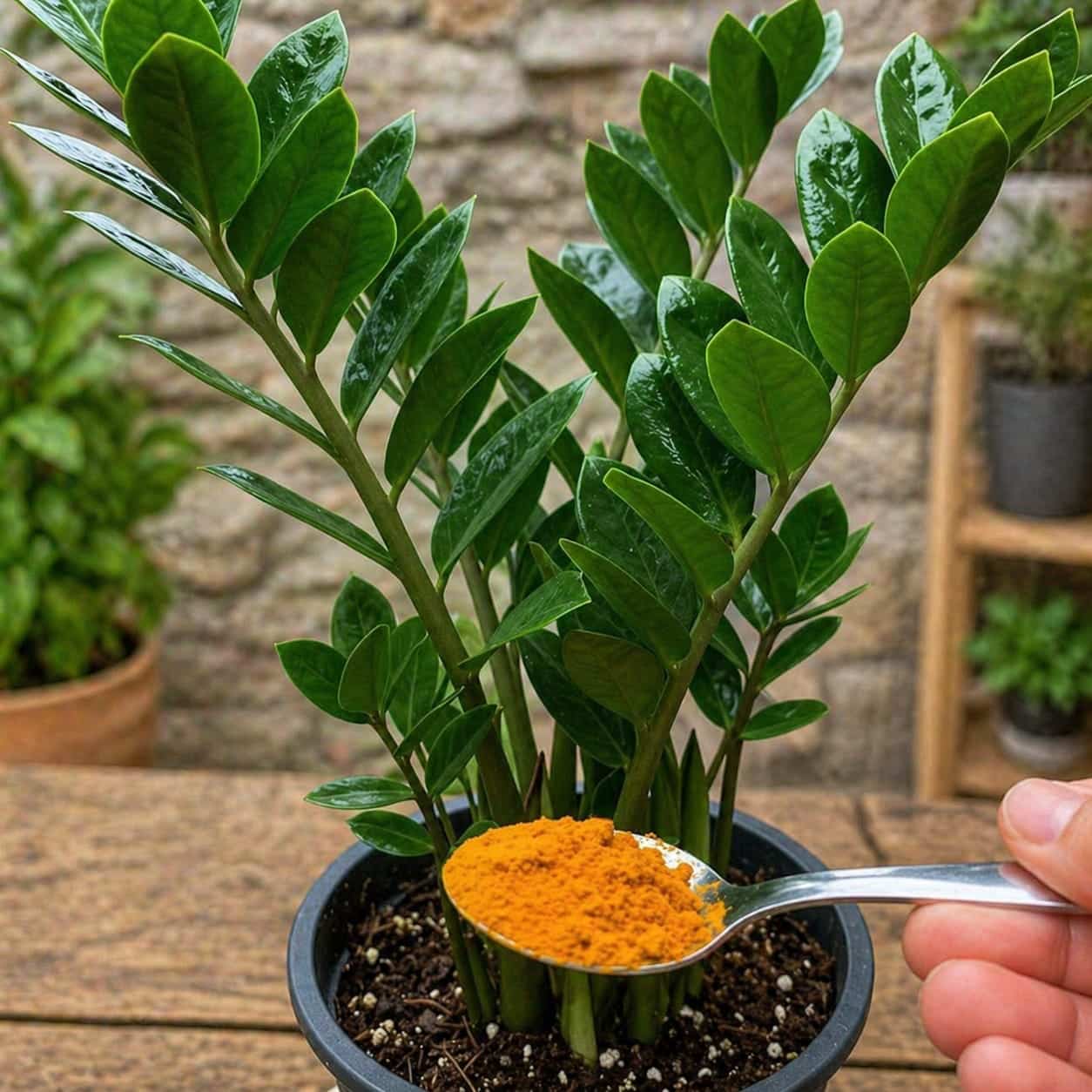
The leaves in the image look shiny and healthy. To keep ZZ leaves glossy, clean them regularly. Dust can dull the natural shine and reduce light absorption.
Use a soft damp cloth and wipe each leaflet gently. Do not use oil, milk, mayonnaise, or commercial leaf shine products. These can leave residue and attract dust.
If turmeric powder gets on the leaves, wipe it off right away. Turmeric can stain and leave orange marks. Keep the powder on the soil or cut area only.
Clean leaves make the plant look healthier instantly.
Can Turmeric Stain Pots and Tables?
Yes. Turmeric stains easily. It can leave yellow-orange marks on white pots, wooden tables, fabric, countertops, and fingers. Be careful when using it indoors.
Use a small spoon or pinch, and apply it slowly. Place newspaper or a tray under the pot if needed. Wipe spills immediately with a damp cloth.
If turmeric gets wet, it can spread and stain more. This is another reason to use only a tiny amount.
The bright color is beautiful in photos, but messy in real life if overused.
Can Turmeric Attract Pests?
Turmeric itself is not sugary, but any kitchen powder used heavily can create mess and residue in potting soil. If it clumps and holds moisture, it can contribute to an unhealthy soil surface. Fungus gnats are more attracted to damp organic soil than turmeric specifically, but overuse of powders can still make the pot less clean.
To avoid pests, use turmeric very lightly, keep the soil surface dry between waterings, remove dead leaves, and do not overwater.
If fungus gnats appear, stop using all homemade treatments. Let the soil dry more, use sticky traps, and consider repotting if the soil is old or damp.
Can You Use Turmeric With Cinnamon?
It is better not to stack multiple powders. Some growers use cinnamon in similar ways to turmeric, especially on cut areas. But adding turmeric, cinnamon, coffee, baking soda, eggshell powder, and fertilizer all together can create soil buildup and confusion.
If you choose turmeric, use turmeric only. If you choose cinnamon, use cinnamon only. Do not treat the pot like a spice mix.
One tiny, targeted dusting is enough.
Can You Use Turmeric With Fertilizer?
You can fertilize a ZZ plant during the growing season, but do not mix fertilizer directly with turmeric powder. Use fertilizer separately and lightly.
A balanced houseplant fertilizer at half strength once every one to two months during spring or summer is usually enough. ZZ plants are slow growers and do not need heavy feeding.
If you recently repotted into fresh soil, you may not need fertilizer right away.
Turmeric is not fertilizer, and fertilizer is not a wound powder. Keep their purposes separate.
Can You Use Turmeric on Other Houseplants?
Turmeric can be used lightly on cut areas of some houseplants, especially after pruning or division. But it should not be sprinkled heavily on every pot in your home.
Some plants prefer consistently moist soil, and powders can behave differently in those conditions. Others are sensitive to residue. Always use a tiny amount and only when needed.
For most healthy plants, good soil, light, and watering are more important than any spice.
A Safe Turmeric Routine for ZZ Plants
Here is a simple safe routine:
- Keep the ZZ plant in bright indirect light.
- Use a pot with drainage holes.
- Grow it in airy, well-draining soil.
- Water only when the soil is dry.
- Use turmeric only when needed, such as after pruning or division.
- Apply only a tiny pinch.
- Keep powder away from leaves and thick stem bases.
- Do not mix it with water into a paste.
- Do not repeat often.
- Stop if the soil becomes clumpy, stained, moldy, or unpleasant.
This routine keeps turmeric as a helpful touch rather than an overpowering treatment.
Common Mistakes With the Turmeric ZZ Plant Trick
Using Too Much Powder
A spoonful is too much for most pots. Use only a tiny pinch.
Thinking It Is Fertilizer
Turmeric is not a complete plant food. Use proper diluted fertilizer if the plant needs nutrients.
Adding It to Wet Soil
Wet turmeric can clump and create a paste. Apply only to dry areas if needed.
Ignoring Root Rot
Turmeric cannot fix rotten rhizomes. Remove rot and repot properly.
Using It Weekly
ZZ plants do not need frequent spice treatments. Use rarely.
Letting It Touch Leaves
Turmeric can stain glossy leaves. Wipe off any powder immediately.
Using It Instead of Better Light
Light drives growth. Turmeric does not wake up a plant kept in darkness.
Signs the Trick Is Being Used Safely
The turmeric trick is being used safely if the plant remains firm, the soil stays airy, there is no mold, and the powder does not form a thick crust. The leaves should stay glossy, and the stems should remain upright.
If used after division, the cut rhizomes should dry and stay firm. New growth may appear later if the plant is healthy, but do not expect immediate results.
A safe turmeric application is almost invisible after a while. It should not dominate the pot.
Signs You Should Stop Using Turmeric
Stop using turmeric if the soil becomes orange, crusty, clumpy, moldy, or sour-smelling. Stop if fungus gnats appear. Stop if you notice powder collecting around stem bases and staying wet.
Remove excess powder from the soil surface. If the soil is badly affected, replace the top layer or repot into fresh mix.
ZZ plants prefer simplicity. If a trick complicates care, stop using it.
Frequently Asked Questions
What is the orange powder on the ZZ plant?
It is most likely turmeric powder. In plant care, turmeric is sometimes used as a light dusting on soil or cut areas.
Is turmeric good for ZZ plants?
Turmeric can be used in tiny amounts for cut-care or surface soil freshness, but it is not necessary for every plant and should not be overused.
Can turmeric make a ZZ plant grow faster?
No. ZZ plant growth depends more on healthy rhizomes, bright indirect light, proper watering, and well-draining soil.
Can I sprinkle turmeric directly on the soil?
Yes, but only a tiny pinch on dry soil. Do not use a thick layer or a full spoonful.
Can I mix turmeric with water?
It is better not to. Turmeric water can become a paste and stain. Use dry dusting only if needed.
Can turmeric cure root rot?
No. Rotten rhizomes must be removed. Turmeric may be used lightly on clean cut areas after trimming, but it does not reverse rot.
How often should I use turmeric?
Rarely. Use it only when needed, such as after pruning or dividing. It is not a weekly treatment.
Will turmeric stain my pot?
Yes, it can stain pots, tables, and leaves. Use it carefully and wipe spills immediately.
Can I use turmeric and fertilizer together?
Do not mix them directly. Fertilize separately and lightly during the growing season if needed.
What matters more than turmeric?
Bright indirect light, drainage, airy soil, careful watering, and healthy rhizomes matter much more than turmeric powder.
Final Thoughts
The turmeric powder ZZ plant trick looks striking because the golden-orange powder stands out beautifully against dark soil and glossy green leaves. It gives the impression of a simple secret ingredient that protects the plant and wakes up new growth.
Used carefully, turmeric can be a small part of ZZ plant care. A tiny dusting may be useful after pruning, after dividing rhizomes, or as a light surface refresh. But it should never be used heavily, frequently, or as a replacement for proper plant care.
ZZ plants grow from thick rhizomes, and those rhizomes need one thing above all: the right balance of moisture and air. Too much water causes rot. Heavy soil causes stress. Pots without drainage create hidden problems. A spoonful of turmeric cannot fix those issues.
The real secrets to a strong ZZ plant are bright indirect light, well-draining soil, a pot with drainage holes, careful watering, clean leaves, and patience. If your plant is healthy, it will send up new shoots in its own time. If it is struggling, diagnose the roots and soil before adding any powder.
Use turmeric as a gentle touch, not a main treatment. Keep it dry, keep it light, and keep it rare. A tiny pinch is enough. With steady care and a healthy root system, your ZZ plant can stay glossy, upright, and beautiful for years.