Snake plants are some of the most dependable indoor plants you can grow. They tolerate missed waterings, lower light, dry indoor air, and long stretches of neglect better than many popular houseplants. Their upright leaves add structure to a room, and their green-and-yellow variegation makes them look bold even when they are small.
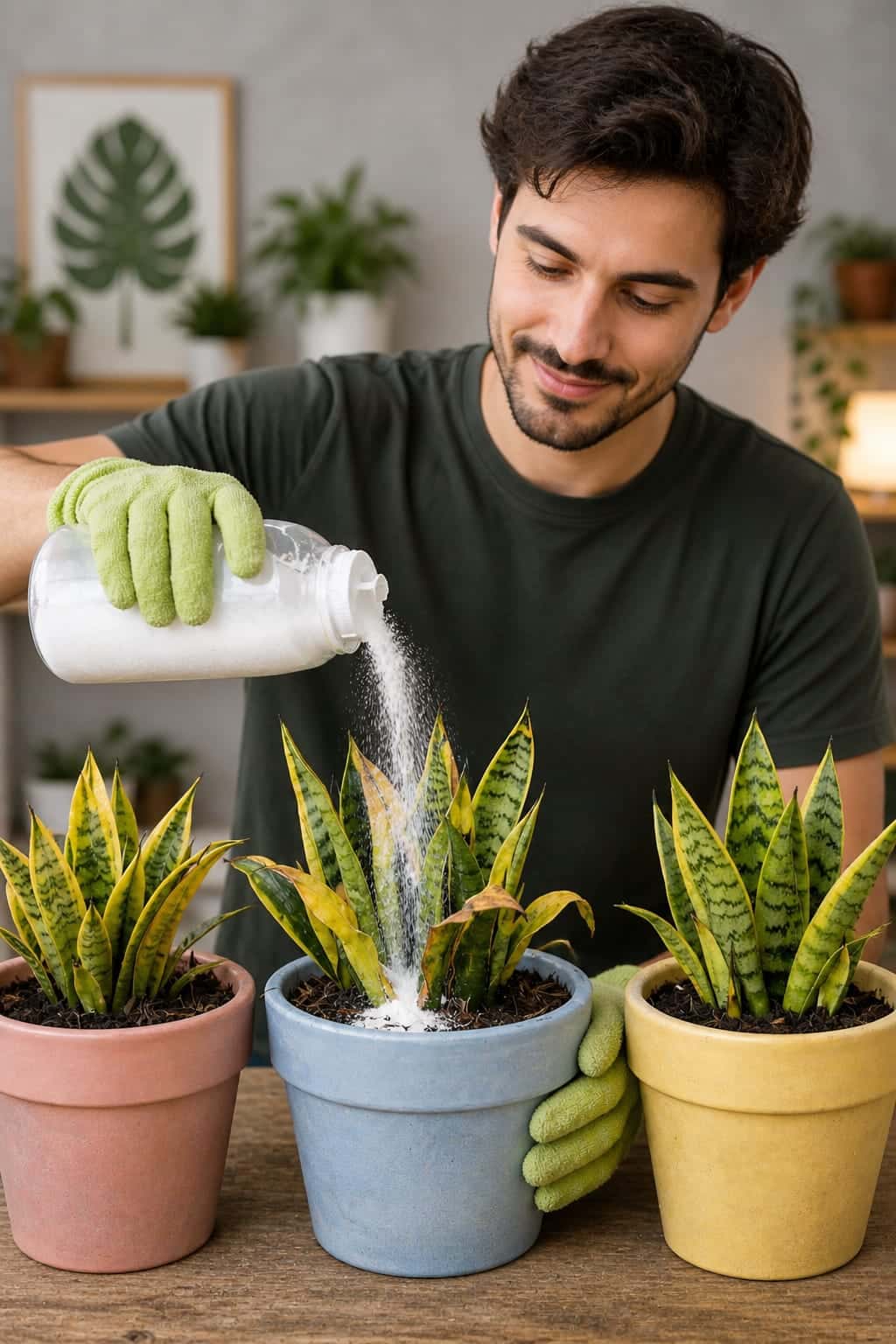
The image shows a man sprinkling a white powder from a bottle onto a snake plant in a blue pot. The plant in the middle looks weaker than the two nearby snake plants. Some leaves appear yellowing, bent, or stressed, while the plants on each side look healthier and more upright. The visual message is clear: a white powder may help revive a tired snake plant and bring it back to strong growth.
This kind of plant-care idea is often called the white powder snake plant trick, the plant revival powder method, the baking soda snake plant hack, the powdered fertilizer trick, or the root booster sprinkle. It looks simple and satisfying: sprinkle a white powder over the soil, and the weak plant may recover.
But this is one of those plant hacks that must be handled carefully. A white powder can mean many different things. It might be a plant-safe powdered fertilizer, perlite dust, mycorrhizal powder, diatomaceous earth, dolomitic lime, baking soda, Epsom salt, powdered milk, or even something completely unsuitable. Some powders can help in very specific situations. Others can damage roots, burn leaves, clog soil, create salt buildup, or make the plant decline faster.
The safest way to understand this trick is this: do not use random white powder on a snake plant. Use only a plant-safe product, apply it lightly, keep it off the leaves, and make sure the real problem is not overwatering or root rot. Snake plants usually fail because of too much water, poor drainage, dense soil, or low light. A powder will not fix those problems unless the care routine is corrected first.
What Is the White Powder Snake Plant Trick?
The white powder snake plant trick is a method where a dry powdered product is sprinkled onto the soil surface around a snake plant. It is usually presented as a way to revive weak plants, strengthen roots, stop yellowing, encourage new pups, or prevent fungal problems.
In the image, the powder is being applied directly onto the center plant, which appears more stressed than the surrounding snake plants. This suggests that the powder is being used as a rescue treatment. The problem is that snake plant rescue depends on diagnosis. A plant with yellowing leaves may need less water, more drainage, brighter light, or root pruning. It may not need powder at all.
The trick can be useful only when the powder is appropriate for the problem. If the plant needs dry soil and root care, adding a moisture-trapping or salty powder can make things worse.
What Could the White Powder Be?
The white powder in the image could represent several products. Some are plant-safe when used correctly, while others are risky.
Possible plant-safe powders include:
- Powdered houseplant fertilizer
- Mycorrhizal root powder
- Diatomaceous earth
- Perlite or pumice dust
- Dolomitic lime
- Gypsum
- Very small amounts of Epsom salt dissolved in water
Risky or unsuitable powders include:
- Baking soda used heavily
- Salt
- Sugar
- Flour
- Cornstarch
- Powdered milk
- Laundry powder
- Cleaning powder
- Bleach powder
- Unknown pest poison
- Any unidentified white substance
If the powder is not clearly labeled for plants, do not use it. Snake plants are tough, but their roots can still be damaged by salts, chemicals, and compacted residues.
The Most Important Question: Why Is the Snake Plant Weak?
Before adding powder, ask why the plant looks weak. Snake plants usually decline for a few common reasons:
- Overwatering
- Poor drainage
- Dense potting soil
- A pot without drainage holes
- Low light for a long time
- Cold damage
- Root rot
- Fertilizer burn
- Pest damage
- Natural aging of older leaves
If the leaves are yellowing and soft, the issue is often overwatering or root rot. If the leaves are wrinkled and curling, the plant may be too dry. If the leaves are pale and stretched, it may need more light. If the soil smells sour, the roots may be rotting.
A white powder cannot solve the problem unless you know what is wrong first.
Can White Powder Revive a Snake Plant?
Sometimes, but only in specific situations. If the powder is a proper plant product and the snake plant is mildly nutrient-deficient, a light application may help. If the powder is diatomaceous earth and the plant has soil-surface pests, it may help reduce crawling insects when used correctly. If the powder is mycorrhizal fungi used during repotting, it may help root establishment.
But if the snake plant is weak because the roots are rotting, powder will not revive it. Root rot requires removing the plant from the pot, cutting away mushy roots, drying healthy sections, and repotting in fresh fast-draining soil.
Many struggling snake plants need less added material, not more.
Why Baking Soda Is Not a Snake Plant Fertilizer
Many people see white powder and assume baking soda. Baking soda is popular in online plant hacks, but it is not a fertilizer. It does not provide balanced nutrition for snake plants, and it can alter soil conditions if used too heavily.
Baking soda is alkaline and contains sodium. Sodium buildup can harm plants over time. Sprinkling baking soda directly into a snake plant pot can disturb the soil and stress the roots.
Baking soda may have limited use in some diluted garden sprays, but it should not be poured or sprinkled into houseplant soil as a growth booster. It is not the secret to reviving snake plants.
Can Epsom Salt Help Snake Plants?
Epsom salt contains magnesium sulfate. It can help plants only when they truly need magnesium. Most snake plants in normal potting mix do not need extra Epsom salt. Too much can create salt buildup and nutrient imbalance.
If you use Epsom salt, do not sprinkle it dry in large amounts. Dissolve a tiny amount in water and use rarely. For most indoor snake plants, a diluted cactus fertilizer is more balanced and safer.
Epsom salt is not a general rescue treatment for yellow leaves. Yellowing is more often related to watering or root stress than magnesium deficiency.
Can Diatomaceous Earth Help Snake Plants?
Diatomaceous earth is a fine white powder sometimes used to help control certain crawling pests. It works best when dry. Once it gets wet, it loses much of its pest-control effect until it dries again.
If you use diatomaceous earth, apply only a thin layer to the dry soil surface. Keep it away from your face while applying because the dust can irritate lungs. Do not cake it heavily around the plant base, and do not use it as fertilizer.
Diatomaceous earth may help with some soil-surface pests, but it will not fix root rot, overwatering, or poor soil.
Can Mycorrhizal Powder Help?
Mycorrhizal powder contains beneficial fungi that can support root relationships in some plants. It is usually most useful during repotting, when the powder can touch the roots directly.
Sprinkling mycorrhizal powder on top of old soil is less effective than placing it near the root zone. It is not an instant revival powder. It supports root establishment over time if conditions are suitable.
If your snake plant has rotten roots, remove the rot first. Beneficial fungi cannot save mushy, dying tissue.
Can Powdered Fertilizer Help?
Powdered fertilizer can help if used correctly, but snake plants need very little fertilizer. Strong fertilizer can burn roots and cause leaf damage.
If the white powder is powdered plant food, read the label carefully. Many powdered fertilizers are meant to be dissolved in water before application. Sprinkling them directly on the soil can create concentrated pockets that burn roots when watered.
For snake plants, use fertilizer at half strength or weaker during spring and summer only. Do not fertilize a sick, newly repotted, or waterlogged plant.
Can Lime Help Snake Plants?
Dolomitic lime is a white or pale powder used to raise soil pH and add calcium and magnesium. It should not be used casually. Snake plants can tolerate a range of soil conditions, but random lime applications may push the soil chemistry too far.
If your snake plant is in old compacted soil, repotting into fresh cactus mix is usually better than adding lime. Use lime only if you know the soil needs it.
Can Flour, Sugar, or Powdered Milk Help?
No. Flour, sugar, and powdered milk are not good snake plant treatments. They can mold, attract pests, create sticky residue, and encourage sour soil. Indoor plant pots are not compost bins.
Food powders are especially risky for snake plants because they can hold moisture and feed fungus or gnats. Snake plants prefer dry, clean, airy soil.
Keep kitchen powders out of snake plant pots.
Why Powder on Leaves Is a Problem
In the image, powder is falling over the plant and may land on the leaves. This is not ideal. Snake plant leaves should be kept clean and dry. Powder residue can dull the leaves, block light, collect moisture, or irritate tissue depending on the product.
If powder lands on the leaves, wipe it off with a soft damp cloth. Do not let powder sit in the grooves or at the base of the leaves. The base area is especially important because trapped moisture and residue can lead to rot.
Keep Powder Away From the Crown and Leaf Bases
Snake plants grow from rhizomes and leaf bases close to the soil surface. These areas should not be buried under powder, damp amendments, or thick top dressing. If powder collects around the base and becomes wet, it can create a paste that holds moisture against the plant.
That is dangerous for snake plants. Leaf-base rot often starts when moisture sits too long around the crown.
Apply any plant-safe powder lightly and around the outer soil surface, not packed into the center of the plant.
The Right Way to Use a Plant-Safe White Powder
If you have a product labeled for houseplants or succulents, use it carefully:
- Read the label completely.
- Confirm whether it should be sprinkled or dissolved.
- Use less than the recommended amount for snake plants if appropriate.
- Apply only to dry or lightly moist soil, depending on the product.
- Keep it off the leaves.
- Keep it away from the leaf bases.
- Do not pile it into a mound.
- Water only if the product requires watering in and the soil is dry enough.
- Make sure the pot drains fully.
- Stop using it if yellowing, mold, crust, or softness appears.
With snake plants, a light hand is almost always safer.
Should You Water After Applying White Powder?
It depends on the powder. Some fertilizers must be watered in. Diatomaceous earth works best when dry. Mycorrhizal powder is often used near roots during repotting. Lime and gypsum have their own application instructions.
Never water a snake plant just because you added powder if the soil is still wet. Snake plants should be watered only when the soil is dry. Adding water to already moist soil can cause root problems.
Always match the product instructions with the plant’s actual watering needs.
Why Drainage Matters Before Any Treatment
The middle snake plant in the image is in a ceramic pot. Ceramic pots can be excellent if they have drainage holes. If they do not, they can trap water at the bottom and cause root rot.
Before using any powder, check drainage. A snake plant should never sit in a pot where water cannot escape. If your decorative pot has no hole, keep the snake plant in a nursery pot inside it and remove the inner pot for watering.
A powder treatment in a pot with poor drainage is a bad combination.
Best Soil for Snake Plant Recovery
If a snake plant looks weak, soil quality matters more than powder. Snake plants need a fast-draining mix that dries between waterings.
A good recovery mix can include:
- 2 parts cactus or succulent mix
- 1 part perlite or pumice
- 1 part orchid bark or coarse coco chips
This type of mix gives roots more oxygen and reduces the risk of rot. If your current soil is dense, soggy, or sour-smelling, repotting is better than sprinkling powder on top.
How to Check If a Snake Plant Has Root Rot
If the plant has yellowing, soft leaves, or a mushy base, check the roots. Gently slide the plant from the pot and inspect the root system.
Healthy snake plant roots and rhizomes are firm. Rotten roots are mushy, dark, slimy, or foul-smelling. Rotten leaves may detach easily at the base.
If you find rot, remove all mushy parts with clean scissors or a sterile knife. Let healthy cut sections dry and callus before repotting into fresh dry soil. Do not add fertilizer or homemade powder during this recovery stage.
What to Do If the Leaves Are Yellow
Yellow leaves can mean several things. On snake plants, yellowing often points to overwatering, poor drainage, or root stress. It can also happen from old age, low light, cold exposure, or fertilizer burn.
If one old outer leaf is yellowing but the rest of the plant is firm, it may simply be aging. Cut it at the base with clean scissors.
If several leaves are yellowing at once, check the soil and roots before using any powder. Adding more material to stressed roots can make the problem worse.
What to Do If the Leaves Are Soft
Soft leaves are a warning sign. A snake plant leaf should feel firm. Softness often means too much water or rot. If the leaf base is mushy, remove the plant from the pot immediately and inspect the rhizomes.
Do not sprinkle powder onto a soft snake plant and hope it recovers. It needs drying, pruning, and fresh soil.
What to Do If the Leaves Are Wrinkled
Wrinkled leaves can mean underwatering, but they can also appear when roots are damaged and cannot absorb water. Check the soil. If it is bone dry and the roots are firm, water deeply and let the pot drain.
If the soil is moist and the leaves are wrinkled, the roots may be rotting. In that case, adding water or powder will not help.
Can White Powder Stop Fungus Gnats?
If the powder is diatomaceous earth, it may help reduce some crawling pests when the soil surface is dry. But fungus gnats usually indicate that the soil is too wet or contains decaying organic matter.
The best fungus gnat prevention for snake plants is simple: let the soil dry, use a fast-draining mix, avoid food-based plant hacks, and do not overwater.
White powder cannot compensate for soggy soil.
Can White Powder Prevent Mold?
Some dry mineral powders may help keep the surface drier, but many powders can actually make mold worse if they are organic or become damp. Flour, powdered milk, sugar, and food-based powders can mold quickly.
If mold appears on the soil, remove the top layer, improve airflow, reduce watering, and avoid organic kitchen treatments. If the soil smells sour, repot.
Can White Powder Encourage New Pups?
Snake plant pups come from healthy rhizomes. A mild fertilizer may support growth during the active season, but powder alone cannot force pups. The plant needs bright indirect light, healthy roots, a slightly snug pot, and proper watering.
If you want more pups, focus on conditions rather than tricks. A snake plant in bright indirect light with fast-draining soil will usually produce offsets when mature and ready.
Continue to Page 2
Continue to page 2 for more details about this article and the key points many readers miss on the first page.