Best Light for Snake Plants
Snake plants tolerate low light, but they grow better in bright indirect light. In low light, they may survive but grow very slowly. They may also become weaker over time if they are overwatered in dim conditions.
Place snake plants near a bright window with filtered light. Morning sun can be helpful. Harsh afternoon sun may scorch leaves, especially variegated varieties.
A weak snake plant often improves more from better light than from any powder treatment.
How to Water Snake Plants Correctly
Water deeply, then let the soil dry. That is the basic rule. Do not water on a fixed weekly schedule unless your conditions truly require it.
In bright warm conditions, a snake plant may need water every two to three weeks. In low light or winter, it may need water far less often. Always check the soil before watering.
When you water, pour evenly around the soil until excess drains from the bottom. Empty the saucer. Never let the pot sit in water.
Why Overwatering Is the Biggest Snake Plant Mistake
Snake plants store water in their leaves and rhizomes. They are built to handle dryness. When they are watered too often, their roots sit without enough oxygen. This creates the perfect condition for rot.
Many people see yellowing leaves and assume the plant needs feeding. Often, it needs drying. Adding powder or fertilizer to wet soil can push a stressed plant closer to failure.
When in doubt, check the roots before treating.
Should You Fertilize a Weak Snake Plant?
Usually not right away. A weak plant should be diagnosed first. If the roots are damaged, fertilizer can burn them. If the soil is wet, fertilizer can worsen stress. If the plant is in low light, it may not use nutrients well.
Wait until the plant is stable and producing healthy new growth before fertilizing. Then use a diluted cactus or houseplant fertilizer at half strength or weaker.
How Often Should You Fertilize a Healthy Snake Plant?
Healthy snake plants need very little fertilizer. Feed once every two to three months during spring and summer. Use diluted cactus fertilizer or balanced houseplant fertilizer.
Do not fertilize in winter unless the plant is actively growing under bright light. Do not fertilize newly repotted plants for several weeks.
Too little fertilizer is rarely a problem for snake plants. Too much fertilizer often is.
What to Do If You Used Too Much White Powder
If you added too much powder, remove as much as possible from the soil surface. If it was a plant-safe dry mineral product, leaving a tiny amount may be fine. If it was baking soda, salt, sugar, flour, powdered milk, or an unknown product, remove it immediately.
If the powder dissolved into the soil and may harm the roots, flush the pot with plain water only if it drains well and the plant is not already waterlogged. If the product was dangerous or the soil becomes sour, repot into fresh dry succulent mix.
What to Do If Powder Got Into the Leaf Bases
Use a soft brush or damp cloth to remove powder from between the leaves. Avoid pushing powder deeper into the crown. If needed, gently rinse the area with a small amount of plain water, then dry it with a paper towel and place the plant in bright indirect light with good airflow.
Do not leave damp powder packed into the plant base. That can encourage rot.
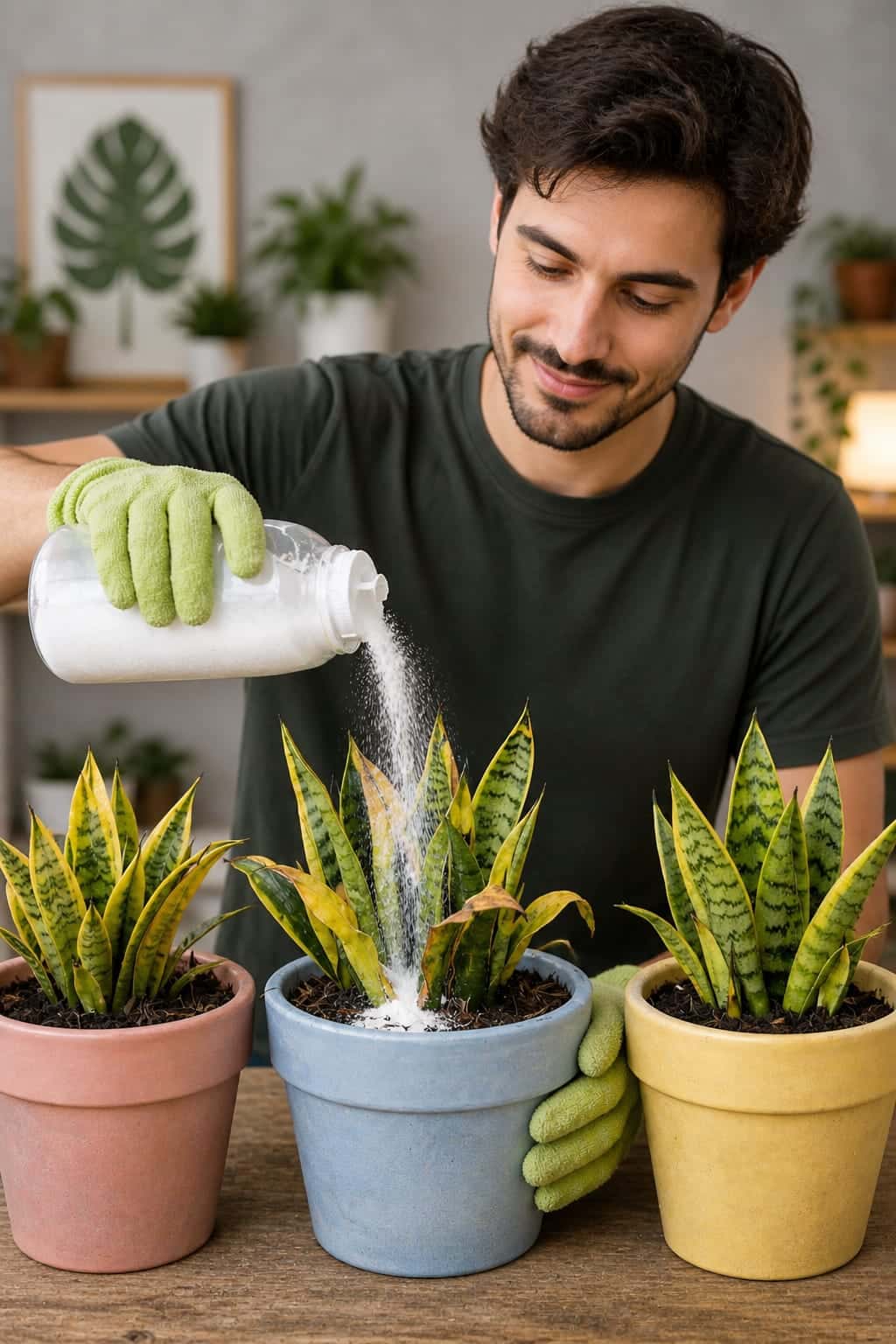
How to Save the Middle Plant in the Image
The middle snake plant appears stressed compared with the two plants beside it. If this were your plant, the safest rescue plan would be:
- Stop adding powder until you know the problem.
- Check whether the pot has drainage.
- Feel the soil several inches deep.
- Remove the plant and inspect the roots if leaves are soft or yellowing.
- Cut away any mushy roots or leaves.
- Repot in dry cactus mix with extra perlite or pumice.
- Place in bright indirect light.
- Wait before watering if roots were trimmed.
- Water only when the soil is dry.
- Feed only after healthy new growth appears.
This approach fixes the most common causes of decline instead of covering them with a powder.
Safe Alternatives to the White Powder Trick
If you want to improve a snake plant without risk, try these instead:
- Move it to brighter indirect light.
- Repot into fast-draining succulent mix.
- Use a pot with drainage holes.
- Water less often.
- Remove dead or damaged leaves at the base.
- Use a thin layer of pumice or grit as top dressing.
- Feed lightly during spring and summer only.
- Keep the leaf bases dry and uncovered.
These steps are more reliable than mystery powder.
A Safe White Powder Routine for Snake Plants
If you are using a legitimate plant-safe powder, follow this routine:
- Identify the product.
- Read the instructions.
- Use only a small amount.
- Apply to soil only.
- Keep it away from leaves and leaf bases.
- Do not use it on wet or rotting plants.
- Do not mix multiple powders together.
- Water only when appropriate.
- Watch for mold, crust, yellowing, or softness.
- Stop immediately if the plant reacts badly.
The goal is gentle support, not heavy treatment.
Common Mistakes With the White Powder Snake Plant Trick
Using an Unknown Powder
Never use powder unless you know what it is and it is safe for houseplants.
Using Baking Soda as Fertilizer
Baking soda is not plant food and can create sodium buildup.
Sprinkling Powder on Leaves
Powder belongs on soil only, and only if the product is appropriate.
Piling Powder Around the Crown
This can trap moisture and lead to rot.
Fertilizing a Sick Plant
A sick plant needs diagnosis before feeding.
Ignoring Drainage
No powder can fix a pot that traps water.
Watering Too Soon After Treatment
Snake plants should be watered only when the soil is dry.
Frequently Asked Questions
What is the white powder being added to the snake plant?
It could be powdered fertilizer, diatomaceous earth, mycorrhizal powder, lime, Epsom salt, or another product. Use only powders clearly labeled as plant-safe.
Can white powder revive a dying snake plant?
Only in limited cases. If the plant has root rot, overwatering damage, or poor drainage, powder will not revive it. Correct the root and soil problem first.
Is baking soda good for snake plants?
No. Baking soda is not a fertilizer and should not be sprinkled into snake plant soil as a growth booster.
Can Epsom salt help snake plants?
Only if the plant truly needs magnesium, and even then it should be used lightly and dissolved in water. It is not a general rescue treatment.
Can I sprinkle fertilizer powder directly on the soil?
Only if the product label says to do so. Many powdered fertilizers must be dissolved in water first.
Why is my snake plant yellow?
Yellowing is often caused by overwatering, poor drainage, root rot, low light, cold stress, or fertilizer burn. Check the roots before feeding.
Should powder touch the leaves?
No. Wipe powder off the leaves and keep the leaf bases clean.
Can diatomaceous earth be used on snake plants?
Yes, but only as a thin dry layer for pest control. It is not fertilizer and should not be inhaled while applying.
How often should I fertilize snake plants?
Once every two to three months during spring and summer is enough. Use diluted cactus or houseplant fertilizer.
What is the best way to revive a weak snake plant?
Check roots, remove rot, repot in fast-draining soil, provide bright indirect light, and water only when dry.
Final Thoughts
The white powder snake plant trick looks convincing because it seems simple: sprinkle a powder, and a weak plant may recover. But snake plants do not respond well to random treatments. They need the right diagnosis and the right growing conditions.
If the powder is a legitimate plant-safe product, it may help in a specific way. Diatomaceous earth may help with some pests when dry. Mycorrhizal powder may support roots during repotting. A powdered fertilizer may feed the plant if used correctly and lightly. But baking soda, flour, sugar, powdered milk, salt, cleaning powders, or mystery products should never be used on snake plants.
The most common reason snake plants decline is not a lack of white powder. It is too much water, poor drainage, dense soil, or low light. Before adding anything, check the soil and roots. If the plant is soft, yellowing, or mushy, remove it from the pot and inspect the root system. Repotting into dry, fast-draining succulent mix may do far more than any sprinkle.
For a healthy snake plant, keep care simple. Use bright indirect light, a draining pot, gritty soil, and deep but infrequent watering. Feed lightly in the growing season if needed. Keep powders away from the leaves and crown. When in doubt, skip the hack and return to the basics.
A strong snake plant is usually the result of less fuss, not more. Give it dry roots, good light, and clean conditions, and it can recover, grow upright, and produce new pups without risky mystery powders.