Aloe plants are tough, sculptural, and wonderfully low-maintenance, which is why they are so popular indoors. Their thick pointed leaves store water, their rosette shape looks elegant on a table or windowsill, and mature plants can even send up tall flower spikes when conditions are right. Because aloe plants are so resilient, many people assume they can handle almost any homemade plant trick.
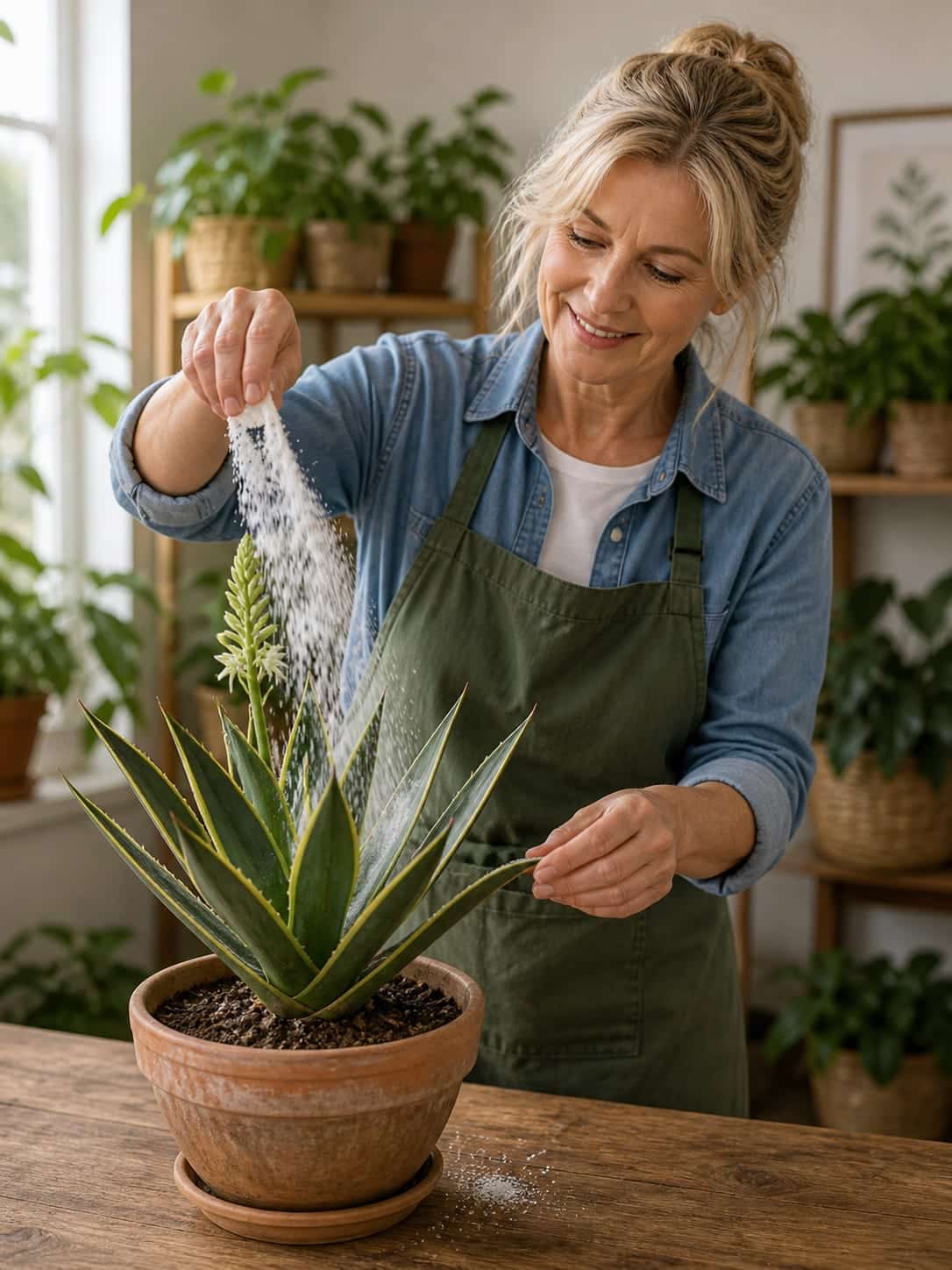
The image shows a woman sprinkling a white powder over a large aloe-like succulent in a terracotta pot. The plant looks firm and healthy, with upright green leaves edged in yellow and a tall flower spike rising from the center. The scene suggests a simple trick: sprinkle a white powder over the plant, and it may grow stronger, bloom better, or stay healthier.
But aloe plants are succulents. That means they need dry periods, excellent drainage, and careful feeding. They do not like heavy moisture, rich soil, or repeated kitchen hacks. A white powder may be harmless or useful if it is the right product used correctly, but it can also damage roots, burn leaves, clog the soil surface, or cause rot if used carelessly.
The safest rule is this: never sprinkle an unknown white powder on aloe. Some powders can help in specific situations, such as a light mineral top dressing, a properly labeled succulent fertilizer, or diatomaceous earth for certain pests. But many popular white powders, including baking soda, flour, sugar, powdered milk, and salt, should not be used on aloe plants.
This guide explains what the white powder aloe trick might be, which powders are safe, which ones to avoid, how to feed aloe properly, and what actually helps aloe plants grow strong leaves and produce flowers.
What Is the White Powder Aloe Trick?
The white powder aloe trick is a plant-care method where a powder is sprinkled over the soil or plant in hopes of improving growth, preventing pests, encouraging flowering, or reviving weak leaves. It is often shown as a simple, natural-looking plant hack.
In the image, the powder is falling over both the leaves and the soil. That is important because aloe leaves should not be coated with powder. Aloe leaves have a waxy surface that helps reduce water loss. Powders, oils, and sticky residues can interfere with that surface, collect in leaf creases, and trap moisture near the crown.
If a powder is used at all, it should usually be applied lightly to the soil surface only, not poured over the entire plant.
What Could the White Powder Be?
A white powder used around aloe could be many different things. Some are plant-safe when used correctly. Others can be harmful.
Possible plant-safe powders include:
- Succulent fertilizer powder
- Mineral top dressing such as pumice dust or perlite dust
- Diatomaceous earth for dry pest control
- Gypsum
- Dolomitic lime, only when soil conditions require it
- Mycorrhizal powder used during repotting
- A tiny amount of Epsom salt dissolved in water, not sprinkled dry
Risky or unsuitable powders include:
- Baking soda
- Table salt
- Sugar
- Flour
- Cornstarch
- Powdered milk
- Laundry powder
- Cleaning powder
- Bleach powder
- Unknown pest poison
- Any unidentified white substance
If the powder is not labeled for plants, succulents, or garden use, do not apply it. Aloe roots and leaf bases can be damaged by the wrong powder.
Is White Powder Good for Aloe Plants?
White powder is not automatically good for aloe plants. It depends entirely on what the powder is and why you are using it.
A light layer of dry diatomaceous earth may help with some crawling insects if kept dry. A proper succulent fertilizer may help during active growth if diluted or applied according to the label. Mycorrhizal powder may help during repotting if it contacts the roots. But random kitchen powders can cause mold, salt buildup, pests, and root damage.
Aloe plants rarely need dramatic treatments. Most healthy aloes grow best with bright light, dry soil between waterings, a gritty potting mix, and very light feeding.
Why Aloe Plants Need Caution With Powders
Aloe plants store water in their leaves. Their roots are adapted to drying between waterings. If the soil becomes dense, wet, or coated with residue, the roots can suffocate or rot.
Fine powder can settle into the soil surface and reduce airflow. If it gets wet, it may form a paste. That paste can hold moisture around the base of the plant, which is exactly where aloe is most vulnerable to rot.
The crown of the plant, where the leaves meet in the center, should stay dry and clean. Powder trapped there can become a problem when watered.
Should Powder Be Sprinkled on Aloe Leaves?
No. Powder should not be sprinkled directly over aloe leaves. If powder lands on the leaves, gently brush or wipe it off.
Aloe leaves are not meant to be dusted with fertilizer, baking soda, milk powder, or other dry substances. Coating the leaves can leave marks, attract moisture, or settle between the leaves where it is difficult to remove.
If you want to clean aloe leaves, use a soft dry cloth or a barely damp cloth. Avoid leaf shine products, oils, and kitchen mixtures.
Keep Powder Away From the Aloe Crown
The crown is the central growing point of the aloe. It is one of the most important parts of the plant. If powder collects in the crown and later becomes wet, it can encourage rot.
When watering aloe, you should water the soil around the plant, not pour water into the center. The same rule applies to powders. Keep treatments away from the crown and leaf joints.
Is Baking Soda Good for Aloe Plants?
No, baking soda is not a fertilizer for aloe. It does not provide balanced plant nutrition, and it contains sodium. Sodium buildup can harm roots over time.
Baking soda is often promoted as a plant hack, but it should not be sprinkled into aloe soil as a growth booster. It can disturb soil chemistry and create unnecessary stress.
If your aloe is struggling, baking soda is not the solution. Check light, soil, watering, drainage, and roots first.
Is Epsom Salt Good for Aloe Plants?
Epsom salt contains magnesium sulfate. Magnesium can be useful for plants in very small amounts if there is a true deficiency. But most aloe plants do not need extra Epsom salt, especially if they are grown in fresh succulent mix and occasionally fertilized.
If Epsom salt is used, it should be dissolved in water at a very weak concentration, not sprinkled dry in a pile. Too much can create salt buildup and stress roots.
For most aloe plants, a diluted succulent fertilizer is safer and more balanced.
Is Diatomaceous Earth Safe for Aloe?
Diatomaceous earth can be used around aloe plants, but carefully. It is a fine white powder often used for pest control. It works best when dry, so it is not very effective if constantly wet.
If you use diatomaceous earth, apply a very thin layer on dry soil only. Do not inhale the dust. Do not coat the leaves or crown. Do not pile it thickly around the base of the plant.
Diatomaceous earth is not fertilizer. It should not be used as a general growth booster.
Can Powdered Fertilizer Help Aloe?
Powdered fertilizer can help only if it is designed for plants and used correctly. Many powdered fertilizers are meant to be dissolved in water before application. Sprinkling dry fertilizer directly into the pot can create concentrated spots that burn roots.
Aloe plants need very little fertilizer. During spring and summer, you can feed with a cactus or succulent fertilizer diluted to half strength or weaker. Once every one to two months during active growth is usually enough.
Do not fertilize aloe in winter if it is not actively growing. Do not fertilize a stressed, rotten, or newly repotted aloe right away.
Can Lime or Gypsum Help Aloe?
Lime and gypsum are mineral amendments used for specific soil conditions. They should not be sprinkled casually. Lime can raise soil pH, while gypsum can add calcium without raising pH as strongly.
Aloe plants usually do not need these products unless there is a known soil issue. If your aloe is in old compacted soil, repotting into a fresh gritty succulent mix is usually better than guessing with mineral powders.
Is Powdered Milk Good for Aloe?
No. Powdered milk should not be used on aloe plants. It can mold, smell sour, attract pests, and create residue in the pot. Although milk contains calcium, it is not a clean or reliable plant supplement.
Food-based powders are especially risky for succulents because they can hold moisture near the soil surface.
Is Flour or Cornstarch Good for Aloe?
No. Flour and cornstarch become sticky when wet. They can form paste, clog the soil surface, attract insects, and encourage mold.
Aloe plants need dry, airy, gritty soil. Starchy kitchen powders work against that need.
Is Sugar Good for Aloe?
No. Sugar does not feed aloe in the way people imagine. Plants make their own sugars through photosynthesis. Adding sugar to the soil can feed microbes, attract ants or gnats, and create sticky residue.
Do not sprinkle sugar on aloe plants.
Why the Aloe in the Image Looks Healthy
The aloe-like plant in the image appears firm, upright, and mature. It has a tall flower spike, which usually means the plant has enough energy to bloom. That is a sign of good overall care.
A healthy flowering aloe does not need aggressive treatments. In fact, adding unnecessary powders or fertilizers while a succulent is already doing well may cause more harm than good.
If your aloe is flowering, keep care stable. Do not suddenly overfeed it or change everything at once.
Can White Powder Make Aloe Bloom?
No powder can guarantee aloe blooms. Aloe plants flower when they are mature and growing in favorable conditions. Blooming depends on light, age, seasonal changes, root health, and overall plant strength.
Aloe grown indoors may bloom less often than aloe grown in very bright conditions. To encourage blooms, provide strong bright light, avoid overwatering, use a well-draining mix, and allow the plant to experience a natural growth cycle.
Fertilizer can support a healthy plant, but it does not force flowers instantly.
What Actually Helps Aloe Plants Grow Strong?
The best aloe care is simple:
- Give very bright light.
- Use a pot with drainage holes.
- Plant in gritty cactus or succulent mix.
- Water deeply but infrequently.
- Let the soil dry completely between waterings.
- Keep water out of the crown.
- Feed lightly during active growth.
- Remove dead leaves at the base.
- Protect from cold drafts.
- Avoid heavy homemade treatments.
These basics do far more than a spoonful of mystery powder.
Best Light for Aloe Plants
Aloe plants need bright light to stay compact, strong, and healthy. Indoors, a sunny window is usually best. A south-facing or west-facing window can work well, although sudden harsh sun may scorch plants that were previously in low light.
If your aloe has been in a dim spot, move it gradually into brighter light. Sudden direct sun can burn the leaves.
Signs of too little light include stretching, pale growth, weak leaves, and leaning toward the window. Signs of too much sudden sun include brown or bleached patches.
How to Water Aloe Correctly
Aloe plants prefer deep but infrequent watering. When the soil is fully dry, water thoroughly until excess drains from the bottom. Then empty the saucer.
Do not water again until the soil has dried completely. Depending on light, temperature, pot size, and season, this may take one week, two weeks, three weeks, or longer.
Never keep aloe soil constantly damp. Constant moisture is one of the fastest ways to rot an aloe plant.
Why Drainage Is Essential
The terracotta pot in the image is a good choice if it has a drainage hole. Terracotta breathes and helps soil dry faster than glazed ceramic or plastic. That can be helpful for succulents.
However, the saucer should not hold standing water. After watering, let the pot drain fully and empty the saucer. Aloe roots should not sit in water.
If your pot has no drainage hole, repot the aloe into one that does.
Best Soil for Aloe Plants
Aloe plants need gritty, fast-draining soil. Regular potting soil alone is often too moisture-retentive. A better mix includes coarse materials that create air pockets.
A simple aloe mix can include:
- 2 parts cactus or succulent mix
- 1 part perlite or pumice
- 1 part coarse sand, lava rock, or small orchid bark
The mix should drain quickly and feel loose, not dense or muddy. If powder or amendments make the soil compact, they are not helping.
Should You Add Powder to Aloe Soil?
Only if it has a clear purpose. A labeled slow-release succulent fertilizer may be added according to directions. A light mineral top dressing may help keep the surface dry. Diatomaceous earth may be used briefly for pests.
But aloe soil should not be repeatedly treated with kitchen powders or mystery products. Succulents prefer lean soil. Too many additives can create salt buildup, mold, or poor drainage.
How to Apply a Safe Powder Correctly
If you are using a plant-safe powder, use it carefully:
- Identify the product first.
- Read the label.
- Use less rather than more.
- Apply to the soil only.
- Keep it away from leaves and the crown.
- Do not pile it around the base.
- Do not use on wet soil unless instructed.
- Do not water immediately unless the product requires it and the soil is dry.
- Watch for crust, mold, pests, or leaf damage.
- Stop using it if the plant reacts badly.
For aloe, restraint is important. A light application is safer than a heavy sprinkle.
What to Do If Powder Gets on Aloe Leaves
If powder lands on the leaves, remove it. Use a soft dry brush, a clean cloth, or a slightly damp cloth if needed. Be gentle around leaf edges and spines.
Pay special attention to the crown. If powder is trapped between leaves, brush it out carefully. Do not leave powder sitting in the center of the plant.
What to Do If You Used Too Much Powder
If you accidentally used too much powder, remove as much as possible from the soil surface. If the powder is harmless mineral dust, a small amount may not matter. If it is fertilizer, baking soda, salt, sugar, flour, powdered milk, or unknown, remove it immediately.
If the powder has dissolved into the soil, you may need to flush the pot with plain water if it drains well. Let it drain completely afterward. If the soil becomes sticky, sour, or crusty, repot into fresh succulent mix.
Signs the Powder Is Hurting Your Aloe
Stop using the powder if you notice:
- White crust on the soil
- Mold on the surface
- Fungus gnats
- Soft leaf bases
- Brown wet spots
- Sour smell from the pot
- Leaves becoming mushy
- Powder clumping into paste
- Leaf burn or residue
- Slow collapse of the crown
These signs suggest moisture problems, chemical stress, or buildup. Correct the soil and watering first.
How to Tell If Aloe Is Overwatered
Overwatered aloe often has soft, mushy, or translucent leaves. The base may feel weak. Leaves may turn yellow, brown, or collapse. The soil may stay wet for too long or smell unpleasant.
If you suspect overwatering, stop watering and inspect the roots. Healthy aloe roots are firm. Rotten roots are dark, mushy, or slimy.
Do not add powder or fertilizer to an overwatered aloe. It needs drying, root inspection, and possibly repotting.
Continue to Page 2
Continue to page 2 for more details about this article and the key points many readers miss on the first page.