How to Save an Overwatered Aloe
Remove the aloe from the pot. Shake away wet soil. Cut off rotten roots and mushy leaves with clean tools. Let the plant dry briefly in a shaded airy place. Repot into dry gritty succulent mix.
Wait several days before watering if roots were trimmed. Then water lightly and only when the soil is dry.
Aloe recovery depends on dry, clean conditions, not heavy treatments.
How to Tell If Aloe Is Underwatered
Underwatered aloe may have thin, curled, wrinkled, or inward-folding leaves. The leaves may feel less plump than usual. The soil will be very dry and the pot may feel light.
If the plant is underwatered, water deeply with plain water and let it drain. Do not start with fertilizer or powder. Rehydration should come first.
How to Feed Aloe Safely
Aloe plants are light feeders. Too much fertilizer can cause weak growth, salt buildup, or root burn.
Use a cactus or succulent fertilizer diluted to half strength or weaker. Feed only during spring and summer when the plant is actively growing. Once every one to two months is enough for most indoor aloe plants.
Do not feed during winter dormancy. Do not feed a newly repotted or stressed plant until it stabilizes.
Can Aloe Grow Without Fertilizer?
Yes. Aloe plants can grow for a long time with little fertilizer, especially if they are in fresh soil and good light. Fertilizer can support growth, but it is not the main secret.
In many homes, aloe problems come from too much care rather than too little. Overwatering, overfeeding, and unnecessary additives cause more trouble than neglect.
How to Encourage Aloe Flowers
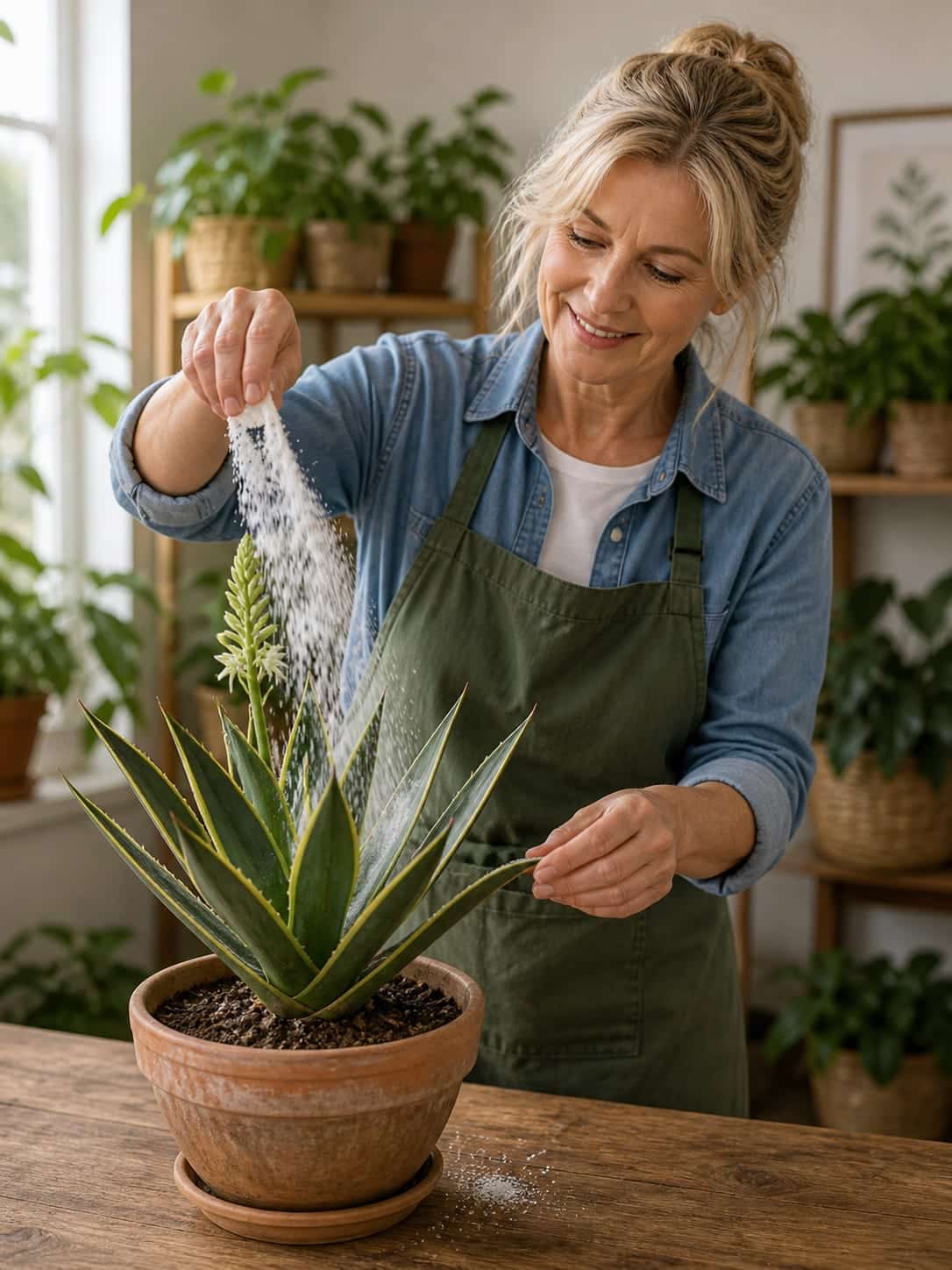
Aloe flowers usually appear on mature plants that receive enough light. A tall flower spike, like the one shown in the image, is a sign that the plant has stored enough energy to bloom.
To encourage flowering:
- Provide very bright light.
- Allow the soil to dry between waterings.
- Use a gritty well-draining mix.
- Keep the plant slightly snug in its pot.
- Feed lightly during active growth.
- Avoid moving the plant constantly.
- Protect it from cold damage.
Patience matters. Aloe flowers are a result of long-term health, not instant tricks.
Should You Cut Off the Aloe Flower Spike?
You can enjoy the flower spike until the blooms fade. Once the spike has finished flowering and starts to dry, cut it near the base with clean scissors or pruners.
Do not pull it out by force. Cutting is safer and avoids damage to the crown.
Should You Repot Aloe While It Is Flowering?
Avoid repotting while the plant is flowering unless there is an emergency such as rot or a broken pot. Flowering uses energy, and repotting can add stress.
Wait until blooming is finished, then repot if needed. If the soil is poor or the plant is root-bound, repotting after bloom can help future growth.
When to Repot Aloe
Repot aloe when:
- The pot is overcrowded with pups
- Roots are circling tightly
- The soil stays wet too long
- The pot has no drainage
- The plant is top-heavy
- The soil is old, compacted, or sour
- The pot has cracked
Choose a pot only slightly larger than the root ball. A pot that is too large holds extra moisture and increases rot risk.
How to Remove Aloe Pups
Aloe plants often produce pups, or offsets, around the base. These can be separated and grown into new plants.
Wait until pups have their own roots if possible. Remove the plant from the pot, gently separate the pup, let any cut area callus for a day or two, then plant it in dry succulent mix. Water lightly after several days.
Do not sprinkle powder heavily on fresh pups. Young roots are sensitive.
Can Powder Help Aloe Pups Grow?
A rooting powder or mycorrhizal product may help during propagation if used according to the label, but it is not required. Most aloe pups root easily when they are separated properly and planted in dry gritty soil.
The biggest mistake with pups is watering too soon or too often. Let them settle before watering.
How to Prevent Aloe Pests
Aloe plants can attract pests such as mealybugs, scale, and fungus gnats. Good care helps prevent them.
- Avoid overwatering.
- Keep the plant in bright light.
- Inspect leaf bases regularly.
- Remove dead leaves from the soil surface.
- Do not use food-based powders.
- Quarantine new plants before placing them near others.
If pests appear, treat the pest directly rather than relying on random powders.
How to Treat Mealybugs on Aloe
Mealybugs often hide in leaf joints and look like white cottony spots. Remove them with a cotton swab dipped in rubbing alcohol, being careful not to flood the crown. Repeat treatment weekly until gone.
For larger infestations, use an insecticidal soap or horticultural oil labeled for succulents. Test a small area first and keep the plant out of direct sun after treatment.
How to Treat Fungus Gnats
Fungus gnats usually mean the soil is staying too wet. Let the soil dry completely. Use yellow sticky traps for adult gnats. If needed, use a biological control such as mosquito-bit water according to product instructions.
Diatomaceous earth may help only if the soil surface stays dry, but it is not a full solution if watering remains excessive.
Why Terracotta Is Good for Aloe
Terracotta pots are porous, which means they allow moisture to evaporate through the sides. This helps succulent soil dry faster. For aloe plants, that is usually a benefit.
The pot in the image appears to be terracotta, which is a good match for aloe as long as it has a drainage hole. The saucer should be emptied after watering.
Should Aloe Be Top-Dressed?
A mineral top dressing can be useful for aloe if applied lightly. Materials such as pumice, lava rock, coarse sand, or small gravel can keep the surface dry and reduce soil splash. They also give the pot a clean look.
However, avoid thick layers that trap moisture or hide the soil condition. You still need to know when the soil is dry.
Why Food-Based Plant Hacks Are Risky for Aloe
Many online plant tricks use kitchen ingredients such as milk, sugar, rice powder, coffee, flour, or baking soda. Aloe plants are not heavy-feeding tropical plants. They are succulents that prefer lean, clean soil.
Food-based additives can mold, attract pests, and hold moisture. They may seem natural, but natural does not always mean safe for potted succulents.
For aloe, simple mineral-based care is usually better than kitchen experiments.
A Safe White Powder Routine for Aloe
If you want to use a white powder around aloe, use this safe checklist:
- Identify the powder clearly.
- Use only plant-safe products.
- Apply only to the soil surface.
- Keep it off the leaves.
- Keep it out of the crown.
- Use a thin layer, not a pile.
- Do not apply to wet soil unless instructed.
- Do not combine multiple powders.
- Water only when the soil is dry.
- Stop if you see mold, crust, gnats, or softness.
This approach keeps the plant protected while avoiding the biggest risks.
Common Mistakes With the White Powder Aloe Trick
Using Unknown Powder
Never use powder unless you know exactly what it is.
Sprinkling Powder Over the Leaves
Aloe leaves should stay clean and dry. Powder belongs on soil only if it is safe.
Piling Powder Around the Crown
This can trap moisture and cause crown rot.
Using Baking Soda as Fertilizer
Baking soda is not plant food and can harm soil balance.
Using Food Powders
Flour, sugar, powdered milk, and cornstarch can mold and attract pests.
Feeding Too Often
Aloe plants need very little fertilizer.
Watering Too Frequently
Overwatering is far more dangerous than underfeeding.
Frequently Asked Questions
What is the white powder being sprinkled on the aloe?
It could be succulent fertilizer, diatomaceous earth, mineral dust, lime, gypsum, or another plant product. It should only be used if it is clearly identified and safe for plants.
Can white powder make aloe grow faster?
Only a proper fertilizer may support growth, and even then aloe grows best with bright light and correct watering. Powder alone will not create fast growth.
Is baking soda good for aloe plants?
No. Baking soda is not a fertilizer and should not be sprinkled on aloe soil.
Can I sprinkle Epsom salt on aloe?
Do not sprinkle it dry. If used at all, it should be dissolved weakly in water and used rarely.
Can powder on aloe leaves hurt the plant?
Yes. Powder can leave residue, collect moisture, or settle in the crown. Brush or wipe it off.
How often should I fertilize aloe?
Feed lightly during spring and summer, usually once every one to two months with diluted cactus or succulent fertilizer.
Why is my aloe turning mushy?
Mushy aloe usually means overwatering, poor drainage, or rot. Stop watering and inspect the roots.
Why is my aloe wrinkled?
Wrinkled leaves may mean underwatering or damaged roots. Check the soil and roots before treating.
Can white powder help aloe bloom?
No powder can force blooms. Mature aloe plants bloom when they receive strong light and proper long-term care.
What is the best way to keep aloe healthy?
Give bright light, gritty soil, drainage, dry periods between waterings, and very light feeding.
Final Thoughts
The white powder aloe trick looks simple and convincing, especially when shown on a healthy flowering plant. But aloe plants do not need mystery powders to thrive. They need bright light, dry roots, gritty soil, and careful watering.
If the powder is a real plant-safe product, such as a labeled succulent fertilizer, diatomaceous earth, or mineral amendment, it may be useful in specific situations. But it must be applied lightly and kept off the leaves and crown. If the powder is baking soda, flour, sugar, powdered milk, salt, cleaning powder, or anything unknown, it should not be used.
Aloe plants are strong, but they are not immune to bad care. Too much moisture, dense soil, and unnecessary additives can cause rot. The plant in the image already looks mature and capable of flowering, which means the best approach is to keep its care stable rather than overload it with treatments.
Use powder only when you know exactly what it is and why your plant needs it. Otherwise, skip the trick and focus on the basics. A sunny window, terracotta pot, drainage hole, gritty mix, and occasional deep watering will do more for aloe than any random white sprinkle.
When cared for simply, aloe can stay firm, upright, and beautiful for years. It may even reward you with flower spikes—no mystery powder required.