A struggling houseplant can make any plant lover nervous. One week it looks green and full, and the next it has crispy brown leaves, yellow patches, weak stems, and dry-looking growth. When a plant reaches that stage, it is tempting to reach for a quick fix: a liquid plant tonic, a few drops of “revival” solution, a homemade oil, or a concentrated nutrient booster.
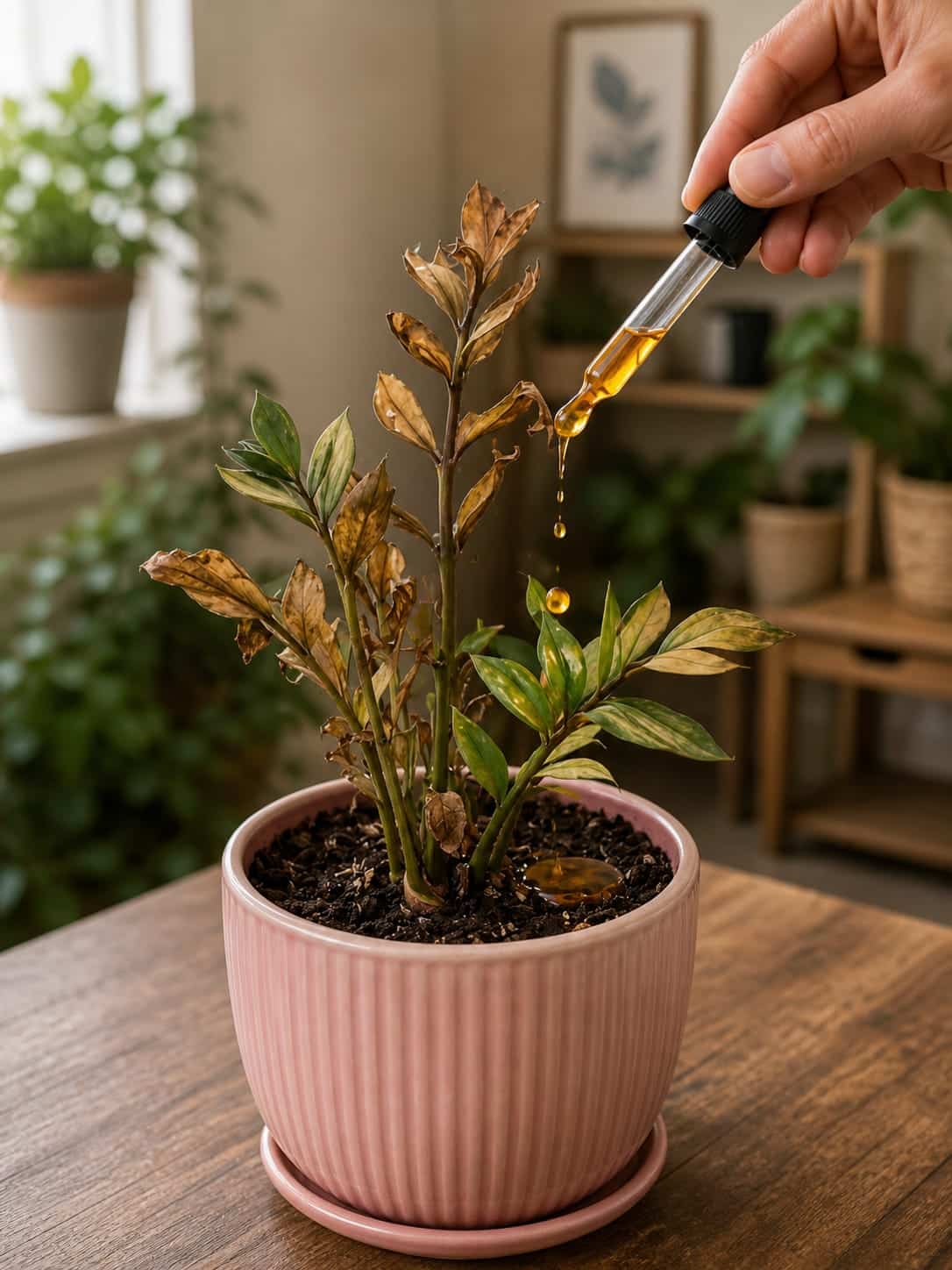
The image shows a stressed houseplant in a pink ribbed pot. Several leaves are brown, curled, and dry, while a few newer leaves still look green and alive. A hand is applying an amber liquid from a dropper directly near the plant. The visual suggests a rescue trick: a few golden drops may help revive the plant and bring it back from decline.
This kind of plant-care trick is popular because it looks precise and powerful. A dropper bottle feels like medicine for plants. The amber liquid might be plant food, rooting hormone, seaweed extract, humic acid, neem oil, diluted fertilizer, or a homemade tonic. But this is also where the danger begins. A plant that is already stressed can be damaged even more by the wrong liquid, especially if the roots are dry, rotten, burned, or sitting in poor soil.
The safest way to understand this trick is simple: never apply an unknown amber liquid to a struggling plant. Some liquid supplements can help when used correctly, but they cannot replace diagnosis. If the plant is dying because of overwatering, root rot, underwatering, pests, sunburn, or fertilizer burn, a dropper treatment alone will not save it.
Before using any liquid revival trick, you need to know what the plant is suffering from. Once you understand the cause, you can decide whether a mild plant-safe tonic is helpful or whether the plant actually needs pruning, repotting, watering, pest treatment, or better light.
What Is the Amber Dropper Plant Trick?
The amber dropper plant trick is a method where a concentrated liquid is applied to the soil, stems, or sometimes leaves of a houseplant using a pipette or dropper bottle. It is usually presented as a rescue treatment for weak, yellowing, brown, or slow-growing plants.
The liquid may be described as a plant revival serum, root booster, growth oil, organic tonic, liquid fertilizer, anti-stress solution, or homemade plant medicine. The dropper makes the treatment look careful and controlled, but even a few drops can be too much if the liquid is strong or unsuitable.
In the image, the plant is clearly stressed. That means the first step should not be feeding. The first step should be diagnosis.
What Could the Amber Liquid Be?
An amber liquid in a dropper could be many things. Some are useful in tiny diluted amounts. Others can harm the plant quickly.
Possible plant-safe liquids include:
- Diluted liquid houseplant fertilizer
- Seaweed or kelp extract
- Humic acid solution
- Rooting tonic
- Plant vitamin solution
- Compost extract
- Diluted neem oil preparation
- Ready-to-use pest treatment labeled for houseplants
Risky or unsafe liquids include:
- Undiluted fertilizer concentrate
- Essential oils
- Cooking oil
- Vinegar
- Alcohol
- Hydrogen peroxide used too strongly
- Bleach or cleaning liquid
- Sugar syrup
- Molasses used too heavily
- Unknown homemade mixtures
- Human medication or supplement drops
If you do not know exactly what is in the dropper, do not use it. A weak plant is less able to tolerate mistakes.
Why a Struggling Plant Should Not Be Fed Immediately
Many plant owners see brown leaves and assume the plant needs fertilizer. In reality, fertilizer is often the wrong first response. A struggling plant may not be hungry. It may be unable to absorb water because its roots are damaged. It may be drowning in wet soil. It may be scorched by direct sun. It may be infested with pests. It may be sitting in compacted soil with no oxygen around the roots.
Adding fertilizer or a tonic to a plant with damaged roots can make the stress worse. Fertilizer salts can burn roots. Oil-based liquids can coat tissues. Organic tonics can sour in wet soil. Strong solutions can shock a plant that is already weak.
Fertilizer supports active growth. It does not repair rotten roots, dead leaves, or incorrect watering.
What the Plant in the Image Appears to Need First
The plant in the image has both dead brown leaves and some green leaves. That means it may still be savable, but it is under stress. The brown leaves will not turn green again. The goal is to save the living parts, protect the roots, and encourage healthy new growth.
Before applying any amber liquid, the safest steps would be:
- Remove dead, crispy leaves with clean scissors.
- Check whether the soil is dry, damp, or soggy.
- Confirm that the pot has drainage holes.
- Inspect stems and undersides of leaves for pests.
- Check the roots if the plant is soft, yellowing, or declining quickly.
- Move the plant to bright indirect light.
- Correct watering before adding any supplement.
Once the plant is stable, a mild diluted plant tonic may be used carefully. But the tonic should not come before basic rescue care.
Common Reasons Houseplants Turn Brown and Crispy
Brown, dry leaves can happen for several reasons. The cause matters because each one needs a different solution.
Underwatering
If the soil has been bone dry for a long time, leaves may curl, crisp, and turn brown. The plant may drop leaves, and stems may become weak. In this case, the plant needs careful rehydration, not fertilizer first.
Overwatering
Overwatered plants can also develop brown or yellow leaves. The leaves may look limp, soft, or patchy. Roots may rot and stop absorbing water, making the plant look dry even though the soil is wet.
Low Humidity
Some tropical houseplants develop crispy edges in dry indoor air. This usually affects leaf tips and edges first.
Too Much Direct Sun
Sunburn can create tan, brown, or bleached patches on leaves. Damaged leaves will not recover.
Fertilizer Burn
Too much fertilizer can cause brown tips, crusty soil, and root damage.
Pests
Spider mites, thrips, scale, and mealybugs can weaken plants and cause speckling, browning, curling, and leaf drop.
Cold Damage
Plants near cold windows or drafts may develop brown or black damaged tissue.
Because there are so many possible causes, a dropper treatment should never be used blindly.
How to Check the Soil Before Using Any Liquid
Stick your finger several inches into the potting mix. Do not judge only by the surface. The top may be dry while the lower soil is still wet.
If the soil is dry all the way down, the plant may need water. If the soil is damp or soggy, do not add more liquid. If the soil smells sour or rotten, the roots may be in trouble.
A moisture meter can help, but your finger and the weight of the pot are often enough. A dry pot feels light. A wet pot feels heavy.
If the Plant Is Too Dry
If the plant is crispy because it has been underwatered, do not start with fertilizer. Start with plain water.
Water slowly and evenly until water drains from the bottom. If the soil has become hydrophobic and water runs down the sides without soaking in, bottom-water the pot for 20 to 30 minutes. Then let it drain fully.
After rehydration, trim dead leaves and give the plant bright indirect light. Wait for signs of recovery before feeding. A stressed dry plant should not receive strong nutrients immediately.
If the Plant Is Too Wet
If the soil is wet and the plant is browning, the problem may be root rot. In this case, adding amber liquid is risky. Remove the plant from the pot and inspect the roots.
Healthy roots are firm. Rotten roots are mushy, dark, slimy, or foul-smelling. Trim away rotten roots with clean scissors. Repot the plant into fresh, airy potting mix and a pot with drainage.
Do not fertilize until the plant begins showing stable new growth.
If the Plant Has Root Rot
Root rot is one of the most common reasons houseplants decline. It happens when roots sit in wet, oxygen-poor soil for too long. The plant may look wilted even though the soil is damp because damaged roots cannot absorb water properly.
To treat root rot:
- Remove the plant from its pot.
- Shake away wet old soil.
- Cut off mushy roots.
- Remove dead stems and leaves.
- Let the root system air briefly if very wet.
- Repot in fresh well-draining mix.
- Use a pot with drainage holes.
- Water lightly only when needed.
- Keep in bright indirect light.
No dropper tonic can replace this process.
Can Liquid Fertilizer Help This Plant?
Liquid fertilizer can help only after the plant is stable and actively growing. If the amber liquid is fertilizer concentrate, it should not be applied directly from the dropper. It must be diluted in water according to the label, and for a stressed plant, even weaker than usual is safer.
A good rule is to wait until you see new healthy growth before fertilizing. Then use quarter-strength fertilizer once, and watch the plant’s response.
Never fertilize a plant with rotten roots, wet soil, or severe stress.
Can Seaweed or Kelp Extract Help?
Seaweed or kelp extract is often sold as a gentle plant tonic. It may help support root growth and stress tolerance when used correctly. However, it must be diluted. Strong kelp extract can still overwhelm a weak plant.
If the amber liquid is seaweed extract, mix it with water according to the label. Apply it to moist, healthy soil only after the plant has been stabilized.
Think of seaweed extract as support, not emergency medicine.
Can Humic Acid Help?
Humic acid products are sometimes used to improve nutrient availability and support soil health. They are usually brown or amber liquids. They can be useful in small amounts, but they should still be diluted and used carefully.
Humic acid will not fix rotten roots or dead leaves. It may support recovery after the main issue has been corrected.
Can Neem Oil Help?
Neem oil is often amber-colored and used for pest management. However, neem oil should not be dripped onto soil or leaves without proper dilution and emulsification. Oil can coat leaves, clog surfaces, and damage plants if applied too strongly.
If pests are present, identify them first. Then use a properly mixed neem spray or another plant-safe pest treatment according to the label. Keep the plant out of direct sun after spraying to avoid leaf burn.
Do not use neem oil as a general revival tonic.
Can Essential Oils Help Plants?
No. Essential oils are not safe general houseplant treatments. They are highly concentrated and can burn leaves or damage roots. Even small drops can be too strong.
Do not apply essential oils from a dropper to plant soil, stems, or leaves. They are not fertilizer, and they are not a reliable pest solution for houseplants.
Can Hydrogen Peroxide Help?
Hydrogen peroxide is sometimes used by plant owners for root issues, but it is often misused. Strong solutions can damage roots. It should not be used casually as a revival dropper.
If root rot is present, removing rotten roots and repotting into fresh airy soil is more important than adding peroxide. Use peroxide only if you understand the dilution and purpose.
Can Vinegar Help?
No. Vinegar should not be applied to a struggling houseplant. It can damage roots and alter the soil. Vinegar is sometimes used as a weed killer, which is a clear sign that it can harm plants.
Do not use vinegar as a plant revival liquid.
Can Sugar Water or Molasses Help?
Sugar water and molasses are not good rescue treatments for indoor potted plants. They can feed microbes, attract pests, create sticky soil, and encourage mold. Plants make their own sugars through photosynthesis; they do not need sugar poured into the pot.
A stressed houseplant needs better roots, water balance, and light—not syrup.
Why the Dropper Method Can Be Risky
A dropper applies liquid to one concentrated area. If the liquid is strong, it can create a hot spot in the soil. Roots in that area may burn or become stressed while other roots receive none of the treatment.
For fertilizers and tonics, it is usually safer to dilute the product in water and apply evenly around the pot. This spreads the solution through the root zone and reduces the chance of concentrated damage.
Dropper application is useful for precise pest treatment or small cut surfaces, but it is not the best method for feeding most plants.
Should the Amber Liquid Touch the Leaves?
Only if the product is specifically meant for leaves and properly diluted. Many liquids can stain, burn, or coat foliage. The plant in the image already has damaged leaves, so extra leaf stress should be avoided.
If liquid drips onto leaves accidentally, wipe it off with a damp cloth. Keep treatments on the soil unless the label says otherwise.
Should the Amber Liquid Touch Stems?
Be careful. Some stems are sensitive, especially on stressed plants. Concentrated liquids can cause spotting, softening, or residue buildup. Apply soil treatments to the potting mix, not directly to stems.
If the plant has cut stems, do not drip random liquid on them. Clean cuts usually heal best with airflow and cleanliness.
How to Prune the Dead Leaves First
Dead leaves use no energy, but they can harbor pests or disease and make it harder to inspect the plant. Remove fully brown, crispy, or shriveled leaves with clean scissors.
Cut close to the stem without damaging healthy tissue. If only the tip is brown, you can trim the damaged part and leave the healthy green section.
Do not remove every leaf if some are still partly green. The plant needs healthy leaves to photosynthesize and recover.
How Much of the Plant Can You Prune?
If the plant is badly damaged, avoid removing too much at once unless the tissue is fully dead or diseased. Green leaves help the plant make energy. Remove the worst dead material first, then reassess after a week or two.
If stems are completely brown and dry, cut them back. If stems are green and firm, leave them even if some leaves are damaged.
Check for Pests Before Feeding
A plant with browning leaves may have pests. Look closely under leaves, along stems, and at new growth. Use a flashlight if needed.
Watch for:
- Fine webbing from spider mites
- Tiny moving dots
- Sticky residue
- White cottony patches
- Brown scale bumps
- Black specks from thrips
- Silvery streaks on leaves
If pests are present, isolate the plant. Treat the pest problem before fertilizing. Feeding a pest-stressed plant can encourage weak growth that pests attack again.
How to Treat Pests Safely
Start by rinsing the plant gently if the plant can tolerate it. Wipe leaves with a damp cloth. Remove visible pests with cotton swabs. Then use insecticidal soap, horticultural oil, or neem according to the label.
Repeat treatment as needed because many pests have life cycles that require several rounds.
Do not combine multiple treatments at once. Too many sprays and tonics can damage a weak plant.
Check the Pot for Drainage
The plant is in a decorative pink pot with a saucer. This may be fine if the pot has drainage holes. If it does not, the plant is at high risk of root rot.
After watering, excess water must be able to escape. The saucer should be emptied so the pot does not sit in standing water.
If the pot has no drainage, repot the plant into a draining nursery pot and place that inside the decorative pot.
Why Soil Quality Matters More Than a Dropper
Old, compacted, or waterlogged soil can slowly suffocate roots. If the soil is dense, sour-smelling, or staying wet for too long, a dropper tonic will not help. It may make the soil even more unpleasant.
Most tropical houseplants prefer a mix that holds moisture but still allows air. A better mix may include potting soil, perlite, orchid bark, and coco coir. The exact blend depends on the plant type, but nearly all indoor plants benefit from drainage and airflow.
When to Repot a Struggling Plant
Repot if:
- The soil smells sour
- The soil stays wet too long
- Roots are rotting
- The pot has no drainage
- The plant is severely root-bound
- There are fungus gnats from damp soil
- Old soil is compacted or crusty
Do not repot just because one leaf is brown. But if several symptoms point to root or soil problems, repotting may be the real rescue step.
How to Repot for Recovery
Choose a pot with drainage holes. Use fresh airy potting mix. Remove old soil gently, especially if it is wet or rotten. Trim dead roots. Place the plant at the same depth as before. Do not bury stems too deeply.
After repotting, water lightly if the roots are healthy and the mix is dry. If roots were trimmed due to rot, wait a short time before watering so cuts can settle.
Keep the plant in bright indirect light and avoid fertilizer for several weeks.
Best Light for Recovery
A recovering plant needs light, but not harsh sun. Bright indirect light is usually best. Place it near a window with filtered light or a few feet back from a bright window.
Too little light slows recovery because the plant cannot produce enough energy. Too much direct sun can burn already stressed leaves.
Stable light helps new growth emerge stronger.
Best Watering Routine After Stress
Water only when the plant needs it. Do not follow a strict schedule. Check the soil first.
If the plant prefers evenly moist soil, water when the top inch begins to dry. If it prefers drying more deeply, wait longer. Always water thoroughly enough to reach the roots, then allow excess to drain.
Avoid tiny daily sips. They can keep the surface damp while lower roots remain unevenly watered.
Should You Mist a Struggling Plant?
Misting is not a cure for brown leaves. It may briefly raise humidity around the plant, but the effect does not last long. If the plant needs higher humidity, use a humidifier or place it near other plants.
Do not mist a plant with fungal issues, pests, or rotting stems. Extra moisture on damaged leaves can worsen problems.
Continue to Page 2
Continue to page 2 for more details about this article and the key points many readers miss on the first page.