Can This Dropper Trick Encourage New Growth?
A mild, properly diluted plant tonic may support new growth only after the plant’s main stress has been corrected. If the roots are healthy and the plant is in good light, a gentle nutrient boost can help.
But new growth comes from living roots, healthy stems, and enough energy. The dropper does not create life in dead tissue. Brown leaves will not turn green again.
The goal is to help the plant produce new healthy leaves, not reverse old damage.
How Long Does Recovery Take?
Recovery can take weeks or months. A plant may look unchanged for a while after the problem is fixed. This is normal. Roots often recover before leaves show improvement.
Look for small signs:
- Stems staying firm
- No more yellowing
- New leaf buds
- New root growth
- Soil drying at a healthy pace
- No sour smell
- No spreading pests
Do not keep adding treatments because you want faster results. Too many interventions can slow recovery.
What If the Plant Keeps Declining?
If the plant continues to decline after basic care is corrected, inspect the roots again. Check for pests again. Consider whether the plant is in the wrong environment.
Sometimes only part of the plant can be saved. If there are healthy stems, you may be able to take cuttings. Propagating the healthy parts can save the plant even if the original root system fails.
Should You Propagate Before It Is Too Late?
If the plant has some healthy green stems, propagation may be wise. Take cuttings from firm, healthy sections. Avoid brown, mushy, or pest-damaged stems.
Root cuttings in water or soil depending on the plant species. Keep them in bright indirect light and clean conditions.
Propagation is often the best backup plan for a plant that is declining fast.
How to Use a Plant Tonic Safely
If you have a plant-safe amber liquid and want to use it, follow this safe approach:
- Identify the product.
- Read the label.
- Dilute it properly.
- Do not apply to dead leaves.
- Do not apply to rotten roots.
- Use only after correcting watering and light.
- Apply evenly to soil, not one concentrated spot.
- Use less than the label suggests for a weak plant.
- Do not combine with other treatments.
- Wait and observe before repeating.
A weak plant needs gentle support, not a strong dose.
How Often Should You Use an Amber Plant Tonic?
For most houseplants, once every four to six weeks during active growth is enough if the product is a mild tonic or diluted fertilizer. Stronger products may be used even less often.
Do not apply a dropper treatment every day. Do not keep adding more because the plant looks bad. The plant needs time to respond.
In winter or low light, reduce or stop feeding unless the plant is actively growing.
Signs the Liquid Is Helping
A helpful treatment will not usually create instant change. Positive signs appear gradually:
- New leaves emerge healthy
- Stems stay firm
- Leaves stop yellowing
- Soil does not smell bad
- No sticky residue appears
- No leaf burn develops
- Roots look firm and active
If the plant looks stable after treatment, do not rush to repeat it.
Signs the Liquid Is Hurting
Stop using the liquid if you notice:
- New brown spots
- Sticky soil surface
- Sour smell
- Mold
- Fungus gnats
- Leaf burn
- Wilting after application
- Soft stems
- Yellowing that spreads quickly
- White crust or oily residue
If the liquid was strong or unknown, flush the soil if the pot drains well. If the soil becomes contaminated or smells bad, repot into fresh mix.
What to Do If You Added Too Much Liquid
If the plant is in a pot with drainage, flush the soil with plain room-temperature water. Let the water drain completely. Empty the saucer. Do not add fertilizer again for several weeks.
If the pot does not drain, remove the plant and repot it. A non-draining pot can trap the liquid around the roots and cause damage.
If the liquid was oil-based, sticky, or unknown, repotting is safer than simply waiting.
What If the Amber Liquid Was Oil?
If oil was applied to the soil, remove the top layer if possible. Oil can coat soil particles and interfere with water movement and airflow. If a large amount was used, repot the plant into fresh soil.
If oil touched leaves, wipe them gently with a damp cloth. Keep the plant out of direct sun.
Do not use cooking oil or essential oils as plant revival treatments.
What If the Amber Liquid Was Fertilizer Concentrate?
Fertilizer concentrate can burn roots. Flush the soil immediately if the pot drains well. Use plenty of plain water to dilute and wash out the excess. Let the pot drain completely.
If the plant is already weak, watch carefully for more yellowing or browning. If symptoms worsen, repot into fresh soil.
In the future, dilute fertilizer before applying it.
What If the Amber Liquid Was Neem Oil?
If neem oil was used correctly and pests are present, it may be helpful. If it was applied too strongly or directly from the bottle, it can stress the plant.
Wipe excess oil from leaves and avoid direct sun. If oil was poured into the soil heavily, remove the affected top layer or repot if necessary.
Neem is a pest treatment, not a general plant vitamin.
What If the Amber Liquid Was a Homemade Mix?
Homemade mixes can be unpredictable. If it contained sugar, oil, vinegar, alcohol, spices, or food ingredients, remove or flush it as soon as possible. If the soil smells bad or becomes sticky, repot.
For indoor plants, simple care is usually safer than kitchen experiments.
Common Mistakes With the Amber Dropper Trick
Using an Unknown Liquid
This is the most dangerous mistake. Always identify the liquid first.
Feeding a Rotting Plant
Rotten roots need pruning and fresh soil, not fertilizer.
Applying Concentrate Directly
Most plant products must be diluted before use.
Using Oil as a Growth Booster
Oil can coat leaves or soil and cause stress.
Adding More Treatments Too Soon
Plants need time. Repeated treatments can overwhelm them.
Ignoring Drainage
No tonic is safe in a pot that traps water.
Expecting Brown Leaves to Turn Green
Dead leaves will not recover. Focus on new growth.
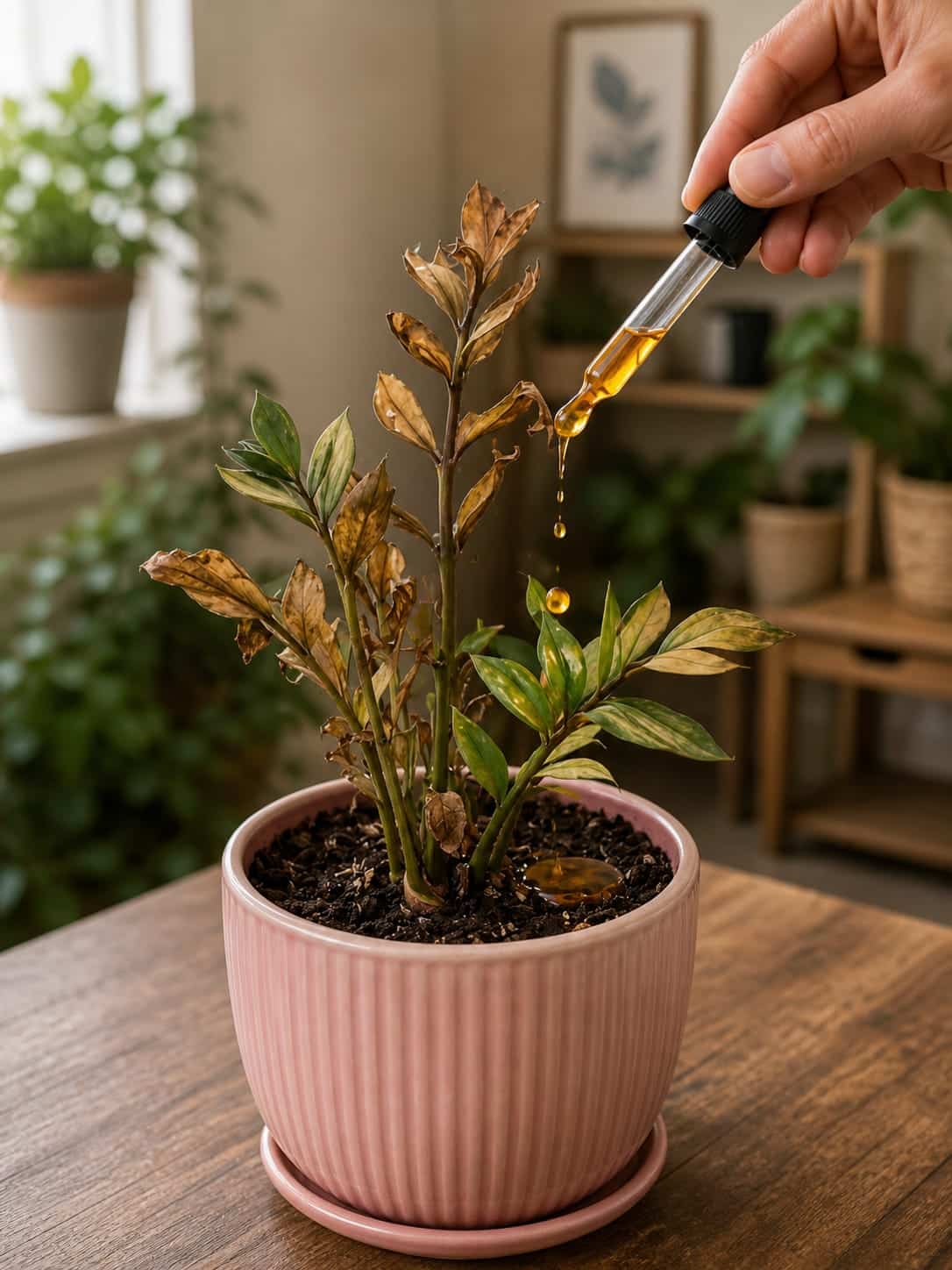
A Simple Rescue Plan for the Plant in the Image
If this plant were yours, the safest rescue plan would be:
- Stop using the dropper until the liquid is identified.
- Remove fully brown and crispy leaves.
- Check the soil moisture deep in the pot.
- Confirm the pot has drainage holes.
- Inspect for pests on stems and leaves.
- If soil is wet or sour, inspect the roots.
- Trim rotten roots if needed.
- Repot into fresh airy soil if the medium is poor.
- Place in bright indirect light.
- Water correctly and wait for new growth.
- Use diluted fertilizer only after recovery begins.
This gives the plant the best chance without adding unnecessary stress.
Frequently Asked Questions
What is the amber liquid being dropped on the plant?
It could be liquid fertilizer, seaweed extract, humic acid, neem oil, rooting tonic, or another plant product. It should only be used if it is clearly identified and safe for houseplants.
Can a dropper liquid revive a dying plant?
Only in limited cases. A liquid tonic may support recovery, but it cannot fix root rot, overwatering, pests, sunburn, or dead leaves by itself.
Should I fertilize a plant with brown leaves?
Not immediately. First check watering, roots, light, soil, and pests. Fertilize only when the plant is stable and actively growing.
Can brown leaves turn green again?
No. Fully brown leaves are dead. Remove them and focus on encouraging healthy new growth.
Is neem oil good for plant recovery?
Neem oil is mainly for pest control. It should be diluted and used according to the label. It is not a general growth tonic.
Can I use essential oils on houseplants?
No. Essential oils are too concentrated and can burn leaves or damage roots.
How often should I use plant tonic?
Most plant tonics should be used sparingly, often every four to six weeks during active growth, depending on the product. Always follow the label.
What should I do if the soil smells bad?
Stop adding liquids. Check the roots and repot into fresh airy soil if the medium is sour or rotten.
Should I apply liquid directly with a dropper?
For feeding, it is usually safer to dilute the liquid in water and apply evenly to the soil. Dropper application can create concentrated spots.
What is the best way to save a struggling houseplant?
Diagnose the cause first. Correct watering, drainage, light, soil, and pests before adding fertilizer or tonics.
Final Thoughts
The amber dropper plant revival trick looks powerful because it resembles medicine for houseplants. A few golden drops seem like they could wake up a struggling plant and restore green growth. But plants do not recover from mystery treatments. They recover when the real problem is identified and corrected.
If the amber liquid is a plant-safe product such as diluted fertilizer, seaweed extract, humic acid, or a labeled rooting tonic, it may help after the plant is stable. If it is essential oil, cooking oil, vinegar, alcohol, sugar syrup, strong fertilizer concentrate, or an unknown homemade mixture, it can make the plant worse.
The plant in the image has visible dead leaves, which means it needs basic rescue care first. Remove dead growth, check the soil, inspect the roots, confirm drainage, look for pests, and place the plant in bright indirect light. Brown leaves will not turn green again, but healthy stems and roots may produce new growth over time.
Use liquid supplements only as gentle support, not as a cure. Dilute them properly, apply them evenly, and avoid repeating treatments too often. A stressed plant needs patience, stable care, and clean growing conditions.
The real secret is not the dropper. It is diagnosis. Once you know whether the plant is too wet, too dry, pest-stressed, light-starved, or root-damaged, you can give it exactly what it needs—and avoid turning a small problem into a bigger one.