Spider plants are some of the easiest and most cheerful houseplants to grow. Their arching striped leaves spill beautifully over the edge of a pot, and mature plants produce little baby plantlets that dangle like green stars. They are forgiving, fast-growing, and perfect for shelves, windowsills, hanging baskets, and decorative planters.
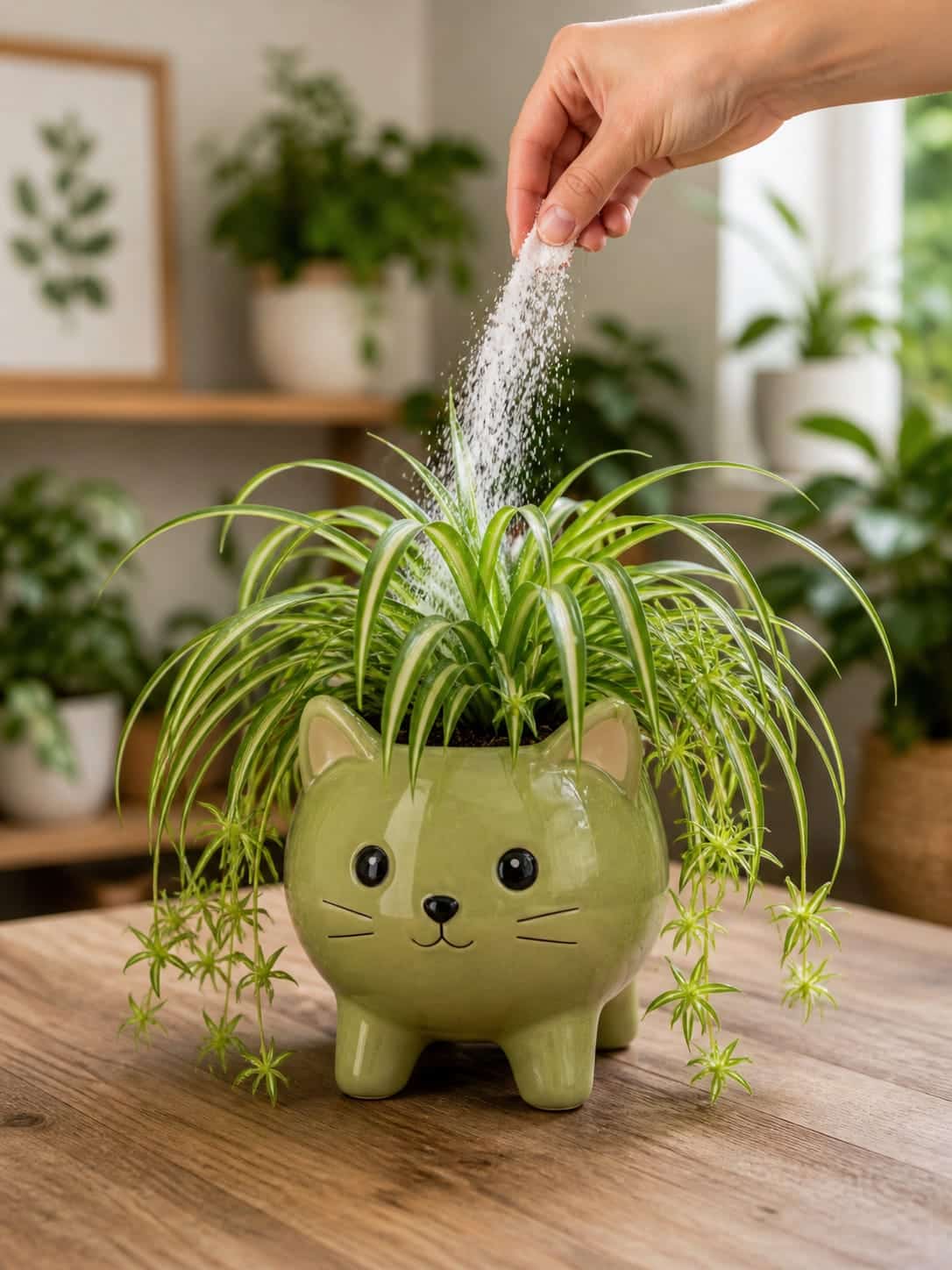
The image shows a healthy spider plant growing in a cute green cat-shaped pot while a hand sprinkles white powder over the top. The plant looks full, bright, and lively, with several baby spider plants hanging from long runners. The visual suggests a simple plant-care trick: sprinkle a white powder over the plant, and it may grow faster, produce more babies, and stay lush.
But spider plants, like all houseplants, do not need mystery powders. A white powder may be helpful if it is a proper plant-safe product used correctly, but it can also cause problems if it is baking soda, salt, flour, sugar, powdered milk, or another kitchen ingredient. Spider plants are tough, but their roots can still be damaged by salt buildup, chemical residue, mold, or poor soil conditions.
The safest rule is simple: never sprinkle an unknown white powder on a spider plant. If you know exactly what the powder is and it is labeled for plants, use it lightly and correctly. If you are guessing, skip the trick and focus on what spider plants actually love: bright indirect light, moderate watering, drainage, occasional feeding, and a slightly snug pot.
What Is the White Powder Spider Plant Trick?
The white powder spider plant trick is a houseplant-care method where a powdered substance is sprinkled over the soil or foliage. It is often presented as a way to make spider plants greener, fuller, faster-growing, or more productive with baby plantlets.
In the image, the white powder is falling directly over the leaves and crown of the plant. That may look dramatic, but it is not the safest way to apply most plant products. Spider plant leaves can hold powder in the center of the plant, and if that powder becomes damp, it may leave residue, encourage rot, or irritate tender new growth.
If a powder is used at all, it should usually be applied lightly to the soil surface, not poured over the leaves.
What Could the White Powder Be?
A white powder used on spider plants could represent several different things. Some are safe in moderation, while others should be avoided completely.
Possible plant-safe powders include:
- Water-soluble houseplant fertilizer powder
- Slow-release plant food granules or powder
- Diatomaceous earth for dry pest control
- Mycorrhizal root powder used during repotting
- Perlite dust or mineral top dressing
- Gypsum, only when needed
- Dolomitic lime, only when soil conditions require it
Unsafe or risky powders include:
- Baking soda
- Table salt
- Sugar
- Flour
- Cornstarch
- Powdered milk
- Laundry detergent
- Cleaning powder
- Bleach powder
- Unknown pest poison
- Any unidentified white powder
If the powder is not labeled for houseplants, do not use it. Spider plants are resilient, but they can decline quickly when their roots are exposed to concentrated salts or residues.
Is White Powder Good for Spider Plants?
White powder is not automatically good for spider plants. It depends on what the powder is. A proper houseplant fertilizer can support growth when used correctly. Diatomaceous earth may help with certain crawling pests if kept dry. Mycorrhizal powder may support roots during repotting.
But random kitchen powders can do more harm than good. Flour and cornstarch can become sticky. Sugar can attract insects. Powdered milk can sour and mold. Baking soda can disturb the soil and add sodium. Salt can burn roots.
Spider plants do not need extreme treatments. They respond best to steady care.
Should Powder Be Sprinkled on Spider Plant Leaves?
No. Powder should not be sprinkled directly over spider plant leaves. The leaves are narrow, arching, and layered, which means powder can easily collect in the crown and between leaf bases.
If powder lands on the foliage, gently shake the plant or wipe the leaves with a soft damp cloth. Avoid leaving powder in the center of the plant, especially if you plan to water soon.
Most plant products belong in the soil, not on the leaves, unless the label specifically says they are safe for foliar use.
Keep Powder Away From the Crown
The crown is the central point where spider plant leaves emerge. It should stay clean and airy. Powder trapped in the crown can become damp and clumpy, especially after watering or misting.
A damp clump of powder in the crown can irritate the plant or encourage fungal problems. If you use any powder on the soil, apply it around the outer soil surface rather than dumping it into the center of the plant.
Is Baking Soda Good for Spider Plants?
No. Baking soda is not a spider plant fertilizer. It does not provide balanced nutrition, and it contains sodium. Sodium buildup can damage roots and interfere with healthy growth.
Baking soda is often promoted as a quick plant hack, but it should not be sprinkled into spider plant soil as a growth booster. If your spider plant is struggling, baking soda is not the answer.
Check watering, light, drainage, pot size, and root health first.
Is Epsom Salt Good for Spider Plants?
Epsom salt contains magnesium sulfate. It can help plants only if they truly need magnesium, but most spider plants do not require extra Epsom salt if they are grown in decent potting mix and fed occasionally.
If used at all, Epsom salt should be dissolved weakly in water and used rarely. It should not be sprinkled dry over the leaves or piled on the soil.
Too much Epsom salt can cause salt buildup and nutrient imbalance.
Is Diatomaceous Earth Safe for Spider Plants?
Diatomaceous earth can be used on spider plants for certain pest issues, especially crawling insects on the soil surface. It works best when dry. Once it becomes wet, it loses much of its effectiveness until it dries again.
Use only a very thin layer on dry soil. Do not inhale the dust. Do not coat the leaves. Do not pile it into the crown.
Diatomaceous earth is not fertilizer. It will not make spider plants grow babies or become greener by itself.
Can Powdered Fertilizer Help Spider Plants?
Yes, powdered fertilizer can help if it is a real plant fertilizer and used according to the label. Many powdered fertilizers are designed to be dissolved in water before use. Sprinkling them directly onto the soil can create concentrated spots that may burn roots.
Spider plants are not heavy feeders. Too much fertilizer can cause brown tips, weak growth, and salt buildup. Use a balanced houseplant fertilizer at half strength during spring and summer.
Feeding lightly is better than feeding heavily.
Is Powdered Milk Good for Spider Plants?
No. Powdered milk should not be used on spider plants. It can mold, smell sour, attract pests, and leave residue in the soil. Although milk contains nutrients, it is not a clean or reliable fertilizer for indoor plants.
Food-based powders are especially risky indoors because they can attract fungus gnats, ants, mold, and bacteria.
Is Flour or Cornstarch Good for Spider Plants?
No. Flour and cornstarch become sticky when wet. They can form a paste on the soil surface, reduce airflow, attract pests, and encourage mold.
Spider plants prefer a light, airy potting mix. Starchy powders work against that.
Is Sugar Good for Spider Plants?
No. Sugar does not help spider plants grow. Plants make their own sugars through photosynthesis. Adding sugar to soil can feed microbes, attract insects, and create sticky residue.
If your spider plant is pale or slow-growing, give it better light and proper fertilizer rather than sugar.
Why the Spider Plant in the Image Looks Healthy
The plant in the image appears full and active. It has long arching leaves, bright variegation, and several baby plantlets. These are signs of a spider plant that is already growing well.
A healthy spider plant does not need aggressive powder treatments. In fact, unnecessary treatments can create problems. When a spider plant is already thriving, the best approach is to keep its care consistent.
Do not overload a healthy plant with repeated additives.
Can White Powder Make Spider Plants Produce More Babies?
No powder can guarantee more spider plant babies. Spider plants produce plantlets when they are mature and growing in suitable conditions. Good light, proper watering, mild feeding, and a slightly snug pot can encourage runners and babies.
If a spider plant is not producing babies, it may be too young, too shaded, overpotted, overfed, or not getting the right seasonal cues.
Powder alone will not force plantlets.
What Actually Helps Spider Plants Produce Babies?
Spider plants usually produce more babies when they are mature and slightly pot-bound. They also need enough light and steady care.
To encourage baby spider plants:
- Place the plant in bright indirect light.
- Let the top inch of soil dry before watering.
- Use a pot with drainage holes.
- Feed lightly during spring and summer.
- Avoid oversized pots.
- Keep the plant comfortably warm.
- Do not constantly disturb the roots.
- Let runners remain on the plant until plantlets develop.
A spider plant with healthy roots and bright light is more likely to produce runners than one treated with random powder.
Best Light for Spider Plants
Spider plants grow best in bright indirect light. They can tolerate lower light, but they may grow more slowly and produce fewer babies. Variegated spider plants may also lose some brightness in deep shade.
Place them near an east-facing window, a bright north-facing window, or a few feet back from a sunny south or west window. Avoid harsh direct afternoon sun, which can scorch leaves.
Good light is one of the real secrets to a full spider plant.
How to Water Spider Plants Correctly
Spider plants like evenly moist soil, but they do not like sitting in water. Water when the top inch of soil feels dry. Then water thoroughly until excess drains from the bottom.
Empty the saucer after watering. The roots should not sit in standing water.
If the plant is in a decorative pot without drainage, remove it and place it in a pot with drainage holes. Good watering is impossible without drainage.
Why Brown Tips Happen on Spider Plants
Spider plants commonly develop brown tips. This can happen because of dry air, inconsistent watering, fluoride or minerals in tap water, fertilizer buildup, underwatering, overwatering, or direct sun.
Brown tips do not always mean the plant is dying. They are often cosmetic. You can trim them with clean scissors, following the natural shape of the leaf.
If brown tips are widespread, review your water quality and fertilizer use before adding powder.
Should You Use Filtered Water?
Spider plants can be sensitive to minerals and chemicals in some tap water. If your plant gets frequent brown tips despite good care, try rainwater, distilled water, or filtered water.
This simple change often helps more than any powder trick.
Continue to Page 2
Continue to page 2 for more details about this article and the key points many readers miss on the first page.