Best Soil for Spider Plants
Spider plants like a light, well-draining potting mix that still holds some moisture. Regular indoor potting mix can work, especially if improved with perlite or orchid bark.
A simple spider plant mix can include:
- 2 parts indoor potting mix
- 1 part perlite
- 1 part fine orchid bark or coco chips
The goal is soil that holds moisture but does not stay soggy. If powder makes the surface compact, sticky, or crusty, it is not helping.
How to Fertilize Spider Plants Safely
Spider plants benefit from light feeding during active growth. Use a balanced houseplant fertilizer diluted to half strength. Feed once a month during spring and summer.
Do not feed heavily. Too much fertilizer can cause brown tips and salt buildup.
In fall and winter, reduce or stop feeding unless the plant is actively growing in bright light.
Can Spider Plants Grow Without Fertilizer?
Yes. Spider plants can grow well with very little fertilizer, especially in fresh potting mix. Fertilizer can support fuller growth, but it is not the main secret.
Light, water, drainage, and root health matter more. A plant in poor light will not become lush just because it receives powder or fertilizer.
Why Drainage Matters
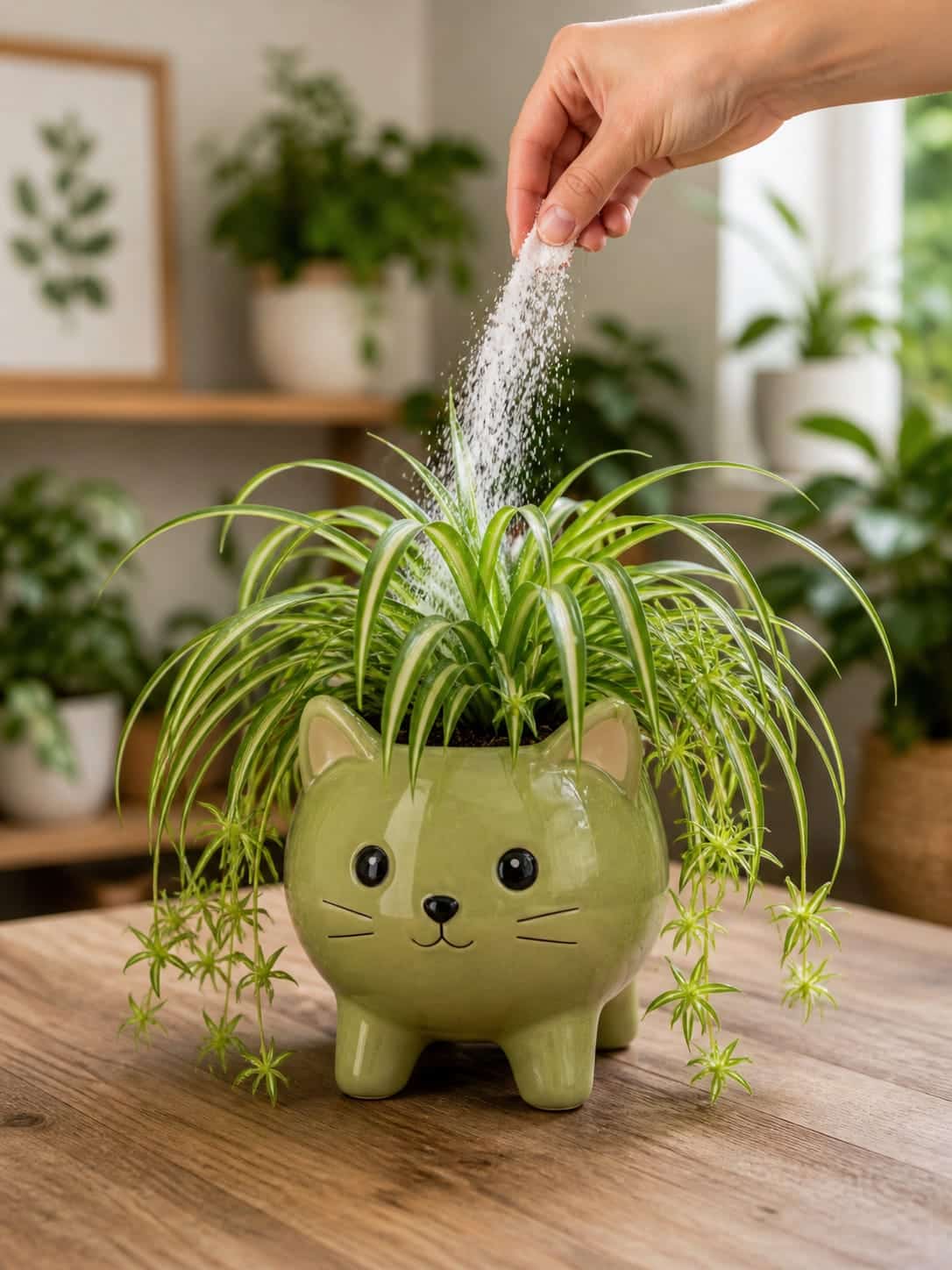
The cute cat-shaped pot in the image is decorative and charming, but the most important question is whether it has a drainage hole. Spider plants need excess water to escape.
If the pot does not drain, water can collect at the bottom and rot the roots. A decorative pot can still work if the spider plant is kept in a nursery pot inside it and removed for watering.
Never rely on powder to fix poor drainage.
How to Use a Plant-Safe Powder Correctly
If you have a real plant-safe powder, use it carefully:
- Identify the product.
- Read the label.
- Apply only to the soil unless the label says otherwise.
- Keep it out of the crown.
- Keep it off the leaves.
- Use a very small amount.
- Do not apply to wet soil unless instructed.
- Do not combine several powders at once.
- Water only if needed and appropriate.
- Stop if mold, crust, pests, or leaf damage appears.
When caring for spider plants, less is usually safer than more.
What to Do If Powder Gets on the Leaves
If powder lands on spider plant leaves, gently shake the plant or wipe the leaves with a soft damp cloth. If powder settles in the crown, brush it out carefully.
Do not mist the plant while powder is sitting on the leaves. Moisture can turn powder into residue and make it harder to remove.
What to Do If You Used Too Much Powder
If you applied too much powder, remove as much as possible from the soil surface. If the powder is fertilizer or an unknown substance, it may be safest to remove the top layer of soil and replace it with fresh mix.
If the product dissolved into the soil and the pot has drainage, flush the soil with plain water and let it drain completely. If the pot has no drainage, repot the plant into fresh soil.
If the powder was flour, sugar, powdered milk, salt, baking soda, or cleaning product, repotting is usually the safest choice.
Signs the Powder Is Hurting Your Spider Plant
Stop using the powder if you notice:
- Brown leaf tips getting worse
- White crust on soil
- Sticky or sour-smelling soil
- Mold growth
- Fungus gnats
- Leaves becoming limp
- Yellowing leaves
- Crown rot
- Powder clumping between leaves
- Roots becoming soft or dark
These signs suggest buildup, poor drainage, mold, or root stress.
How to Tell If a Spider Plant Is Overwatered
An overwatered spider plant may have yellow leaves, soft growth, mushy roots, or a sour smell from the soil. The plant may look limp even though the soil is wet.
If this happens, stop watering and check the roots. Remove rotten roots and repot into fresh airy mix if needed.
Do not add powder or fertilizer to an overwatered spider plant.
How to Tell If a Spider Plant Is Underwatered
An underwatered spider plant may have pale, curling, crispy, or limp leaves. The soil will feel very dry, and the pot may feel light.
Water thoroughly with plain water and let it drain. If the soil has become hydrophobic, bottom-water the pot for 20 to 30 minutes, then let it drain fully.
Do not fertilize a severely dry plant until it has recovered.
How to Repot a Spider Plant
Repot when the plant is severely root-bound, dries out too quickly, has poor soil, or is declining due to root problems. Choose a pot only one size larger than the current one.
Remove the plant gently, loosen the outer roots, trim dead roots, and place it in fresh well-draining mix. Water thoroughly after repotting if the roots are healthy.
Avoid fertilizing immediately after repotting. Fresh soil and recovery time are enough at first.
Do Spider Plants Like Being Root-Bound?
Spider plants can tolerate being somewhat root-bound, and a slightly snug pot may encourage plantlets. However, if the roots are packed so tightly that water cannot absorb properly, the plant may suffer.
The goal is not extreme crowding. The goal is a comfortable pot that supports healthy roots without holding too much wet soil.
How to Propagate Spider Plant Babies
Spider plant babies are easy to propagate. Wait until the baby has small roots or root bumps. Then place it in water or directly into moist potting mix.
You can leave the baby attached to the mother plant while it roots in a small pot nearby, or you can cut it off and root it separately.
Keep the baby in bright indirect light and avoid overwatering. No powder is needed.
Can Powder Help Spider Plant Babies Root?
Rooting powder is usually unnecessary for spider plants. The babies root easily on their own. If you use a rooting product, apply it only according to the label and only to the root area, not over the leaves.
Plain water, light potting mix, and patience are usually enough.
Why Spider Plant Babies Sometimes Dry Up
Plantlets may dry up if the mother plant is stressed, underwatered, in low light, or struggling with poor roots. Babies can also dry if the air is very dry or if they are left dangling too long without enough moisture.
Improve the mother plant’s care first. Then propagate the strongest babies.
Should You Cut Off Spider Plant Babies?
You can leave them for a full cascading look or remove them for propagation. Removing some babies can help the mother plant conserve energy if it is stressed.
If the plant is healthy, leaving them is fine. If the plant is weak, trim some runners and focus on root and leaf health.
How to Make a Spider Plant Fuller
To make a spider plant look fuller, give it bright indirect light, rotate the pot regularly, water consistently, and propagate a few babies back into the same pot.
Planting rooted babies around the mother plant creates a lush, full look. This is safer and more reliable than sprinkling mystery powder.
Should You Mist Spider Plants?
Spider plants can tolerate normal indoor humidity, but they appreciate moderate humidity. Misting is not necessary and does not solve dry air for long. It can also make powder residue worse if you recently sprinkled anything on the plant.
If your home is very dry, use a humidifier or group plants together instead of relying on misting.
How to Prevent Pests on Spider Plants
Spider plants can attract pests such as spider mites, mealybugs, scale, and fungus gnats. Prevention starts with healthy care.
- Avoid overwatering.
- Keep leaves clean.
- Inspect new plants before placing them nearby.
- Remove dead leaves from the soil surface.
- Do not use food-based powders.
- Give the plant good airflow.
If pests appear, treat them directly with a plant-safe method rather than relying on random powders.
Common Mistakes With the White Powder Spider Plant Trick
Using an Unknown Powder
This is the biggest mistake. Never use powder unless you know what it is.
Sprinkling Powder on Leaves
Spider plant leaves should stay clean. Apply plant-safe products to the soil only unless the label says otherwise.
Dumping Powder Into the Crown
The crown can trap powder and moisture, leading to rot or residue problems.
Using Baking Soda as Fertilizer
Baking soda is not plant food and can create sodium buildup.
Using Food Powders
Flour, sugar, powdered milk, and cornstarch can mold and attract pests.
Overfertilizing
Too much fertilizer can cause brown tips and root stress.
Ignoring Water Quality
Spider plants can develop brown tips from mineral-heavy or treated tap water.
A Safe White Powder Routine for Spider Plants
If you want to use a white powder product, follow this safe checklist:
- Confirm the powder is plant-safe.
- Read the label carefully.
- Use a very small amount.
- Apply it to soil, not leaves.
- Keep it away from the crown.
- Do not apply it to wet soil unless instructed.
- Do not combine it with other hacks.
- Water only when the plant needs water.
- Watch for brown tips, crust, mold, or gnats.
- Stop immediately if the plant reacts badly.
This method protects the plant while avoiding the risks of over-treatment.
Frequently Asked Questions
What is the white powder being sprinkled on the spider plant?
It could be fertilizer, diatomaceous earth, mineral powder, mycorrhizal powder, or something else. It should only be used if it is clearly identified and safe for plants.
Can white powder make spider plants grow more babies?
No powder can guarantee babies. Spider plants produce plantlets when they are mature, healthy, and growing in good light with proper care.
Is baking soda good for spider plants?
No. Baking soda is not a fertilizer and should not be sprinkled into spider plant soil.
Can I use Epsom salt on spider plants?
Only rarely and very diluted, if needed. Do not sprinkle it dry over the plant.
Is powdered milk good for spider plants?
No. Powdered milk can mold, sour, and attract pests.
Should powder touch the leaves?
No. If powder lands on the leaves, wipe or shake it off gently.
Why does my spider plant have brown tips?
Brown tips can come from inconsistent watering, dry air, too much fertilizer, mineral-heavy water, direct sun, or root stress.
How often should I fertilize spider plants?
Feed once a month during spring and summer with a balanced houseplant fertilizer diluted to half strength.
Do spider plants need a lot of fertilizer?
No. They are moderate to light feeders. Too much fertilizer can cause brown tips.
What is the best way to make a spider plant fuller?
Give bright indirect light, water properly, rotate the pot, and plant rooted spider plant babies back into the same pot.
Final Thoughts
The white powder spider plant trick looks appealing because it seems quick, simple, and magical. A single sprinkle appears to promise greener leaves, fuller growth, and more baby spider plants. But the truth is that spider plants do not need mystery powders to thrive.
If the powder is a real plant-safe product, such as diluted fertilizer powder, diatomaceous earth, or mycorrhizal powder, it may have a specific use. But it should be applied carefully, lightly, and mostly to the soil. It should not be dumped over the leaves or into the crown.
If the powder is baking soda, flour, sugar, powdered milk, salt, cleaning powder, or anything unknown, keep it away from your spider plant. These substances can cause mold, pests, salt buildup, root damage, and leaf problems.
The real secret to a thriving spider plant is steady care. Give it bright indirect light, a pot with drainage, a light potting mix, consistent watering, and mild fertilizer during active growth. Use filtered water if brown tips are a problem. Propagate the babies when they are ready, and add them back to the pot for a fuller look.
A healthy spider plant does not need dramatic tricks. With simple care, it will reward you with arching leaves, dangling plantlets, and years of easy indoor beauty.