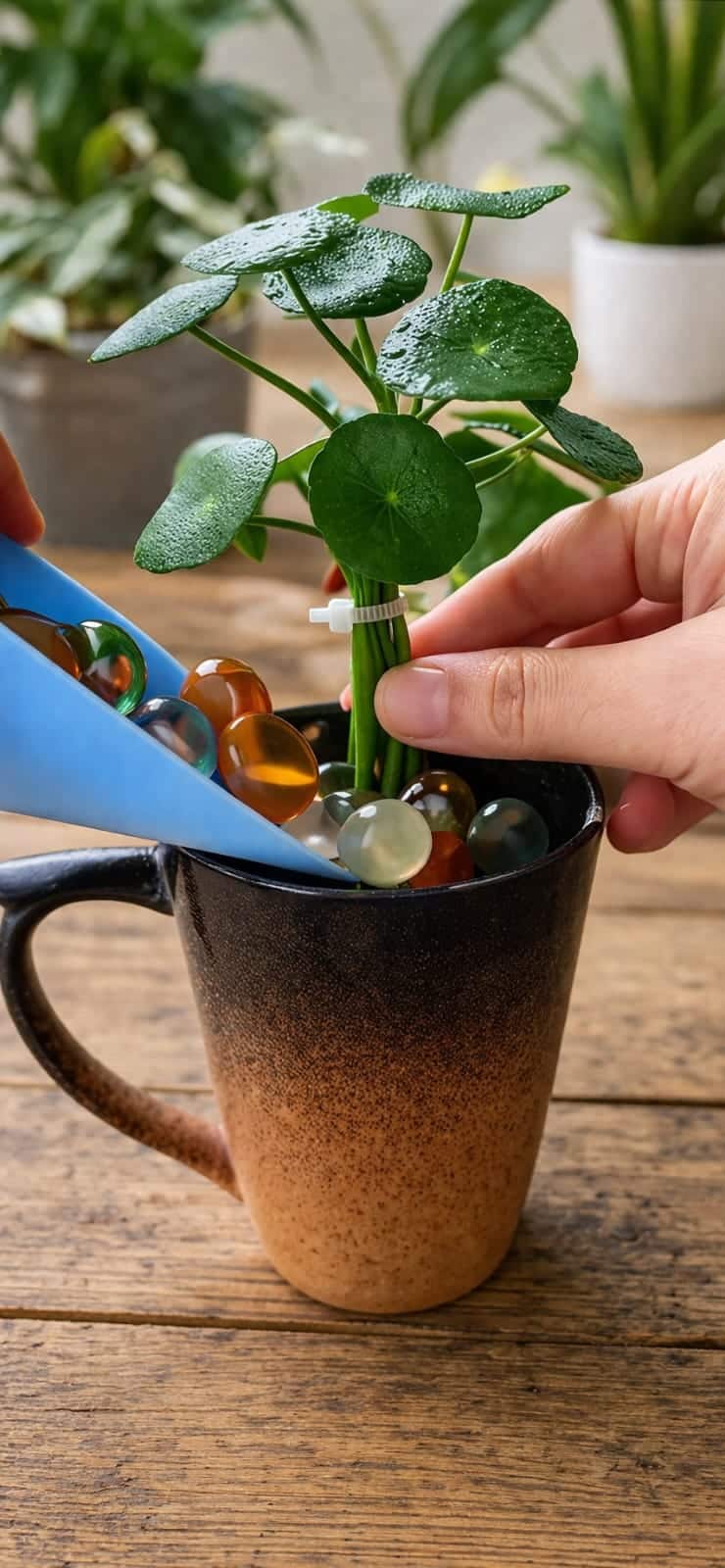
Some houseplant tricks catch your eye immediately because they look beautiful before you even understand what they are doing. The image shows one of those tricks perfectly: a small round-leaf plant, most likely a Chinese money plant, being placed inside a mug-style planter while colorful glassy beads are poured around the base. The plant stems are gently gathered with a small tie, the leaves are fresh and round, and the shiny beads create a jewel-like surface around the roots.
At first glance, it looks like a simple decorative idea. But many indoor plant lovers use this trick for more than appearance. These colorful beads are usually called water beads, hydrogel beads, gel pearls, or water-storing crystals. They absorb water, swell up, and slowly release moisture around the root zone or inside a decorative container. When used carefully, they can help create a neat, modern display while keeping the plant’s base lightly humid and supported.
This method is often called the water bead Pilea trick, the hydrogel pearl plant method, the decorative moisture bead hack, or the self-watering bead routine. It is especially popular for small plants with delicate stems, such as Pilea peperomioides, also known as the Chinese money plant, pancake plant, UFO plant, or coin plant.
The trick is visually charming because Pilea leaves already look like green coins. When you place them above glossy amber, green, clear, and smoky beads, the whole arrangement looks playful and expensive. A simple mug becomes a mini indoor plant display. The beads hide the soil, help hold the stems in position, and make the plant look like it belongs in a styled home magazine.
But like most plant tricks, this one needs to be done correctly. Water beads can be useful in decorative plant styling, but they are not magic. They do not replace healthy roots, proper light, good drainage, or the right watering schedule. If used too heavily or placed in a container with no drainage, they can keep the root zone too wet and cause problems. They can also be dangerous if pets or children swallow them, because hydrated beads can expand and cause choking or internal blockage.
So the safest version of this trick is simple: use water beads as a decorative moisture-support layer, not as the only growing medium for long-term plant health. Keep the plant’s roots in proper potting mix, use a container that drains or a removable nursery pot, and treat the beads as a stylish top dressing or short-term display tool.
In this complete guide, you will learn what the water bead Pilea trick is, how it works, how to use hydrogel beads safely, how often to refresh them, what mistakes to avoid, and what your Chinese money plant really needs to grow round, glossy, and full indoors.
What Is the Water Bead Pilea Trick?
The water bead Pilea trick is a decorative plant-care method where hydrated water beads are placed around the base of a small houseplant. In the image, the beads are being poured into a mug-like container around the stems of a round-leaf plant. The goal is to create a neat, colorful, moisture-holding surface that looks attractive and may help keep the base of the plant from drying out too quickly.
Water beads are tiny dry polymer beads that expand when soaked in water. Once hydrated, they become soft, slippery, and translucent. They can hold water inside their gel-like structure and release some moisture gradually as they dry. This is why people use them in flower arrangements, decorative plant displays, propagation setups, and sometimes as a moisture helper for houseplants.
For a Pilea, the beads can serve several purposes. They can hide bare soil, support thin stems, reduce surface dryness, and make the plant look cleaner. In a small container like a mug, they also create a finished decorative look.
However, the best way to use them is around the top of the soil, not as a complete replacement for soil. Pilea plants grow best in an airy potting mix that gives roots both moisture and oxygen. Water beads alone can keep roots too wet or unstable if used as the only medium for too long.
Think of this trick as a decorative moisture layer, not a full plant-growing system.
What Plant Is Shown in the Image?
The plant in the image looks like a Chinese money plant, also called Pilea peperomioides. This plant is known for its round, coin-shaped leaves that grow on slender stems. The leaves usually sit like little green disks or umbrellas, giving the plant a playful, modern appearance.
Pilea plants are loved because they are easy to propagate, fast-growing in good conditions, and very photogenic. They often produce little baby plants around the base, which can be separated and shared. This is why the plant is sometimes called the friendship plant, although that name is also used for other plants.
The plant in the image appears to have its stems gathered together with a small tie. This may be done to keep the plant upright while the decorative beads are added. Pilea stems can lean toward light, and young plants sometimes need gentle support while they settle into a container.
The water bead trick works especially well visually with Pilea because the round leaves and round beads echo each other. The plant looks like green coins rising from colorful polished stones.
Why People Use Water Beads Around Houseplants
Water beads are popular because they solve a few visual and practical problems at the same time. First, they make the top of the pot look clean. Instead of seeing bare soil, bark pieces, or perlite, you see glossy colorful pearls. This makes the plant look more decorative on a desk, kitchen table, shelf, or windowsill.
Second, they can hold a little moisture near the surface. This can be useful in very dry indoor air, especially for small plants that dry quickly. The beads release moisture slowly as they shrink.
Third, they can help support delicate stems. When placed around the base, they gently hold stems in place without compacting like wet soil.
Fourth, they make plant care feel fun. The process of soaking beads, watching them swell, and arranging them around a plant is satisfying. It turns an ordinary pot into a styled plant display.
But water beads should not be treated like a miracle watering system. They can help with short-term moisture and decoration, but they do not replace checking the soil, watering correctly, or giving the plant enough light.
How Water Beads Work
Water beads are made from superabsorbent polymer material. When dry, they are tiny and hard. When placed in water, they absorb liquid and swell into soft gel pearls. Depending on the product, they can grow many times larger than their dry size.
After they are hydrated, they slowly lose water through evaporation or contact with surrounding material. This is why they shrink over time. If you add water again, they can swell back up.
In plant displays, this slow moisture release can help keep the area around the plant slightly humid. But the beads do not know how much water a plant needs. If you use too many beads in a closed container, moisture can stay trapped. If the roots sit constantly wet, they may rot.
This is why water beads work best as a top layer or decorative support, not as a deep soggy root bed.
Are Water Beads Good for Pilea Plants?
Water beads can be useful for Pilea plants when used carefully. They can make a small Pilea display look attractive, help support stems, and reduce how quickly the top layer dries. But they should not completely replace a good potting mix for long-term growth.
Pilea plants like soil that is lightly moist but not waterlogged. They prefer an airy mix with good drainage. If the roots stay too wet, the plant may develop yellow leaves, drooping stems, or root rot.
Water beads can create a problem if they keep the soil surface wet all the time. They can also hide the soil, making it harder to know when the plant actually needs water. This is one of the main risks of the trick.
The safest method is to keep the Pilea planted in proper soil and add a shallow layer of hydrated beads on top. This gives you the decorative look without trapping the whole root system in gel.
The Best Way to Use Water Beads With Pilea
The safest version of this trick is a layered setup. The plant should grow in soil, and the water beads should sit on top as decoration and light support.
You Will Need
- A healthy small Pilea plant
- A nursery pot with drainage holes
- A decorative mug or outer container
- Fresh airy potting mix
- Hydrated water beads
- Clean water
- A small spoon or scoop
Steps
- Plant the Pilea in a small nursery pot with drainage holes.
- Use airy potting mix, not dense garden soil.
- Place the nursery pot inside the decorative mug if the mug has no drainage.
- Soak the water beads according to package directions.
- Drain off extra water from the beads.
- Add a thin layer of beads around the top of the soil.
- Keep beads away from burying the leaf stems too deeply.
- Water the soil only when the plant actually needs it.
- Remove and rinse beads occasionally to keep them fresh.
This method keeps the plant healthier because the roots still have oxygen and drainage. The mug acts as a decorative cover pot, and the beads act as a stylish top layer.
Should You Grow Pilea Directly in Water Beads?
You can use water beads for short-term displays or propagation, but growing Pilea directly in only water beads for the long term is not ideal for most people. The roots may not get enough oxygen. The beads can become slimy if not cleaned. Nutrients are limited. The plant may become unstable as the beads shrink.
Some cuttings can root in water or water beads temporarily. This can look beautiful in clear glass. But once the plant has roots and needs steady growth, potting mix is usually better.
If you want a long-lasting Pilea, use soil as the main growing medium. Use beads for decoration, moisture support, or temporary rooting displays.
The prettiest version of a trick is not always the healthiest long-term version. For Pilea, roots need more than glossy beads.
How to Prepare Water Beads Safely
Water beads must be hydrated before use. Never pour dry beads into a plant pot and then water heavily. Dry beads expand as they absorb water, and if they expand inside tight soil, they can disturb the roots or push against the plant.
Prepare them separately first.
- Place a small amount of dry beads in a large bowl.
- Add plenty of clean water.
- Let them soak for several hours, or as directed on the package.
- Once fully expanded, drain off extra water.
- Rinse the beads gently.
- Use only the amount needed for a thin top layer.
Remember that a small spoonful of dry beads can become a large bowl of hydrated beads. Start with less than you think you need.
How Thick Should the Bead Layer Be?
Keep the bead layer thin. A layer about one-half inch to one inch deep is usually enough for decoration. You do not need to fill the whole container with beads unless the plant is in a separate nursery pot and the beads are only surrounding the outside for display.
If the bead layer is too thick, it can trap moisture against the soil and stems. It can also make it hard to check the soil underneath. A shallow layer gives the visual effect while keeping the plant easier to manage.
Do not bury the Pilea stems deeply in beads. The base of the stems should have airflow. If beads press wetly against the stems all the time, they may encourage rot.
Less is better. The beads should decorate and support, not smother.
Why the Mug Container Looks Beautiful but Needs Care
The plant in the image is placed in a mug-style container. This looks charming and creative. Mugs make cute planters because they are small, sturdy, and decorative. But most mugs do not have drainage holes.
A container without drainage is risky for living plants. Water can collect at the bottom, and roots may sit in soggy conditions. This is especially risky when water beads are added because they already hold moisture.
The safest way to use a mug is as a cover pot. Keep the Pilea in a small plastic nursery pot with drainage holes, then place that inside the mug. When it is time to water, remove the nursery pot, water it over a sink, let it drain fully, and then put it back into the mug.
This gives you the cute mug look without sacrificing plant health.
Can Water Beads Replace Watering?
No. Water beads do not fully replace watering. They hold moisture, but they do not automatically deliver the perfect amount of water to the roots. The soil still needs to be checked.
If the Pilea is planted in soil, water when the top inch of soil feels dry. If the beads on top still look plump but the soil underneath is dry, the plant may still need water. If the beads have shrunk but the soil is damp, do not water yet.
Always judge by the soil, not the beads.
The beads are a helper, not a watering schedule.
How Often Should You Water a Pilea With Water Beads?
Watering frequency depends on light, temperature, pot size, soil type, and season. A small Pilea in bright indirect light may need water about once a week, but in cooler or lower-light conditions it may need less.
Because water beads can slow surface drying, always check the soil before watering. Move a few beads aside and touch the potting mix. If the top inch is dry, water. If it is still damp, wait.
During winter, Pilea plants often grow more slowly and need less water. Be extra careful not to overwater when using beads.
The best rule is simple: check first, water second.
Best Soil for a Pilea Plant
Pilea plants like a light, airy potting mix. They do not want heavy soil that stays wet for too long. A good mix holds some moisture but drains well.
A simple Pilea soil mix can include:
- 2 parts indoor potting mix
- 1 part perlite or pumice
- 1 part coco chips, fine bark, or orchid bark
This mix gives roots moisture and oxygen. It also makes the water bead trick safer because excess water can drain away instead of staying trapped.
If the soil is dense and muddy, remove the beads and repot the plant into a better mix. The potting mix matters more than the decorative top layer.
Best Light for Pilea Plants
Pilea plants love bright indirect light. They can tolerate moderate light, but they grow fuller and more compact with good brightness. If the plant is too far from a window, the stems may stretch and lean.
Place your Pilea near an east-facing window, a bright north-facing window, or a filtered south or west window. Avoid harsh direct afternoon sun, which can scorch the leaves.
Rotate the pot every week or two because Pilea plants lean toward light. Rotation helps keep the plant balanced and symmetrical.
Water beads may make the pot look beautiful, but light is what keeps the leaves round, firm, and healthy.
Why the Stems Are Tied Together
In the image, the Pilea stems appear to be gently gathered with a small white tie. This can help hold a young or leaning plant upright while it is being styled in the container. Pilea stems can become long and flexible, especially if the plant has been reaching for light.
A gentle tie can make the plant look neater temporarily, but it should not be tight. The stems need room to grow and thicken. If the tie squeezes them, it can damage the plant.
Use a soft plant tie, twist tie, or loose clip. Check it regularly and loosen it as the plant grows.
Also, do not rely only on tying to fix leaning. If a Pilea leans strongly, it usually needs more even light or regular rotation.
Can Water Beads Help Support Stems?
Yes, water beads can give light support around thin stems. Because they are soft and round, they can hold stems gently without the pressure of compacted soil. This is useful for styling a small Pilea in a decorative container.
However, beads should not be packed tightly around the stems. They should not press against the plant base constantly when wet. Too much wet contact can create stem rot.
Use beads as loose support, not as a tight brace. If the plant needs real support, use a small stake or move it to better light so it grows stronger.
Can Water Beads Cause Root Rot?
They can contribute to root rot if used incorrectly. Root rot happens when roots stay too wet and lack oxygen. If water beads are packed around roots in a container without drainage, they can keep the root zone damp for too long.
This is why drainage is so important. If the Pilea is in a nursery pot with holes and the beads are only a top layer, the risk is much lower. If the plant is planted directly into a mug full of beads and water, the risk is higher.
Signs of root rot include yellow leaves, mushy stems, bad smell, and soil that stays wet. If you see these signs, remove the beads and inspect the roots.
Water beads are pretty, but they must not create a swamp.
How to Keep Water Beads Clean
Water beads can become cloudy or slimy over time, especially if they sit in warm conditions or collect soil particles. To keep them clean, remove and rinse them occasionally.
Every two to four weeks, scoop off the top layer of beads and rinse them in clean water. Remove any that look slimy, broken, or dirty. Replace with fresh hydrated beads if needed.
If the beads smell bad, throw them away. Do not reuse beads that have developed odor or mold.
Clean beads are decorative. Dirty beads can become a plant-care problem.
Continue to Page 2
Continue to page 2 for more details about this article and the key points many readers miss on the first page.