How Long Do Water Beads Last?
Water beads can last for weeks or months depending on the product and conditions. They slowly shrink as they lose moisture. They may also break down, become cloudy, or collect debris over time.
In a plant pot, they usually need refreshing more often than in a clean vase because soil particles, fertilizer, and organic matter can dirty them.
If they shrink, you can rehydrate them separately in clean water. If they look unpleasant, replace them.
Do not keep old beads forever just because they still exist. Fresh, clean beads are safer and prettier.
Are Water Beads Safe Around Pets and Children?
Water beads can be dangerous if swallowed. Dry beads are especially risky because they can expand after ingestion. Hydrated beads can also be a choking hazard. For pets and children, they may look like candy or toys.
If you have curious pets, babies, or young children, avoid using water beads in open plant containers. Choose a safer decorative top dressing such as large stones that cannot be swallowed easily, or skip decorative toppings altogether.
Do not leave dry water beads where children or pets can reach them. Store them securely.
Plant styling should never create a safety risk in the home.
Can You Use Marbles Instead?
Yes. Glass marbles can give a similar decorative look without swelling or shrinking. They do not store water like hydrogel beads, but they can hide soil and help support stems. They are also easier to clean.
However, marbles can still be choking hazards for children and pets. They can also make it harder to check soil moisture if used in a thick layer.
If you want the shiny look but not the moisture effect, marbles are a good alternative. If you want slight moisture support, water beads give that effect.
Either way, keep the layer shallow and check the soil underneath.
Can You Use Decorative Stones Instead?
Decorative stones, pebbles, or leca balls can also work as top dressing. Pebbles give a natural look, while leca balls provide a modern clay-pebble style. Unlike water beads, stones do not shrink or become slimy.
Stones can help keep soil from splashing and make the pot look finished. But a very thick stone layer can slow surface drying, so use them lightly.
For long-term plant health, stones or leca may be easier to maintain than water beads. Water beads are more playful and colorful, but they require more cleaning.
Can You Propagate Pilea in Water Beads?
Yes, you can use water beads for a temporary propagation display. Pilea babies or cuttings can sometimes be placed in hydrated beads to hold them upright while roots develop. This looks especially attractive in a clear glass container.
However, propagation in water beads requires cleanliness. Rinse the beads often, keep the water fresh, and watch the roots. Once roots develop, transfer the plant to soil for stronger long-term growth.
Water beads can be a fun rooting display, but soil is usually better for a permanent Pilea plant.
How to Repot a Pilea After Using Water Beads
If your Pilea has been growing in a bead-heavy setup and starts to decline, repot it into proper soil.
- Remove the plant gently from the container.
- Take away the water beads from the roots.
- Rinse roots lightly if beads are stuck.
- Trim any mushy or rotten roots.
- Prepare a small pot with drainage holes.
- Add airy potting mix.
- Plant the Pilea at the same depth as before.
- Water lightly and let it drain.
- Place in bright indirect light.
- Wait for recovery before adding beads again.
If the plant was stressed from too much moisture, skip the beads for a while and let the roots recover.
Signs Your Pilea Likes the Setup
Your Pilea is doing well if the leaves stay firm, round, and green. The stems should remain upright or gently arching, not mushy. The soil should not smell sour. The plant should produce new leaves over time, especially during spring and summer.
The beads should remain clean, not slimy. The top of the soil should not grow mold. There should be no fungus gnats flying around.
If the display looks clean and the plant continues growing, the setup is working.
Signs the Water Beads Are Causing Problems
Remove the beads if you notice yellow leaves, soft stems, bad smell, mold, fungus gnats, or constantly damp soil. These signs suggest the root zone may be too wet or the beads are trapping moisture.
Also remove beads if they become slimy, discolored, or dirty. Replace them only after the plant is stable.
If the plant declines quickly, inspect the roots. Healthy roots are firm. Rotten roots are brown, black, mushy, or smelly.
The beads should make the plant prettier, not harder to keep alive.
Can You Add Fertilizer to Water Beads?
It is better not to soak decorative water beads in fertilizer unless the product specifically allows it. Fertilizer can encourage residue, smell, algae, or bead breakdown. It may also create uneven feeding if the beads touch roots directly.
If your Pilea needs fertilizer, feed the soil lightly during active growth. Use a balanced houseplant fertilizer at half strength once every four to six weeks in spring and summer.
Do not fertilize a stressed or overwatered plant. Do not pour fertilizer into a closed mug with no drainage.
Keep the beads decorative and the fertilizer routine separate.
Can You Add Essential Oils or Fragrance to the Beads?
No. Essential oils and fragrances should not be added to plant beads. They can damage plant tissue, irritate roots, and create residue. They may also be unsafe for pets.
Water beads should be hydrated with clean water only. If they smell bad, replace them instead of trying to perfume them.
Plants do not need scented beads. They need clean growing conditions.
How to Make the Display Look Like the Image
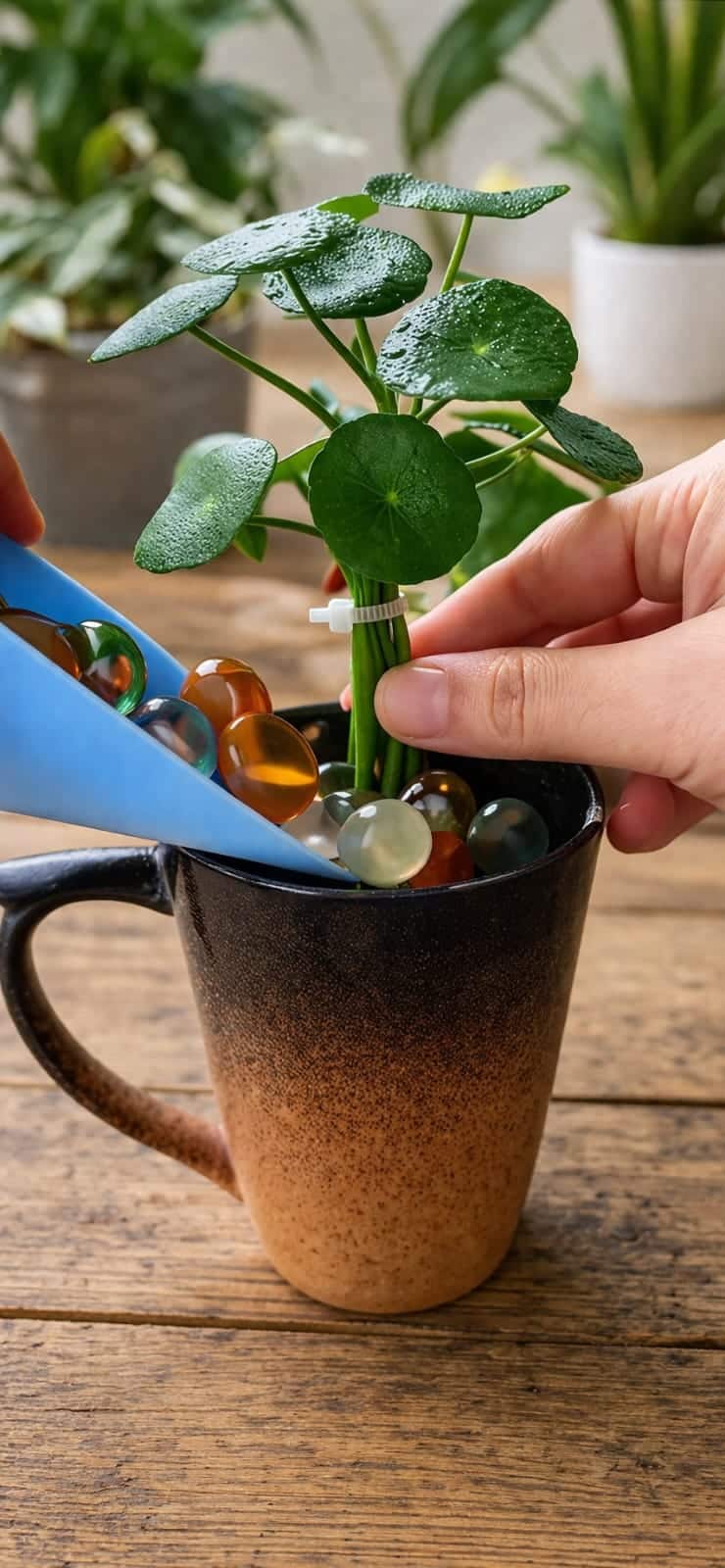
To recreate the look in the image safely, use a decorative mug as an outer container. Place a small Pilea in a nursery pot inside the mug. Add hydrated amber, green, clear, and smoky water beads around the top for decoration. Use a small scoop to pour them neatly around the plant base.
Gather leaning stems gently with a loose plant tie if needed. Keep the tie soft and not too tight. Place the display on a wooden table near bright indirect light.
To keep the leaves glossy, wipe them gently with a damp cloth. To keep the beads attractive, rinse or replace them every few weeks.
The result is a charming indoor plant display that looks styled but still supports healthy plant care.
Common Mistakes With the Water Bead Pilea Trick
Using Dry Beads Directly in the Pot
Dry beads expand and can disturb the roots. Always hydrate them first.
Using Too Many Beads
A thick layer can trap moisture. Use a shallow decorative layer.
Planting Directly in a Mug With No Drainage
This can cause root rot. Use a nursery pot inside the mug.
Letting Beads Become Slimy
Dirty beads can smell and look bad. Rinse or replace them regularly.
Forgetting to Check Soil
Beads can hide the soil. Move them aside and check moisture before watering.
Keeping Beads Around Pets or Kids
Water beads can be dangerous if swallowed. Avoid them in homes with curious children or animals.
Thinking Beads Replace Light
Pilea plants need bright indirect light. Beads only decorate and lightly support moisture.
A Safe Water Bead Pilea Routine
Here is a simple routine to keep the setup healthy:
- Grow the Pilea in a pot with drainage holes.
- Use airy, well-draining soil.
- Place the pot inside a decorative mug if desired.
- Hydrate water beads separately before use.
- Add only a thin layer on top of the soil.
- Keep beads away from burying stems too deeply.
- Check the soil before watering.
- Water only when the top inch feels dry.
- Remove and rinse beads every few weeks.
- Replace beads if they smell, stain, or become slimy.
This routine gives you the beauty of the trick without sacrificing plant health.
Frequently Asked Questions
What are the colorful balls in the plant pot?
They are usually water beads, also called hydrogel beads or gel pearls. They absorb water and swell into soft decorative beads.
Can Pilea grow in water beads?
Pilea can be displayed or propagated in water beads temporarily, but long-term growth is usually better in airy potting soil.
Do water beads replace watering?
No. You still need to check the soil and water when the plant needs it.
Are water beads safe for plants?
They can be safe when used as a thin decorative layer, but too many beads can keep roots too wet.
Can I put water beads in a mug planter?
Yes, but it is safest to keep the plant in a nursery pot with drainage and place that inside the mug.
How often should I clean water beads?
Rinse or replace them every two to four weeks, or sooner if they become slimy or dirty.
Can water beads cause root rot?
Yes, if they trap too much moisture around roots, especially in containers without drainage.
Are water beads safe for pets?
No, they can be dangerous if swallowed. Avoid open water beads around pets and children.
Can I use marbles instead?
Yes. Glass marbles give a similar decorative look but do not store water like hydrogel beads.
What matters more than water beads?
Bright indirect light, proper watering, drainage, airy soil, and regular plant inspection matter much more.
Final Thoughts
The water bead Pilea trick is one of the prettiest small houseplant ideas because it combines decoration and plant care in a simple way. The glossy round leaves of the Chinese money plant look beautiful above colorful hydrated beads, and a simple mug can become a charming mini planter display.
Used carefully, water beads can help hide the soil, support delicate stems, and add a little moisture around the surface. They make the plant look clean, styled, and playful. They are especially attractive for desks, shelves, windowsills, and small indoor plant corners.
But water beads should be used with caution. They should not replace good potting soil for long-term Pilea growth. They should not be packed deeply around the roots. They should not be used in a closed mug with no drainage unless the plant is inside a removable nursery pot. They should not be left dirty, slimy, or accessible to pets and children.
The safest method is to grow the Pilea in airy soil inside a pot with drainage, then add a thin layer of hydrated beads on top for decoration. Check the soil before watering, rinse the beads regularly, and keep the plant in bright indirect light.
The real secret to a full, healthy Pilea is not the beads alone. It is proper light, balanced moisture, clean roots, and regular rotation. The beads simply make the routine more beautiful.
With the right setup, your Pilea can stay fresh, round-leafed, and charming while the colorful beads give the display a polished, creative look. Use the trick lightly, keep the roots healthy, and enjoy a plant arrangement that feels both practical and decorative.