Peace lilies are dramatic plants. One day they look elegant, glossy, and full of white blooms. The next day, their leaves can droop, yellow, curl, or collapse so badly that the whole plant looks finished. If you have ever owned a peace lily, you already know how quickly it reacts when something is wrong. It does not suffer quietly. It shows every problem on its leaves.
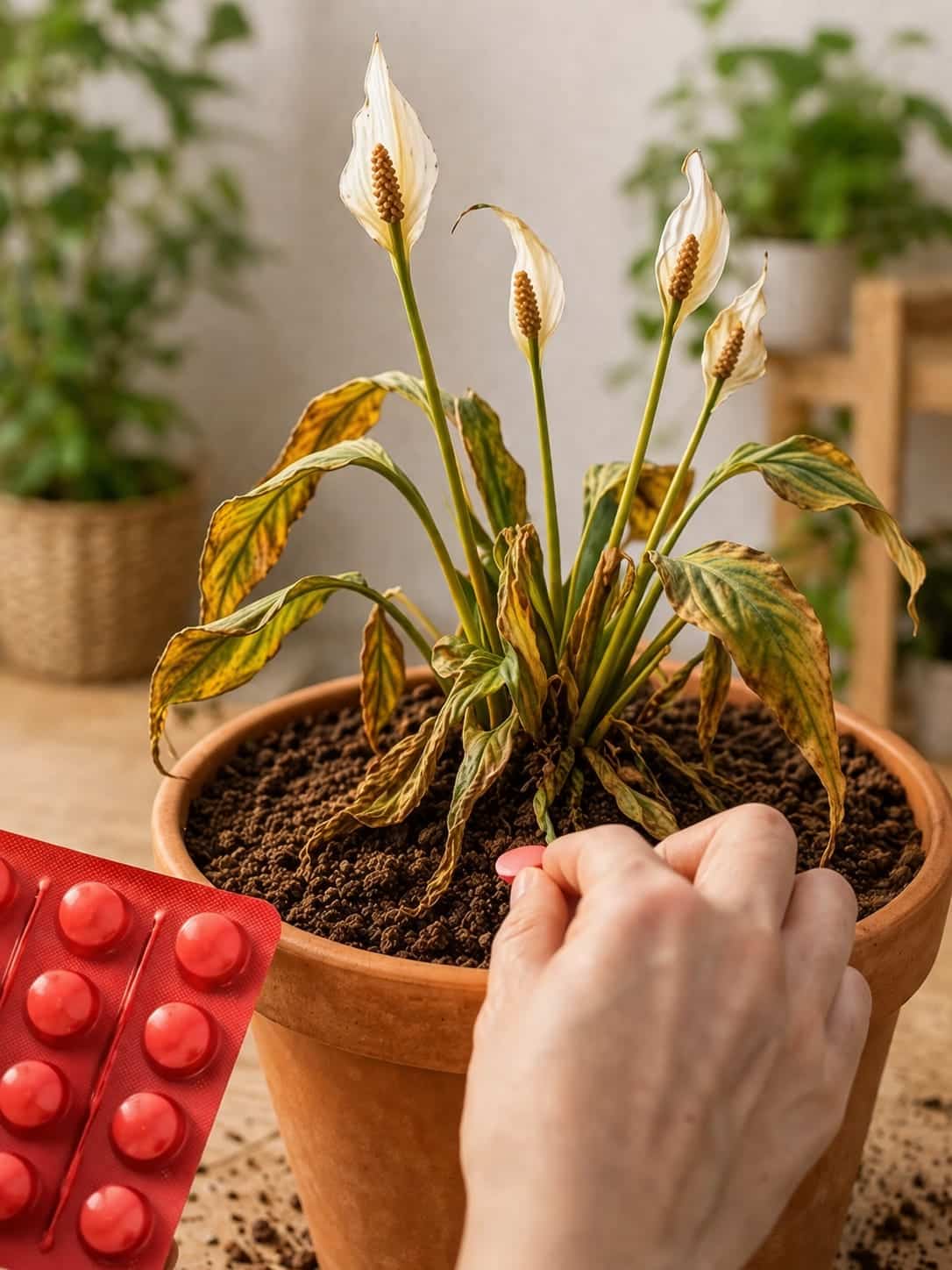
The image shows a tired peace lily in a terracotta pot. The white flowers are still standing, but the leaves are yellow, brown-edged, wrinkled, and stressed. A hand is placing a small red tablet near the soil, with more tablets visible beside the pot. This creates a strong plant-rescue idea: a simple tablet trick that looks like it could wake the plant back up.
For this trick, the safest plant-care version is not to bury random medicine directly into the soil. The better version is to make a very diluted aspirin water tonic and use it only as an occasional stress-supporting treatment. Aspirin contains salicylic acid, a compound often discussed in plant-care circles because plants naturally use salicylic acid in stress responses. Used carefully and rarely, aspirin water can be turned into a gentle “rescue tonic” for a peace lily that is still alive but stressed.
This is not a miracle cure. It will not fix rotten roots, old dead leaves, or soil that stays wet for too long. But when combined with trimming, proper watering, drainage, and bright indirect light, this tiny tablet trick can become part of a full peace lily revival routine.
What Is the Red Tablet Trick?
The red tablet trick is a visual version of an aspirin water plant tonic. Instead of pushing a pill directly into the soil, you dissolve a small amount of aspirin in water, dilute it well, and use that water lightly around the root zone.
The image shows a tablet being placed near the soil, but for real plant care, dissolving and diluting is better. A whole tablet sitting in one spot can create a concentrated patch in the soil. A diluted liquid spreads more evenly and is gentler on the roots.
Think of this trick as a plant stress tonic, not regular fertilizer. Peace lilies still need the basics first: clean roots, airy soil, the right moisture level, and soft filtered light.
Why Peace Lilies Look Tired So Quickly
Peace lilies are sensitive to watering mistakes. They like lightly moist soil, but they do not like soggy soil. If the soil dries completely, the plant droops fast. If the soil stays wet for too long, the roots can struggle and the leaves may turn yellow or brown.
They also dislike harsh direct sun, cold drafts, poor drainage, and heavy compacted soil. When the plant is stressed, the leaves may become thin, curled, brown-tipped, or yellow.
The peace lily in the image still has upright flower stems, which suggests it may not be fully dead. The leaves are stressed, but the center still has life. That is exactly the kind of plant where a careful rescue routine may help.
Important: Do Not Use Random Pills
This trick should only be done with plain aspirin, not random red tablets from a medicine cabinet. Do not use painkillers that contain caffeine, coatings, sweeteners, cold medicine, ibuprofen, acetaminophen, antibiotics, or mixed medication formulas.
If you cannot confirm that the tablet is plain aspirin, skip the tablet trick and use plain water instead.
For plant content, the red tablet is visually interesting, but the real-life version should be safe and controlled. Plain, uncoated aspirin is the only version that makes sense for this kind of plant tonic.
How to Make Aspirin Water for a Peace Lily
Use a very weak mixture. Peace lilies are not heavy feeders, and stressed roots should not be shocked with a strong solution.
Simple Recipe
- One plain aspirin tablet
- One gallon of water
Dissolve the aspirin completely in water. Stir well. Use only a small amount on the plant, and save the rest only for outdoor use or discard it. For a single indoor peace lily, you do not need much.
If you want an even gentler version, dissolve half a tablet in one gallon of water. This is better for smaller pots or sensitive plants.
Step 1: Check the Soil Before Doing Anything
Before using aspirin water, touch the soil. This matters more than the tablet. If the soil is wet, do not add more water yet. If the soil is bone dry, the plant may simply be thirsty.
Peace lilies like soil that stays lightly moist, not soaked and not powder-dry. Push your finger about one inch into the soil. If it feels dry at that depth, the plant may be ready for watering. If it feels damp, wait.
Using any tonic on already wet soil can make the plant worse.
Step 2: Remove Dead and Crispy Leaves
The yellow and brown leaves in the image will not turn green again. A rescue routine works by helping the plant grow fresh leaves, not by reversing dead tissue.
Use clean scissors and cut away fully brown leaves near the base. If a leaf is mostly green with only a brown tip, you can trim the brown edge and leave the healthy part. Remove old dried flower stems too if they are finished.
This makes the plant cleaner and helps you see the living crown more clearly.
Step 3: Inspect the Crown
The crown is the center where the leaves and stems emerge from the soil. It should feel firm. If the crown is mushy, black, or foul-smelling, the plant may have rot.
If the crown is firm and the flower stems are still standing, the peace lily has a chance. A firm crown means the plant still has energy to push new growth.
Do not bury tablets or powder directly into the crown. Keep the crown open and clean.
Step 4: Use the Aspirin Water Lightly
Once the soil is ready for watering, pour a small amount of diluted aspirin water around the soil. Do not pour it directly into the tight center of the plant. Pour around the root zone instead.
For a medium peace lily pot, use enough to lightly moisten the soil, but do not flood it. If water runs into the saucer, let the pot drain fully and empty the saucer after a few minutes.
The goal is a gentle stress-supporting drink, not a heavy soaking with medicine.
Step 5: Improve the Light
A peace lily recovering from stress needs bright indirect light. It should be near a bright window but protected from harsh direct sun. Direct sun can scorch the leaves and make brown edges worse.
If your peace lily has been sitting in a dark corner, move it closer to a window gradually. Low light may keep the plant alive, but it often reduces growth and blooming.
Good light helps the plant use water properly and grow new leaves.
Step 6: Fix the Watering Routine
The biggest peace lily rescue secret is watering correctly. After the aspirin tonic, return to normal care. Water when the top inch of soil begins to dry. Do not water every day. Do not let the pot sit in a saucer full of water.
Peace lilies droop when thirsty, but repeated extreme drooping can weaken them. Try to water before the plant collapses completely.
A steady routine is better than emergency watering every time the leaves fall flat.
How Often Should You Use the Tablet Trick?
Use aspirin water rarely. Once every six to eight weeks is more than enough, and only when the plant is stressed. Do not use it every watering.
If the plant is healthy, you do not need this trick. If the plant is rotting, this trick will not save it by itself.
Use it as a one-time rescue support, then focus on light, moisture, soil, and drainage.
Why This Trick Should Be Diluted
Concentration matters. A tablet placed directly into a pot can dissolve unevenly and create a strong area in the soil. That can stress roots instead of helping them.
Dilution spreads the ingredient through the water and makes it gentler. Indoor plants live in small containers, so anything you add can build up more easily than it would outdoors.
When in doubt, make the mixture weaker.
What If the Peace Lily Has Root Rot?
If the leaves are yellowing, the soil smells bad, and the pot stays wet for days, root rot may be the real problem. Aspirin water cannot fix rotten roots.
Remove the plant from the pot and check the roots. Healthy peace lily roots are usually firm and pale. Rotten roots are mushy, dark, and may smell sour.
Trim away the bad roots with clean scissors. Repot the healthy plant into fresh, well-draining soil. Then keep it lightly moist while it recovers.
Best Soil for a Peace Lily Rescue
Peace lilies like soil that holds some moisture but still drains well. A heavy muddy mix can suffocate the roots. A very dry gritty mix may not hold enough moisture.
A good peace lily mix can include:
- Indoor potting soil
- Perlite
- Coco coir
- A small amount of orchid bark
This gives the roots both moisture and air. If your soil is compacted, repotting may help more than any tablet trick.
Should You Remove the White Flowers?
If the plant is badly stressed, removing old flowers can help it focus on leaves and roots. If the flowers are still fresh, you can leave them. If they are brown, thin, or curling, cut them off near the base.
The white flowers in the image are still standing but look a little tired. If they begin browning, remove them so the plant can save energy.
Continue to Page 2
Continue to page 2 for more details about this article and the key points many readers miss on the first page.