Some houseplants are loved for their leaves, but Christmas cactus is loved for its flowers. When it is happy, it can turn into a waterfall of green segmented stems covered in bright pink, red, white, orange, or purple blooms. It looks soft, tropical, and festive all at once. A blooming Christmas cactus can make an ordinary corner of the home feel like a little indoor garden show.
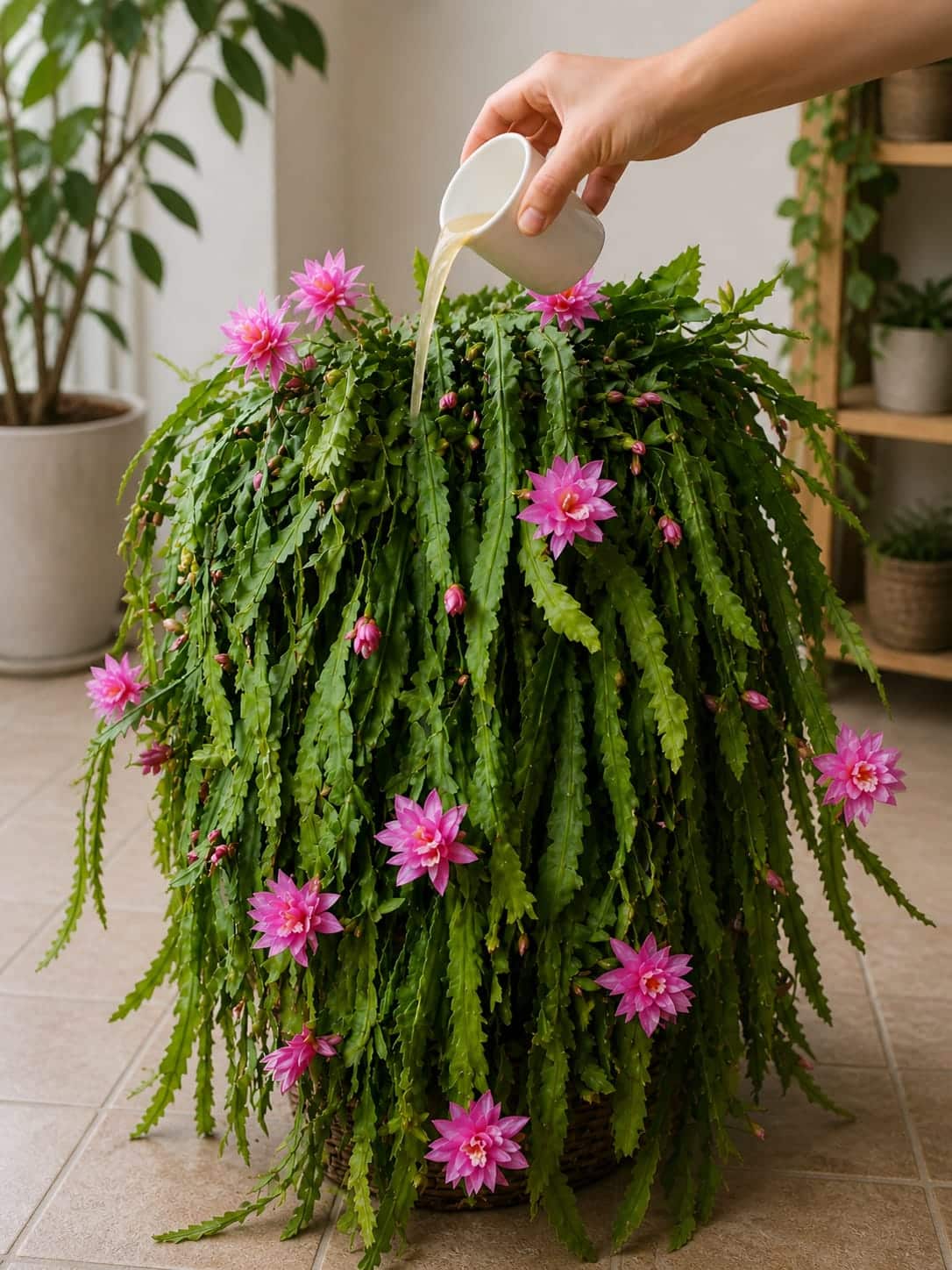
The image shows a beautiful trailing Christmas cactus covered in pink flowers and buds. A hand is pouring a pale creamy liquid from a small cup over the top of the plant. The plant is full, healthy, and heavy with blooms, which makes the trick look exciting: a simple homemade pour that helps the cactus stay lush and keep flowering.
For this trick, the safest and most useful version is a diluted banana peel tea. Banana peel tea has a pale yellow, slightly creamy color when made lightly, and it fits flowering houseplants beautifully. It is popular because banana peels are often associated with potassium, and potassium is commonly linked with flower support. But the trick must be used gently. Christmas cactus is not a desert cactus, but it still does not like heavy, soggy soil or sticky homemade mixtures.
This banana peel tea trick is not about dumping thick banana liquid onto the plant every day. It is a soft flowering-season tonic. Used occasionally, diluted well, and paired with the right light and watering routine, it can become a lovely natural boost for a Christmas cactus that is already forming buds or blooming.
What Plant Is in the Image?
The plant in the image looks like a Christmas cactus or holiday cactus. These plants have long, flat, segmented green stems that trail beautifully over the sides of a basket or pot. When the plant blooms, flowers appear along the ends and sides of the stems, creating a colorful cascading effect.
Despite the name “cactus,” Christmas cactus is not cared for like a desert cactus. It is a tropical epiphytic cactus, which means it naturally grows in humid forest conditions, often attached to trees rather than sitting in dry desert sand. Because of this, it enjoys more moisture than desert cacti, but it still needs excellent drainage and airflow around the roots.
This is why the pouring trick in the image makes sense only when the liquid is light, diluted, and used with care.
What Is the Pale Liquid Being Poured?
The best plant-friendly version of this pale liquid is diluted banana peel tea. It can look light yellow or creamy depending on how it is made. It is simple, natural, and easy to prepare at home.
Banana peel tea is made by soaking banana peels in water, straining the liquid, diluting it, and pouring a small amount around the soil. For blooming plants like Christmas cactus, it is often used as a gentle seasonal tonic.
The important part is straining and diluting. You do not want banana pieces, pulp, sugar, or thick liquid sitting in the pot. That can smell bad, attract gnats, and create problems in indoor soil.
Why Banana Peel Tea Is Popular for Flowering Plants
Banana peels are often used in natural plant-care tricks because they are easy to find and feel like a useful kitchen scrap. Instead of throwing them away, many plant lovers turn them into a mild homemade plant tonic.
Flowering plants need balanced care, and potassium is often mentioned in connection with bloom strength. That is why banana peel tea became popular for plants like Christmas cactus, orchids, peace lilies, anthuriums, geraniums, and flowering houseplants.
However, banana peel tea should not replace real plant care. A Christmas cactus will not bloom only because of banana water. It needs the right season, light, temperature, watering rhythm, and rest period. The tea is just a gentle extra.
Why Christmas Cactus Blooms So Beautifully
Christmas cactus blooms when conditions tell it that the season is right. Shorter days, cooler nights, and a proper rest period can encourage buds. Once buds form, the plant needs steady care. Sudden changes, dry stress, overwatering, or moving the plant too much can cause buds to drop.
The plant in the image is already full of flowers and buds. This means it is in an active blooming stage. During this time, the goal is to keep the plant stable, lightly moist, and supported without overwhelming it.
A diluted banana peel tea can be used as a bloom-season treat, but the plant must not be drowned.
Important Warning: Do Not Pour Thick Banana Smoothie on the Soil
Some plant tricks become harmful when people use them too strongly. Banana peel tea should never be thick, sticky, sweet, or full of banana pieces. Do not blend banana peel into a paste and pour it into your Christmas cactus pot.
Thick banana mixtures can attract fungus gnats, ants, and mold. They can also sit in the soil and create odor. Indoor pots are small, and anything organic that does not break down cleanly can become a problem.
The safe trick is light banana peel water: soaked, strained, diluted, and used fresh.
How to Make Gentle Banana Peel Tea
You only need a banana peel, water, and a clean jar.
Ingredients
- One fresh banana peel
- Two cups of room-temperature water
- One clean glass jar
- A strainer
- Plain water for dilution
Method
- Rinse the banana peel to remove dust or residue.
- Cut the peel into small pieces.
- Place the peel pieces into a clean jar.
- Add two cups of room-temperature water.
- Let it soak for 12 to 24 hours.
- Strain the liquid completely.
- Dilute the banana peel tea with the same amount of plain water.
- Use it fresh.
The final liquid should be thin, pale, and mild. If it smells sour, fermented, or unpleasant, do not use it indoors.
Step 1: Check the Plant Before Pouring
Before using banana peel tea, look at the Christmas cactus carefully. Are the stems firm and green? Are the buds still attached? Is the soil dry, lightly moist, or wet?
If the plant looks healthy and the soil is ready for watering, you can use the tea. If the soil is already wet, wait. Do not add more liquid just because you want to try the trick.
Christmas cactus likes a more consistent moisture routine than snake plants or desert cacti, but it still does not want soggy roots.
Step 2: Pour Around the Soil, Not Over the Flowers
The image shows liquid being poured from above, but in real care, try to pour mainly onto the soil surface. Avoid soaking the flowers and buds. Wet flowers may bruise, fade faster, or develop spots if moisture sits on them too long.
Lift the trailing stems gently if needed and pour the diluted banana peel tea around the base of the plant. Use a slow, controlled pour.
For a large basket like the one in the image, you can use more than you would for a small pot, but still keep it moderate. The soil should become lightly moist, not flooded.
Step 3: Let the Pot Drain Fully
Drainage is essential. Christmas cactus roots like moisture but also need air. If the basket or pot has no drainage, be extra careful. A decorative basket may hide a plastic pot inside, so check that water can escape.
After pouring, allow excess liquid to drain. Do not let the plant sit in a puddle. If there is a saucer or liner, empty it after watering.
This simple step can prevent root problems and keep the plant healthier long-term.
Step 4: Keep the Plant in Bright Indirect Light
Christmas cactus loves bright indirect light. It can handle some gentle morning light, but harsh direct afternoon sun may scorch the stems or stress the plant.
During blooming, a bright spot near a window is ideal. Too little light can reduce flowering, while too much direct sun can cause yellowing or reddish stress marks.
The plant in the image appears to be in a bright indoor space, which is perfect for keeping blooms strong.
Step 5: Keep Care Stable While Buds Are Forming
Once a Christmas cactus has buds, avoid moving it around too much. Sudden changes in light, temperature, or watering can cause buds to drop.
Use the banana peel tea only as part of the normal watering routine. Do not shock the plant with too much liquid, strong fertilizer, or a sudden new location.
Blooming plants love consistency.
How Often Should You Use Banana Peel Tea?
Use banana peel tea once every four to six weeks during active growth or bloom season. Do not use it every week. A Christmas cactus can be sensitive to buildup in the soil, especially in containers.
If the plant is blooming heavily, one light application during the bloom period is enough. After flowering ends, return to plain water for a while.
Too much homemade tonic can create more problems than benefits.
When Is the Best Time to Use This Trick?
The best time is when the plant is actively growing, forming buds, or blooming. Spring, summer, and the pre-bloom period can be good times, depending on your plant’s cycle.
Morning is the best time of day to water because the plant has time to absorb moisture while the room is bright. Avoid watering late at night if the room is cool.
If the plant is resting after flowering, reduce watering slightly and skip extra tonics until new growth begins.
Can Banana Peel Tea Make Christmas Cactus Bloom?
Banana peel tea alone will not force a Christmas cactus to bloom. Blooming depends mostly on seasonal signals. The plant often needs shorter daylight hours, cooler nights, and a rest period before buds appear.
Once buds are forming, a gentle banana peel tea can support the plant as part of the routine. But if your plant refuses to bloom, focus first on light, temperature, and rest.
The trick supports blooms. It does not replace the bloom cycle.
Continue to Page 2
Continue to page 2 for more details about this article and the key points many readers miss on the first page.