Orchids are some of the most elegant indoor plants you can grow. Their thick green leaves, sculptural aerial roots, and long-lasting flowers make them a favorite for windowsills, living rooms, bedrooms, offices, kitchens, and indoor plant displays. A healthy orchid can bloom for months, rest quietly, then surprise you again with a new flower spike when the conditions are right.
But orchids can also be confusing. One month they look perfect, and the next month the leaves look dull, the roots seem tired, the potting mix smells stale, or the plant simply refuses to bloom again. Many people water orchids like ordinary houseplants, but orchids are different. They do not like heavy soil, standing water, or aggressive fertilizer. They grow best when their roots receive moisture, airflow, and gentle nutrition.
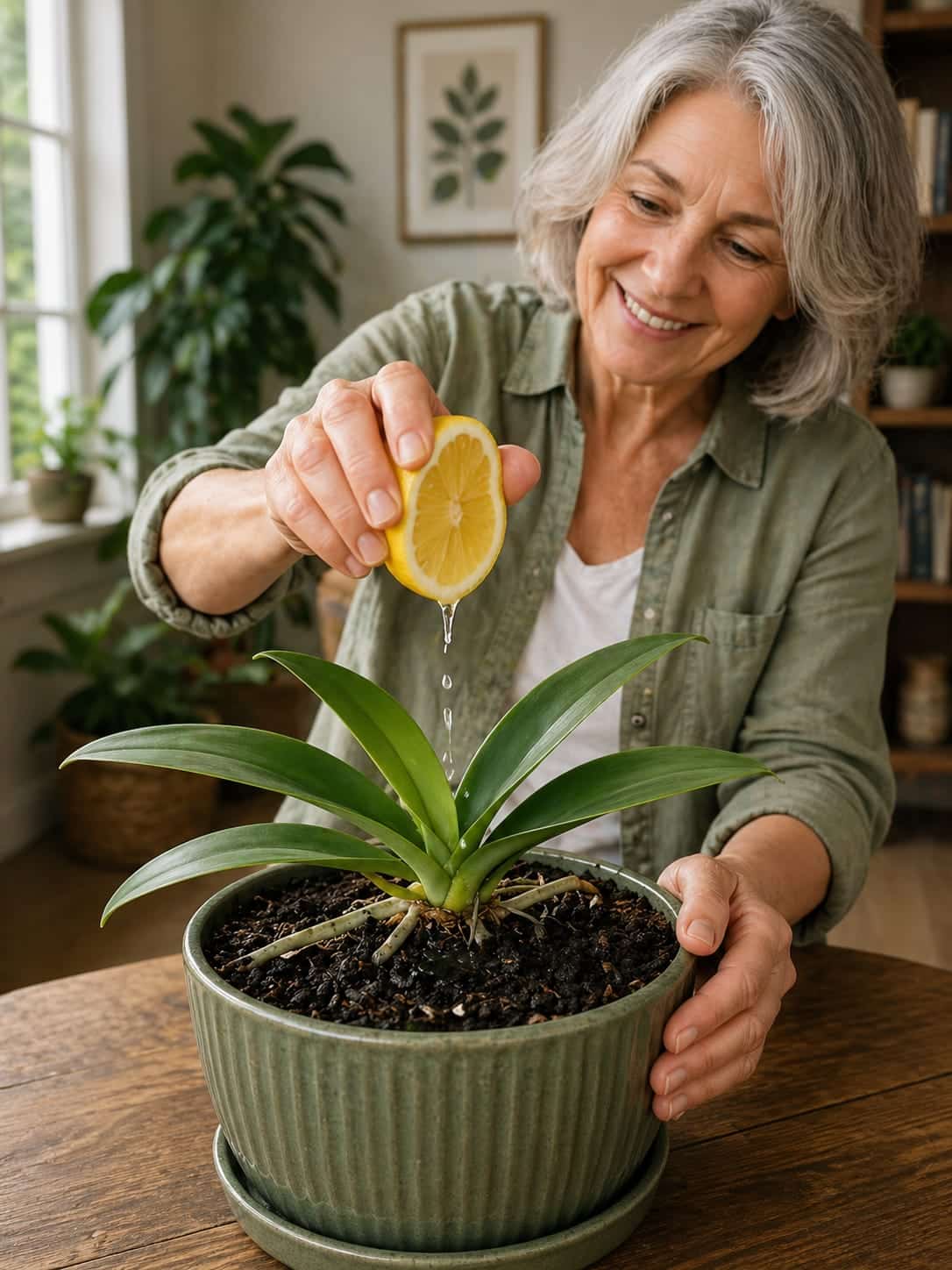
The image shows a mature orchid in a decorative green pot while a woman squeezes lemon juice above the plant. This suggests a popular natural plant care trick: using lemon water as a mild orchid refresh. Lemon is bright, acidic, and often used in home gardening tips, especially when growers want to clean mineral residue, refresh leaves, or gently adjust water quality.
However, this trick must be handled carefully. Pure lemon juice should never be squeezed directly onto orchid leaves, roots, or the crown. Undiluted lemon juice is too acidic and can burn tender tissue, damage roots, and stress the plant. The safe version is not raw lemon juice. The safe version is a very weak lemon water rinse or a diluted lemon wipe used occasionally and carefully.
When prepared correctly, lemon water may help reduce hard-water residue on leaves, lightly refresh the root zone, and support cleaner orchid care. Used too strongly or too often, it can damage the plant. This complete guide explains how to make the lemon water orchid trick safely, how to apply it, when to avoid it, and how to combine it with proper orchid watering, light, potting mix, and bloom care.
What Plant Is in the Image?
The plant in the image appears to be a Phalaenopsis orchid, also called a moth orchid. Phalaenopsis orchids are the most common orchids sold for indoor growing. They are popular because they can bloom indoors for a long time and adapt well to normal home conditions.
A Phalaenopsis orchid has broad, thick leaves and fleshy roots. Many of the roots may grow above the potting mix. These are aerial roots, and they are normal. They help the orchid absorb moisture and oxygen from the air. Healthy orchid roots are usually firm and green or silvery gray, depending on whether they are wet or dry.
The orchid in the image has healthy-looking leaves and visible aerial roots. It is not blooming at the moment, but that does not mean it is dying. Orchids naturally rest between flowering cycles. During this rest stage, the goal is to keep the roots healthy, the leaves strong, and the potting mix fresh so the plant has enough energy to bloom again later.
What Is the Lemon Water Trick?
The lemon water trick is a simple homemade orchid care method that uses a tiny amount of lemon juice diluted in water. It is often used by indoor gardeners who want to refresh orchid leaves, reduce mineral marks, or slightly soften hard watering routines.
Lemon juice contains citric acid. In very weak amounts, citric acid can help loosen mineral residue from leaves or pots. Some gardeners also use weak acidic water occasionally because many orchids prefer slightly acidic conditions around the roots.
But the key word is weak. Orchids are sensitive. Their roots are not designed to handle strong kitchen acids. A little lemon diluted into plenty of water is very different from squeezing lemon directly onto the plant.
Why Orchid Growers Use Lemon Carefully
Orchid roots are sensitive to salt buildup, hard water minerals, stale potting mix, and fertilizer residue. Over time, tap water can leave white marks on leaves and mineral crust on the potting medium. This can make the plant look dull and may affect root comfort.
A weak lemon water solution may help with:
- Cleaning hard-water spots from orchid leaves
- Refreshing dusty foliage
- Reducing visible mineral residue
- Lightly balancing very alkaline water
- Keeping leaves looking glossy and clean
- Supporting a fresher orchid care routine
- Encouraging better overall plant hygiene
Still, lemon water is not a fertilizer. It does not replace orchid food. It does not force blooms. It does not cure root rot. It is a light maintenance trick, not a miracle treatment.
Important Warning: Do Not Squeeze Lemon Directly on Orchids
The image looks beautiful, but the real-life method should be gentler. Direct lemon juice can be too strong for orchid tissue. If it runs into the crown, it can irritate the plant and increase the risk of crown problems. If it touches exposed roots in concentrated form, it may burn them.
Never apply undiluted lemon juice to:
- The center crown
- Open wounds
- Freshly cut roots
- Aerial roots
- Flower spikes
- Buds
- Open blooms
- Dry stressed leaves
The safe method is always dilution first.
How to Make Safe Lemon Water for Orchids
This recipe is gentle enough for occasional orchid leaf cleaning or a very light soil-free root-zone refresh. Use fresh lemon, clean water, and a weak dilution.
Ingredients
- 1 liter clean water
- 3 to 5 drops fresh lemon juice
- Clean bowl or bottle
- Soft cloth or cotton pad
Steps
- Fill a clean container with 1 liter of room-temperature water.
- Add only 3 to 5 drops of fresh lemon juice.
- Stir well.
- Use immediately.
- Do not store the mixture for days.
The water should smell only very lightly citrusy. If it smells strong like lemonade, it is too concentrated for orchids.
Extra-Safe Dilution for Sensitive Orchids
If your orchid is weak, recently repotted, not growing well, or recovering from root problems, use an even weaker mix:
1 to 2 drops lemon juice in 1 liter water
This is enough for a gentle leaf wipe without stressing the plant. With orchids, subtle care is safer than strong homemade treatments.
Method 1: Lemon Water Leaf Wipe
The safest way to use lemon water on orchids is as a leaf wipe. This helps remove dust and mineral spots while keeping the solution away from the roots and crown.
How to Wipe Orchid Leaves
- Prepare very weak lemon water.
- Dip a soft cloth or cotton pad into the solution.
- Squeeze out excess liquid so the cloth is damp, not dripping.
- Support the leaf gently with one hand.
- Wipe the top of the leaf from base to tip.
- Wipe the underside lightly if needed.
- Keep liquid away from the crown.
- Dry the leaf with a clean soft cloth.
This method can make orchid leaves look cleaner and shinier without using commercial leaf shine sprays. Never use oily leaf shine products on orchids because they can clog the leaf surface and collect dust.
Method 2: Lemon Water Potting Mix Rinse
A weak lemon water rinse can be used occasionally if your tap water is hard and the potting mix has light mineral residue. This is not a regular watering method. It is an occasional refresh.
How to Apply It
- Make a very weak lemon water solution.
- Use only 3 to 5 drops lemon juice in 1 liter water.
- Water the orchid normally through the potting mix.
- Let the liquid drain completely.
- Do not let the pot sit in the drained water.
- After 10 minutes, flush once with plain water if the plant is sensitive.
This method should only be used if the orchid is in a pot with excellent drainage. It should never be used in a pot without holes.
Method 3: Lemon Water Root Refresh for Clear Pots
Many orchids are grown in clear plastic pots inside decorative containers. If the roots look healthy but the pot has mineral residue, a weak lemon rinse may help refresh the outside of the root zone.
Remove the inner pot from the decorative pot. Pour the weak lemon water through the bark mix. Let it drain completely. Then return the orchid only after the pot is no longer dripping.
This method is best for healthy orchids, not orchids with root rot.
How Often Should You Use Lemon Water?
Use lemon water rarely. Once every six to eight weeks is enough for leaf cleaning. For root-zone rinsing, use it even less often, only when needed.
A safe schedule:
- Leaf wipe: once every 4 to 8 weeks
- Potting mix rinse: once every 2 to 3 months at most
- During blooming: avoid root treatments
- During root recovery: avoid lemon water
- Winter: use very rarely or not at all
Do not use lemon water every week. Orchids prefer consistent, simple care.
When Not to Use Lemon Water
Lemon water is not safe for every orchid situation. Avoid it if the plant is already stressed or if the roots are damaged.
Do not use lemon water if:
- The orchid has root rot
- The crown is wet or damaged
- The leaves are sunburned
- The plant was recently repotted
- Roots are freshly cut
- The pot has no drainage holes
- The orchid is dropping buds
- The plant is dehydrated and wrinkled
- The orchid is sitting in soggy moss
- You recently fertilized heavily
In these cases, fix the main care issue first. Lemon water should only be used on stable plants.
Can Lemon Water Make Orchids Bloom?
Lemon water does not directly make orchids bloom. It can help keep leaves clean and may support a fresher growing environment, but orchid blooming depends on light, temperature, roots, watering, and maturity.
For Phalaenopsis orchids, blooms are usually encouraged by:
- Bright indirect light
- Healthy roots
- Proper watering
- Good airflow
- A slight nighttime temperature drop
- Light feeding during active growth
- Patience during the rest period
A clean, healthy orchid is more likely to bloom again, but lemon is not the main bloom trigger.
Why Orchids Stop Blooming
Many people think an orchid is unhealthy when it stops flowering. In reality, orchids naturally rest after blooming. During this time, they grow roots and leaves so they can flower again later.
Common reasons orchids do not rebloom include:
- Not enough bright indirect light
- Weak roots
- Overwatering
- Old broken-down potting mix
- No nighttime temperature change
- Too much nitrogen fertilizer
- Plant is still resting
- Stress from repotting
If your orchid has strong leaves and healthy roots, it may simply need time and better light.
Best Light for Orchids
Phalaenopsis orchids grow best in bright indirect light. They do not like harsh direct sun on their leaves. Too much sun can cause yellow patches, brown burns, and dry leaf tips. Too little light can prevent reblooming.
A good location is near an east-facing window or a bright window with filtered light. The leaves should look medium green. Very dark green leaves may mean the orchid needs more light. Yellow-green or scorched leaves may mean too much direct sun.
Best Watering Routine for Orchids
Orchids should not be watered like ordinary houseplants in dense soil. Most Phalaenopsis orchids grow in bark, moss, or a chunky orchid mix. This mix should become partly dry before watering again.
Water when the roots look silvery gray and the pot feels lighter. After watering, healthy roots usually turn green. Let all water drain away completely.
Never allow water to sit in the crown. Crown rot is one of the most common orchid problems. If water gets trapped in the center, blot it with tissue.
Best Water for Orchids
Orchids can be sensitive to hard water, chlorine, and salt buildup. If your tap water leaves white marks on pots or leaves, consider using filtered water, rainwater, or rested tap water.
A weak lemon water rinse may help with mineral residue occasionally, but improving your regular water quality is better long-term.
Best Orchid Potting Mix
Orchid roots need air. Regular potting soil is usually too dense for Phalaenopsis orchids. A good orchid mix allows water to pass through while keeping enough moisture around the roots.
A good orchid mix can include:
- Orchid bark
- Perlite
- Charcoal
- Coconut chips
- A small amount of sphagnum moss
If your orchid is planted in dense soil, lemon water will not fix the problem. Repotting into proper orchid mix is the better solution.
Why Drainage Is Essential
Orchid pots must drain well. A decorative pot without drainage can trap water around the roots and cause rot. If you use a decorative ceramic pot, keep the orchid in a clear plastic nursery pot with drainage holes and place it inside the decorative pot.
After watering, remove the inner pot, let it drain completely, then return it to the decorative container. Never let roots sit in water.
How to Check Orchid Roots
Healthy roots are the secret to reblooming. Before trying any trick, check the roots.
Healthy Orchid Roots
- Firm
- Green when wet
- Silvery gray when dry
- Plump
- No bad smell
Unhealthy Orchid Roots
- Brown
- Black
- Mushy
- Hollow
- Slimy
- Sour-smelling
If many roots are rotten, do not use lemon water. Trim damaged roots and repot into fresh orchid mix.
Can Lemon Water Clean Orchid Leaves?
Yes, a very weak lemon water wipe can help remove dust and mineral spots from orchid leaves. Clean leaves absorb light better and look healthier. This is especially helpful for indoor orchids near windows, where dust and water marks can build up.
Always wipe gently. Orchid leaves can crack if bent too hard. Support the leaf with your hand and wipe in one direction.
Can You Use Lemon Peel Instead of Lemon Juice?
Lemon peel can be used to make a very mild citrus water, but it should still be diluted and strained. Do not place lemon peels in the orchid pot. They can rot, attract pests, and create mold.
Mild Lemon Peel Water
- 1 small strip of lemon peel
- 1 liter water
- Rinse the lemon peel well.
- Place one small strip in 1 liter water.
- Let it sit for 1 hour only.
- Remove the peel.
- Use the water for a light leaf wipe.
Do not ferment lemon peel water. Fresh and weak is safer.
Can Lemon Juice Kill Pests on Orchids?
Lemon juice is not the best pest treatment for orchids. Strong lemon juice can damage the plant before it solves the pest problem. If your orchid has pests like mealybugs, scale, aphids, or spider mites, use a targeted treatment.
For mealybugs, many growers use a cotton swab with rubbing alcohol on the pests only, followed by careful monitoring. For larger infestations, insecticidal soap or orchid-safe pest treatments may be needed.
Do not spray lemon juice all over an orchid as pest control.
Can Lemon Water Remove White Residue?
A weak lemon wipe may help remove white mineral residue from leaves. This residue often comes from hard water or fertilizer salts. If the residue is on the potting mix, the better solution is usually flushing with plain water or repotting if the mix is old.
To prevent residue:
- Use filtered water if possible
- Flush the pot occasionally with plain water
- Use weak fertilizer
- Avoid overfeeding
- Repot when bark breaks down
Can Lemon Water Hurt Orchid Roots?
Yes, if it is too strong or used too often. Orchid roots are exposed and sensitive. Strong acids can damage their outer layer. This is why only a few drops of lemon juice should be used in a full liter of water.
If roots turn brown, shriveled, or mushy after a lemon treatment, stop immediately and flush with plain water. If damage continues, repot and inspect the roots.
Can You Use Bottled Lemon Juice?
Fresh lemon juice is better because bottled lemon juice may contain preservatives or additives. If you only have bottled lemon juice, use extreme caution and dilute heavily. One or two drops in 1 liter water is enough.
Never use lemonade, lemon syrup, lemon cleaner, lemon essential oil, or sweetened lemon drink on orchids.
Can You Use Lemon Essential Oil?
No. Lemon essential oil is too concentrated and can damage orchid leaves and roots. Essential oils are not the same as diluted lemon water. They can coat plant tissue, block respiration, and cause burns.
Use fresh lemon juice only, and only in tiny amounts.
Continue to Page 2
Continue to page 2 for more details about this article and the key points many readers miss on the first page.