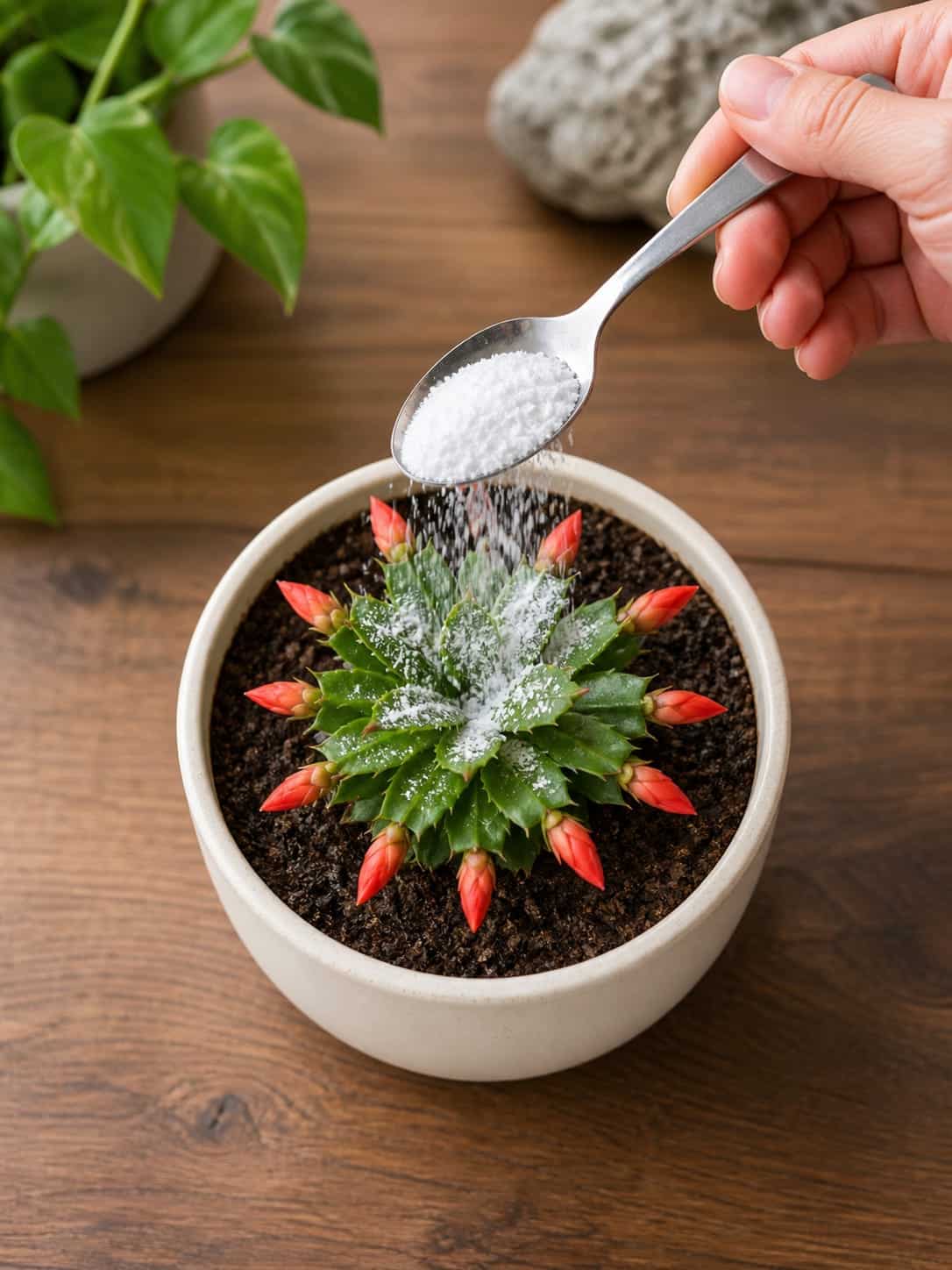
Christmas cactus is one of the most beautiful flowering houseplants you can keep indoors. When it is healthy, it produces colorful buds that open into bright holiday flowers, often in shades of red, pink, orange, white, purple, or salmon. Its glossy green segmented stems form a compact or cascading shape, making it perfect for tabletops, windowsills, plant shelves, hanging baskets, and cozy indoor plant corners.
But many plant owners run into the same problem: the plant grows, but the buds are weak. Sometimes the flower buds appear, then fall off before opening. Sometimes the leaves look dull, pale, or tired. Sometimes the plant stays alive for years but never gives that full, dramatic bloom display people expect from a healthy Christmas cactus.
The image shows a small Christmas cactus or Thanksgiving cactus with red buds while a white crystalline powder is being sprinkled over the center of the plant. This white powder is best explained as Epsom salt, a common garden supplement made of magnesium sulfate. Many gardeners use Epsom salt for flowering plants because magnesium helps plants use light, support green growth, and maintain healthy internal processes.
However, this is very important: Epsom salt should not be dumped heavily onto the crown or leaves of a Christmas cactus. The dramatic image may look like a quick miracle trick, but the safer method is to dissolve a tiny amount of Epsom salt in water and apply it to the soil only. When used correctly, Epsom salt may help support healthy green stems and stronger blooming. When used too often or too strongly, it can cause mineral buildup, root stress, and plant decline.
This guide explains how to use the Epsom salt trick safely for Christmas cactus, how to prepare the mixture, how often to apply it, when to avoid it, and how to combine it with proper light, watering, soil, and blooming care.
What Plant Is in the Image?
The plant in the image appears to be a holiday cactus, commonly called Christmas cactus or Thanksgiving cactus. These plants belong to the Schlumbergera group. They are often sold during fall and winter because they bloom beautifully around the holiday season.
Although people call them cactus, they are not desert cactus. Christmas cactus plants are tropical forest cacti. They naturally grow in humid, airy environments where their roots receive moisture but also plenty of oxygen. This means they need different care from dry desert succulents.
A Christmas cactus prefers:
- Bright indirect light
- Moderate moisture
- Good drainage
- Airy potting mix
- Stable temperatures
- Gentle feeding
- Longer dark periods before blooming
The plant in the image looks compact and full of developing red buds. That means it is in an important stage. Budding plants should be treated gently because sudden changes in water, fertilizer, temperature, or location can cause bud drop.
What Is the White Powder?
The white powder in the image looks like Epsom salt. Epsom salt is magnesium sulfate. It is commonly used by gardeners as a magnesium supplement for plants. Magnesium is important because it helps plants produce chlorophyll, the green pigment that allows them to use light for energy.
For Christmas cactus, magnesium can be useful when the plant is actively growing or preparing for blooms. But it should be used in very small amounts. Christmas cactus roots are not built for heavy fertilizer or strong mineral treatments.
The safe method is not to sprinkle a spoonful directly over the plant. The safe method is to dissolve a small amount in water and apply it around the soil edge.
Why Gardeners Use Epsom Salt for Christmas Cactus
Epsom salt is popular in houseplant care because it contains magnesium and sulfur. These are secondary nutrients that plants use in small amounts. They are not a replacement for complete fertilizer, but they may help when a plant needs magnesium support.
Gardeners use Epsom salt because it may support:
- Greener segmented stems
- Stronger plant energy
- Improved chlorophyll production
- Healthier active growth
- Better nutrient use
- Bloom support when other care is correct
- Recovery from mild magnesium deficiency
But Epsom salt does not create blooms by itself. A Christmas cactus needs the right light cycle, temperature, watering routine, and healthy roots before any supplement can help.
Can Epsom Salt Make Christmas Cactus Bloom?
Epsom salt can support blooming indirectly, but it does not force flowers. Blooming in Christmas cactus depends mostly on seasonal conditions. The plant needs shorter days, longer nights, cooler temperatures, and steady moisture before bloom season.
If the plant is not blooming, the issue is usually one of these:
- Too much light at night
- Not enough bright indirect light during the day
- No cool rest period
- Overwatering
- Underwatering
- Weak roots
- Sudden movement after buds form
- Too much fertilizer
Epsom salt may help the plant stay strong, but it cannot replace the blooming cycle. Think of it as a gentle support step, not a magic flower button.
Important Warning: Do Not Sprinkle It Like Snow
The image shows powder being sprinkled directly onto the plant. This may look visually appealing, but it is not the safest method for real indoor plant care.
Dry Epsom salt crystals can sit in the crown, collect moisture, and create concentrated mineral spots. If too much touches the roots at once, it can stress the plant. A Christmas cactus has segmented stems and tight growing points where powder can get trapped.
Avoid sprinkling Epsom salt directly on:
- Flower buds
- Open flowers
- Stem segments
- The center crown
- Wet leaves
- Dry exposed roots
The safest method is always dilution.
How to Make Epsom Salt Water for Christmas Cactus
Use a weak solution. Christmas cactus plants do not need strong mineral feeding.
Ingredients
- ¼ teaspoon Epsom salt
- 1 liter clean water
- Clean bottle or watering can
- Spoon for mixing
Steps
- Add ¼ teaspoon Epsom salt to 1 liter of water.
- Stir until completely dissolved.
- Use room-temperature water.
- Apply only to the soil.
- Do not spray or pour over the buds.
For small pots or sensitive plants, use an even weaker mix:
⅛ teaspoon Epsom salt in 1 liter water
A weaker mix is safer, especially if this is your first time using it.
How to Apply Epsom Salt Water Safely
Epsom salt water counts as watering. Do not apply it to already wet soil. Christmas cactus likes moisture, but it does not like soggy roots.
Safe Application Steps
- Check the soil first.
- Use the mixture only when the top inch of soil is starting to dry.
- Pour slowly around the outer soil edge.
- Avoid the center of the plant.
- Keep the solution away from buds and flowers.
- Let excess water drain fully.
- Empty the saucer after watering.
- Do not repeat too soon.
The goal is to deliver a tiny amount of magnesium to the root zone without shocking the plant.
How Often Should You Use Epsom Salt?
Use Epsom salt sparingly. For Christmas cactus, once every six to eight weeks during active growth is enough. Do not use it weekly.
A safe schedule:
- Spring: one weak application during new growth
- Summer: one weak application if the plant is healthy
- Early fall: one very weak application before buds form
- Bud stage: avoid unless the plant is stable and not stressed
- Blooming: avoid strong treatments
- Winter rest: do not use
If your plant is already blooming well, you may not need Epsom salt at all.
When Not to Use Epsom Salt
Epsom salt is not safe for every situation. Avoid it when the plant is stressed, overwatered, or unstable.
Do not use Epsom salt if:
- The soil is wet
- The plant has root rot
- The stems are mushy
- The plant is dropping buds
- The pot has no drainage holes
- There is white crust on the soil
- You recently fertilized the plant
- The plant was recently repotted
- The plant is in low light
- The room is cold
- The plant is already declining
Adding minerals to a stressed plant can make recovery harder. Fix the basic care first.
Can Too Much Epsom Salt Damage Christmas Cactus?
Yes. Too much Epsom salt can create mineral buildup in the soil. This may interfere with nutrient balance and root function. Christmas cactus roots are sensitive, so strong mineral treatments can cause more harm than good.
Signs of overuse include:
- White crust on soil
- Brown tips or edges
- Bud drop
- Wrinkled stems
- Slow growth
- Wilting after treatment
- Soil staying salty or crusty
- Root stress
If you notice these signs, stop using Epsom salt and flush the soil with plain water if the pot drains well. If buildup is severe, repot into fresh soil.
What Epsom Salt Can and Cannot Do
| Epsom Salt May Help With | Epsom Salt Will Not Fix |
|---|---|
| Mild magnesium support | Root rot |
| Greener growth if magnesium is low | Dead flowers |
| Plant energy during active growth | No drainage holes |
| Bloom support with proper care | Bud drop from sudden movement |
| Nutrient balance in tiny amounts | Severe overwatering |
| Post-bloom recovery support | Low light problems |
This is why Epsom salt should be part of a complete care routine, not the whole routine.
Why Christmas Cactus Buds Fall Off
Bud drop is one of the most frustrating Christmas cactus problems. The plant may form beautiful red buds, just like the one in the image, then suddenly drop them before they open.
Common causes include:
- Moving the plant after buds form
- Sudden temperature changes
- Too much water
- Too little water
- Dry indoor air
- Heat from radiators
- Cold drafts
- Too much fertilizer
- Strong sunlight
- Root stress
If your plant is already dropping buds, avoid Epsom salt until the plant stabilizes. Keep conditions steady first.
Best Light for Christmas Cactus Blooms
Christmas cactus needs bright indirect light for healthy growth. During fall, it also benefits from long nights and cooler temperatures to trigger blooming.
Place it near a bright window with filtered light. Morning sun can be helpful, but harsh afternoon sun may cause reddish or yellowish stress on the stems.
Once buds appear, do not keep moving the plant. A sudden change in light direction, temperature, or humidity can cause buds to fall.
Best Watering Routine
Christmas cactus likes more moisture than desert cactus, but it still needs drainage. Water when the top inch of soil begins to dry. Do not let the pot sit in water.
During bud formation and blooming, keep moisture steady. Avoid extreme drying and avoid soggy soil. Both can cause bud drop.
Watering steps:
- Check the top inch of soil.
- Water when it begins to dry.
- Pour around the soil, not over the crown.
- Let water drain from the bottom.
- Empty the saucer.
- Wait before watering again.
If you use Epsom salt water, it replaces one normal watering. Do not water again immediately afterward.
Best Soil for Christmas Cactus
A Christmas cactus needs airy soil that holds light moisture but drains well. Dense potting soil can suffocate roots. Pure desert cactus soil may dry too quickly. The ideal mix is balanced.
A good mix can include:
- 2 parts indoor potting mix
- 1 part orchid bark
- 1 part perlite or pumice
- A small amount of coco coir
This gives the roots moisture, oxygen, and structure. Healthy roots are the foundation of strong flowers.
Why Drainage Matters
Drainage holes are essential. A Christmas cactus may like moisture, but standing water at the bottom of the pot can rot the roots. A pot without drainage is risky, especially when using any plant tonic or fertilizer.
If your decorative pot has no hole, keep the plant in a plastic nursery pot with drainage and place that inside the decorative pot. After watering, remove it and let it drain fully.
No supplement can fix poor drainage.
Should You Use Epsom Salt During Blooming?
Use caution. During blooming, Christmas cactus prefers stable care. Strong feeding during bloom can sometimes trigger bud drop, especially if the plant is already sensitive.
If the plant is full of buds and looks healthy, it is often better to wait until after blooming. After the flowers fade and the plant enters active growth again, you can use a very weak Epsom salt solution if needed.
If you do apply it during the bud stage, make the solution extra weak and apply only to slightly dry soil.
Can Epsom Salt Replace Fertilizer?
No. Epsom salt contains magnesium and sulfur, but it does not provide nitrogen, phosphorus, potassium, calcium, or the full range of trace nutrients a plant may need. It is a supplement, not a complete fertilizer.
For long-term Christmas cactus care, use a balanced houseplant fertilizer or cactus fertilizer at half strength during active growth. Use Epsom salt separately and rarely.
Do not combine Epsom salt and fertilizer in the same watering unless you know exactly what your plant needs. For most home gardeners, simple is safer.
Continue to Page 2
Continue to page 2 for more details about this article and the key points many readers miss on the first page.