Christmas cactus is one of the most rewarding flowering houseplants you can grow indoors. When it is happy, it produces dozens of bright buds that open into beautiful pink, red, orange, purple, white, or salmon-colored blooms. Its segmented stems spill gracefully over the edge of the pot, making it perfect for windowsills, shelves, tabletops, hanging baskets, and cozy indoor plant corners.
But many plant owners face the same frustrating problem: the Christmas cactus grows leaves, but it refuses to bloom. Or it forms buds, then drops them before they open. Sometimes the stems look dull, the plant stops growing, or the flowers fade too quickly. This usually happens when the plant is missing the right balance of light, moisture, rest, and gentle nutrients.
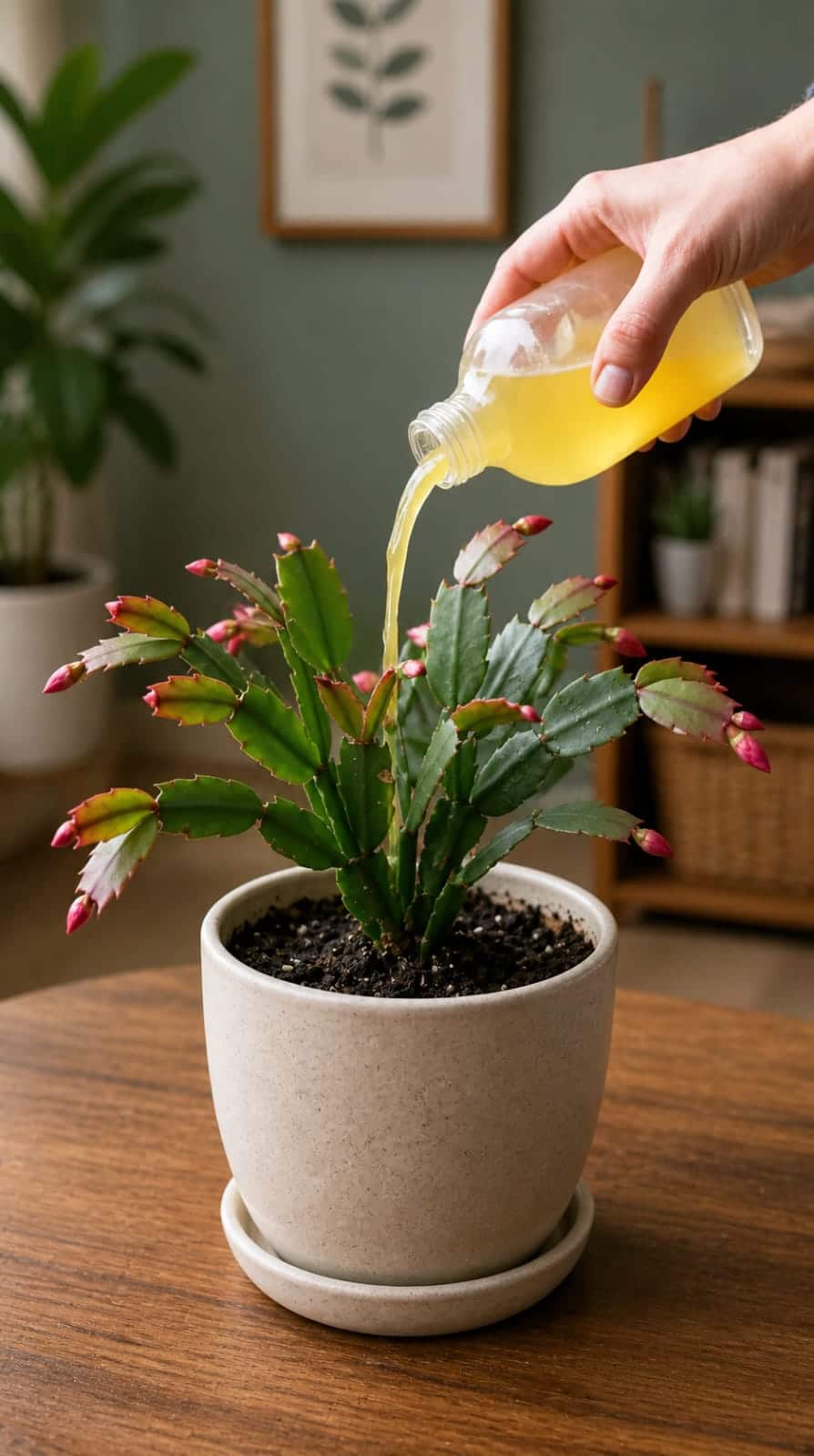
The image shows a healthy Christmas cactus with many pink flower buds while a golden-yellow liquid is being poured into the soil. This liquid is best explained as diluted banana peel water, a simple homemade plant tonic that many gardeners use to support flowering houseplants naturally.
Banana peel water is popular because banana peels contain potassium and small amounts of other minerals. Potassium is especially important for flowering strength, root function, and overall plant resilience. However, like every homemade plant fertilizer, banana peel water must be prepared and diluted correctly. Used too strong or too often, it can attract fungus gnats, cause sour soil, or stress the roots.
The safe version of this trick is simple: make a weak banana peel infusion, strain it well, dilute it heavily, and apply it only to the soil when the Christmas cactus actually needs watering.
This guide explains exactly how to make banana peel water, how to use it on Christmas cactus, how often to apply it, what mistakes to avoid, and how to combine it with proper Christmas cactus care for stronger buds and better blooms.
What Plant Is in the Image?
The plant in the image appears to be a holiday cactus, commonly called Christmas cactus or Thanksgiving cactus. These plants are part of the Schlumbergera group. They are tropical forest cacti, not desert cacti.
This matters because a Christmas cactus does not want the same care as a cactus that grows in dry desert sand. In nature, holiday cacti grow in humid forest environments where their roots receive moisture, organic matter, and plenty of airflow. They like soil that stays lightly moist during active growth but never soggy.
A healthy Christmas cactus has flat segmented stems with small joints. The plant in the image has many healthy buds, which means it is entering or already in its blooming cycle. This is the perfect time for gentle support, but not heavy feeding.
What Is the Yellow Liquid?
The yellow liquid in the image is best described as diluted banana peel water. It is a homemade liquid fertilizer made by soaking or simmering banana peels in water, then straining and diluting the liquid before applying it to the plant soil.
Banana peel water is often used as a natural fertilizer for flowering houseplants because banana peels contain potassium. Potassium supports flower quality, stem strength, water movement inside the plant, and root function.
For Christmas cactus, banana peel water should be mild. This plant does not like strong fertilizer while it is budding. A weak solution can support blooming, but a strong one can overwhelm the roots.
Why Banana Peel Water Is Popular for Flowering Houseplants
Banana peels are a common kitchen waste item, and gardeners love turning them into a useful plant tonic. Instead of throwing peels away, they can be used to make a gentle homemade fertilizer for indoor plants, balcony plants, flowering plants, and container gardens.
Banana peel water may help support:
- Flower bud development
- Longer-lasting blooms
- Stronger root activity
- Better plant hydration balance
- Healthier soil microbes
- Steadier growth during active seasons
- Reduced kitchen waste
But banana peel water is not a complete fertilizer. It should not replace good soil, proper light, correct watering, or occasional balanced feeding. It is best used as a gentle booster, not as the only food source.
Why Christmas Cactus Needs Gentle Feeding
Christmas cactus plants do not need heavy fertilizer. In fact, too much fertilizer can cause weak growth, root stress, bud drop, and salt buildup in the soil. These plants respond better to light, steady nutrition.
During active growth, they can benefit from mild feeding. During bud formation and bloom season, they need careful support without sudden changes. A diluted banana peel water treatment can be useful because it is gentle when prepared correctly.
The key is moderation. More is not better.
How Banana Peel Water Helps Christmas Cactus Buds
Christmas cactus buds are sensitive. They can drop from stress, low humidity, inconsistent watering, sudden movement, heat, cold, or too much fertilizer. Potassium-rich plant support may help the plant maintain stronger buds when the rest of the care routine is correct.
Banana peel water may support blooming by helping with:
- Bud strength
- Flower color
- Stem firmness
- Root function
- Moisture movement inside the plant
- Post-bloom recovery
However, it will not force a Christmas cactus to bloom if the plant has not received the right light and temperature conditions. Blooming depends on several factors working together.
How to Make Banana Peel Water for Christmas Cactus
There are two safe ways to make banana peel water: the soaking method and the quick simmer method. For indoor plants, the simmer method is often cleaner because it reduces spoilage risk.
Method 1: Quick Simmer Banana Peel Water
This is the best method if you want a cleaner, fresher liquid for houseplants.
Ingredients
- 1 clean banana peel
- 1 liter water
- Small pot
- Fine strainer
- Clean jar or bottle
Steps
- Rinse the banana peel well to remove dirt or residue.
- Cut the peel into small pieces.
- Add the peel pieces to 1 liter of water.
- Simmer gently for 10 minutes.
- Turn off the heat.
- Let the liquid cool completely.
- Strain very well.
- Dilute before using on the plant.
The finished liquid should be pale yellow, not thick, sticky, or strong-smelling. If it smells sour or fermented, do not use it.
Method 2: Cold Soak Banana Peel Water
This method is simple but should be used carefully because soaked banana peel can ferment if left too long.
Ingredients
- 1 clean banana peel
- 1 liter water
- Clean jar
- Fine strainer
Steps
- Rinse the banana peel.
- Cut it into small pieces.
- Place the pieces in a jar with 1 liter water.
- Let it soak for 12 to 24 hours only.
- Strain completely.
- Dilute the liquid before applying.
- Use immediately.
Do not leave banana peels soaking for many days indoors. Long soaking can create fermentation, odor, bacteria, and pest problems.
Continue to Page 2
Continue to page 2 for more details about this article and the key points many readers miss on the first page.