Peace lilies are known for their graceful white blooms, deep green leaves, and calm tropical beauty. They are one of the most popular indoor flowering plants because they can brighten a living room, office, balcony corner, bedroom, or shaded patio with very little fuss. When healthy, a peace lily looks elegant and fresh. Its leaves stand tall, its white spathes rise above the foliage, and the plant gives that clean, lush look every indoor gardener loves.
But when a peace lily starts to decline, the change can be shocking. The leaves droop dramatically. The white flowers turn brown and limp. The stems bend. The plant can look as if it is collapsing overnight. Many people panic and add more water, more fertilizer, or every homemade plant remedy they find online. Unfortunately, peace lilies are sensitive, and too much “help” can make the problem worse.
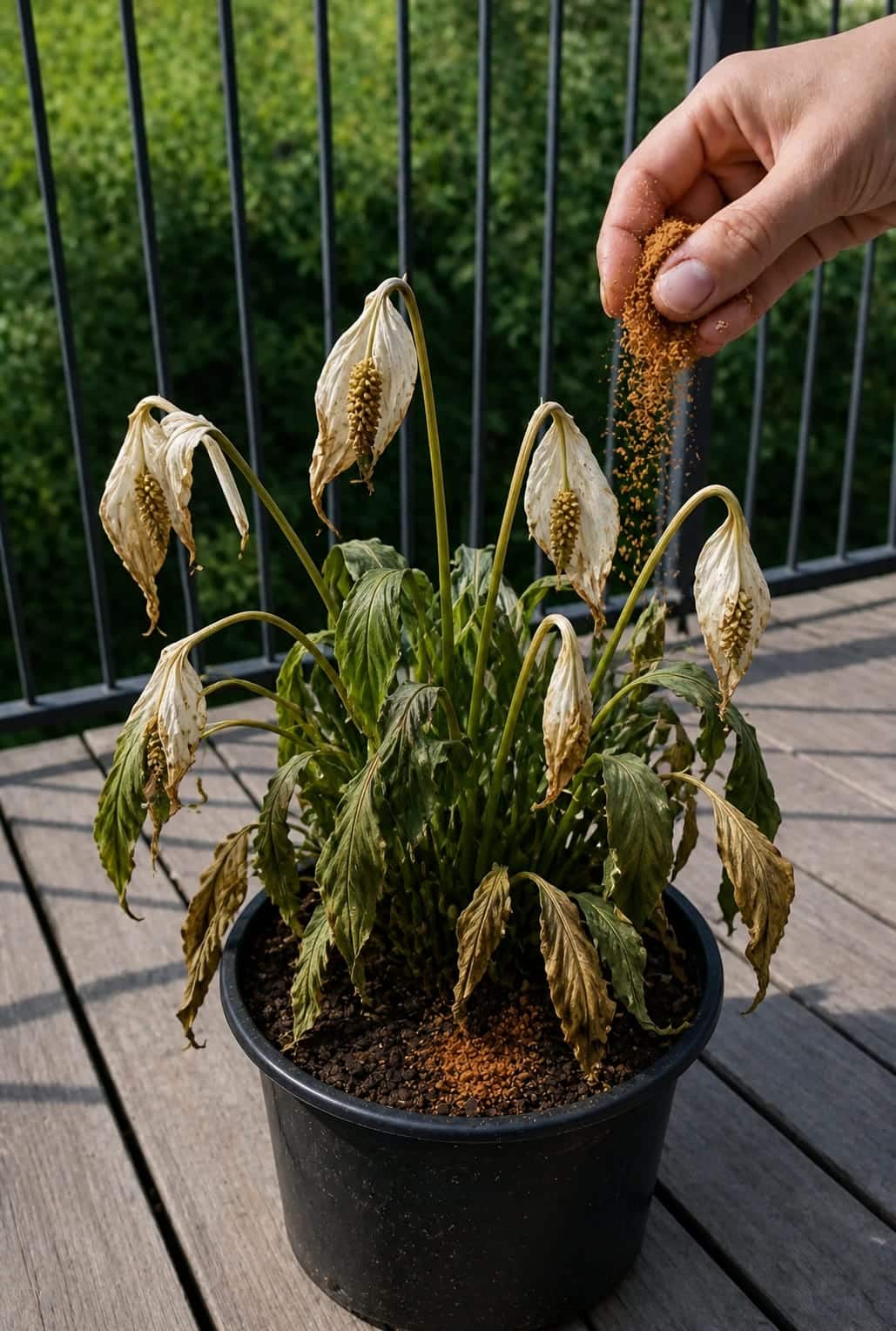
The image shows a badly stressed peace lily on a balcony. The white flowers are wilted, several leaves are drooping, and a hand is sprinkling a brown granular material onto the soil. This brown material is best explained as dried used coffee grounds. Coffee grounds are one of the most talked-about natural plant care tricks because they contain organic matter and small amounts of nutrients. However, they must be used carefully, especially with peace lilies.
The safe version of this trick is not dumping wet coffee grounds into the pot. The safe version is using a very thin layer of completely dried used coffee grounds, mixed lightly into the top soil or brewed into a weak coffee-ground tea. Used correctly, coffee grounds can support soil structure and provide a mild organic boost. Used incorrectly, they can cause mold, fungus gnats, sour soil, root rot, and leaf damage.
This guide explains how to use the coffee grounds trick safely for peace lilies, how to prepare the grounds, when to avoid them, how often to apply them, and what actually helps a drooping peace lily recover.
What Plant Is in the Image?
The plant in the image is a peace lily, also known as Spathiphyllum. Peace lilies are tropical houseplants famous for glossy green leaves and white spathes that look like flowers. The true flower is the small spike in the center, called the spadix.
Peace lilies are often grown indoors, but they can also sit on shaded balconies or patios if temperatures are warm and the light is gentle. They do not like harsh direct sun, cold drafts, dry wind, or soggy soil. They prefer bright indirect light, moderate humidity, and evenly moist but well-draining potting mix.
The peace lily in the image is stressed. Its flowers are wilted, the leaves are limp, and some foliage looks dry and tired. This could be caused by underwatering, overwatering, heat stress, root rot, direct sun exposure, compacted soil, or old potting mix.
Before using coffee grounds, the first step is to understand why the plant is drooping.
What Is the Brown Powder Being Sprinkled?
The brown material in the image looks like dried used coffee grounds. Coffee grounds are the leftover particles after brewing coffee. Gardeners often use them in compost piles, outdoor garden beds, worm bins, and sometimes houseplant soil.
Coffee grounds contain organic matter and small amounts of nutrients. They may improve soil texture when used lightly and correctly. But they are not a complete fertilizer, and they are not always safe for indoor pots if used too heavily.
For peace lilies, coffee grounds should be used only in small amounts and only when they are fully dried. Wet coffee grounds can clump together, block airflow, hold too much moisture, and grow mold.
Can Coffee Grounds Help Peace Lilies?
Yes, but only when used carefully. Coffee grounds can support soil health in small doses. They may add mild organic material and help refresh the top layer of potting mix. Some gardeners also use weak coffee-ground tea as an occasional soil tonic.
Coffee grounds may help with:
- Adding gentle organic matter
- Supporting soil microbial activity
- Lightly improving soil texture
- Refreshing old potting mix when used sparingly
- Providing a mild nutrient boost during active growth
- Reducing kitchen waste through natural plant care
However, coffee grounds are not a miracle cure. They will not instantly lift a collapsed peace lily. They will not reverse dead flowers. They will not fix root rot. They will not solve direct sun damage. They are only a small support step.
Why Coffee Grounds Can Be Risky Indoors
Indoor plant pots are small, closed environments. Anything added to the soil can build up quickly. Coffee grounds are organic and moisture-retentive, so if too much is added, they can create problems.
Common problems from overusing coffee grounds include:
- Mold on the soil surface
- Fungus gnats
- Sour smell from the pot
- Compacted topsoil
- Poor airflow around roots
- Soil staying wet too long
- Root stress
- Yellowing leaves
- More drooping instead of recovery
Peace lilies already like moisture, but they do not like soggy, airless soil. Coffee grounds can make wet soil worse if applied at the wrong time.
Important Rule: Never Use Wet Coffee Grounds Directly
Freshly used coffee grounds are wet. If you scoop them from the coffee maker and place them directly onto peace lily soil, they may form a dense mat. This mat can block oxygen, trap moisture, and encourage mold.
Always dry coffee grounds completely before using them on houseplants.
The grounds should feel loose, crumbly, and dry. If they feel damp, sticky, or clumpy, they are not ready.
How to Dry Coffee Grounds for Plant Use
Drying coffee grounds properly is the most important part of this trick. Clean, dry grounds are much safer than wet clumps.
What You Need
- Used coffee grounds
- A plate or baking tray
- Paper towel or parchment paper
- A spoon
- A dry jar for storage
Drying Method
- Spread used coffee grounds in a very thin layer.
- Place them on a tray or plate.
- Leave them in a dry airy spot for 24 to 48 hours.
- Stir once or twice so they dry evenly.
- Make sure there are no damp clumps.
- Store the dry grounds in a clean jar.
- Keep the jar open for another day if any moisture remains.
You can also dry them in a very low oven for a short time, but do not burn them. Burned grounds are not useful and may smell unpleasant.
How Much Coffee Grounds Should You Use?
Use much less than most people think. For a medium peace lily pot, use only ½ teaspoon to 1 teaspoon of dried used coffee grounds. For a small pot, use just a pinch.
Do not cover the entire soil surface with a thick layer. Do not pile grounds near the crown of the plant. Do not bury large amounts in the pot.
A thin sprinkle is enough.
How to Apply Coffee Grounds Safely to Peace Lilies
Coffee grounds should be applied only when the soil is lightly dry on top, not soaking wet. If the pot is already wet, wait.
Safe Application Steps
- Check the soil moisture first.
- Make sure the top inch of soil is lightly dry.
- Remove dead flowers and badly damaged leaves.
- Sprinkle a very small amount of dried used coffee grounds around the outer soil edge.
- Keep the grounds away from the crown and stems.
- Gently scratch them into the top layer of soil.
- Do not create a thick surface layer.
- Water lightly only when the plant actually needs water.
The goal is to blend the grounds into the surface, not create a coffee blanket on top of the pot.
The Safer Alternative: Coffee Ground Tea
For peace lilies, coffee-ground tea is often safer than applying grounds directly. It gives the plant a very weak organic rinse without leaving particles on the soil surface.
How to Make Weak Coffee Ground Tea
- 1 teaspoon dried used coffee grounds
- 1 liter clean water
- Clean jar
- Fine strainer or coffee filter
Steps
- Add 1 teaspoon dried used coffee grounds to 1 liter water.
- Let it sit for 2 to 4 hours.
- Stir gently.
- Strain very well.
- Dilute the liquid again with equal parts clean water.
- Use only on lightly dry soil.
The final liquid should be weak, pale, and not smell sour. If it smells fermented, throw it away.
How Often Should You Use Coffee Grounds on Peace Lilies?
Use coffee grounds only once every six to eight weeks during active growth. For most peace lilies, this means spring and summer.
Do not use coffee grounds weekly. Do not use them every time you water. Do not combine them with strong fertilizer on the same day.
Peace lilies prefer balanced, gentle feeding. Too much organic material can overwhelm the roots.
When Not to Use Coffee Grounds
Do not use coffee grounds if the peace lily is already struggling from wet soil or root rot. Coffee grounds can hold moisture and may make a soggy pot worse.
Avoid this trick if:
- The soil is wet
- The pot smells sour
- The plant has fungus gnats
- There is mold on the soil
- The pot has no drainage holes
- The plant was recently overwatered
- The roots are rotten
- The plant is in direct hot sun
- You recently fertilized it
In these situations, fix the root and soil problem first.
Why the Peace Lily in the Image Is Drooping
The peace lily in the image looks badly wilted. The flowers are dry and hanging, and the leaves are collapsed. There are several possible causes.
Possible Cause 1: Underwatering
Peace lilies droop quickly when they get too dry. If the soil is dry and pulling away from the pot, the plant may need a deep watering with plain water. Coffee grounds should not be the first step.
Possible Cause 2: Overwatering
If the soil is wet and the plant is still drooping, the roots may be damaged. More water or coffee tea can worsen the problem.
Possible Cause 3: Heat Stress
The plant is on a balcony, and balconies can become hot, windy, and bright. Peace lilies do not like direct sun or dry wind. Their leaves can collapse from heat even if the soil has moisture.
Possible Cause 4: Root Rot
Root rot prevents the plant from absorbing water. The leaves droop because the roots are no longer functioning properly.
Possible Cause 5: Old Soil
Old compacted soil can hold too much water in some areas while drying hard in others. Peace lilies need a loose, breathable mix.
Step One: Check the Soil Before Adding Anything
Before using coffee grounds, push your finger into the soil. Check at least one to two inches deep.
If the soil is dry, water the plant with plain water first. Let it drain fully.
If the soil is wet, do not water and do not add coffee grounds. Slide the plant out of the pot and check the roots.
If the soil is lightly dry on top but still slightly moist below, the plant may need shade, humidity, and cleanup more than feeding.
How to Check Peace Lily Roots
Root health is everything. A peace lily with healthy roots can recover from drooping. A peace lily with rotten roots needs repotting.
Healthy Roots
- Firm
- Light-colored
- Flexible
- No bad smell
Rotten Roots
- Brown or black
- Mushy
- Slimy
- Sour-smelling
- Easy to pull apart
If many roots are rotten, coffee grounds will not solve the problem. The plant needs fresh soil and root trimming.
Continue to Page 2
Continue to page 2 for more details about this article and the key points many readers miss on the first page.