How to Rescue a Drooping Peace Lily
The safest rescue method depends on the soil condition.
If the Soil Is Dry
- Move the plant out of direct sun.
- Water deeply with plain water.
- Let the pot drain fully.
- Empty the saucer.
- Wait several hours.
- Do not fertilize immediately.
A thirsty peace lily may perk up within hours, but damaged leaves and flowers may not fully recover.
If the Soil Is Wet
- Remove the plant from the pot.
- Inspect the roots.
- Trim rotten roots.
- Remove soggy old soil.
- Repot into fresh well-draining mix.
- Keep in bright indirect light.
- Water lightly after repotting.
Do not use coffee grounds until the plant has stabilized.
Should You Cut Off the Dead Peace Lily Flowers?
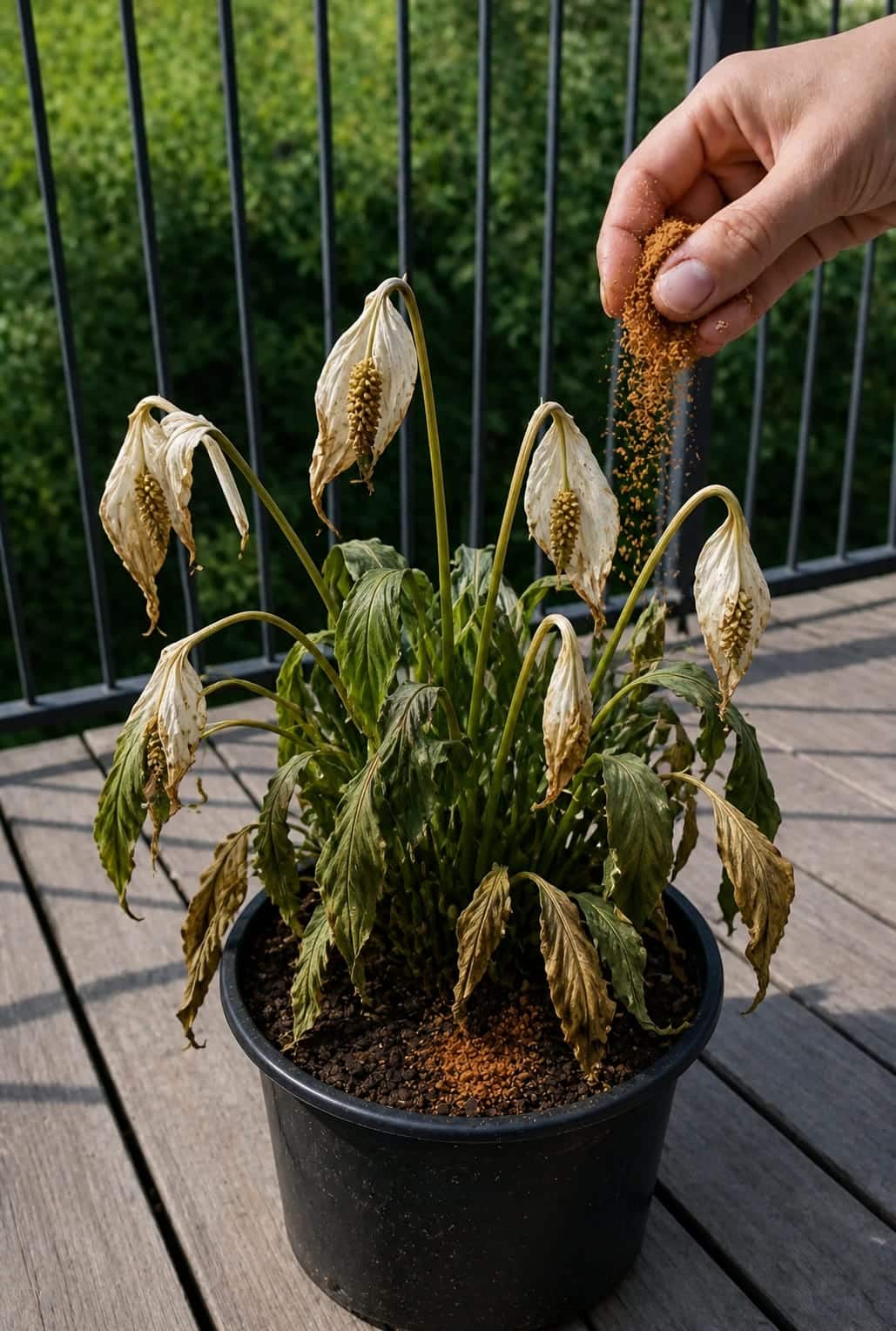
Yes. The flowers in the image are wilted and browning. They will not turn white again. Removing them helps the plant redirect energy toward roots and new leaves.
Use clean scissors and cut the flower stems near the base. Do not pull them by hand. Pulling can damage the crown.
Should You Remove Drooping Leaves?
Do not remove every drooping leaf immediately. Some may recover if the plant is watered correctly and moved to better conditions. Remove only leaves that are mostly brown, crispy, yellow, or mushy.
If a leaf is green but limp, leave it for now. It may still help the plant make energy.
Best Soil Mix for Peace Lilies
Peace lilies need soil that holds some moisture but still drains well. Dense soil can suffocate roots. Very dry chunky soil may not hold enough moisture. The right balance is important.
A good peace lily soil mix can include:
- 2 parts indoor potting mix
- 1 part perlite
- 1 part orchid bark or coco chips
- A small amount of worm castings
This mix keeps roots moist but breathable.
Why Drainage Is Essential
Peace lilies like moisture, but they do not like standing water. A pot without drainage can quickly cause root rot. Always use a pot with drainage holes.
If the decorative pot has no hole, keep the peace lily in a nursery pot with holes and place that inside the decorative container. After watering, remove the inner pot and let it drain before putting it back.
No coffee trick can fix poor drainage.
Best Light for Peace Lily Recovery
Peace lilies prefer bright indirect light. They can tolerate lower light indoors, but they recover better when they receive soft brightness. A balcony can be too harsh if the plant gets direct sun.
If your peace lily is wilting outside, move it to:
- A shaded balcony corner
- A bright indoor room
- Near a window with filtered light
- A spot protected from hot wind
Do not place a stressed peace lily in strong midday sun. This can burn leaves and dry the plant faster.
How to Water Peace Lilies Correctly
Peace lilies prefer evenly moist soil, but not soggy soil. Water when the top inch of soil begins to dry. If you wait until the plant collapses repeatedly, it becomes weaker over time.
Water deeply, let the water drain fully, and empty the saucer. Avoid tiny daily sips, which can keep the top soil wet while deeper roots stay dry or stressed.
Should You Use Coffee Grounds Instead of Fertilizer?
No. Coffee grounds are not a complete fertilizer. They contain some organic material and mild nutrients, but they do not provide a balanced feeding program for peace lilies.
During active growth, a peace lily can be fed with a diluted balanced houseplant fertilizer once every four to six weeks. If using coffee grounds, use them occasionally and do not combine them with fertilizer on the same day.
Can Coffee Grounds Make Peace Lilies Bloom?
Coffee grounds alone will not force blooms. Peace lily flowering depends on plant maturity, light, root health, and consistent care. A plant that is drooping and stressed should not be pushed to bloom. It needs recovery first.
To encourage blooms later:
- Give bright indirect light
- Keep soil evenly moist
- Use well-draining mix
- Feed lightly during spring and summer
- Remove spent flowers
- Avoid overwatering
Healthy roots create healthy leaves. Healthy leaves support future flowers.
Can Coffee Grounds Make Soil Too Acidic?
Used coffee grounds are often less acidic than people think, but they can still affect the soil when used repeatedly. In a small pot, buildup matters. Peace lilies can handle slightly acidic soil, but too much organic buildup or compacted coffee layers can create stress.
Use coffee grounds rarely and lightly. If you see white crust, mold, or sour smell, stop using them.
Can Coffee Grounds Attract Fungus Gnats?
Yes, especially if they are wet or applied too thickly. Fungus gnats love moist organic matter. Peace lily soil already tends to stay more moist than succulent soil, so wet coffee grounds can make the pot attractive to gnats.
To avoid fungus gnats:
- Use only dry grounds
- Use very small amounts
- Mix lightly into the surface
- Do not apply to wet soil
- Let the top layer dry between waterings
- Improve airflow
If gnats appear, stop using coffee grounds and let the top soil dry more.
Can Coffee Grounds Cause Mold?
Yes. Mold is common when coffee grounds are damp, thick, or left as a surface mat. This is why drying and light application are essential.
If mold appears:
- Remove the moldy top layer.
- Stop using coffee grounds.
- Improve airflow.
- Reduce watering slightly.
- Check that the pot drains well.
Mold on the surface is a sign that the soil is staying too wet or too rich.
Best Balcony Care for Peace Lilies
A balcony can be good for peace lilies only if it is shaded and protected. Direct sun, hot pavement, and wind can dry the plant quickly.
Balcony peace lily care tips:
- Keep in bright shade
- Avoid direct afternoon sun
- Protect from strong wind
- Check soil moisture more often in summer
- Bring indoors during cold nights
- Use a pot with drainage
- Avoid black pots in hot sun
The black pot in the image may heat up quickly outdoors. Heat around the root zone can make wilting worse.
What to Do Immediately for the Plant in the Image
If this peace lily were yours, the safest immediate routine would be:
- Move it out of direct sun.
- Check the soil moisture deeply.
- Cut off dead flowers.
- Remove fully brown leaves.
- If soil is dry, water with plain water first.
- If soil is wet, check roots for rot.
- Do not add more coffee grounds until the plant stabilizes.
- Repot if soil is compacted or sour.
- Keep in bright indirect light.
- Use coffee grounds only later, lightly, and rarely.
The plant needs diagnosis before feeding.
Signs Coffee Grounds Are Helping
Coffee grounds do not create instant change. Look for slow improvement over several weeks.
Good signs include:
- New leaves emerging
- Less frequent drooping
- Soil drying normally
- No mold
- No fungus gnats
- Leaves standing firmer
- Healthy green new growth
- Fresh white blooms later
Old dead flowers and crispy leaves will not recover. Focus on new growth.
Signs You Used Too Much Coffee Grounds
Stop immediately if you notice:
- Moldy soil
- Fungus gnats
- Sour smell
- Soil staying wet too long
- Yellowing leaves
- More drooping after application
- Sticky or clumpy topsoil
- Black or mushy roots
If this happens, remove the top layer of soil. If the smell continues, repot the plant in fresh mix.
Peace Lily Care Table
| Care Factor | Best Setup | Why It Matters |
|---|---|---|
| Light | Bright indirect light | Supports leaves and blooms without burning |
| Watering | When top inch begins to dry | Prevents collapse and root rot |
| Soil | Moist but well-draining mix | Keeps roots hydrated and oxygenated |
| Pot | Drainage holes required | Stops water from sitting at roots |
| Coffee grounds | Dry, tiny amount, occasional | Adds mild organic support |
| Humidity | Moderate indoor humidity | Reduces brown tips |
| Feeding | Light feeding in growing season | Supports new leaves and flowers |
Natural Alternatives to Coffee Grounds
If coffee grounds feel risky, there are gentler options for peace lilies.
- Worm casting tea, heavily diluted
- Compost tea, very weak and strained
- Rice water, diluted and used rarely
- Aloe water, very weak
- Balanced houseplant fertilizer at half strength
For a severely stressed peace lily, fresh soil and correct watering usually help more than any homemade tonic.
Can You Use Fresh Coffee?
Do not pour strong brewed coffee into peace lily soil. Fresh coffee can be too acidic or too concentrated, especially if used often. It may also leave residue and stress roots.
If you use coffee-based plant care, use dried used coffee grounds or a very weak coffee-ground tea. Avoid sweetened coffee, milk coffee, flavored coffee, and coffee with cream.
Can You Use Coffee With Sugar or Milk?
No. Never use coffee with sugar, milk, cream, flavor syrup, or sweeteners on houseplants. These ingredients can attract pests, create mold, and rot in the soil.
Use only plain used coffee grounds.
Can Coffee Grounds Repel Pests?
Some gardeners believe coffee grounds may discourage certain pests outdoors, but indoors they can also attract fungus gnats if wet. Do not rely on coffee grounds as pest control for peace lilies.
If your peace lily has pests, identify the pest first. Use proper treatment such as insecticidal soap, neem oil solution, or manual cleaning depending on the problem.
How to Prevent Peace Lily Drooping Again
Peace lilies droop when care becomes inconsistent. Prevention is easier than rescue.
To prevent future drooping:
- Check soil moisture regularly
- Water before the plant fully collapses
- Keep it out of harsh direct sun
- Use a well-draining soil mix
- Keep the pot slightly snug
- Remove old flowers
- Maintain moderate humidity
- Feed lightly, not heavily
A peace lily does best with steady care, not dramatic treatment.
Simple Coffee Grounds Routine for Peace Lilies
- Brew plain coffee with no flavoring.
- Collect the used grounds.
- Spread them thinly and dry completely.
- Store dry grounds in a clean jar.
- Check that peace lily soil is not wet.
- Sprinkle only ½ teaspoon to 1 teaspoon on a medium pot.
- Keep grounds away from the crown.
- Mix lightly into the top soil.
- Use only every six to eight weeks.
- Stop if mold or gnats appear.
Simple Coffee Ground Tea Routine
- Add 1 teaspoon dried used coffee grounds to 1 liter water.
- Soak for 2 to 4 hours.
- Strain very well.
- Dilute again with equal parts clean water.
- Apply only when the top inch of soil is lightly dry.
- Let the pot drain completely.
- Use rarely during active growth.
Common Mistakes to Avoid
- Using wet coffee grounds directly
- Covering the whole pot with grounds
- Applying coffee grounds to wet soil
- Using sweetened or flavored coffee
- Using coffee grounds every week
- Ignoring root rot
- Keeping the plant in direct balcony sun
- Leaving dead flowers on the plant
- Using a pot without drainage
- Expecting dead leaves to turn green again
Short Caption for This Trick
“For a drooping peace lily, use only completely dried used coffee grounds in a tiny amount. Sprinkle a thin layer around the outer soil, keep it away from the crown, and use it only every six to eight weeks. Never add wet coffee grounds, sweet coffee, or thick layers, because they can cause mold, fungus gnats, and root rot.”
Frequently Asked Questions
Are coffee grounds good for peace lilies?
Coffee grounds can be used in very small amounts if they are completely dried. They may support soil organic matter, but they are not a complete fertilizer.
Can coffee grounds save a dying peace lily?
No, not by themselves. A dying peace lily needs soil and root diagnosis first. Coffee grounds are only a mild support trick.
Should coffee grounds be wet or dry?
Always dry. Wet coffee grounds can clump, grow mold, attract fungus gnats, and keep the soil too wet.
How often should I use coffee grounds on peace lilies?
Use them only once every six to eight weeks during active growth, and only in small amounts.
Can I pour brewed coffee on my peace lily?
Strong brewed coffee is not recommended. If using coffee, make a very weak coffee-ground tea from dried used grounds and dilute it well.
Can coffee grounds cause fungus gnats?
Yes. Wet or thick coffee grounds can attract fungus gnats because they hold moisture and organic matter.
Why is my peace lily drooping?
Drooping can be caused by underwatering, overwatering, root rot, heat stress, direct sun, or compacted soil.
Should I cut off brown peace lily flowers?
Yes. Brown or wilted flowers will not recover. Cut the stems near the base with clean scissors.
Can coffee grounds make peace lilies bloom?
Not directly. Blooming depends mostly on light, healthy roots, steady watering, and balanced feeding.
What is the best soil for peace lilies?
A mix of indoor potting soil, perlite, orchid bark or coco chips, and a small amount of worm castings works well.
Final Thoughts
The coffee grounds trick can be useful for peace lilies, but only when it is done carefully. The plant in the image is badly drooping, which means the first step should not be feeding. The first step should be checking the soil, roots, light, and watering routine.
If the soil is dry, the peace lily may need plain water. If the soil is wet, it may have root rot. If it is on a hot balcony, it may be suffering from heat and direct sun. Coffee grounds cannot fix these problems by themselves.
The safe way to use coffee grounds is simple: dry them completely, use only a tiny amount, keep them away from the crown, and apply them rarely. Never use wet grounds, sweet coffee, milk coffee, or thick layers. If mold, fungus gnats, or sour soil appear, stop immediately.
With bright indirect light, a well-draining potting mix, balanced watering, and occasional gentle feeding, a peace lily can recover from drooping and return to producing glossy leaves and beautiful white blooms. Coffee grounds can be a small part of that care routine, but healthy roots and proper watering will always matter most.