Snake plants are famous for their bold upright leaves, sharp architectural shape, and almost legendary toughness. They are often called one of the best indoor plants for beginners because they tolerate dry soil, missed waterings, low humidity, and lower light better than many other houseplants. A healthy snake plant can sit beautifully in a living room, office, bedroom, hallway, or apartment balcony and still keep its strong green-and-yellow leaves for years.
But because snake plants are so tough, many people forget one important thing: they are still living plants with roots that can suffer when the soil becomes too wet, too compacted, or too rich. That is why homemade plant tricks must be used carefully, especially when the trick involves kitchen ingredients.
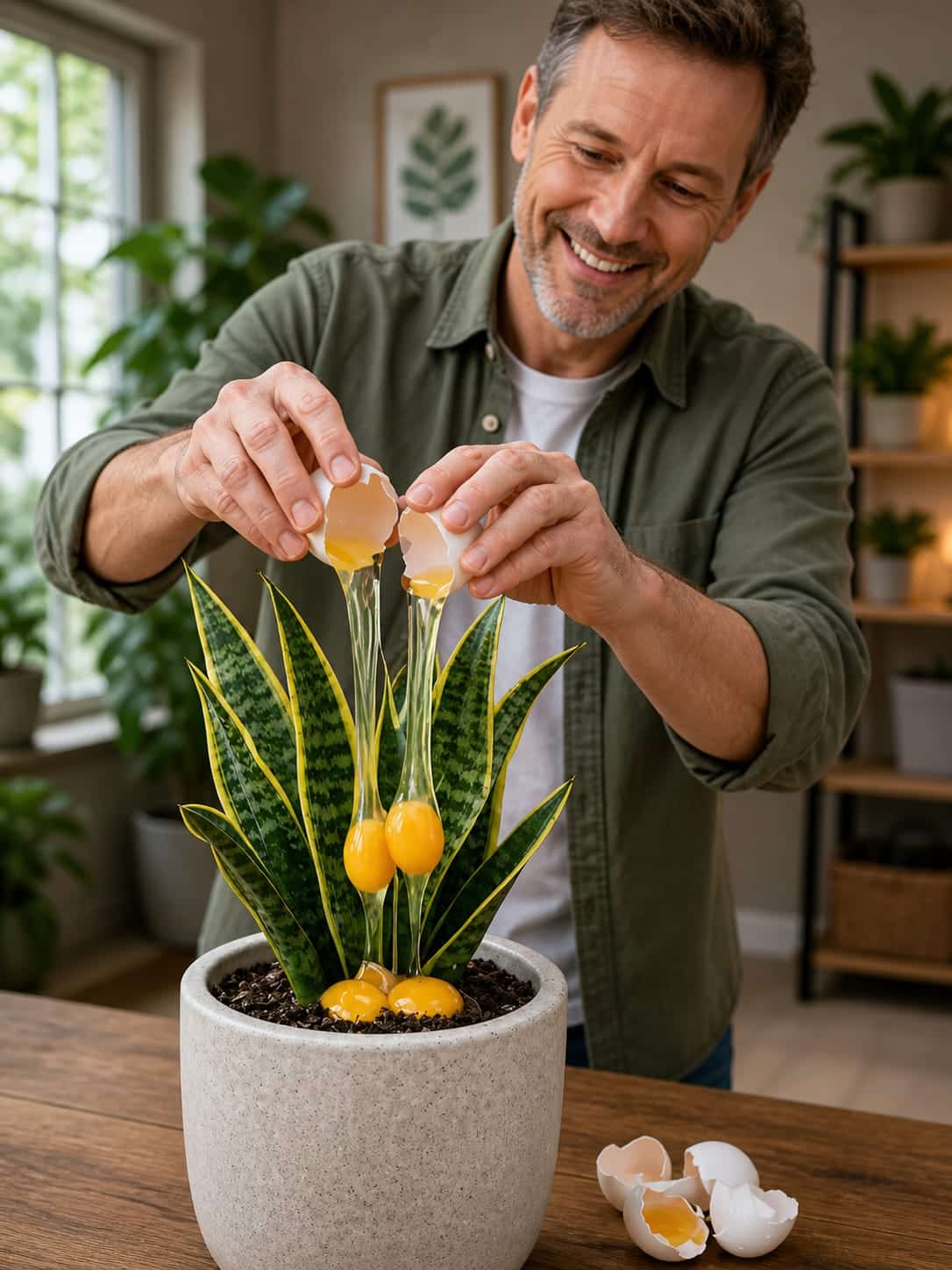
The image shows a snake plant in a decorative pot while raw eggs are being cracked over the soil. It is an eye-catching idea, and many gardeners have heard that eggs can help plants because they contain calcium, protein, and nutrients. However, pouring raw egg directly into a snake plant pot is not the safest method. Raw egg can spoil, smell bad, attract fungus gnats, encourage mold, and create a sticky mess around the roots.
The safer version of this trick is not raw egg. The safer version is eggshell water or finely powdered eggshell, used in small amounts as a slow calcium support for the soil. This gives you the “egg trick” without the biggest risks of rotten soil, pests, and root damage.
In this guide, you will learn how to use eggs safely for snake plants, how to make eggshell water, how to prepare eggshell powder, how often to apply it, what mistakes to avoid, and how to keep your snake plant strong, upright, and healthy indoors.
What Plant Is in the Image?
The plant in the image is a snake plant, also known as Sansevieria or Dracaena trifasciata. Many people still call it Sansevieria, although it has been reclassified botanically into the Dracaena group.
Snake plants are known for their thick sword-like leaves that store water. This makes them drought-tolerant and low-maintenance. Their leaves often have dark green patterns with yellow margins, depending on the variety. They are commonly used in modern home decor, indoor plant styling, minimalist interiors, office plant arrangements, and low-maintenance houseplant collections.
The snake plant in the image looks healthy and upright. That means it does not need an emergency rescue treatment. It only needs gentle maintenance and careful feeding. For a healthy snake plant, less is usually better.
What Is the Egg Trick?
The egg trick is based on the idea that eggshells contain calcium, which can slowly support soil minerals. Eggshells are mostly calcium carbonate, and calcium plays a role in plant cell structure. Some gardeners use crushed eggshells in compost, garden beds, tomato soil, and container plants.
But there is a big difference between using clean eggshells and pouring raw egg into a houseplant pot.
Raw egg is not ideal for indoor snake plants. It can decompose in the pot, create odor, feed bacteria, attract pests, and keep the soil too moist. Snake plant roots need airflow and dry periods. A raw egg mixture can interfere with both.
The safest version is:
- Eggshell water
- Baked and powdered eggshell
- Eggshell compost used outdoors first
For indoor snake plants, eggshell water and powdered eggshell are the cleanest options.
Why You Should Not Pour Raw Egg Into Snake Plant Soil
The image is dramatic, but raw egg is risky in real indoor plant care. A snake plant is not a compost bin. Its pot is a small closed environment where moisture, organic matter, and minerals build up quickly.
Raw egg can cause several problems:
- Bad smell as it decomposes
- Fungus gnats and flies
- Mold on the soil surface
- Sticky soil texture
- Root stress
- Bacterial growth
- Slow drainage
- Attraction of ants or pets
- Soil imbalance
Snake plants do best in clean, fast-draining soil. Raw egg adds heavy organic material that can rot before the plant benefits from it.
If you want to use eggs for plants, use the shell, not the raw egg.
What Eggshells Can Do for Snake Plants
Eggshells can provide a slow-release source of calcium when prepared properly. Calcium is not a “fast green-up” fertilizer, and it will not make a snake plant grow overnight. But in small amounts, eggshells may help support long-term soil mineral balance.
Eggshells may support:
- Stronger leaf structure
- Long-term soil calcium
- Slow mineral release
- Healthier root environment when used lightly
- Container soil refreshment
- Low-waste natural plant care
The key word is slow. Eggshells break down gradually. They are not a quick fertilizer, and they should not replace proper snake plant soil, light, and watering.
How to Make Eggshell Water for Snake Plants
Eggshell water is one of the easiest and safest ways to use the egg trick indoors. It gives the plant a very mild mineral rinse without adding raw egg to the soil.
Ingredients
- Shells from 2 clean eggs
- 1 liter clean water
- Small pot or kettle
- Clean jar
- Fine strainer
Step-by-Step Method
- Rinse the eggshells very well to remove all egg residue.
- Let the shells dry completely.
- Crush the shells lightly.
- Add them to 1 liter of water.
- Simmer gently for 5 to 10 minutes.
- Turn off the heat and let the water cool fully.
- Let the shells sit in the water for several hours.
- Strain the liquid completely.
- Use the cooled eggshell water on dry soil only.
The final liquid should be clear or slightly cloudy, not thick. It should not smell like egg. If it smells unpleasant, throw it away and make a fresh batch.
How to Apply Eggshell Water to a Snake Plant
Snake plants should not be watered too often. Eggshell water counts as watering, so apply it only when the soil is fully dry.
Application Steps
- Check the soil first.
- Make sure the soil is dry several inches deep.
- Pour a small amount around the outer edge of the pot.
- Avoid pouring directly into the center crown.
- Let the water drain fully.
- Empty the saucer after watering.
- Wait until the soil dries again before the next watering.
For a medium pot, you do not need a large amount. Use just enough to lightly moisten the soil. Snake plants prefer dry periods between waterings.
How Often Should You Use Eggshell Water?
Use eggshell water once every one to two months during the active growing season. For most indoor snake plants, that means spring and summer.
Do not use it every week. Do not use it every time you water. Too much mineral water can create buildup in the soil, especially if your tap water is already hard.
During winter, avoid extra feeding unless the plant is under strong grow lights and actively producing new leaves.
How to Make Eggshell Powder for Snake Plants
Eggshell powder is another safe way to use the egg trick. The powder should be clean, dry, and very fine. Large shell pieces break down slowly and may simply sit on the soil for months.
What You Need
- Clean eggshells
- Baking tray
- Oven or dry sunny place
- Blender, spice grinder, or mortar and pestle
- Fine sieve
- Small dry jar
Step-by-Step Method
- Rinse eggshells thoroughly.
- Remove any raw egg residue.
- Let the shells dry fully.
- Bake them at low heat for 10 minutes to dry and sanitize them.
- Allow them to cool completely.
- Grind them into a fine powder.
- Sift the powder to remove large pieces.
- Store it in a dry jar.
The finer the powder, the better it mixes with the soil surface. Fine powder also reduces the chance of sharp shell pieces sitting around the plant base.
How to Apply Eggshell Powder
Use eggshell powder sparingly. Snake plants do not need heavy calcium treatments.
Safe Amount
- Small pot: one tiny pinch
- Medium pot: ¼ teaspoon
- Large pot: ½ teaspoon maximum
Sprinkle the powder lightly around the outer soil surface. Do not bury it against the base of the leaves. Do not pour it into the crown. You can gently scratch it into the top layer of dry soil, but do not disturb the roots.
Use eggshell powder only once every few months.
Eggshell Water vs Eggshell Powder
| Method | Best For | Risk Level | How Often |
|---|---|---|---|
| Eggshell water | Gentle mineral watering | Low if strained and fresh | Every 1–2 months |
| Eggshell powder | Slow soil calcium support | Low if used sparingly | Every 3–4 months |
| Raw egg | Not recommended indoors | High | Avoid |
For most indoor snake plant owners, eggshell water is the easiest and cleanest option.
Can Eggshells Make Snake Plants Grow Faster?
Not quickly. Eggshells are not a fast-growth fertilizer. They mainly provide calcium slowly. If a snake plant is not growing, the cause is usually low light, cold temperatures, compacted soil, overwatering, or lack of active growing season.
To encourage healthy snake plant growth, focus on:
- Bright indirect light
- Fast-draining soil
- Correct watering
- Warm indoor temperatures
- Occasional light feeding
- A pot with drainage
Eggshell water can support the routine, but it is not the main growth trigger.
Can Eggshells Fix Yellow Snake Plant Leaves?
Usually no. Yellow snake plant leaves often mean overwatering, root rot, cold damage, poor drainage, or natural aging. Eggshell water will not reverse yellow leaves.
If a snake plant leaf is yellow and soft, check the roots. If it is dry and yellow-brown, check for underwatering, heat stress, or old damage.
Old damaged leaves will not become perfect again. The goal is to protect the remaining healthy leaves and encourage new growth.
Can Eggshells Help Brown Tips?
Brown tips can happen from inconsistent watering, mineral buildup, underwatering, low humidity, physical damage, or too much direct sun. Eggshells may support calcium slowly, but they do not instantly repair brown tips.
Brown tips will not turn green again. You can trim them with clean scissors if they bother you, but leave healthy green tissue.
Best Soil for Snake Plants
Snake plants need fast-draining soil. This is more important than any homemade fertilizer. If the soil is heavy and stays wet, the roots can rot. If the soil is hard and compacted, water may run off without reaching the roots properly.
A good snake plant soil mix can include:
- 2 parts cactus or succulent mix
- 1 part perlite or pumice
- 1 part coarse sand or lava rock
- A small amount of orchid bark for airflow
The soil should feel loose, gritty, and airy. It should not feel like dense garden mud.
Why Drainage Matters So Much
Snake plant roots need oxygen. If water sits at the bottom of the pot, the roots can suffocate and rot. This is why drainage holes are essential.
If your decorative pot has no drainage hole, use it only as a cover pot. Keep the snake plant in a plastic nursery pot with holes, then place that inside the decorative container. After watering, remove the inner pot and let it drain completely before placing it back.
No homemade trick can replace drainage.
Best Pot for Snake Plants
Terracotta pots are excellent for snake plants because they allow moisture to evaporate. Ceramic pots can also work if they have drainage holes. Plastic pots hold moisture longer, so watering must be less frequent.
Choose a pot that is only slightly larger than the root ball. A pot that is too large holds extra wet soil and increases the risk of root rot.
How to Water Snake Plants Correctly
The best watering rule is simple: water only when the soil is completely dry. Snake plants store water in their leaves and rhizomes, so they do not need constant moisture.
When watering:
- Check that the soil is dry deep down.
- Water slowly around the soil surface.
- Avoid pouring water into the center of the plant.
- Let excess water drain out.
- Empty the saucer.
- Wait until the soil fully dries before watering again.
This routine prevents root rot and keeps the leaves firm.
Should You Use Eggshell Water Instead of Regular Water?
No. Eggshell water should be occasional. Most of the time, use plain water. Eggshell water is a mild mineral support, not a replacement for normal watering.
If you use eggshell water too often, minerals may build up in the soil. This can cause white crust, leaf tip burn, or slow growth.
Can You Mix Eggshell Water With Fertilizer?
Do not use eggshell water and fertilizer on the same day. Too many minerals at once can stress the roots.
If you use a balanced succulent fertilizer, wait several weeks before using eggshell water. Keep your feeding routine simple. Snake plants prefer light feeding.
Best Fertilizer Routine for Snake Plants
Snake plants do not need much fertilizer. During spring and summer, you can feed lightly with a diluted cactus or succulent fertilizer. Use half strength or weaker.
A simple routine:
- Spring: one light feeding
- Summer: one light feeding if actively growing
- Fall: reduce feeding
- Winter: stop feeding
If using eggshell water, count it as a mild supplement and avoid stacking multiple plant food tricks together.
Best Light for Snake Plants
Snake plants tolerate low light, but they grow better in bright indirect light. A bright room near a window is ideal. Morning sun can be beneficial, but harsh afternoon sun may scorch leaves if the plant is not used to it.
If your snake plant is not growing, light is often the reason. Eggshell water will not fix low-light growth.
Move the plant gradually into brighter conditions if needed.
Can Eggshells Attract Pests?
Clean eggshells usually do not attract pests if they are rinsed, dried, and used sparingly. Raw egg residue, however, can attract pests quickly.
To avoid pest problems:
- Rinse shells thoroughly
- Dry them completely
- Never use raw egg in the pot
- Do not overapply powder
- Keep the soil surface clean
- Let the soil dry between waterings
If you see fungus gnats, stop using all homemade tonics until the soil dries and the pest issue is controlled.
Can Eggshells Cause Mold?
Eggshells themselves are less likely to mold if clean and dry. Raw egg residue can mold quickly. Eggshell water can also encourage problems if used too often or if the soil stays wet.
If mold appears on the soil, remove the top layer, improve airflow, reduce watering, and stop using kitchen-based treatments for a while.
What If You Already Poured Raw Egg Into the Pot?
If raw egg was already poured into the snake plant soil, act quickly before it spoils.
Fixing Raw Egg in Soil
- Remove as much egg from the soil surface as possible.
- Scoop out the top layer of contaminated soil.
- If egg soaked deeply, repot the plant.
- Use fresh fast-draining succulent mix.
- Check the roots for rot.
- Do not water immediately after repotting unless the plant needs it.
- Place the plant in bright indirect light.
Repotting is the safest option if a lot of raw egg entered the pot.
Continue to Page 2
Continue to page 2 for more details about this article and the key points many readers miss on the first page.