Snake plants are famous for being almost impossible to kill. They tolerate dry air, missed waterings, low light, bright rooms, small pots, and beginner mistakes better than many other indoor plants. That is why they are one of the most popular houseplants for apartments, offices, balconies, bedrooms, and modern indoor gardens.
But even snake plants have limits.
When the leaves begin to collapse, curl, turn yellow-brown, dry at the edges, or look papery and lifeless, the plant is no longer just “a little stressed.” It is sending a serious warning. The roots may be damaged, the soil may be exhausted, the pot may be holding the wrong kind of moisture, or the plant may have been pushed too far by heat, drought, poor drainage, or compacted soil.
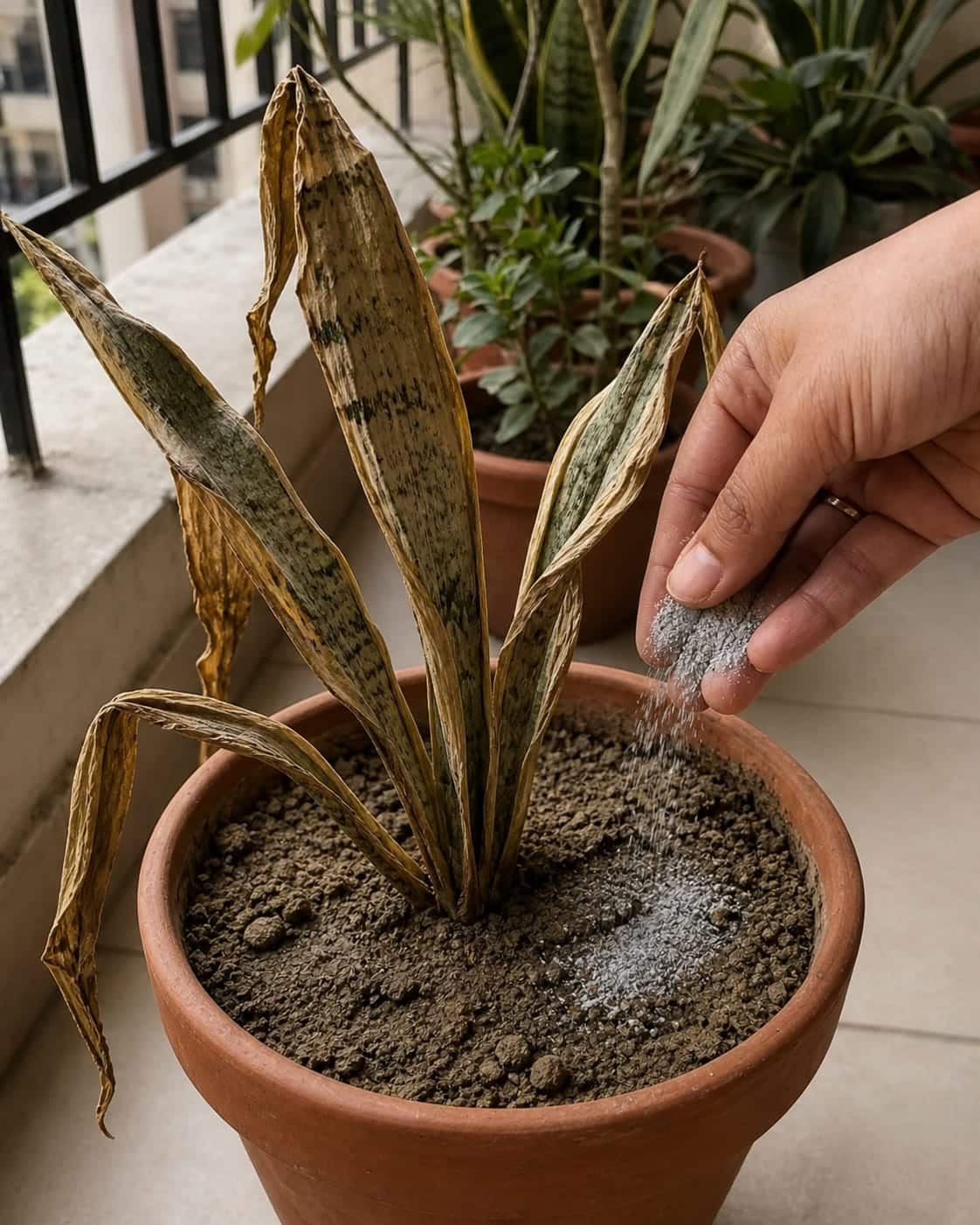
The image shows a severely stressed snake plant in a terracotta pot. The leaves are dry, folded, yellowed, and crispy. A hand is sprinkling a gray-white powder onto the soil surface. This powder is best explained as fine wood ash, a traditional garden amendment sometimes used in very small amounts to add minerals and adjust acidic soil.
Wood ash can be helpful in some plant-care situations, but it must be used carefully. It is alkaline and mineral-rich. Too much can damage roots, raise soil pH too quickly, and make nutrients harder for the plant to absorb. For a weak snake plant, the correct method is not to dump ash all over the pot. The safe method is a tiny surface dusting, followed by root inspection, better soil, and careful watering.
This guide explains how to use the wood ash trick safely for a struggling snake plant, how to prepare the ash, when to avoid it, and what actually helps a dying snake plant recover.
What Plant Is in the Image?
The plant in the image is a snake plant, also known as Sansevieria or Dracaena trifasciata. It is often called mother-in-law’s tongue because of its tall, sword-shaped leaves. Snake plants are popular because they are tough, architectural, and low maintenance.
A healthy snake plant usually has firm upright leaves with green patterns and, depending on the variety, yellow or pale edges. The plant in the image is not healthy. Its leaves are curled, dry, brown, and collapsing. This can happen when the roots have stopped functioning properly.
Before using any powder, fertilizer, or homemade plant trick, the first step is to understand why the plant is declining.
What Is the Gray Powder?
The gray-white powder in this trick is best explained as sifted wood ash. Wood ash is the soft powder left after clean, untreated wood has burned completely. It contains minerals such as potassium, calcium, magnesium, and trace elements.
In outdoor gardening, wood ash is sometimes used to sweeten acidic soil, add potassium, and improve mineral balance. In indoor plant care, it must be used much more cautiously because pots are small and minerals can build up quickly.
For snake plants, wood ash should only be used in tiny amounts and only when the soil is dry and not already alkaline. It is not a weekly fertilizer. It is not a cure for root rot. It is not a magic revival powder. It is a mineral dusting that may support dry, depleted soil when used correctly.
Important Warning Before Using Wood Ash
Do not use ash from charcoal briquettes, painted wood, treated wood, cardboard, glossy paper, fire starters, barbecue leftovers, or burned trash. These can contain chemicals that may harm plants and contaminate indoor soil.
Only use ash from clean, untreated hardwood or natural wood burned without chemicals.
Also, never use large amounts in a houseplant pot. Indoor pots do not have the same buffering power as outdoor garden beds. A little ash can go a long way. Too much can burn roots.
Why Gardeners Use Wood Ash on Snake Plants
Snake plants prefer a loose, fast-draining soil mix. They do not like heavy, wet, acidic, compacted soil. In very small amounts, wood ash may help refresh mineral-poor soil and create a drier surface layer.
Wood ash may help with:
- Adding a small amount of potassium
- Adding calcium and trace minerals
- Reducing excess acidity in old soil
- Drying a damp soil surface slightly
- Discouraging some soft-bodied pests on the soil surface
- Refreshing exhausted potting mix when used very lightly
But wood ash does not fix rotten roots. It does not rehydrate dead leaves. It does not replace repotting if the soil is compacted. It should be treated as a support step, not the entire rescue method.
Is Wood Ash a Fertilizer?
Wood ash can act as a mineral amendment, but it is not a complete fertilizer. It contains potassium and calcium, but it does not provide enough nitrogen for balanced growth. Snake plants do not need heavy nitrogen, but they still need balanced care over time.
If your snake plant is dying, the problem is usually not simply “lack of fertilizer.” More often, the cause is one of these:
- Overwatering
- Underwatering for too long
- Compacted soil
- No drainage
- Root rot
- Extreme heat or sun scorch
- Cold damage
- Old exhausted potting mix
Before adding wood ash, check the plant and soil carefully.
How to Prepare Wood Ash for Plant Use
Wood ash should be clean, dry, cool, and sifted before use. Never use hot ash. Never use ash that has been exposed to rain or chemicals.
What You Need
- Clean untreated wood ash
- A fine sieve
- A dry container with a lid
- A small spoon or pinch tool
- Gloves if desired
Preparation Steps
- Make sure the ash is completely cool.
- Remove large charcoal pieces.
- Sift the ash through a fine sieve.
- Keep only the soft fine powder.
- Store it in a dry sealed container.
- Label it clearly for plant use.
The ash should be light gray and powdery. If it contains chunks, grease, plastic residue, or strange smells, do not use it.
How Much Wood Ash Should You Use on a Snake Plant?
Use much less than shown in many dramatic plant trick images. For a medium indoor snake plant pot, use only ¼ teaspoon or less. For a small pot, use just a tiny pinch.
The ash should look like a very light dusting on the soil surface, not a thick pile.
If the pot is large, you can sprinkle a small amount around the outer soil edge, but do not bury the crown of the plant in ash. Do not pour ash directly into the center where the leaves emerge.
How to Apply Wood Ash Safely
Use wood ash only when the soil surface is dry. If the soil is wet, do not add ash. Wet ash can become concentrated and may irritate roots.
Safe Application Steps
- Remove dead, mushy, or fully dried leaves first.
- Check that the soil is dry on top.
- Take a tiny pinch of sifted wood ash.
- Sprinkle it thinly around the outer soil surface.
- Keep it away from the central crown.
- Do not mix large amounts into the soil.
- Wait several days before watering.
- Water lightly only when the soil is dry deeper down.
For a severely stressed snake plant, this should be done only once. Do not repeat every week.
When Not to Use Wood Ash
Wood ash is not safe for every snake plant problem. Avoid it if:
- The soil is wet or soggy
- The plant has root rot
- The pot has no drainage holes
- The soil already has white mineral crust
- You recently fertilized the plant
- The plant is in very alkaline soil
- The ash came from treated wood or charcoal briquettes
- The plant is newly repotted and root-damaged
If the plant is rotting, repotting is more important than ash. If the plant is bone dry and shriveled, plain water and root inspection matter more.
Why the Snake Plant in the Image Looks So Bad
The leaves in the image are dry, folded, yellow-brown, and crispy. This usually means the plant has been under severe stress for a long time. The cause may be extreme dehydration, dead roots, compacted soil, or heat exposure on a balcony.
Snake plant leaves store water. When they become papery and collapsed, the plant is losing its internal reserves. Some leaves may already be dead and will not recover.
The goal is not to turn dead leaves green again. The goal is to save any living rhizomes or healthy leaf bases so the plant can produce new growth later.
Step One: Remove Dead Leaves
Before applying any treatment, remove leaves that are fully dry, hollow, mushy, or collapsed. Dead leaves can attract pests and keep the base crowded.
How to Remove Damaged Leaves
- Use clean sharp scissors or pruners.
- Cut dead leaves close to the soil line.
- Do not pull hard if the leaf is attached firmly.
- Remove fallen dry pieces from the soil surface.
- Leave any firm green parts that may still be alive.
If most leaves are dead, the plant may still have living rhizomes under the soil. Snake plants can sometimes regrow from healthy underground parts.
Step Two: Check the Roots and Rhizomes
A dying snake plant should be checked below the soil. The roots and rhizomes tell you whether the plant can recover.
Healthy snake plant rhizomes are firm and usually pale orange, cream, or light-colored. Rotten rhizomes are mushy, dark, smelly, or slimy. Dry dead rhizomes are hollow, shriveled, and brittle.
Root Check Method
- Gently remove the plant from the pot.
- Shake away old soil.
- Inspect the roots and rhizomes.
- Cut away mushy or dead parts.
- Keep only firm living sections.
- Let cut areas dry before repotting.
If you find firm rhizomes, the plant still has a chance.
Can Wood Ash Fix Root Rot?
No. Wood ash cannot fix root rot. If roots or rhizomes are mushy, they must be removed. Adding ash on top of rotten soil will not stop the problem inside the pot.
For root rot, the correct method is:
- Remove the plant from the pot
- Cut away rotten roots and rhizomes
- Let healthy pieces dry and callus
- Repot into fresh dry succulent soil
- Use a pot with drainage
- Wait before watering
A tiny amount of wood ash can be used later only if the soil needs mineral support, but it is not the main rescue treatment.
Best Soil for Snake Plant Recovery
Snake plants need fast-draining soil. Heavy garden soil or compacted potting soil can suffocate roots and trap moisture. The soil in the image looks dense and dry, which may be part of the problem.
A good snake plant recovery mix can include:
- 2 parts cactus or succulent mix
- 1 part perlite or pumice
- 1 part coarse sand or lava rock
- A small amount of orchid bark for airflow
The mix should drain quickly and dry between waterings. If water sits on the surface or the soil becomes hard like clay, replace it.
Why Terracotta Pots Help Snake Plants
The image shows a terracotta pot, which is usually a good choice for snake plants. Terracotta allows moisture to evaporate through the pot walls, helping the soil dry faster.
However, even terracotta cannot save a plant if the soil is too dense or the pot has poor drainage. Always make sure the pot has a drainage hole. If the saucer holds water, empty it after watering.
Continue to Page 2
Continue to page 2 for more details about this article and the key points many readers miss on the first page.