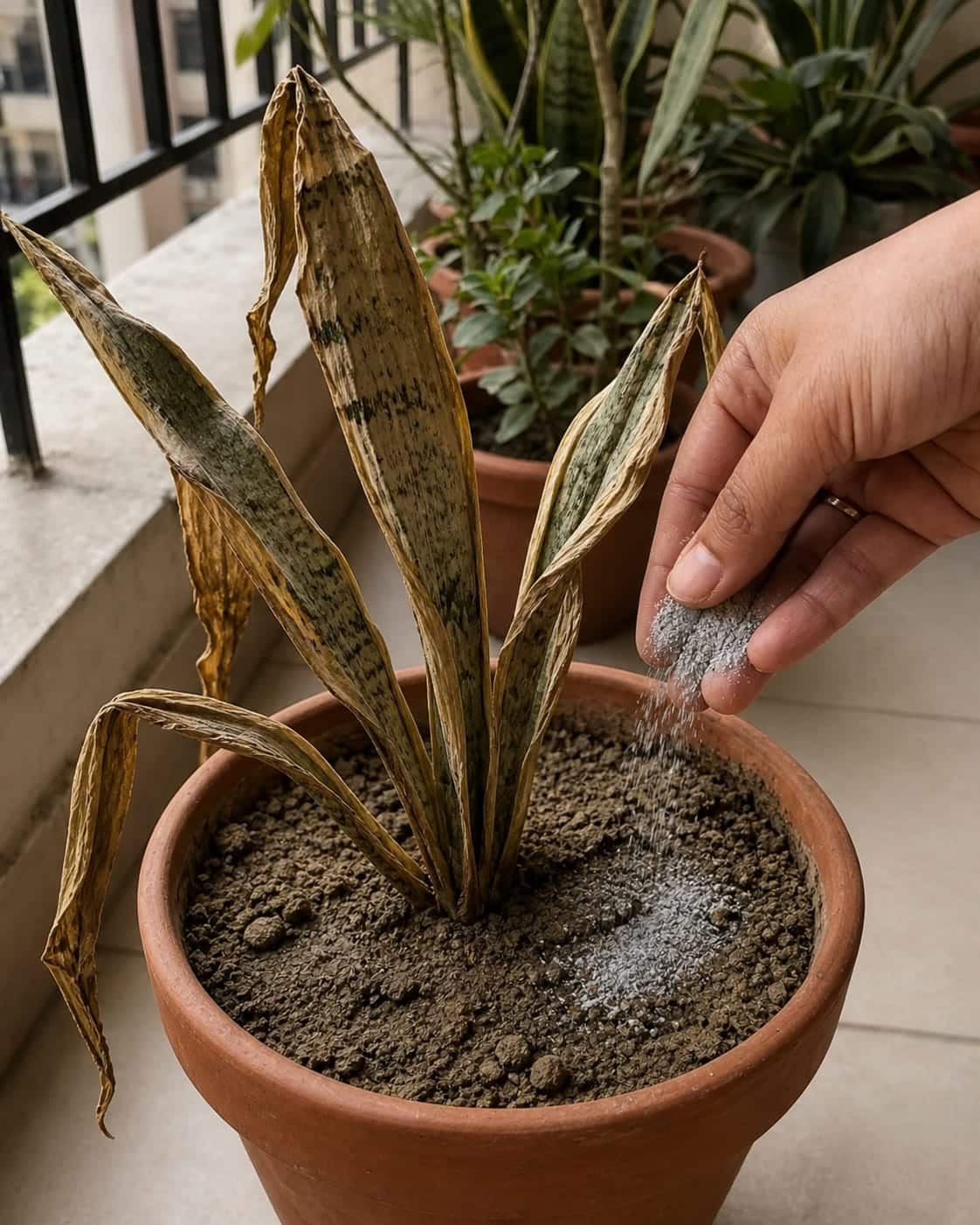
How to Water a Weak Snake Plant
A weak snake plant should be watered carefully. If the roots are damaged, too much water can rot what remains. If the plant is severely dry but still has living roots, it needs slow rehydration.
After repotting into dry soil, wait several days before watering. Then water lightly around the edges of the pot. Do not soak a plant with very few roots.
Once the plant stabilizes, water only when the soil is fully dry.
How Often Should You Water Snake Plants?
There is no perfect calendar because indoor conditions vary. In bright warm rooms, a snake plant may need water every two to four weeks. In low light or winter, it may need water much less often.
The best rule is simple:
Water only when the soil is completely dry.
Check deep into the pot, not just the surface. A moisture meter, wooden skewer, or finger test can help.
Underwatered vs Overwatered Snake Plant
Snake plants can look bad from both too much and too little water. The difference is usually in the texture.
| Sign | Underwatered Snake Plant | Overwatered Snake Plant |
|---|---|---|
| Leaves | Wrinkled, folded, dry, crispy | Soft, mushy, yellow, collapsing |
| Soil | Very dry, hard, pulling from pot | Wet, sour, heavy, compacted |
| Roots | Dry, brittle, weak | Brown, black, mushy, smelly |
| Best fix | Slow rehydration and fresh soil | Root trimming and dry repotting |
The plant in the image looks extremely dry, but root inspection is still necessary. Sometimes overwatered roots rot first, then the leaves dry because the plant can no longer drink.
Best Light for Snake Plant Recovery
Snake plants tolerate low light, but they recover better in bright indirect light. Place a stressed plant near a bright window, but avoid harsh direct afternoon sun while it is weak.
If the plant was on a hot balcony and dried badly, move it to a protected bright spot. If it was in a dark corner, move it gradually into better light.
Good light helps the remaining green tissue create energy for new growth.
Can a Snake Plant Regrow After Losing Leaves?
Yes, if the rhizomes are still alive. Snake plants grow from underground rhizomes. Even if the visible leaves are damaged, a firm healthy rhizome can produce new shoots later.
Recovery can take weeks or months. Snake plants grow slowly, especially after stress. Do not keep disturbing the plant to check for growth. Give it stable care and patience.
Can You Propagate a Damaged Snake Plant Leaf?
If part of a leaf is still firm and green, you may be able to propagate it. However, badly dried or rotten leaves usually do not root well.
Simple Leaf Propagation Method
- Choose a firm healthy leaf section.
- Cut it into pieces about 3 to 4 inches long.
- Remember which end is the bottom.
- Let the cuttings dry for 2 to 3 days.
- Place the bottom end into dry succulent soil.
- Water lightly after several days.
- Keep in bright indirect light.
Propagation is a backup plan if the mother plant is too damaged.
Can You Mix Wood Ash Into the Soil?
For indoor snake plants, do not mix large amounts of wood ash into the soil. If you want to add it to a soil mix, use only a tiny pinch per pot and blend it thoroughly. A surface dusting is easier to control.
Too much ash can raise the pH and create mineral imbalance. Snake plants tolerate a range of conditions, but extreme alkalinity can make nutrients unavailable.
Can You Use Fireplace Ash?
You can use fireplace ash only if it comes from clean untreated wood. The ash must be completely cool, dry, and sifted.
Do not use ash from:
- Charcoal briquettes
- Painted wood
- Pressure-treated wood
- Glossy paper
- Cardboard with ink
- Burned trash
- Fire starters
- Barbecue grease
Unsafe ash can damage plants and contaminate soil.
Can You Use Wood Ash on All Houseplants?
No. Many houseplants prefer slightly acidic soil and may not respond well to wood ash. Plants like peace lilies, ferns, calatheas, and many tropical plants may be more sensitive to alkaline amendments.
Snake plants are tougher than many houseplants, but even they need only tiny amounts.
Use wood ash only when you understand the plant and soil condition.
What to Do After Applying Wood Ash
After a light ash dusting, do not water immediately unless the plant is severely dry and the roots are healthy. Let the ash sit on the dry surface for a few days. Then water lightly when the soil is dry deeper down.
Observe the plant for signs of new growth. Remove dead leaves gradually. Do not keep adding ash every time the plant looks bad.
Signs the Trick Is Helping
Old dead leaves will not become green again. Look for new signs of life instead.
Good signs include:
- Firm leaf bases
- No sour smell from soil
- Soil drying normally
- New shoots emerging
- Remaining leaves feeling firmer
- No spreading mushy rot
- Stable rhizomes under the soil
Recovery is slow. A snake plant may take one to three months to show visible improvement after serious stress.
Signs You Used Too Much Wood Ash
Stop using ash if you notice:
- White crust building on soil
- Leaf tips burning more
- Soil becoming hard or dusty
- Plant decline after application
- New growth looking weak or distorted
- Water running off instead of soaking in
If too much ash was applied, remove the top layer of soil and replace it with fresh succulent mix. If the plant is already weak, repotting may be safer than leaving excess ash in the pot.
Simple Wood Ash Rescue Routine for Snake Plants
- Remove fully dead or mushy leaves.
- Check whether the soil is wet, dry, or compacted.
- Inspect roots and rhizomes if the plant is severely damaged.
- Trim rotten or dead underground parts.
- Repot into fresh fast-draining succulent soil if needed.
- Use a pot with drainage holes.
- Sprinkle only a tiny pinch of clean sifted wood ash on dry soil.
- Keep ash away from the crown.
- Wait before watering.
- Move the plant to bright indirect light.
Common Mistakes to Avoid
- Using ash from charcoal briquettes
- Using ash from treated or painted wood
- Applying too much ash
- Adding ash to wet soil
- Pouring ash into the center crown
- Using ash as a weekly fertilizer
- Ignoring root rot
- Keeping the plant in compacted soil
- Watering too soon after repotting
- Expecting dead leaves to recover
Short Caption for This Trick
“For a struggling snake plant, use only a tiny pinch of clean sifted wood ash on dry soil as a mineral dusting. Keep it away from the crown, never use ash from charcoal or treated wood, and do not repeat often. First check roots, remove dead leaves, and repot into fast-draining succulent soil if the plant is badly damaged.”
Frequently Asked Questions
What is the gray powder on the snake plant soil?
The gray powder is best explained as sifted wood ash. It is sometimes used as a mineral amendment, but only in tiny amounts.
Can wood ash save a dying snake plant?
Wood ash alone cannot save a dying snake plant. It may support dry mineral-poor soil, but the real rescue is root inspection, fresh soil, drainage, and correct watering.
How much wood ash should I use?
Use only a tiny pinch for a small pot or ¼ teaspoon or less for a medium pot. A thin dusting is enough.
Can wood ash burn snake plant roots?
Yes. Too much wood ash can raise soil pH and damage roots. Use it sparingly and only on dry soil.
Can I use charcoal ash?
No. Do not use ash from charcoal briquettes, barbecue leftovers, treated wood, painted wood, or burned trash.
Should I water after applying wood ash?
Do not water immediately unless the plant truly needs it and the roots are healthy. Let the soil remain dry for a few days if possible.
Why are my snake plant leaves dry and folded?
Dry folded leaves can come from severe underwatering, dead roots, compacted soil, heat stress, or old root damage.
Will brown snake plant leaves turn green again?
No. Brown or crispy leaves will not recover. Remove dead leaves and focus on saving the rhizome and encouraging new growth.
What soil is best for snake plants?
Use a fast-draining succulent mix with perlite, pumice, coarse sand, or lava rock. Avoid dense heavy soil.
Can snake plants regrow from roots?
Yes, if the rhizomes are firm and alive. New shoots can emerge later, but recovery may take weeks or months.
Final Thoughts
The wood ash trick can be useful for snake plants, but only when used with control. A tiny pinch of clean sifted wood ash may add minerals and lightly refresh dry soil, but too much can harm roots and make the soil too alkaline. This is especially important in indoor pots, where minerals build up faster than they do in outdoor garden beds.
If your snake plant looks like the one in the image, do not rely on powder alone. Remove dead leaves, check the roots, inspect the rhizomes, replace compacted soil, and use a fast-draining succulent mix. Keep the plant in bright indirect light and water only when the soil is fully dry.
Wood ash is a support trick, not a miracle cure. Used lightly and safely, it can be part of a rescue routine. Used heavily, it can make a weak plant worse. With patience, proper soil, careful watering, and healthy remaining rhizomes, even a badly stressed snake plant may push out new growth and slowly return to life.