Every indoor gardener knows the disappointing moment: a once-beautiful houseplant suddenly starts to collapse. The leaves turn yellow, the stems droop, the soil looks tired, and the plant seems to lose its energy day by day. Many people immediately think the plant is dead, but sometimes a struggling houseplant still has living roots hidden under the soil. With the right care, it may recover.
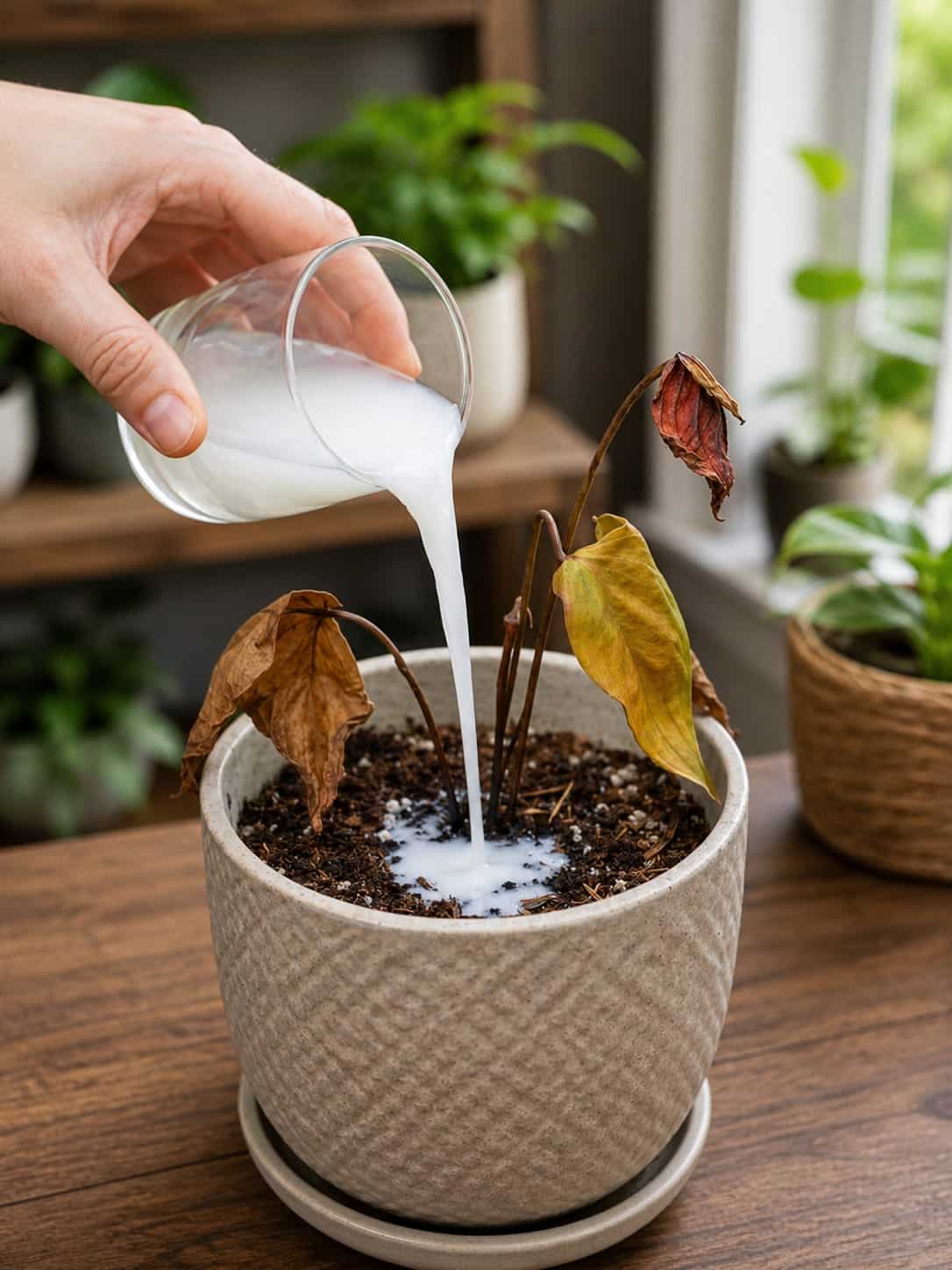
The image shows a weak, wilted plant with yellow and brown leaves while a white liquid is being poured into the soil. This white liquid is best explained as diluted rice water, one of the most popular homemade plant care tricks used by gardeners who want to support tired roots naturally.
Rice water is the cloudy white liquid left after rinsing rice. It contains small amounts of starch, trace minerals, and organic compounds that may gently support soil microbes. When used correctly, it can become a mild homemade plant tonic for weak houseplants. But there is one important rule: rice water must be diluted, fresh, and used only on plants that still have living roots.
If a plant is completely dead, rice water cannot bring it back. If the roots are rotten, rice water will not fix the problem by itself. But if the plant is stressed from low nutrients, dry soil, poor watering habits, or mild transplant shock, a weak rice water rinse may help support recovery as part of a complete plant rescue routine.
What Is Happening in the Image?
The plant in the image looks severely stressed. The leaves are wilted, yellow, and brown. Some stems appear weak and dry. This kind of damage can happen for several reasons, including underwatering, overwatering, root rot, heat stress, cold drafts, old soil, nutrient deficiency, or poor light.
The white liquid being poured into the soil looks like rice water. Many plant owners use rice water because it is easy to make at home, inexpensive, and gentle when properly diluted.
However, pouring a large amount of thick white liquid into a struggling plant can be risky. If the soil is already wet or the roots are damaged, adding more liquid can make the problem worse. The safe method is to inspect the plant first, remove dead leaves, check the soil, and apply only a small amount of diluted rice water when the plant actually needs moisture.
What Is Rice Water?
Rice water is the cloudy liquid produced when plain rice is rinsed or soaked in water. It usually looks milky white because tiny starch particles are released from the rice grains.
For plants, rice water is used as a gentle homemade fertilizer or soil tonic. It may contain small amounts of:
- Starch
- Trace minerals
- Small organic compounds
- Very mild nutrient residues
- Carbohydrates that may support soil microbes
Rice water is not a complete fertilizer. It does not replace balanced plant food. But when used occasionally, it may support soil life and encourage a weak plant to recover if the main care problems are corrected.
Why Gardeners Use Rice Water for Weak Plants
Rice water is popular because it is mild, simple, and easy to prepare. Many gardeners use it when a plant looks tired but not completely dead.
It may help by:
- Adding light organic matter to the soil
- Supporting beneficial soil microbes
- Providing a gentle root-zone refresh
- Helping dry soil absorb moisture more evenly
- Encouraging steady recovery after stress
- Reducing reliance on strong chemical fertilizer
- Supporting new growth when used with proper care
The biggest benefit is not that rice water is powerful. The benefit is that it is gentle. A weak plant does not need a shock. It needs stable care, correct watering, better light, and mild support.
Important Warning: Rice Water Is Not a Miracle Cure
Rice water can help only if the plant still has a chance to recover. It cannot revive dead roots, repair rotten stems, or reverse severe disease overnight.
Rice water will not fix:
- Severe root rot
- A completely dead plant
- Stems that are fully dry and hollow
- Pest infestations
- Fungal disease
- No drainage holes
- Constantly wet soil
- Extreme low light
If the plant is dying because of root rot, adding rice water may feed microbes in the wet soil and make the smell worse. Always check the soil and roots before using any homemade plant tonic.
How to Tell If the Plant Can Still Be Saved
Before using rice water, check whether the plant is still alive. A weak plant can often recover if the roots and stems still have life.
Signs the Plant May Recover
- Some stems are still firm
- There is green tissue near the base
- Roots are light-colored or firm
- Soil does not smell rotten
- Some leaves are still partly green
- New tiny shoots are visible
- The stem bends slightly instead of snapping
Signs the Plant May Be Too Far Gone
- All stems are dry and brittle
- Roots are black and mushy
- Soil smells sour or rotten
- The crown is soft
- No green tissue remains
- The entire plant pulls out easily with no healthy roots
If there is still firm tissue, the rice water trick may be worth trying.
How to Make Safe Rice Water for Houseplants
The safest rice water for indoor plants is made from rinsing plain uncooked rice. Do not use salted rice water, oily rice water, or water from rice cooked with spices.
Ingredients
- ½ cup plain uncooked rice
- 2 cups clean water
- Bowl
- Fine strainer
- Clean watering cup
Steps
- Place the rice in a clean bowl.
- Add 2 cups of clean water.
- Swirl the rice with your hand for 30 to 60 seconds.
- The water will become cloudy white.
- Strain out the rice grains completely.
- Keep only the liquid.
- Dilute the rice water before using it on plants.
This simple rinse water is safer than fermented rice water for a weak indoor plant.
The Correct Dilution for a Weak Plant
Do not pour thick rice water directly into the pot. Dilution is important, especially for a struggling plant.
Use this safe ratio:
1 part rice water + 3 parts clean water
For a very weak plant, use an even lighter mix:
1 part rice water + 5 parts clean water
The final liquid should look lightly cloudy, not thick and milky.
How to Apply Rice Water Correctly
Rice water should be applied only when the plant needs watering. Do not pour it into wet soil.
Application Steps
- Remove completely dead leaves first.
- Check the soil moisture.
- If the soil is wet, do not apply rice water.
- If the top layer is dry, apply a small amount around the soil edge.
- Avoid pouring directly on the stem base.
- Stop when the soil is lightly moist.
- Let excess liquid drain fully.
- Empty the saucer after watering.
For a small pot, only a few tablespoons may be enough. For a larger pot, use more, but never flood the plant.
How Often Should You Use Rice Water?
For weak plants, rice water should be used occasionally. Too much can create sour soil, fungus gnats, or mold.
A safe schedule:
- Use once after checking the plant
- Wait 2 to 3 weeks before repeating
- Use only if the plant shows signs of recovery
- Stop if the soil smells sour
- Stop if fungus gnats appear
Do not use rice water every day. Do not use it every time you water. A plant rescue works best when care is steady and simple.
First Step: Remove Dead Leaves
Before using any plant tonic, clean the plant. Dead leaves drain no useful energy and can attract pests or mold.
Use clean scissors to remove:
- Fully brown leaves
- Dry crispy stems
- Mushy leaves
- Dead flower stalks
- Rotting plant material on the soil
Do not remove every yellow leaf at once if the plant is very weak. Leave any partly green leaves because they may still help the plant produce energy.
Second Step: Check the Soil
The plant in the image looks stressed, but the cause cannot be known from the leaves alone. Soil moisture tells you what to do next.
If the Soil Is Bone Dry
The plant may be dehydrated. Water gently with diluted rice water or plain water. Avoid shocking the plant with too much liquid at once.
If the Soil Is Wet
The plant may be overwatered or suffering from root rot. Do not add rice water. Let the soil dry slightly and check the roots if the plant continues to decline.
If the Soil Smells Bad
Do not use rice water. A sour or rotten smell often means root rot or decomposing organic matter. Repotting may be necessary.
Third Step: Check the Roots
If the plant is badly wilted, gently inspect the roots. This tells you whether the plant needs water, repotting, or root rescue.
Healthy Roots
- Firm
- White, tan, or light brown
- Fresh-smelling
- Not slimy
Rotten Roots
- Black
- Mushy
- Slimy
- Bad-smelling
- Fall apart when touched
If roots are rotten, trim the damaged parts and repot into fresh soil. Rice water should wait until the plant stabilizes.
What If the Plant Has Root Rot?
Rice water is not the first treatment for root rot. Root rot needs oxygen, fresh soil, and removal of rotten roots.
Root Rot Rescue Steps
- Remove the plant from the pot.
- Shake away wet old soil.
- Cut off black, mushy roots.
- Keep firm healthy roots.
- Repot in fresh well-draining soil.
- Use a pot with drainage holes.
- Water lightly with plain water.
- Wait before using any tonic.
After repotting, wait at least 3 to 4 weeks before using diluted rice water. Fresh roots need stability first.
What If the Plant Is Dehydrated?
If the soil is very dry and pulling away from the pot edges, the plant may be dehydrated. In that case, rice water can be used as a gentle rehydration support, but plain water may be enough.
Dehydration Rescue Steps
- Remove dead leaves.
- Water slowly around the pot edge.
- Let the soil absorb moisture gradually.
- Do not flood the pot all at once.
- Place the plant in bright indirect light.
- Keep it away from heat and cold drafts.
- Wait for signs of new growth.
If the plant perks up within a few days, dehydration was likely part of the problem.
Can Rice Water Attract Fungus Gnats?
Yes, if it is too thick, too frequent, or left sitting in wet soil. Rice water contains starch, and starch can feed microbes in the soil. In a small indoor pot, too much organic liquid can attract fungus gnats.
To avoid fungus gnats:
- Dilute rice water well
- Use it only occasionally
- Never pour it into wet soil
- Do not leave rice grains in the pot
- Let the soil dry properly between waterings
- Keep the surface clean
- Use pots with drainage holes
If fungus gnats appear, stop using rice water immediately and let the soil dry more between waterings.
Can Rice Water Cause Mold?
Yes, especially if it is thick or used too often. Mold can grow when organic liquid sits on damp soil. A small amount of harmless surface fungus may appear in rich soil, but mold around a dying plant is not ideal.
To prevent mold, apply rice water sparingly and keep good airflow around the plant. Remove dead leaves from the soil surface.
Should You Use Fermented Rice Water?
Fermented rice water is sometimes used outdoors or by experienced gardeners, but it can be too strong for a weak indoor plant. Fermentation changes the liquid and may create a sour smell, stronger microbial activity, and more risk of attracting pests.
For the plant shown in the image, use fresh diluted rice rinse water instead. A weak plant needs gentle care, not a strong ferment.
Continue to Page 2
Continue to page 2 for more details about this article and the key points many readers miss on the first page.