Can You Use Cooked Rice Water?
You can use cooked rice water only if it is plain, unsalted, and diluted. However, cooked rice water is often thicker and starchier than rinse water, so it is riskier for indoor pots.
Do not use cooked rice water if it contains:
- Salt
- Oil
- Butter
- Spices
- Broth
- Sauce
- Sugar
For houseplants, rice rinse water is safer than thick cooked rice water.
Can Rice Water Replace Fertilizer?
No. Rice water is not a complete fertilizer. It may provide mild support, but it does not contain balanced nutrients in reliable amounts.
A recovering plant may later need balanced fertilizer, but not immediately. Weak plants can be damaged by strong fertilizer. Wait until new growth appears before feeding with regular houseplant fertilizer.
When to Use Fertilizer After Rice Water
Do not fertilize a dying plant right away. Wait until it shows signs of recovery.
Signs it is ready for light fertilizer:
- New leaves appear
- Stems become firmer
- Soil dries normally
- No sour smell
- Roots look healthy
- The plant stops declining
Once recovery begins, use a balanced liquid houseplant fertilizer at quarter strength.
Best Light for a Recovering Plant
A weak plant needs bright indirect light. Direct hot sun can burn damaged leaves, while low light slows recovery. Place the plant near a bright window with filtered light.
Avoid:
- Harsh afternoon sun
- Dark corners
- Cold windowsills in winter
- Heat vents
- Air conditioner drafts
Stable light helps the plant produce energy for new growth.
Best Soil for Plant Recovery
If the soil is old, compacted, sour, or staying wet too long, rice water will not help much. Fresh, well-draining soil may be necessary.
A good recovery soil mix can include:
- Quality indoor potting mix
- Perlite or pumice
- Small orchid bark pieces
- A little compost if the plant is not rot-prone
The soil should hold moisture but still allow air to reach the roots.
Why Drainage Is Essential
The pot must have drainage holes. Without drainage, water collects at the bottom and suffocates roots. A saucer is fine, but it should be emptied after watering.
If the pot has no drainage, move the plant to a proper pot before trying any homemade tonic.
How to Use Rice Water on Different Houseplants
Rice water can be used carefully on many indoor plants, but each plant has different needs.
| Plant Type | Rice Water Use | Warning |
|---|---|---|
| Pothos | Weak diluted rinse | Avoid soggy soil |
| Peace Lily | Occasional diluted use | Do not use during root rot |
| Philodendron | Light soil tonic | Use only when watering is needed |
| Snake Plant | Very rare use | High rot risk if overwatered |
| Calathea | Very diluted use | Sensitive roots |
| Succulents | Usually avoid | Too much moisture risk |
Simple Rice Water Rescue Recipe
Ingredients
- ½ cup plain uncooked rice
- 2 cups clean water
Instructions
- Rinse the rice in water for 30 to 60 seconds.
- Strain out the rice grains completely.
- Mix 1 part rice water with 3 to 5 parts clean water.
- Check the plant soil before applying.
- Use only if the top soil is dry enough for watering.
- Pour slowly around the soil edge.
- Let the pot drain completely.
- Use once, then wait 2 to 3 weeks before considering another application.
Plant Rescue Routine After Using Rice Water
After applying rice water, do not keep adding more treatments. Give the plant time.
First Week
- Keep in bright indirect light
- Do not fertilize
- Do not overwater
- Remove any newly dead leaves
- Watch soil moisture
Second Week
- Check for new growth
- Check for pests
- Keep watering gentle
- Do not move the plant repeatedly
Third to Fourth Week
- If recovery begins, continue stable care
- If decline continues, inspect roots
- If soil smells bad, repot
- If pests appear, treat them directly
Common Mistakes to Avoid
- Pouring thick rice water directly into the pot
- Using rice water on wet soil
- Using salted cooked rice water
- Leaving rice grains on the soil
- Using rice water every day
- Trying to save rotten roots with starch water
- Ignoring drainage problems
- Keeping the plant in low light
- Fertilizing immediately after rice water
- Leaving dead leaves on the soil surface
What to Do If the Plant Gets Worse
If the plant worsens after rice water, stop using it immediately. The issue may be root rot, compacted soil, pests, or a plant that was already too weak.
Emergency Steps
- Stop all homemade treatments.
- Check soil moisture.
- Remove the plant from the pot if soil smells bad.
- Trim rotten roots.
- Repot in fresh soil.
- Place in bright indirect light.
- Water only when needed.
- Wait for new growth before feeding.
Short Caption for This Trick
“For a weak houseplant, use fresh diluted rice water only if the roots are still alive and the soil is not wet. Rinse ½ cup plain rice in 2 cups water, strain, then mix 1 part rice water with 3 to 5 parts clean water. Pour a small amount around the soil edge, let it drain fully, and repeat only after 2 to 3 weeks if the plant improves.”
Frequently Asked Questions
Is rice water good for dying plants?
Rice water may help a weak plant if the roots are still alive and the main problem is mild stress. It cannot revive a completely dead plant or cure severe root rot.
How do I make rice water for plants?
Rinse plain uncooked rice in clean water, strain out the rice, then dilute the cloudy water before using it on plants.
Can I pour rice water directly into soil?
Only if it is diluted. Thick rice water can attract pests and create mold. Use 1 part rice water with 3 to 5 parts clean water.
How often should I use rice water?
Use it once, then wait 2 to 3 weeks. Do not use it daily or weekly on a weak plant.
Can rice water cause fungus gnats?
Yes, if used too often or too strong. Always dilute it and let the soil dry properly between waterings.
Can rice water fix root rot?
No. Root rot requires trimming rotten roots, fresh soil, and better drainage. Rice water can make wet soil worse.
Can I use cooked rice water?
Only if it is plain, unsalted, and heavily diluted. Rice rinse water is safer for indoor plants.
Should I ferment rice water?
For weak indoor plants, fresh rice rinse water is safer than fermented rice water.
Can I use rice water on snake plants?
Use extreme caution. Snake plants are prone to rot if overwatered. Plain water and dry soil are usually safer.
What should I do before using rice water?
Remove dead leaves, check soil moisture, inspect roots if needed, and make sure the pot has drainage holes.
Final Thoughts
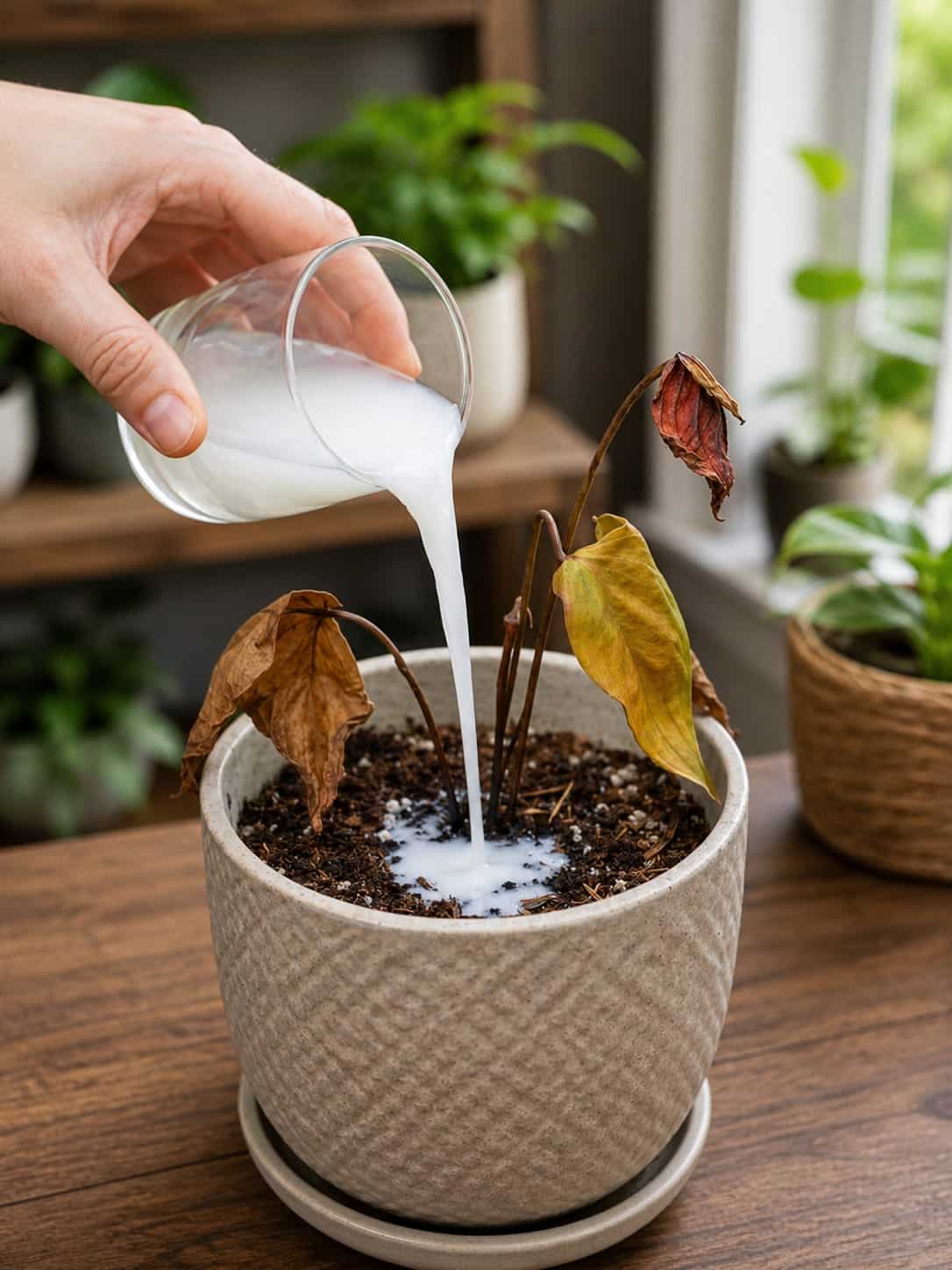
The white liquid rescue trick can be useful when done carefully. In the image, the plant looks badly stressed, and the white liquid appears to be rice water. Rice water can act as a mild homemade plant tonic, but it should never be treated as a miracle cure. It works best when the plant still has living roots and the main care problems are corrected.
The safest method is to make fresh rice rinse water, strain it well, dilute it heavily, and apply only a small amount when the soil is ready for watering. Never use salted rice water, thick cooked rice water, or fermented liquid on a weak indoor plant. Avoid using rice water on wet soil or plants with root rot.
For real recovery, focus on the basics first: remove dead leaves, check the roots, improve drainage, give bright indirect light, and water correctly. Once the plant stabilizes, rice water may gently support the soil and roots as part of a balanced indoor plant care routine.
Used wisely, this simple white liquid trick can help give a struggling plant a second chance — not by forcing instant growth, but by supporting the conditions it needs to recover naturally.