Orchids are some of the most beautiful indoor flowering plants, but they can also be some of the most emotional plants to watch decline. One month they are covered in elegant blooms, glossy leaves, and strong flower spikes. Then suddenly the flowers wilt, the leaves wrinkle, the roots shrink, and the entire plant looks like it is drying from the inside out.
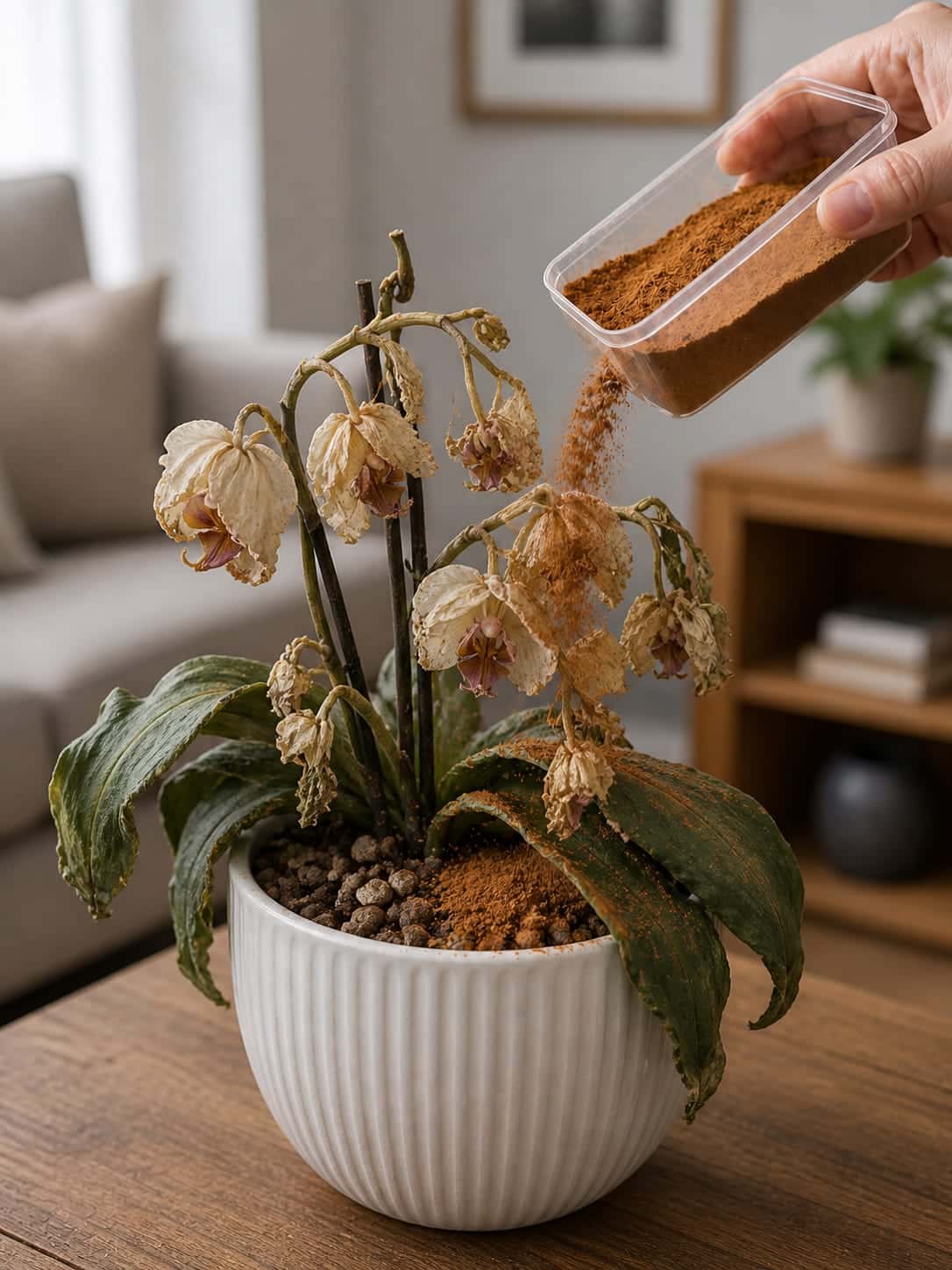
The image shows a struggling orchid in a white ceramic pot. The flowers are dry and collapsed, the leaves look limp and dehydrated, and a hand is sprinkling a fine brown powder over the plant and potting medium. This is a dramatic plant rescue scene, and the brown powder is best explained as plain cinnamon powder.
Cinnamon powder is a popular home gardening trick for orchids because it can help dry small cuts, reduce surface moisture around damaged areas, and keep pruning wounds cleaner after removing dead flowers, rotten roots, or infected tissue. It is not a miracle fertilizer, and it will not bring dead blooms back to life. But when used correctly, cinnamon can be a useful orchid care tool during rescue, repotting, pruning, and root rot recovery.
The key is using it carefully. Orchids have delicate roots. Too much cinnamon can dry healthy roots and damage tender growing tips. The correct method is not to bury the whole plant in powder. The safest method is to use a tiny amount only on cut areas, rotten spots that have been cleaned, or the dry surface of the potting medium after removing dead material.
This guide explains exactly how to use the cinnamon powder trick for orchids, how to make cinnamon powder at home, when to apply it, when to avoid it, and what steps actually help a dying orchid recover.
What Plant Is in the Image?
The plant in the image appears to be a Phalaenopsis orchid, also known as a moth orchid. Phalaenopsis orchids are among the most popular indoor orchids because they produce long-lasting flowers and can bloom for months when grown correctly.
They are commonly sold in garden centers, grocery stores, flower shops, and indoor plant stores. Their flowers can be white, pink, purple, yellow, spotted, striped, or mixed colors. But after blooming, many people do not know how to care for them properly. This is when problems begin.
The orchid in the image is clearly stressed. The flowers are spent and dry, the leaves are wrinkled, and the plant may be dealing with root damage, dehydration, old potting medium, or a watering problem. Cinnamon powder can help with cleaned wounds, but the plant also needs a full recovery routine.
What Is the Brown Powder?
The brown powder in the image is best explained as plain cinnamon powder. Cinnamon is a dry spice made from the bark of cinnamon trees. In houseplant care, it is often used as a natural drying powder for cuts, wounds, and small damaged areas.
For orchids, cinnamon powder is usually used after trimming dead roots, cutting an old flower spike, removing rotted tissue, or cleaning a wound. It helps keep the area dry while the plant seals the cut.
However, cinnamon should not be used like normal fertilizer. It should not be poured heavily over healthy roots. It should not be mixed deeply into orchid bark. It should not be applied every week. A small amount is enough.
Why Gardeners Use Cinnamon on Orchids
Orchids are sensitive to rot because their roots need airflow. When roots stay wet for too long, they can turn brown, black, hollow, mushy, or slimy. Once roots begin rotting, the plant cannot absorb water properly. This is why a plant can look dehydrated even when it has been watered often.
Cinnamon is used during orchid rescue because it can help dry small problem areas after the damaged tissue has been removed. Gardeners often use it after pruning because orchid cuts can stay moist and vulnerable.
Cinnamon may help with:
- Drying small pruning cuts
- Protecting trimmed flower spikes
- Helping cleaned root wounds dry
- Reducing moisture around damaged areas
- Discouraging mild surface mold
- Keeping cut tissue cleaner after repotting
- Supporting orchid root rot recovery when used carefully
The important phrase is when used carefully. Cinnamon is powerful because it dries. That is helpful on wounds, but risky on healthy roots.
Cinnamon Is Not Orchid Fertilizer
This is the biggest mistake people make with the cinnamon trick. Cinnamon is not a complete orchid fertilizer. It does not provide the balanced nutrients orchids need for new leaves, roots, and flower spikes.
If your orchid is weak because it lacks nutrients, cinnamon will not feed it. If it has no roots left, cinnamon will not magically rebuild them. If it is sitting in rotten bark, cinnamon on top will not fix the old potting medium.
Cinnamon is a wound-care trick. It is not plant food.
For long-term orchid care, the plant still needs bright indirect light, proper watering, orchid bark, airflow, drainage, humidity, and occasional diluted orchid fertilizer during active growth.
How to Make Cinnamon Powder at Home
You can buy cinnamon powder, but making it at home gives you a clean, fresh powder with no sugar or additives. For plant care, the powder must be plain cinnamon only.
What You Need
- Plain cinnamon sticks
- A clean dry spice grinder or coffee grinder
- A fine sieve
- A dry glass jar with a lid
- A small spoon
Step-by-Step Method
- Choose plain cinnamon sticks with no coating, sugar, or flavoring.
- Break the sticks into small pieces.
- Place the pieces in a clean dry grinder.
- Pulse until the cinnamon becomes powder.
- Let the powder settle before opening the grinder.
- Sift the powder through a fine sieve.
- Grind any large pieces again.
- Store the powder in a dry glass jar.
- Keep it away from moisture.
The powder should be fine, dry, and easy to sprinkle. If it becomes clumpy, it has absorbed moisture and should not be used on orchid wounds.
Can You Use Store-Bought Cinnamon Powder?
Yes, store-bought cinnamon powder is fine if it is plain cinnamon. Read the label before using it. It should not contain sugar, cocoa, milk powder, artificial flavoring, anti-caking blends with unknown ingredients, or dessert spice mixes.
Do not use cinnamon sugar. Do not use pumpkin spice. Do not use chai spice mix. Do not use sweet baking blends.
For orchid care, use plain cinnamon powder only.
How to Use Cinnamon Powder on a Dying Orchid
The image shows cinnamon being sprinkled broadly over the plant. For real orchid care, the safer method is more precise. You should apply cinnamon only after removing dead or rotten parts.
Safe Orchid Cinnamon Method
- Remove the orchid from its pot if root rot is suspected.
- Take away old soggy bark or moss.
- Inspect all roots carefully.
- Cut off black, mushy, hollow, or rotten roots with sterilized scissors.
- Trim dead flower spikes if they are dry and brown.
- Let cut areas air-dry for 10 to 20 minutes.
- Touch a tiny amount of cinnamon powder onto the cut ends only.
- Avoid coating healthy green or silver roots.
- Repot into fresh orchid bark.
- Wait before watering if many roots were trimmed.
This method protects the plant without overdrying the healthy root system.
How Much Cinnamon Should You Use?
Use very little. For an orchid, a pinch is usually enough. You do not need a spoonful poured across the whole pot.
For a cut flower spike, touch the cut end with a tiny amount. For a trimmed root wound, dab only the cut tip. For a mild mold spot on the bark surface, remove the mold first, then dust a very small amount on the dry surface.
Heavy cinnamon can dry out orchid roots, especially new root tips. New root tips are tender, green, and actively growing. Keep cinnamon away from them.
Where Cinnamon Is Safe to Apply
Cinnamon is safest on:
- Cut ends of old flower spikes
- Trimmed dead root ends
- Small cleaned rot spots
- Minor pruning wounds
- Dry surface areas after removing mold
It should be used like a tiny wound dressing, not like mulch or fertilizer.
Where You Should Not Apply Cinnamon
Do not apply cinnamon heavily to:
- Healthy orchid roots
- Green root tips
- The crown of the orchid
- Wet leaf joints
- New growth points
- Fresh flower buds
- The entire potting mix
Healthy orchid roots need moisture and airflow. Cinnamon can dry them too much if used heavily.
Why the Orchid in the Image Looks Stressed
The orchid in the image has dried flowers and wrinkled leaves. This usually means the plant is not absorbing water properly. The cause could be underwatering, overwatering, root rot, old compacted moss, or damaged roots.
Many people think wrinkled orchid leaves mean the plant needs more water. Sometimes that is true, but often the roots are already damaged from too much water. If roots are rotten, watering more will not help because the plant cannot absorb it.
Before adding any treatment, always inspect the roots.
How to Check Orchid Roots
Healthy Phalaenopsis orchid roots are firm. They may look green when wet and silvery-gray when dry. Rotten roots look brown, black, mushy, slimy, flat, or hollow.
To check roots:
- Gently slide the orchid out of its pot.
- Remove old bark or moss from around the roots.
- Rinse lightly if needed.
- Squeeze roots gently between your fingers.
- Keep firm roots.
- Remove mushy or hollow roots.
Root inspection tells you whether the orchid is thirsty, overwatered, or suffering from root rot.
How to Rescue an Orchid With Root Rot
If the orchid has root rot, cinnamon can help only after the rotten roots are removed. Do not just sprinkle cinnamon on top and hope the rot disappears.
Root Rot Rescue Steps
- Remove the orchid from the pot.
- Throw away old wet bark or moss.
- Sterilize scissors with alcohol.
- Cut off all mushy, black, or hollow roots.
- Leave firm roots, even if they are pale.
- Let the plant air-dry briefly.
- Apply a tiny amount of cinnamon to cut root ends only.
- Repot in fresh orchid bark.
- Use a pot with drainage and side airflow if possible.
- Wait a few days before watering heavily.
This gives the orchid a cleaner start and reduces the chance of rot spreading.
Best Potting Mix for Orchids
Phalaenopsis orchids should not be grown in dense regular potting soil. Their roots need air. A good orchid potting mix is chunky, breathable, and fast-draining.
A good orchid mix can include:
- Medium orchid bark
- Perlite
- Charcoal
- LECA clay pebbles
- A small amount of sphagnum moss for dry homes
If your home is humid or you tend to overwater, use mostly bark. If your home is very dry, a little sphagnum moss can help hold moisture, but do not pack it tightly.
Why Old Orchid Bark Causes Problems
Orchid bark breaks down over time. As it decomposes, it becomes compacted and holds too much moisture. This reduces airflow and increases the risk of root rot.
If your orchid has been in the same potting mix for more than two years, it may need repotting. If the bark smells sour, looks crumbly, or stays wet too long, replace it sooner.
Fresh orchid bark is one of the best ways to revive a struggling orchid.
Should You Cut Off the Dead Flowers?
Yes. The dry flowers in the image will not recover. Remove them so the plant can focus on survival and new growth.
If the flower spike is still green, you can leave it or trim above a node. If the spike is brown, dry, or shriveled, cut it close to the base with sterilized scissors. Then dab the cut end with a tiny amount of cinnamon powder.
Removing dead flowers improves airflow and reduces stress.
Should You Cut Yellow or Wrinkled Leaves?
Do not cut green wrinkled leaves just because they look tired. Wrinkled leaves may still help the plant photosynthesize. If a leaf is fully yellow, mushy, black, or rotting, remove it carefully.
If the leaf is limp but still green, leave it while the roots recover. New leaves will look better once the plant can absorb water again.
Orchid recovery is slow. Patience matters.
How to Water an Orchid After Cinnamon Treatment
After trimming rotten roots and applying cinnamon to cut ends, do not soak the orchid immediately. Give the cuts time to dry and seal.
Wait one to three days before watering, depending on how much root trimming was done and how humid your home is. Then water gently. Let water run through the bark and drain completely.
Never let an orchid sit in standing water. Empty the saucer after watering.
Best Watering Method for Phalaenopsis Orchids
The best orchid watering method is simple:
- Check the roots and bark.
- Water when roots look silvery and the bark feels mostly dry.
- Use room-temperature water.
- Pour water through the potting mix.
- Avoid letting water sit in the crown.
- Drain fully.
- Empty the saucer.
Do not water on a strict calendar. Orchids dry at different speeds depending on temperature, humidity, pot size, light, and potting mix.
Why Water in the Crown Is Dangerous
The crown is the center where orchid leaves meet. If water sits there for too long, crown rot can develop. Crown rot can kill a Phalaenopsis orchid quickly.
When watering, avoid pouring directly into the crown. If water gets trapped there, blot it gently with a paper towel.
Cinnamon can sometimes be used on a cleaned crown wound, but crown rot is serious and often difficult to reverse. Prevention is best.
Best Light for Orchid Recovery
A recovering orchid needs bright indirect light. It should not be placed in harsh direct sun, especially when stressed. Strong sun can burn weak leaves and cause more dehydration.
Place the orchid near an east-facing window, or near a bright window with filtered light. The leaves should receive enough light to support growth but not so much that they become hot or scorched.
If the orchid is too far from a window, it may not have enough energy to grow new roots.
Continue to Page 2
Continue to page 2 for more details about this article and the key points many readers miss on the first page.