Humidity for a Weak Orchid
Orchids appreciate moderate humidity, especially when recovering from root loss. Dry indoor air can make wrinkled leaves worse. However, high humidity without airflow can encourage fungal problems.
To improve humidity safely:
- Group plants together
- Use a humidity tray below the pot
- Run a small humidifier nearby
- Keep the orchid away from heaters
- Maintain gentle airflow
Do not keep the leaves wet all day. Moisture plus poor airflow can cause spotting and rot.
Should You Fertilize a Dying Orchid?
Do not fertilize immediately if the orchid has root rot or very few roots. Fertilizer can burn weak roots. First, stabilize the plant, repot it into fresh bark, and wait for signs of new root growth.
Once new roots begin growing, use a diluted orchid fertilizer at quarter strength. Feed lightly during active growth, not when the plant is severely stressed.
Cinnamon helps with cuts. Fertilizer helps with nutrition. They are not the same thing.
How to Encourage New Orchid Roots
New roots are the key to recovery. To encourage them:
- Use fresh orchid bark
- Keep the plant in bright indirect light
- Maintain moderate humidity
- Water carefully
- Avoid overfertilizing
- Do not keep the crown wet
- Keep the plant warm
- Use a clear orchid pot if possible
New roots may take weeks or months to appear. Orchids recover slowly, but they can recover if enough living tissue remains.
Can Cinnamon Help Orchid Cuttings?
Orchids are not usually propagated like pothos or succulents. Phalaenopsis orchids are commonly propagated through keikis, which are baby orchids that grow from flower spikes or the base of the plant.
If you remove a keiki, cinnamon can be used very lightly on the cut area of the old spike or mother plant. Do not coat the keiki roots in cinnamon.
Healthy keiki roots need moisture and airflow, not drying powder.
Can Cinnamon Help With Mold on Orchid Bark?
A small amount of surface mold can appear when bark stays damp and airflow is poor. Cinnamon may help after the mold is removed, but it is not the main fix.
Better Mold Control Steps
- Remove visible moldy bark pieces.
- Improve airflow around the orchid.
- Let the bark dry more between waterings.
- Use a pot with good drainage.
- Repot if the bark is old and decomposing.
- Apply a tiny cinnamon dusting only if needed.
If mold keeps returning, the potting medium is likely too wet or too old.
Can Cinnamon Damage Orchids?
Yes, if overused. Cinnamon is drying. That is why it helps on cuts, but it can also dry healthy orchid roots. A heavy layer can damage root tips and slow recovery.
Use cinnamon only where needed. Do not treat it like soil topping. Do not sprinkle large amounts over the whole root system.
For orchids, precision matters.
Can You Mix Cinnamon With Water?
For orchids, dry cinnamon powder is usually better than cinnamon water. Cinnamon does not dissolve well and can spread particles into places where you do not want them, including healthy roots.
Use dry cinnamon on cut areas only. Keep watering separate.
Can You Mix Cinnamon With Honey?
No. Honey can become sticky, attract pests, and encourage mold in indoor plant care. It is not necessary for orchids.
Use plain cinnamon powder only. Do not mix it with sugar, honey, syrup, oil, or milk.
Can You Use Cinnamon Every Week?
No. Cinnamon should be used only during specific care tasks, such as pruning, repotting, root trimming, or cleaning small mold spots. Weekly use can dry the plant and create buildup.
If you feel the orchid needs cinnamon every week, the real issue is probably watering, old bark, poor airflow, or root rot.
Common Orchid Problems and What They Mean
| Problem | Likely Cause | Best Fix |
|---|---|---|
| Wrinkled leaves | Dehydration or damaged roots | Check roots before watering more |
| Dry flowers | Natural bloom ending or stress | Remove spent blooms and check care |
| Mushy roots | Root rot from overwatering | Trim roots, use cinnamon on cuts, repot |
| Brown flower spike | Spent spike | Cut with sterile scissors and dab cinnamon |
| Yellow leaves | Age, overwatering, low light, or stress | Check roots, light, and watering |
| Moldy bark | Old wet medium and poor airflow | Repot and improve drying |
| No blooms | Low light or no temperature change | Increase bright indirect light |
How to Help an Orchid Bloom Again After Recovery
Do not try to force blooms while the orchid is weak. First, rebuild roots and leaves. Once the plant is stable and growing, it can bloom again.
To encourage future blooms:
- Give bright indirect light
- Use fresh orchid bark
- Water when the bark is almost dry
- Feed lightly during active growth
- Provide a slight nighttime temperature drop in fall
- Keep humidity moderate
- Do not overpot
- Keep roots healthy
A healthy orchid is much more likely to bloom than a stressed one covered in treatments.
Should You Repot the Orchid in the Image?
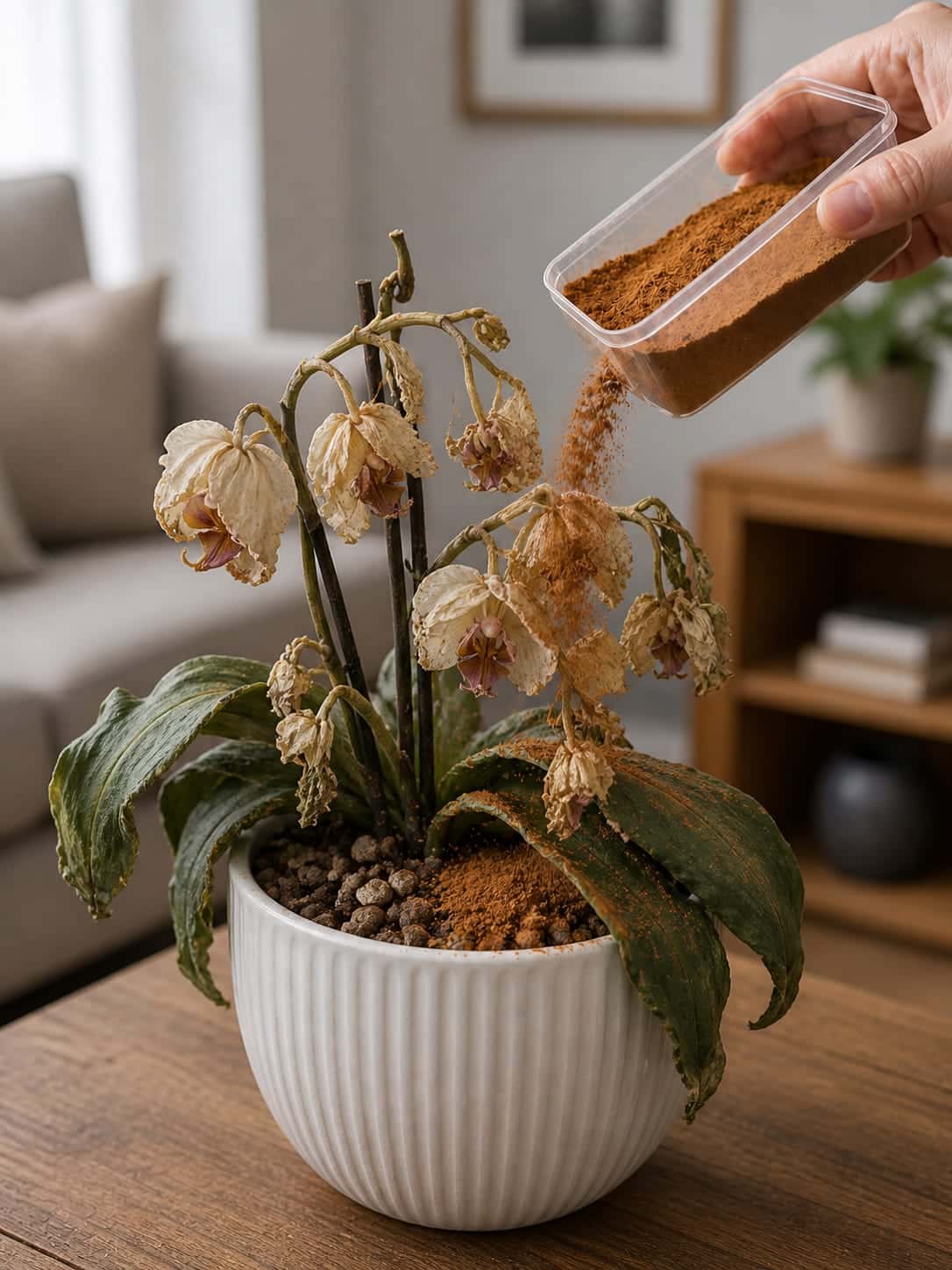
Yes, if this were a real orchid in this condition, repotting would be strongly recommended. The plant looks dehydrated and stressed, and the potting medium may be old or too compacted.
Repotting allows you to inspect the roots, remove rot, refresh the medium, and reset the care routine. Cinnamon can be used after trimming damaged roots, but the fresh orchid mix is what gives the plant a real chance to recover.
Simple Orchid Cinnamon Rescue Routine
- Remove all dry flowers.
- Cut dead brown flower spikes with sterilized scissors.
- Take the orchid out of the pot.
- Remove old bark or moss.
- Trim rotten or hollow roots.
- Let wounds dry briefly.
- Apply a tiny amount of cinnamon to cut ends only.
- Repot in fresh orchid bark.
- Place in bright indirect light.
- Water carefully after the plant settles.
Common Mistakes to Avoid
- Sprinkling cinnamon heavily over all roots
- Using cinnamon sugar instead of plain cinnamon
- Applying cinnamon every week
- Using cinnamon as fertilizer
- Trying to revive dead flowers
- Watering more without checking roots
- Leaving the orchid in rotten bark
- Keeping water in the crown
- Using regular potting soil
- Fertilizing a rootless orchid too soon
Short Caption for This Trick
“For a struggling orchid, plain cinnamon powder can be used as a tiny drying dust on cut flower spikes, trimmed rotten roots, or cleaned wound areas. Remove dead flowers, inspect the roots, trim damaged tissue, dab cinnamon only on the cuts, then repot into fresh orchid bark. Do not use cinnamon as fertilizer or cover healthy roots with it.”
Frequently Asked Questions
Can cinnamon save a dying orchid?
Cinnamon can help dry small cuts and cleaned wounds, but it cannot save an orchid by itself. The orchid also needs root inspection, fresh bark, proper watering, and bright indirect light.
Is cinnamon good for orchid root rot?
Cinnamon can be applied lightly to trimmed root ends after rotten roots are removed. It should not be poured over the whole root system.
How much cinnamon should I use on an orchid?
Use only a tiny pinch. Dab it on cut areas only. Avoid coating healthy roots or green root tips.
Can cinnamon damage orchid roots?
Yes. Too much cinnamon can dry healthy roots and slow growth. Use it carefully and only where needed.
Can I sprinkle cinnamon on orchid bark?
A very light dusting can be used after removing mild surface mold, but heavy sprinkling is not recommended. Fix moisture and airflow problems first.
Should I cut off dead orchid flowers?
Yes. Dry flowers will not recover. Remove them so the plant can focus on roots and leaves.
Should I cut the orchid flower spike?
If the spike is brown and dry, cut it close to the base with sterilized scissors. If it is green, you may leave it or trim above a node.
Can I use cinnamon sugar?
No. Cinnamon sugar can attract pests and mold. Use plain cinnamon powder only.
What is the best potting mix for orchids?
Use a chunky orchid bark mix with good airflow. Avoid dense regular potting soil.
Why are my orchid leaves wrinkled?
Wrinkled leaves often mean the plant is dehydrated, but the cause may be either underwatering or damaged roots from overwatering. Check the roots before adding more water.
Final Thoughts
The cinnamon powder trick can be useful for orchid rescue, but only when it is used the right way. A struggling orchid with dry flowers and wrinkled leaves needs more than powder on top. It needs a full root check, clean pruning, fresh orchid bark, careful watering, and bright indirect light.
Plain cinnamon powder works best as a tiny drying dust for cut flower spikes, trimmed rotten roots, and small cleaned wound areas. It should not be used as fertilizer, and it should not be poured heavily over healthy roots. Too much cinnamon can dry an orchid instead of helping it.
If your orchid looks like the plant in the image, start by removing dead blooms and inspecting the roots. Trim only the damaged parts, dab cinnamon lightly on the cuts, and repot the plant into a fresh airy orchid mix. Then give it warmth, filtered light, moderate humidity, and patience.
Orchids recover slowly, but with the right care, even a tired plant can grow new roots, produce fresh leaves, and eventually return with beautiful blooms.