Anthuriums are some of the most striking indoor plants you can grow. Their heart-shaped leaves, glossy tropical texture, and long-lasting red, pink, white, or burgundy flowers make them look expensive and elegant even in a simple pot. A healthy anthurium can brighten a living room, kitchen counter, bedroom corner, office desk, or indoor plant shelf with very little effort.
But when anthuriums stop blooming, the plant can quickly lose its charm. The leaves may still look green, but the flowers disappear. Sometimes the leaves become dull, the stems weaken, or the plant sits for months without producing a single new bloom. Many plant owners then rush to buy strong fertilizer, hoping it will force the plant to flower again.
The problem is that anthuriums do not like harsh treatment. They are tropical plants with sensitive roots. Strong fertilizer, thick homemade mixtures, poor drainage, or overwatering can stress them instead of helping them bloom. If the roots are already weak, a heavy feeding routine can cause brown leaf tips, yellow leaves, salt buildup, and root damage.
That is why the best version of the golden liquid trick is not a strong syrup or concentrated compost extract. It is a gentle diluted banana peel and compost tea tonic, used carefully as a mild homemade fertilizer for anthuriums. When prepared correctly, this golden liquid can support healthy roots, encourage stronger leaves, and help the plant maintain a better blooming cycle.
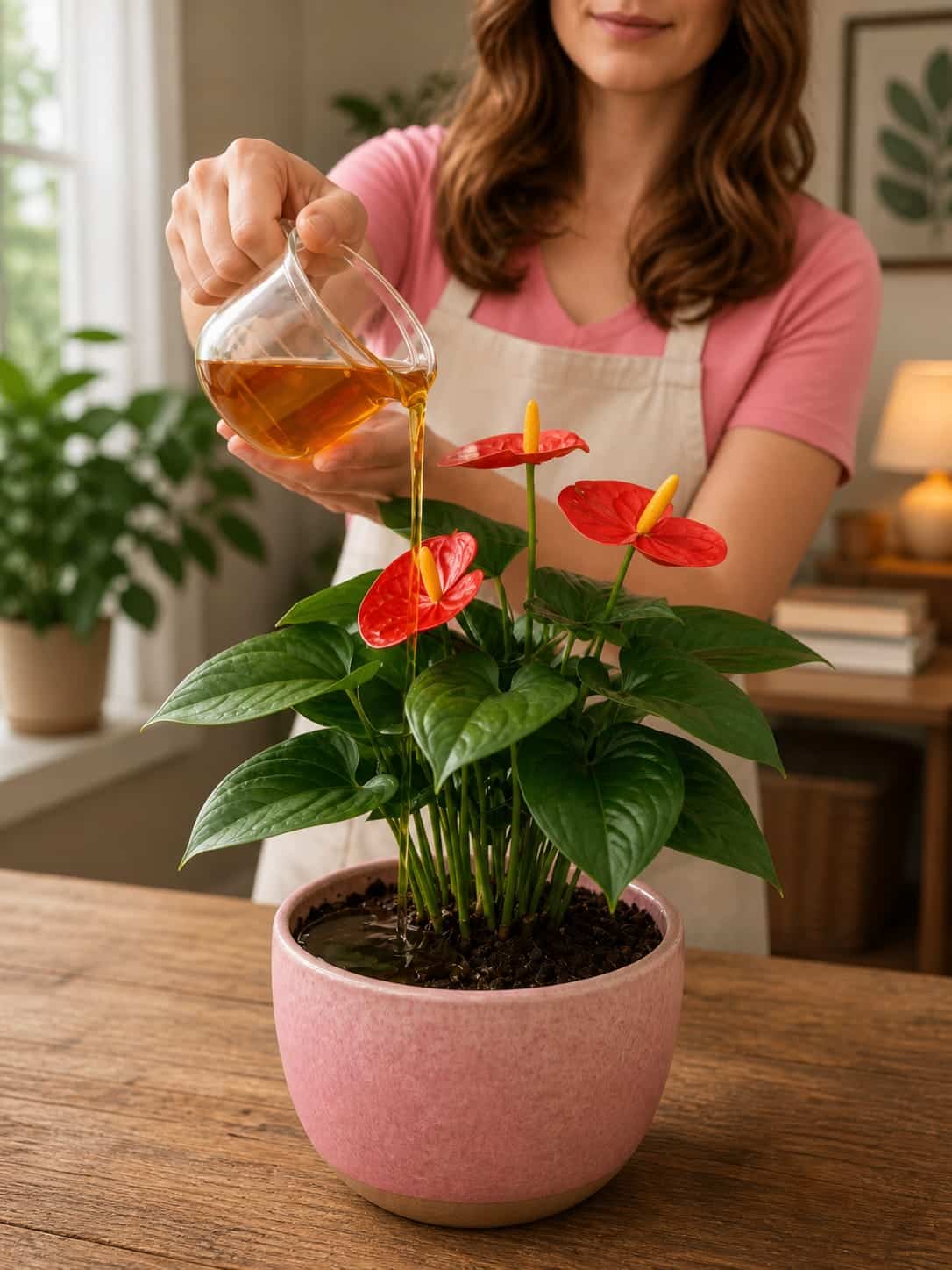
The image shows a woman pouring a warm golden liquid into the soil of a blooming anthurium in a pink ceramic pot. The plant has deep green leaves and bright red flowers with yellow spadices. This is the perfect visual for a natural flowering plant care trick: a light amber tonic poured around the root zone to support glossy leaves and long-lasting blooms.
The goal is not to shock the plant into instant flowering. The goal is to feed gently, protect the roots, and create the right conditions for steady indoor plant growth.
What Plant Is in the Image?
The plant in the image is an anthurium, often called flamingo flower, laceleaf, or painter’s palette. Anthuriums are tropical houseplants known for their shiny heart-shaped leaves and colorful spathes. What many people call the “flower” is actually a waxy modified leaf called a spathe, while the small upright center part is called the spadix.
Anthuriums are popular indoor flowering plants because their blooms can last for weeks. With the right care, they can flower repeatedly throughout the year, especially in warm rooms with bright indirect light and consistent moisture.
The anthurium in the image looks healthy and actively blooming, so the golden liquid trick should be used as a maintenance and bloom-support method, not an emergency rescue treatment. Healthy anthuriums benefit from gentle feeding. Stressed anthuriums need their root and watering issues fixed first.
Why Anthuriums Stop Blooming Indoors
Anthuriums usually stop blooming when one or more basic care conditions are missing. Fertilizer can help, but it is rarely the only answer.
Common reasons an anthurium stops flowering include:
- Not enough bright indirect light
- Overwatering
- Poor drainage
- Dense potting soil
- Low humidity
- Cold drafts
- Root stress
- Lack of nutrients during active growth
- A pot that is too large
- Old compacted soil
Before using any homemade fertilizer, check the plant’s environment. If your anthurium is in a dark corner, the golden liquid will not force flowers. If the soil is soggy, extra liquid can make root rot worse. If the pot has no drainage holes, fertilizer may build up and damage the roots.
A bloom tonic works best when the plant already has good light, breathable soil, and healthy roots.
What Is the Golden Liquid?
The golden liquid in this trick is best explained as a diluted banana peel and compost tea tonic. Banana peel water is often used by gardeners because banana peels contain potassium, while compost tea can support soil life and provide mild nutrition. Together, when used weakly and carefully, they create a light amber homemade plant food for flowering houseplants.
For anthuriums, the liquid must be diluted. It should look like pale golden tea, not thick brown syrup. It should smell mild and earthy, not sour, fermented, or rotten.
This golden liquid is meant to support the plant, not flood it with nutrients. Anthurium roots are sensitive, so a gentle organic fertilizer is safer than a concentrated homemade mixture.
Why Banana Peel and Compost Tea Can Help Anthuriums
Anthuriums need balanced nutrition to keep producing glossy leaves and colorful blooms. They benefit from nitrogen for leaf growth, phosphorus for root and flower support, and potassium for general plant strength. Banana peels are known for potassium, while compost tea can add mild organic compounds and support the potting mix.
A weak golden tonic may support:
- Healthy anthurium roots
- Better bloom cycles
- Glossy green leaves
- Stronger flower stems
- Healthier potting soil
- Reduced dependence on harsh fertilizer
- Steady indoor plant growth
This does not mean banana peel water is a complete fertilizer. It is not. It is a mild plant tonic that can be part of a broader anthurium care routine.
The Safe Golden Liquid Recipe for Anthuriums
This recipe is designed to be gentle enough for indoor anthuriums when used occasionally. The mixture should always be strained and diluted before applying to the soil.
Ingredients
- 1 small piece of banana peel
- 1 teaspoon finished compost or worm castings
- 2 cups clean water
- 1 glass jar or bowl
- 1 fine strainer or coffee filter
- Extra water for dilution
Preparation
- Chop a small piece of banana peel into tiny pieces.
- Add it to a jar with 2 cups of clean water.
- Add 1 teaspoon of finished compost or worm castings.
- Stir well.
- Let it sit for 6 to 12 hours only.
- Strain the liquid very well.
- Dilute before using.
Do not let the mixture ferment for days. Long fermentation can create a strong smell and increase the risk of attracting pests indoors. For houseplants, fresh and mild is better.
The Correct Dilution
Anthuriums prefer gentle feeding. The safest dilution is:
1 part golden liquid + 4 parts clean water
For example:
- ¼ cup golden liquid
- 1 cup clean water
If your anthurium is small, newly repotted, or slightly stressed, dilute it even more. The final liquid should be pale amber and watery.
Never pour concentrated banana peel or compost water directly into an indoor anthurium pot.
How to Apply the Golden Liquid
The image shows the golden liquid being poured into the soil. That is the correct place to apply it. Do not pour it over the leaves or flowers. Do not splash the spathes. Do not let it sit inside the crown of the plant.
Use it as a light soil feeding when the plant needs moisture.
Application steps:
- Check the soil moisture first.
- Use only when the top inch feels slightly dry.
- Pour the diluted tonic slowly around the outer soil edge.
- Avoid the crown and stems.
- Let excess liquid drain completely.
- Empty the saucer after watering.
For a medium anthurium, use a modest amount. The soil should become lightly moist, not soaked.
How Often Should You Use It?
Use the golden liquid once every four to six weeks during spring and summer. This is when anthuriums are more likely to grow new leaves and flowers.
During fall and winter, reduce feeding or stop completely unless the plant is actively growing under bright indoor light. Anthuriums may still grow indoors in winter, but they usually slow down when light levels drop.
Do not use this tonic every week. Organic liquids can build up in the soil, attract fungus gnats, or create sour conditions if used too often.
Do Not Use It on Wet Soil
This is one of the most important rules. If the anthurium soil is already wet, do not add golden liquid. Anthuriums like consistent moisture, but they do not like soggy roots. Wet soil reduces oxygen, and roots can rot when they stay saturated for too long.
Before applying any homemade plant fertilizer, touch the soil. If it is still damp, wait. If the pot feels heavy, wait. If the soil smells sour, do not feed at all. The plant may need fresh soil and better drainage.
Feeding wet soil is one of the fastest ways to harm an anthurium.
Why Anthurium Roots Are Sensitive
Anthuriums are tropical plants that naturally grow in airy environments. Their roots need moisture, but they also need oxygen. In a pot, the roots can suffer when the mix becomes dense, old, or waterlogged.
Healthy anthurium roots are firm and usually light-colored. Unhealthy roots may look black, mushy, slimy, or smell rotten. If the roots are damaged, fertilizer will not solve the problem. The plant needs repotting, pruning, and better drainage first.
A gentle golden tonic helps only when the root zone is healthy enough to use it.
Continue to Page 2
Continue to page 2 for more details about this article and the key points many readers miss on the first page.