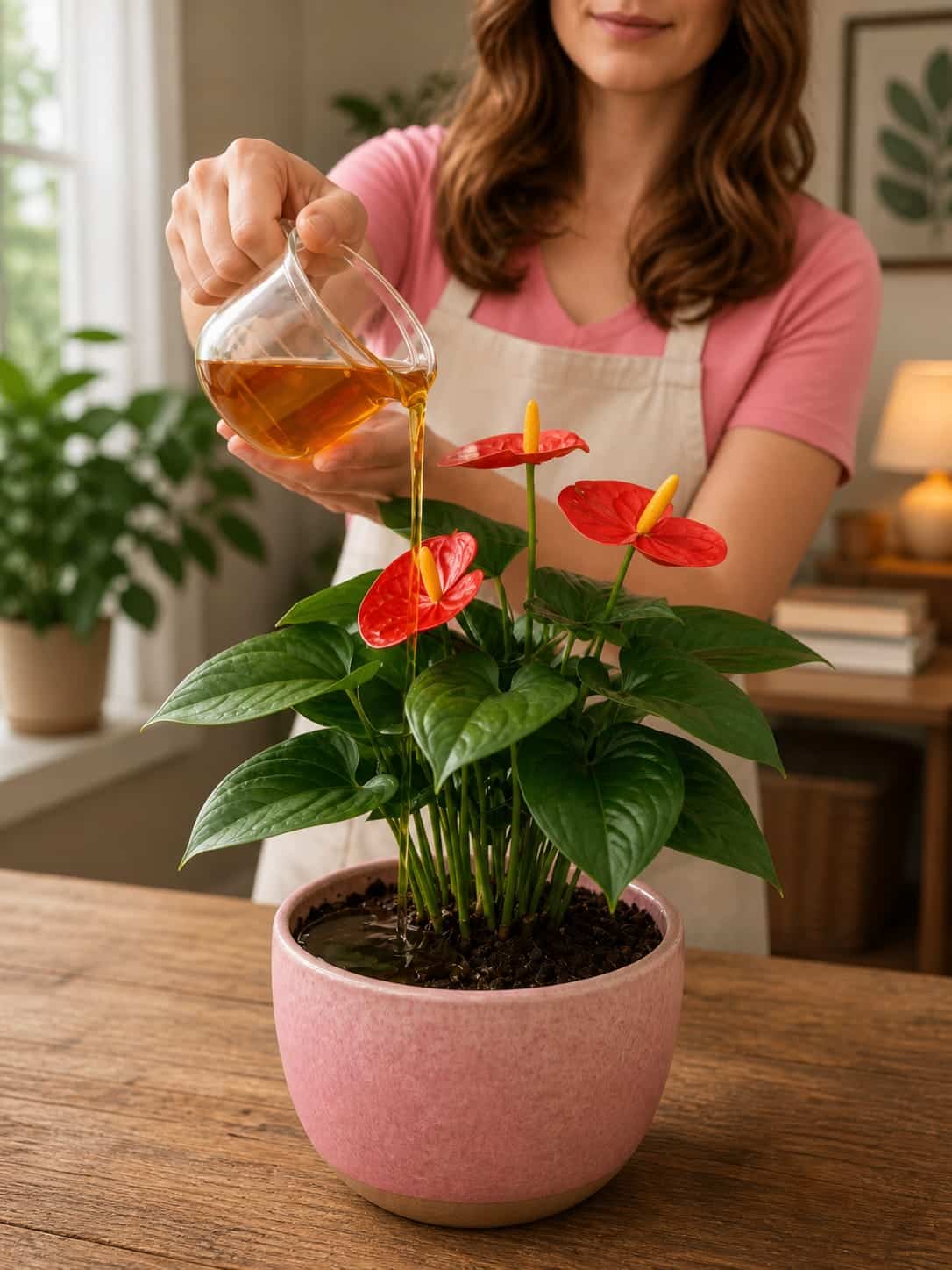
Best Soil Mix for Anthuriums
The best anthurium soil is chunky, airy, and moisture-retentive without becoming soggy. Regular indoor potting soil alone is often too dense.
A good anthurium potting mix can include:
- 2 parts orchid bark
- 1 part indoor potting mix
- 1 part perlite or pumice
- 1 part coco chips or coco coir
- A small amount of worm castings
This type of mix gives the roots moisture and airflow at the same time. It is especially helpful for anthuriums that are not blooming, have yellow leaves, or dry slowly after watering.
Best Light for Anthurium Blooms
Light is the biggest factor for anthurium flowering. Anthuriums can survive in moderate indoor light, but they bloom best in bright indirect light.
Place the plant near a bright window with filtered sunlight. An east-facing window is often excellent. A south or west window can work if the plant is protected by a sheer curtain. Avoid harsh direct sun, which can burn the leaves and fade the flowers.
If your anthurium has healthy leaves but no flowers, move it to brighter indirect light before increasing fertilizer.
How to Water Anthuriums Correctly
Anthuriums like evenly moist soil, but they should never sit in standing water. Water when the top inch of soil begins to dry. Pour water through the potting mix until it drains out the bottom, then empty the saucer.
If the plant is in a decorative pot without drainage holes, remove it immediately or keep it in a nursery pot inside the decorative container. Anthuriums need drainage.
Overwatering is one of the most common reasons anthuriums stop blooming and develop yellow leaves.
Can the Golden Liquid Make Anthuriums Bloom Faster?
It can support blooming, but it does not work like a switch. Anthurium blooms depend on light, root health, warmth, humidity, and steady care. The golden liquid provides gentle support, but it cannot replace the right growing conditions.
If your anthurium already has healthy roots and bright indirect light, a mild organic tonic may help the plant maintain stronger growth and better bloom cycles. If the plant is in low light or soggy soil, fix those issues first.
Healthy roots and proper light create flowers. The tonic supports that process.
Can It Make Leaves Glossier?
Healthy anthurium leaves naturally become glossy when the plant is well hydrated, properly lit, and not overfed. A mild tonic can support leaf health, but it will not polish leaves instantly.
To keep leaves shiny, wipe dust away with a soft damp cloth. Dust blocks light and makes leaves look dull. Avoid commercial leaf shine products because they can leave residue.
The best natural leaf shine comes from good care, clean leaves, and healthy roots.
Can You Add Honey or Molasses?
Some homemade fertilizer recipes include honey or molasses, but for indoor anthuriums, it is better to avoid sweeteners. Sugar-rich liquids can attract ants, fungus gnats, mold, and bacteria in potting soil.
Even if honey or molasses sounds natural, it can cause problems in indoor pots. Anthuriums do not need sugar water. They make their own sugars through photosynthesis.
Keep the golden liquid simple: banana peel, a tiny amount of compost or worm castings, water, strain, dilute, and use fresh.
Can You Use Banana Peel Water Alone?
Yes, banana peel water alone can be used, but it should still be mild and fresh. Use a small piece of banana peel, soak briefly, strain well, and dilute heavily.
Do not leave banana peels sitting in water for many days indoors. Long soaking can create a fermented smell and attract pests. Do not bury fresh banana peel pieces directly in an anthurium pot because they can rot and invite fungus gnats.
For indoor plants, strained liquid is safer than chunks of food waste in the soil.
Can You Use Compost Tea Alone?
Yes, but keep it weak. Compost tea can vary in strength depending on the compost. If it smells bad, do not use it. A good compost tea should smell earthy, not rotten.
For anthuriums, a very diluted compost tea can be used occasionally during active growth. Always strain it well and avoid using thick particles in indoor pots.
Clean, mild, and fresh is the safest approach.
Can You Use Store-Bought Fertilizer Instead?
Yes. A balanced liquid houseplant fertilizer or orchid fertilizer diluted to half strength can work well for anthuriums. Store-bought fertilizers are more predictable because the nutrient ratio is listed on the label.
The golden liquid trick is for plant owners who want a natural homemade plant food option. You can use either approach, but do not overdo both. If you use commercial fertilizer one month, skip the homemade tonic that same week.
Too much feeding causes more problems than too little feeding.
Best Fertilizer Routine for Anthuriums
Anthuriums like light feeding during active growth. A safe routine is:
- Spring: feed lightly once every four to six weeks
- Summer: continue light feeding if the plant is growing
- Fall: reduce feeding
- Winter: pause or feed very rarely
If using the golden liquid, treat it as one feeding. Do not combine it with strong fertilizer on the same day.
Humidity for Healthy Anthuriums
Anthuriums are tropical plants and appreciate moderate to high humidity. Dry indoor air can cause brown leaf tips, curled leaves, and slower growth. This is especially common in homes with heaters or air conditioning.
To improve humidity:
- Group houseplants together
- Use a pebble tray below the pot
- Run a small humidifier nearby
- Keep the plant away from heaters
- Avoid cold drafts
Do not rely only on misting. Misting gives temporary humidity and can leave spots if airflow is poor. A humidifier or grouped plants works better.
How to Prune Anthuriums for Better Growth
Pruning helps anthuriums focus energy on healthy growth. Remove yellow leaves, dead flowers, and weak stems with clean scissors. Cut close to the base without damaging nearby stems.
Removing spent blooms can encourage the plant to redirect energy into new leaves and future flowers. It also keeps the plant looking clean and elegant.
Do not remove too many healthy leaves at once. Leaves are the plant’s energy source.
How to Clean Anthurium Leaves
Glossy anthurium leaves look best when they are dust-free. Use a soft damp cloth to wipe each leaf gently. Support the leaf with one hand while wiping with the other so you do not bend the stem.
Do not use cooking oil, mayonnaise, milk, or commercial shine sprays. These can clog leaf surfaces, attract dust, or create residue.
Clean water and a soft cloth are enough.
Common Anthurium Problems and What They Mean
| Problem | Likely Cause | Best Fix |
|---|---|---|
| No blooms | Low light or weak feeding | Move to bright indirect light and feed lightly |
| Yellow leaves | Overwatering, poor drainage, or old leaves | Check roots and adjust watering |
| Brown tips | Dry air, salt buildup, or inconsistent watering | Improve humidity and flush soil |
| Dull leaves | Dust, low light, or weak growth | Clean leaves and improve light |
| Drooping stems | Underwatering or root stress | Check soil moisture and root health |
| Sour soil smell | Root rot or soggy soil | Repot into airy mix |
Signs the Golden Liquid Is Helping
Anthuriums respond gradually. Do not expect dramatic overnight results. Over several weeks, look for signs of stable growth.
Good signs include:
- New glossy leaves
- Firm upright stems
- Healthy root growth
- Longer-lasting flowers
- New flower buds
- Soil that smells clean and earthy
- No fungus gnats
- No brown fertilizer burn on leaf edges
The best sign is healthy new growth. Old damaged leaves may not fully recover, but new leaves should look stronger.
Signs You Used Too Much
Stop using the golden liquid if you notice:
- Fungus gnats
- Mold on soil
- Sour smell
- Yellowing that gets worse
- Brown crispy leaf edges after feeding
- Wet soil that does not dry
- Soft stems near the base
These signs may mean the liquid was too strong, used too often, or applied to soil that was already wet. Stop feeding and let the soil dry slightly. If the plant continues to decline, check the roots.
How to Flush Anthurium Soil
If you suspect fertilizer buildup, flush the soil with plain water. Place the pot in a sink and slowly run water through the soil for a few minutes. Let all excess water drain out.
This helps remove excess salts and residue. After flushing, do not fertilize again right away. Give the plant time to recover.
Only flush pots with drainage holes. If your pot has no drainage, repot the anthurium into one that does.
Can This Trick Be Used on Other Flowering Houseplants?
A diluted golden tonic can be used carefully on some flowering houseplants, such as peace lilies, Christmas cactus, Thanksgiving cactus, orchids, begonias, and African violets. However, each plant has different needs.
Use small amounts and avoid applying it to wet soil. For orchids, it must be much weaker and used with extra caution because orchid roots are especially sensitive.
Do not use one homemade fertilizer on every plant without adjusting the strength and timing.
When Not to Use the Golden Liquid
Do not use this tonic if:
- The soil is wet
- The plant has root rot
- The pot has no drainage holes
- The mixture smells fermented
- The plant was recently fertilized
- There are fungus gnats in the soil
- The plant is in very low light
- The anthurium was recently repotted and roots were damaged
In these situations, feeding can make stress worse. Fix the growing conditions first.
How to Encourage Anthuriums to Bloom Naturally
For repeat blooms, focus on the complete care routine:
- Bright indirect light
- Warm indoor temperatures
- Airy well-draining soil
- Consistent but careful watering
- Moderate humidity
- Light feeding during active growth
- Clean leaves
- Pruning spent flowers
- A pot with drainage holes
When these conditions are right, anthuriums are much more likely to produce new flowers.
Seasonal Anthurium Care
Spring
Spring is the best time to refresh care. Increase light if needed, prune old leaves, and begin light feeding. This is a good season to use the golden liquid tonic once if the plant is actively growing.
Summer
Anthuriums often grow well in summer with warmth and humidity. Keep soil lightly moist, avoid direct harsh sun, and feed lightly every four to six weeks.
Fall
Growth may slow as light decreases. Reduce feeding and check that the soil is not staying wet too long.
Winter
Use less water and little to no fertilizer unless the plant is still growing under bright light. Keep it away from cold windows and heating vents.
Simple Golden Liquid Routine
- Chop a small piece of banana peel.
- Add it to 2 cups of water.
- Add 1 teaspoon compost or worm castings.
- Let it sit for 6 to 12 hours.
- Strain very well.
- Dilute 1 part tonic with 4 parts water.
- Check that the top inch of soil is slightly dry.
- Pour around the outer soil edge.
- Let the pot drain fully.
- Use once every four to six weeks during active growth.
Common Mistakes to Avoid
- Using concentrated banana peel water
- Adding honey, sugar, or molasses
- Letting the mixture ferment for days
- Pouring it on wet soil
- Using it every week
- Splashing flowers and leaves
- Using a pot without drainage
- Combining it with strong fertilizer
- Ignoring low light
- Expecting instant blooms
Short Caption for This Trick
“For glossy anthurium leaves and stronger bloom support, use a gentle golden liquid made from a small piece of banana peel, a teaspoon of worm castings or compost, and water. Strain it, dilute it heavily, and pour only around slightly dry soil. Use once every four to six weeks during active growth, and always let the pot drain completely.”
Frequently Asked Questions
What is the golden liquid for anthuriums?
The safest version is a diluted banana peel and compost tea tonic. It should be strained, diluted, and used only occasionally.
Can it make anthuriums bloom faster?
It can support blooming when the plant already has bright indirect light, healthy roots, and proper care. It will not force flowers by itself.
How often should I use it?
Use it once every four to six weeks during spring and summer. Reduce or stop feeding in winter.
Can I use banana peel water on anthuriums?
Yes, but only if it is fresh, strained, and diluted. Do not bury banana peels in the pot.
Should I add honey or molasses?
No. Sweeteners can attract pests and mold indoors. Keep the mixture simple and mild.
Can I pour it on the leaves?
No. Apply it to the soil only. Keep it away from leaves, flowers, and the crown.
Why is my anthurium not blooming?
The most common reasons are low light, poor root health, overwatering, lack of humidity, or insufficient feeding during active growth.
Why are my anthurium leaves turning yellow?
Yellow leaves often come from overwatering, poor drainage, low light, or natural aging. Check soil moisture and root health before feeding.
What is the best soil for anthuriums?
Anthuriums prefer a chunky, airy mix with orchid bark, perlite, coco chips, and a little potting soil or worm castings.
Can I use this on other indoor plants?
Yes, but only in diluted amounts and only for plants that tolerate light organic feeding. Avoid using it on wet soil or plants with root rot.
Final Thoughts
The golden liquid trick can be a beautiful and useful part of anthurium care when it is done gently. A diluted banana peel and compost tea tonic can support healthy roots, glossy leaves, and stronger flowering cycles without relying on harsh feeding.
But the real secret to anthurium blooms is balance. The plant needs bright indirect light, warm temperatures, well-draining soil, careful watering, and moderate humidity. Fertilizer only helps when those basics are already in place.
Use the golden liquid sparingly. Keep it fresh. Strain it well. Dilute it heavily. Apply it only to slightly dry soil and let the pot drain completely. Avoid sugar, honey, thick fermented liquids, and overfeeding.
With steady care, your anthurium can keep its glossy tropical leaves, strong stems, and vibrant blooms, turning any indoor space into a lush flowering corner.