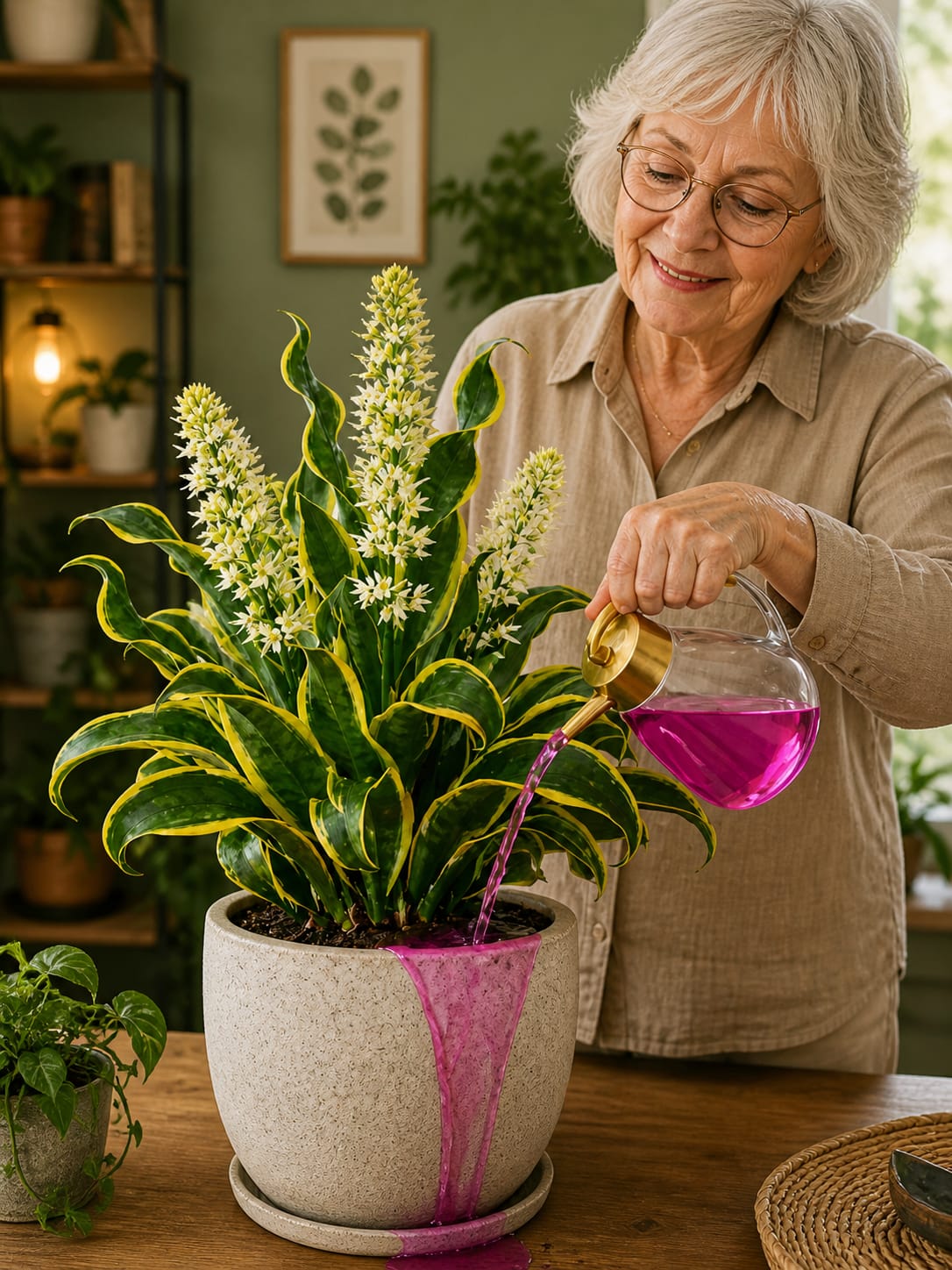
Dracaena plants are some of the most stylish indoor plants you can grow. Their bold leaves, upright shape, and tropical look make them perfect for living rooms, bedrooms, offices, entryways, plant shelves, and bright indoor corners. Some varieties, like the one in the image, can even produce tall fragrant flower spikes when the plant is mature, comfortable, and growing in the right conditions.
The image shows a beautiful variegated Dracaena with glossy green leaves edged in yellow and tall white flower clusters. A woman is pouring a bright pink liquid into the pot. This dramatic pink liquid is best explained as a diluted orchid fertilizer water or a weak bloom-support tonic. Many indoor gardeners use orchid fertilizer on other tropical houseplants because it is usually gentle, water-soluble, and designed for plants with sensitive roots.
But there is a big warning: you should never pour strong colored fertilizer directly into a plant pot until it spills over the rim like the image shows. That much liquid can oversaturate the soil, wash fertilizer unevenly through the pot, stain surfaces, and stress roots if the mixture is too strong.
The safe version of this trick is simple: use a very diluted orchid fertilizer solution, apply it only to already slightly moist soil, let the pot drain fully, and use it only during the active growing season. Done correctly, this gentle pink water method may support greener leaves, stronger roots, and better flowering potential in mature Dracaena plants.
What Plant Is in the Image?
The plant in the image appears to be a variegated Dracaena, likely a fragrant Dracaena type such as Dracaena fragrans or a related cultivar. These plants are popular indoor houseplants because they tolerate normal home conditions better than many tropical plants.
Dracaenas are known for:
- Long glossy leaves
- Green and yellow variegation
- Upright tropical growth
- Low-maintenance indoor care
- Air-purifying houseplant appeal
- Occasional fragrant flower spikes on mature plants
The white flowering spikes in the image suggest a mature, healthy plant. Dracaena flowers are not guaranteed indoors, but they can appear when the plant is established, receives good light, and experiences stable care over time.
What Is the Pink Liquid?
The bright pink liquid is best treated as a diluted orchid fertilizer or a mild flowering houseplant fertilizer. Some liquid fertilizers are naturally tinted or dyed, and many bloom-boosting products come in bright colors. The color itself is not the important part. What matters is the dilution and the ingredients.
For Dracaena, the mixture should be weak. Dracaenas are sensitive to fertilizer salts and fluoride buildup, so strong feeding can cause brown tips, yellow edges, root stress, or leaf damage.
The safe “pink water” idea is not about color. It is about using a gentle, diluted feeding solution.
Why Orchid Fertilizer Can Work for Dracaena
Orchid fertilizer is often mild compared with heavy garden fertilizer. Since orchids have sensitive roots, many orchid fertilizers are designed to dissolve easily and feed gently. This makes them useful for some indoor tropical plants when diluted properly.
A weak orchid fertilizer solution may help Dracaena by supporting:
- Steady leaf growth
- Root activity
- Healthy green color
- Better nutrient balance
- Flowering potential in mature plants
- Recovery after a long low-growth period
- Indoor plant maintenance during spring and summer
However, orchid fertilizer is not a magic bloom trigger. Dracaena flowers usually appear because the plant is mature and well cared for, not because of one single watering trick.
Important Warning: Do Not Overwater With Fertilizer
The image shows pink liquid overflowing the pot. For real plant care, this is too much. Dracaena roots do not like soggy soil. If fertilizer water floods the pot and sits in the saucer, the roots can become stressed.
Never let fertilizer water sit around the roots. Always drain fully.
Too much fertilizer water can cause:
- Root rot
- Brown leaf tips
- Yellowing leaves
- Salt buildup
- Soft stems
- Fungus gnats
- Soil compaction
- Weak new growth
The goal is gentle feeding, not soaking.
How to Make the Safe Pink Orchid Water Tonic
Use a mild orchid fertilizer or balanced liquid houseplant fertilizer. Always dilute more than the label suggests for a sensitive indoor plant.
Ingredients
- 1 liter clean water
- ¼ of the recommended dose of liquid orchid fertilizer
- Clean watering can
Steps
- Fill a clean watering can with 1 liter of room-temperature water.
- Add only one-quarter strength orchid fertilizer.
- Mix well.
- Use immediately.
- Do not store mixed fertilizer water for long periods.
If the fertilizer label says 1 teaspoon per liter, use only ¼ teaspoon per liter for Dracaena. If your plant is small or sensitive, use even less.
Extra-Gentle Recipe for Sensitive Dracaena
If your Dracaena has brown tips, old soil, or slow growth, use an extra weak mixture:
⅛ strength orchid fertilizer in 1 liter water
This is safer than strong feeding. Dracaenas respond better to light, consistent care than to heavy fertilizer.
How to Apply It Correctly
Apply the diluted fertilizer only when the soil is slightly moist, not bone dry and not soggy. Fertilizing dry roots can stress them. Fertilizing wet soil can keep the pot too damp.
Application Steps
- Check the soil moisture first.
- Water lightly with plain water if the soil is completely dry.
- Wait a short time so the roots are not dry.
- Pour the diluted orchid water around the outer soil edge.
- Avoid pouring directly into the crown or stem base.
- Stop before the pot overflows.
- Let excess water drain fully.
- Empty the saucer after drainage.
Do not pour fertilizer over the leaves or flowers. Apply it to the soil only.
How Often Should You Use This Trick?
Use the pink orchid water tonic only during active growth. For Dracaena, that usually means spring and summer. Avoid frequent feeding in winter when growth slows indoors.
A safe schedule:
- Spring: once every 4 to 6 weeks
- Summer: once every 4 to 6 weeks
- Fall: reduce or stop
- Winter: do not fertilize unless the plant is actively growing under strong light
If your Dracaena is flowering, avoid strong feeding while flowers are open. Keep the plant stable and lightly moist instead.
Can This Make Dracaena Bloom?
This tonic may support a healthy mature plant, but it cannot force flowers by itself. Dracaena blooming indoors depends on maturity, light, stable care, root health, and sometimes environmental changes.
Dracaenas are more likely to bloom when they have:
- Bright indirect light
- Healthy roots
- A mature root system
- Stable watering
- Good drainage
- Moderate feeding
- No repeated stress
Many Dracaena plants grow for years before flowering. Some never flower indoors, even when healthy. That is normal.
Why Dracaena Leaves Get Brown Tips
Brown tips are one of the most common Dracaena problems. They often happen because of water quality, fertilizer salts, dry air, or inconsistent watering.
Common causes include:
- Too much fertilizer
- Tap water minerals
- Fluoride sensitivity
- Low humidity
- Underwatering
- Overwatering
- Old compacted soil
- Direct harsh sun
If your Dracaena already has brown tips, do not use strong fertilizer. Use clean water, flush the soil gently, and switch to a weaker feeding routine.
Best Water for Dracaena
Dracaenas can be sensitive to minerals and fluoride in tap water. If your plant often gets brown tips, try using filtered water, distilled water, rainwater, or tap water that has been allowed to sit overnight.
Good water quality can make a bigger difference than any plant tonic.
Best Light for Dracaena Flowers
Dracaenas tolerate lower light, but they grow and flower better in bright indirect light. A plant kept in a dark corner may survive, but it is unlikely to produce flower spikes.
Place the plant near a bright window with filtered sunlight. Avoid harsh direct afternoon sun because it can burn the leaves, especially variegated leaves with yellow edges.
Good light helps the plant produce energy, maintain leaf color, and support flowering potential.
Continue to Page 2
Continue to page 2 for more details about this article and the key points many readers miss on the first page.