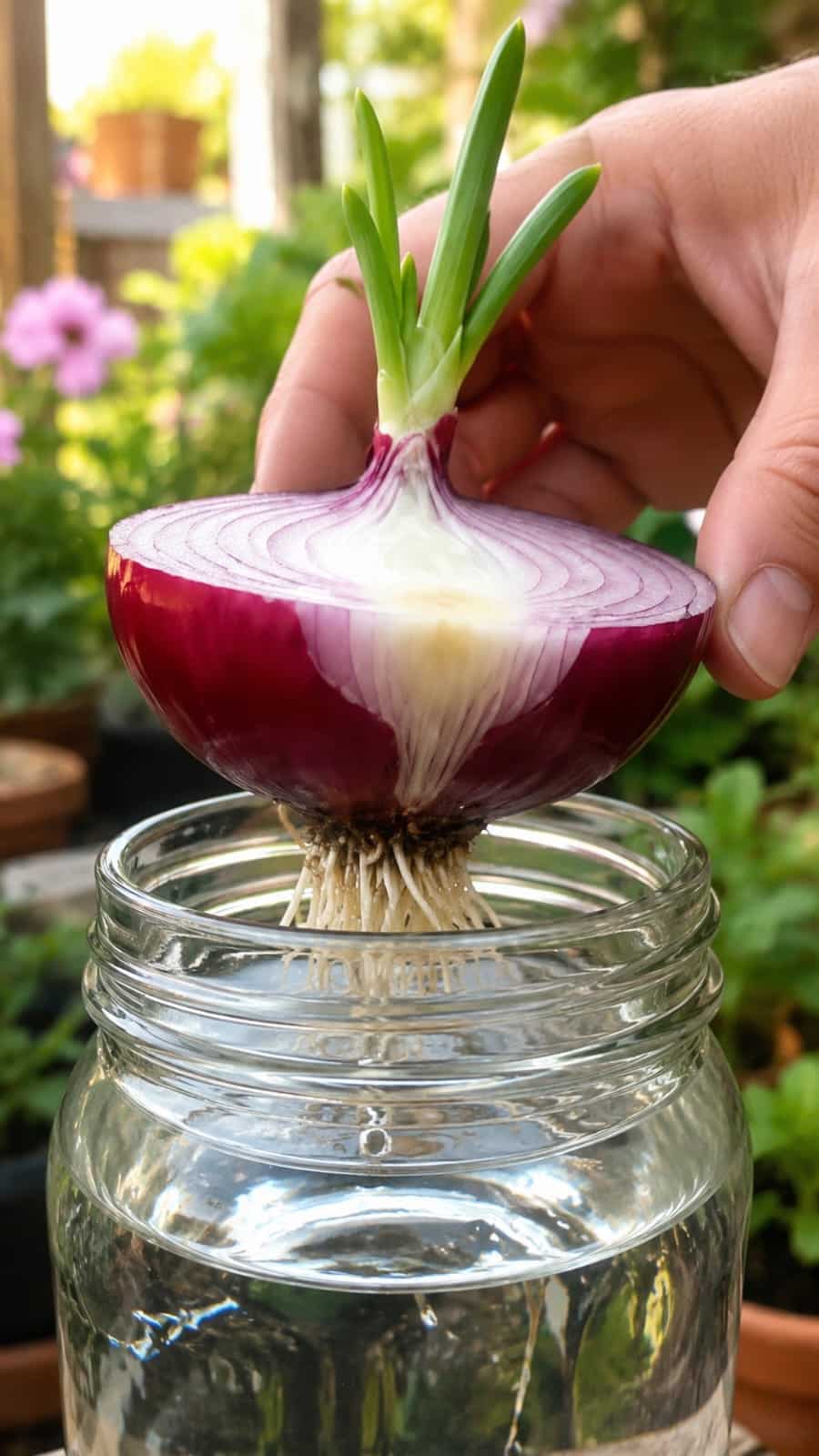
Growing onions from an onion bottom is one of the easiest kitchen scrap gardening tricks you can try at home. Instead of throwing away the root end of an onion, you can use it to grow fresh green shoots, new roots, and even a small garden onion plant with the right care. If you are looking for the best way to regrow onions from scraps, this simple method will give you fresh green onions for months.
The images show a red onion bottom being rooted in water, then planted into rich garden soil, and finally growing into fresh green onion shoots with strong white roots. This method is simple, low-cost, and perfect for beginner gardeners, balcony gardens, raised beds, backyard vegetable gardens, and anyone who wants to regrow food from kitchen scraps. It is one of the most popular DIY vegetable propagation techniques for sustainable living.
You do not need expensive supplies. You only need an onion with the root plate still attached, a jar of water, a sunny spot, and loose fertile soil. This how to grow green onions indoors guide will turn your kitchen scraps into a continuous harvest.
This guide explains how to grow onions from onion bottoms step by step, how long rooting takes, when to plant them in soil, how to care for the new shoots, and what results to expect. Follow these professional kitchen garden secrets for success.
Can You Really Regrow Onions from Kitchen Scraps? – Yes, Here’s How
Yes, you can regrow onions from the root end of an onion. The bottom part of the onion contains the basal plate, which is the hard root area where new roots and shoots can develop. If this section is still healthy, it can produce fresh growth. This how to regrow onions from kitchen waste method is perfect for reducing food waste.
This method works especially well for growing green onion tops. In some cases, the plant may also form small bulbs later, but the fastest and most reliable harvest is the green leaves. This easy onion propagation for beginners project is both fun and rewarding.
You can use this method with:
Red onions
White onions
Yellow onions
Spring onions
Green onions
Scallions
The root plate must be intact. If the bottom is completely cut away or dried out, it may not regrow well.
Why This Onion Growing Trick Works – Understanding Onion Biology
Onions are bulb plants. Their energy is stored in layers, and their growth point sits near the base. When the bottom section has enough stored energy and moisture, it can push out new roots and leaves. This natural food scrap gardening method leverages the onion’s own survival instincts.
The water stage helps wake up the roots. The soil stage gives the plant nutrients, support, and space to grow stronger. This how to turn onion scraps into plants guide is a cornerstone of sustainable home gardening.
The process usually looks like this:
The onion bottom sits above water.
Roots begin growing from the base.
Green shoots start rising from the top.
The rooted onion bottom is planted into soil.
The leaves grow taller and stronger.
You harvest fresh onion greens as needed.
What You Need – Supplies for Regrowing Onions
This is a very simple propagation project. Here is your onion regrowing supplies checklist.
Supplies
1 onion with roots attached
Sharp clean knife
Glass jar or small cup
Clean water
Toothpicks, optional
Pot or garden bed
Loose potting mix or garden soil
Compost, optional
Sunny windowsill or outdoor garden spot
A clear jar is helpful because you can watch the roots grow, but any clean container can work.
Step 1: Choose the Right Onion – Best Onions for Regrowing
Start with a healthy onion. The best onion for regrowing should feel firm, not mushy. The root end should be visible and intact. This how to select onions for kitchen scrap gardening tip ensures success.
Choose an onion that has:
A firm base
No mold
No rotten smell
No black mushy spots
A visible root plate
Some dry root fibers if possible
An onion that has already started sprouting can work very well because it is already active.
Step 2: Cut the Onion Bottom Correctly – Proper Cutting Technique
Cut the onion so that the root end remains thick enough to regrow. Do not slice it too thin. This how to cut onion bottom for regrowing step is critical.
Leave about 1 to 1½ inches of onion above the root plate. This gives the plant enough stored energy to produce new roots and shoots.
The top part of the onion can still be used for cooking. Keep the bottom section for planting.
Important Cutting Tip
Do not damage the root plate. The root plate is the most important part of the onion bottom. If it is cut off, the onion will not regrow properly.
Step 3: Let the Cut Surface Dry Briefly – Preventing Rot
After cutting, let the onion bottom sit for a few hours. This allows the cut surface to dry slightly before placing it near water. This how to prevent onion rot during regrowth tip is essential.
This short drying time can help reduce rot, especially if the onion is very juicy.
Do not leave it for many days until it shrivels. A few hours is enough.
Step 4: Place the Onion Bottom Over Water – Correct Water Level
Fill a clean jar with water. Place the onion bottom so that only the roots touch the water. The onion flesh should not be fully submerged. This how to root onion bottoms in water step is the key to success.
This is very important. If the whole onion bottom sits underwater, it can rot.
Best Water Level
Roots touching water: yes
Basal plate lightly touching water: okay
Onion flesh submerged: no
Top of onion underwater: no
You can use toothpicks to suspend the onion on the rim of the jar, or use a jar opening narrow enough to hold the onion above the water.
Step 5: Place It in Bright Light – Optimal Light for Onion Growth
Put the jar in a bright spot. A sunny windowsill, warm patio, or bright kitchen counter works well. Providing optimal light for regrowing onions indoors accelerates growth.
Onions need light to grow strong green shoots. If the light is too weak, the shoots may become pale and floppy.
Good light options include:
Bright windowsill
Morning sun
Outdoor bright shade
Greenhouse shelf
Grow light indoors
Avoid extremely hot direct sun through glass if the water heats up too much.
Step 6: Change the Water Often – Maintaining Clean Water for Roots
Fresh water keeps the roots healthy. Change the water every 1 to 2 days, especially if it becomes cloudy. This how often to change water when regrowing onions tip prevents rot.
Stale water can cause odor, slime, and rot.
Healthy Water Signs
- Water stays mostly clear
- Roots look white or cream-colored
- No rotten smell
- No slimy film on the onion base
If the water smells bad, rinse the jar and onion roots gently before adding fresh water.
Continue to Page 2
Continue to page 2 for more details about this article and the key points many readers miss on the first page.