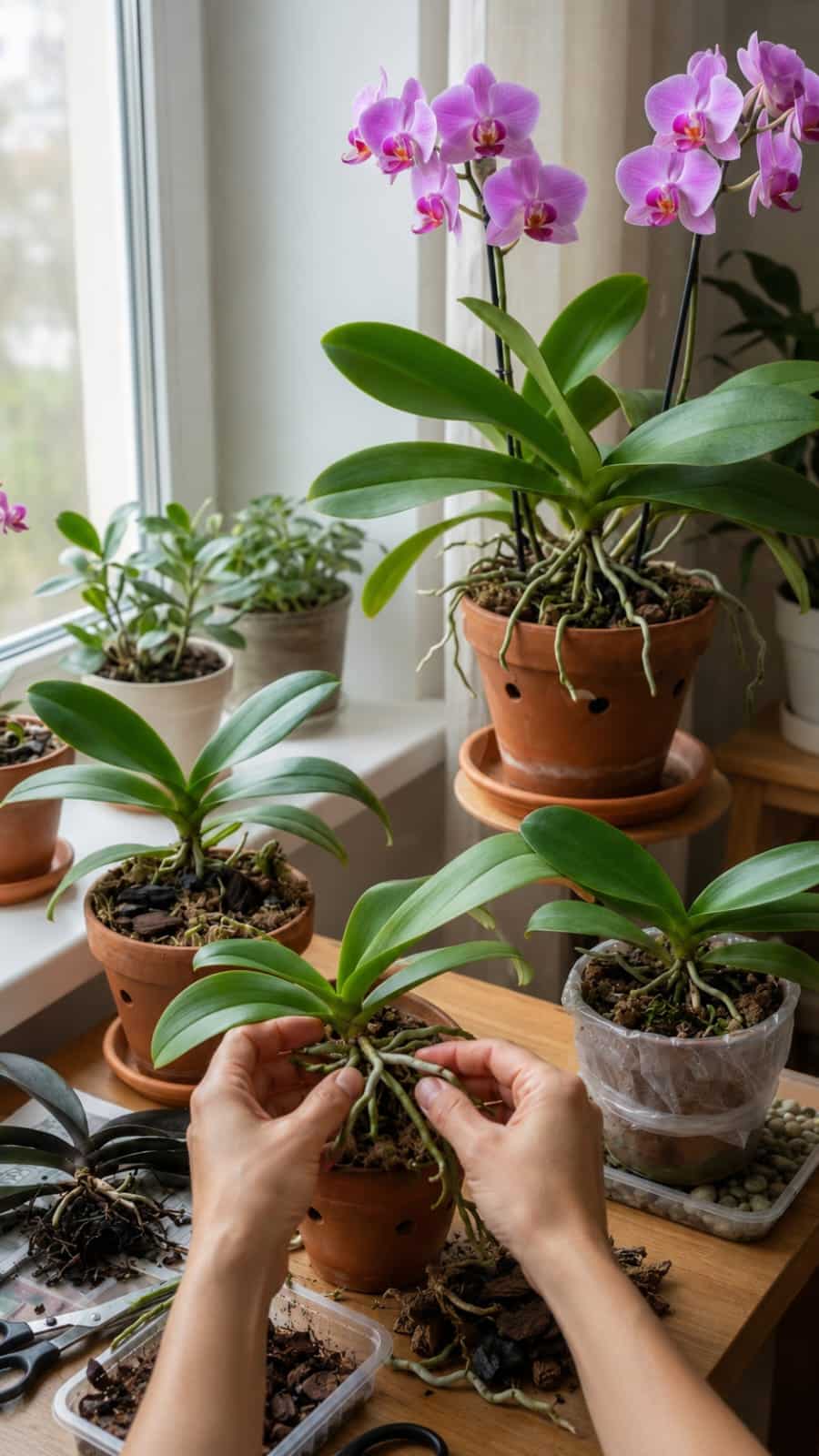
Orchids are elegant, long-lasting houseplants, but they can become weak when their roots are crowded, dry, rotten, or trapped in old potting bark. Many orchid problems begin below the leaves, where roots slowly decline before the plant shows obvious stress. When an orchid stops blooming, grows wrinkled leaves, or develops brown mushy roots, repotting may be the most important step toward recovery. If you are looking for the best natural orchid root treatment and a safe homemade orchid care method, this garlic water soak is a gentle option used by experienced growers.
The images show a healthy orchid being handled during repotting. The plant has been removed from its pot, the roots are being inspected and trimmed, and then the root system is soaked in a bowl containing garlic slices and water. This method is often used by home gardeners as a gentle natural root rinse before placing the orchid into fresh orchid bark. Many orchid enthusiasts consider this the best natural root rinse for repotting orchids because it’s simple and chemical-free.
The goal is not to “force” blooms overnight.
The goal is to clean the roots, remove damaged parts, refresh the growing medium, and give the orchid a healthier environment so it can produce strong leaves, fresh roots, and future flower spikes. This how to repot orchids step by step guide will help you master the process.
In this guide, you will learn how to repot an orchid, how to trim bad roots, how to prepare a mild garlic water soak, how long to soak orchid roots, what potting mix to use, and how to care for the orchid after repotting so it can recover beautifully. Follow these professional orchid care secrets for stunning results.
Why Orchids Need Repotting – The Importance of Fresh Bark and Root Health
Most common indoor orchids, especially Phalaenopsis orchids, do not grow in regular soil. Their roots need air. In nature, many orchids grow attached to trees, where their roots receive moisture, oxygen, and organic debris without being buried in dense dirt. This is why using the best orchid potting mix is critical for success.
When grown indoors, orchids are usually planted in bark chips, sphagnum moss, coconut husk, perlite, or a chunky orchid mix. Over time, this material breaks down. When old bark decomposes, it becomes compact, holds too much moisture, and reduces airflow around the roots. This common orchid care mistake leads to root rot.
That can cause orchid roots to rot.
Repotting helps by:
Removing old decomposed bark
Improving airflow around roots
Preventing root rot
Giving new roots room to grow
Refreshing the orchid’s growing medium
Helping the plant absorb water more evenly
Supporting stronger leaves and future blooms
A healthy orchid root system is the foundation of every bloom spike. This how to revive an orchid with rotten roots guide is essential for beginners.
When Should You Repot an Orchid? – Timing for Healthy Growth
The best time to repot an orchid is after flowering, when the blooms have faded and the plant is entering a growth phase. This gives the orchid time to adjust and produce new roots before the next blooming cycle. Following the best orchid repotting schedule ensures success.
You should repot an orchid when:
The potting bark is breaking down
The plant smells sour or rotten
Roots are mushy, black, or hollow
The orchid is leaning badly
The roots are packed too tightly
The plant has not been repotted for 1 to 2 years
Water drains too slowly
Fungus gnats or mold appear in the pot
The orchid has finished blooming
If your orchid is actively blooming and looks healthy, wait until the flowers fade. If the roots are rotting badly, repot immediately even if flowers are present.
What Is the Garlic Water Method? – Natural Orchid Root Rinse Explained
The garlic water method is a homemade orchid root rinse made by soaking sliced garlic in clean water. Some gardeners use it before repotting because garlic contains natural sulfur compounds and has a strong cleansing smell. When made weak and used briefly, garlic water can act as a mild root rinse during orchid maintenance. This homemade orchid root disinfectant is popular among organic growers.
However, garlic water must be used carefully. Orchids have sensitive roots. A strong garlic mixture, long soak, fermented liquid, or repeated use can irritate roots and damage the plant. This safe orchid root treatment recipe must be made correctly.
The safe version is simple:
Use only a small amount of fresh garlic
Soak briefly in clean water
Strain or remove garlic pieces
Use the liquid fresh
Soak roots for a short time only
Repot into fresh orchid bark afterward
This method should be occasional, not a weekly orchid treatment.
Important Safety Note About Garlic Water – When to Avoid It
Garlic water is not a replacement for proper orchid care. It will not save an orchid if the roots remain in old soggy bark, the pot has poor drainage, or the plant is kept in low light. For best orchid root recovery, focus on the basics first.
Use garlic water only as a mild optional root rinse. The real recovery comes from:
Removing rotten roots
Using clean tools
Repotting into fresh orchid mix
Keeping the crown dry
Providing bright indirect light
Watering correctly after repotting
If your orchid is severely damaged, focus first on root health and correct growing conditions.
Supplies You Need – Orchid Repotting Checklist
Before starting, prepare everything. Orchid roots dry quickly when exposed, so it helps to work calmly and efficiently. This orchid repotting supplies list will help you gather what you need.
Materials
Orchid plant
Clean scissors or pruning shears
Fresh orchid bark mix
Orchid pot with drainage holes
Clear plastic orchid pot, optional
Clean bowl
Fresh garlic clove
Clean water
Paper towel
Hydrogen peroxide, optional for tool cleaning
Cinnamon powder, optional for cut stems only
Do not use regular garden soil for orchids. Regular soil is too dense and can suffocate orchid roots.
Step 1: Remove the Orchid from the Pot – Gentle Extraction
Hold the orchid gently at the base. Squeeze the pot slightly if it is plastic, then slide the plant out. If roots are stuck to the pot, do not pull hard. Loosen them slowly. This how to remove orchid from pot without damaging roots step is crucial.
If the plant is in a clay pot and roots are attached to the sides, soak the pot briefly to soften the roots before removal.
Be patient. Healthy orchid roots are valuable, and breaking too many roots can slow recovery.
Step 2: Remove Old Bark or Moss – Cleaning the Root Zone
Once the orchid is out of the pot, remove the old potting medium from around the roots. Pick out old bark pieces, compacted moss, and broken debris. This how to clean orchid roots before repotting step is essential.
Old orchid mix may look dark, soft, sour, or crumbly. This is a sign that it has broken down and should be replaced.
Rinse the roots gently with room-temperature water if needed. This helps you see which roots are healthy and which should be trimmed.
Step 3: Inspect the Orchid Roots – Identifying Healthy vs Rotten Roots
Healthy orchid roots are usually firm. They may be green when wet, silver when dry, or pale cream inside the pot. Some roots naturally look slightly tan, especially older roots. This orchid root health check guide will help you diagnose problems.
Bad roots are different. They feel soft, hollow, slimy, or mushy.
Healthy Roots
Firm texture
Green, silver, white, or tan color
Plump shape
No rotten smell
Do not collapse when touched
Unhealthy Roots
- Black or dark brown
- Mushy or slimy
- Hollow and papery
- Rotten smell
- Outer layer slides off easily
Only remove roots that are clearly dead or rotten. Do not cut firm roots just because they are not perfectly green.
Step 4: Trim Rotten or Dead Roots – Proper Pruning Technique
Use clean scissors to cut away dead roots. Cut back to firm tissue. If the whole root is mushy, remove it near the base. This how to trim orchid roots for repotting step is critical for recovery.
Clean your scissors before cutting. If you are trimming several rotten roots, wipe or disinfect the blades between cuts to reduce spreading decay.
Do not over-trim. Orchids need roots to recover. Keep every firm, living root you can.
Step 5: Prepare Mild Garlic Water – Homemade Root Soak Recipe
Now prepare the gentle garlic water soak shown in the image. This easy garlic water for orchid roots recipe is perfect for repotting day.
Ingredients
- 1 small garlic clove
- 2 cups clean water
- Clean glass or bowl
Instructions
Peel 1 small garlic clove.
Slice it thinly.
Add the slices to 2 cups of room-temperature water.
Let it sit for 30 to 60 minutes.
Remove the garlic pieces or strain the water.
Use the liquid fresh.
Do not ferment garlic water overnight for orchid roots. Strong or fermented garlic liquid can be too harsh.
Continue to Page 2
Continue to page 2 for more details about this article and the key points many readers miss on the first page.