Rosemary is one of the most useful herbs you can grow at home. It smells wonderful, looks beautiful in pots, and can be used in roasted vegetables, homemade bread, chicken recipes, herbal teas, infused oils, and natural garden projects. But instead of buying new rosemary plants every season, you can multiply one healthy rosemary plant into many new plants using cuttings. If you are looking for the best way to propagate rosemary at home or a simple herb garden from cuttings method, this water-rooting technique is perfect for you.
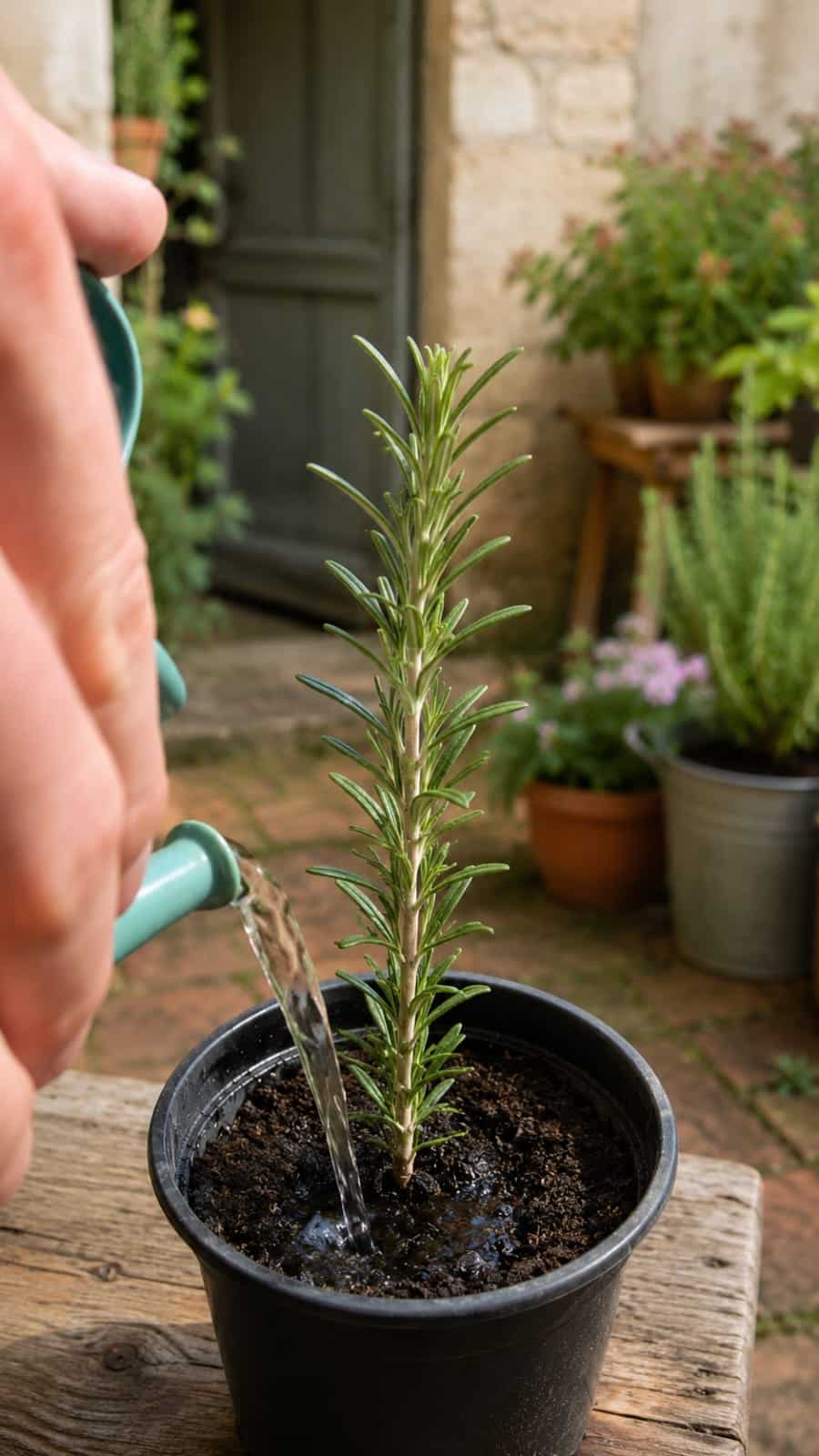
The images show a classic rosemary propagation method: a fresh rosemary cutting is placed in a jar of water until roots appear, then it is transferred into soil and watered carefully. This is one of the easiest ways for beginner gardeners to grow rosemary from cuttings, especially if they want to see the roots developing before planting. This how to root rosemary in water guide will turn one plant into many.
Rosemary can be a little slower to root than soft herbs like mint or basil, but with the right cutting, clean water, bright light, and patience, it can produce strong roots and grow into a healthy potted herb plant. This easy indoor herb propagation method is perfect for building a low-cost kitchen herb garden.
In this guide, you will learn how to propagate rosemary in water, when to move rosemary cuttings into soil, what potting mix works best, how to prevent root rot, and how to care for your young rosemary plant after planting. Follow these professional herb gardening secrets for a thriving harvest.
Can You Grow Rosemary from Cuttings? – Yes, Here’s How
Yes, rosemary grows very well from stem cuttings. This is one of the best ways to multiply rosemary because the new plant will be a clone of the original plant. That means it keeps the same fragrance, growth habit, flavor, and leaf shape as the mother plant. This best rosemary propagation technique is used by home gardeners everywhere.
Growing rosemary from seed is possible, but it is slower and less predictable. Cuttings are faster, easier, and more reliable for home gardeners.
You can root rosemary cuttings in:
- Water
- Potting soil
- Seed-starting mix
- Perlite
- Sand and compost mix
Water propagation is popular because it lets you watch the roots form. Soil propagation often creates stronger roots from the beginning, but water propagation is more visual and satisfying for beginners. This how to grow rosemary from cuttings without rooting hormone method is simple and effective.
Why Propagate Rosemary in Water? – Benefits of Water Rooting
Water propagation is simple. You place the prepared rosemary stem in a jar of clean water, keep it in bright indirect light, and wait for roots to appear. Once roots are long enough, the cutting can be planted into a small pot. This easy herb plant propagation method is ideal for kitchen gardeners.
This method is useful because:
You can see root growth clearly
It requires very few supplies
It is beginner-friendly
It works well indoors
It helps you avoid guessing whether roots have formed
It is a low-cost way to multiply herb plants
The key is to keep the water clean and avoid leaving leaves below the waterline.
Best Time to Take Rosemary Cuttings – Seasonal Guide
The best time to take rosemary cuttings is during the active growing season, usually spring through early summer. During this period, the plant has fresh flexible growth that roots more easily. Choosing the optimal time for rosemary propagation increases your success rate.
You can also take cuttings in late summer or early fall if the weather is still warm. Winter cuttings may root more slowly because rosemary naturally grows less during cold months.
Best timing:
Spring: excellent
Early summer: excellent
Late summer: good
Fall: possible in warm climates
Winter: slower, best indoors with warmth
If your rosemary plant has tender green tips, it is usually a good time to take cuttings.
Choose the Right Rosemary Stem – Selecting Healthy Cuttings
Not every stem roots equally well. For the best results, choose a healthy stem that is not flowering and not too woody. This how to select rosemary cuttings for rooting tip is essential.
The ideal cutting is semi-soft: flexible at the top but slightly firm near the base. Very old woody stems can root, but they are slower. Very soft new growth can wilt quickly.
Look for a cutting that is:
- 4 to 6 inches long
- Healthy and green
- Free from pests
- Not flowering
- Not dried out
- Not too woody
- Taken from a strong mother plant
A healthy parent plant gives you a stronger cutting and better rooting success.
Supplies You Need – Rosemary Propagation Checklist
You only need a few basic supplies to root rosemary in water. This rosemary propagation supplies list will help you gather everything.
Fresh rosemary cutting
Clean scissors or pruning shears
Small glass jar
Clean water
Small pot with drainage holes
Well-draining potting mix
Optional: perlite or coarse sand
Optional: rooting hormone for soil propagation
Clean tools are important. Dirty scissors can introduce bacteria or fungus into the cutting.
Step 1: Take a Healthy Cutting – Proper Cutting Technique
Cut a 4 to 6-inch rosemary stem from a healthy plant. Make the cut just below a leaf node. A node is the spot where leaves grow from the stem, and it is one of the best areas for new roots to form. This how to cut rosemary for propagation step is critical.
Use sharp clean scissors so the stem is not crushed. A clean cut helps the cutting absorb water and reduces damage.
Take more than one cutting if possible. Not every cutting roots, so starting several improves your chances.
Step 2: Remove Lower Leaves – Preparing the Stem
Strip the leaves from the bottom 1 to 2 inches of the cutting. This lower bare stem will sit in water and later go into soil.
Do not leave rosemary leaves underwater. Leaves submerged in water can rot, cloud the water, and cause bacteria growth.
Keep the top leaves intact so the cutting can continue photosynthesis.
Important Tip
Remove only the lower leaves. Do not strip the whole cutting. A cutting with too few leaves may struggle to produce energy.
Step 3: Place the Cutting in Water – Correct Setup
Fill a clean jar with room-temperature water. Place the rosemary cutting into the jar so the bare lower stem is underwater, but the leaves remain above the waterline. This how to root rosemary in a jar of water method is foolproof.
The image shows roots forming from the lower stem while the upper leafy section stays dry and upright. This is the correct setup.
Use a small jar if possible. A narrow opening helps hold the cutting upright.
Step 4: Put the Jar in Bright Indirect Light – Optimal Light for Rooting
Place the jar near a bright window, but avoid harsh direct afternoon sun. Too much hot sun can heat the water and stress the cutting. Providing optimal light for rosemary propagation encourages faster rooting.
Rosemary cuttings root best with strong light and mild warmth.
Good locations include:
- Bright kitchen windowsill
- East-facing window
- Warm greenhouse shelf
- Protected patio with filtered light
- Grow light setup indoors
If the cutting becomes pale or weak, it may need more light. If it wilts or dries quickly, it may be getting too much direct sun.
Step 5: Change the Water Regularly – Keeping Roots Healthy
Fresh water is essential for rosemary propagation. Change the water every 2 to 3 days, or sooner if it becomes cloudy. This how often to change water for propagating rosemary tip prevents root rot.
Clean water helps prevent stem rot and keeps oxygen available around the developing roots.
Healthy water signs:
- Water stays mostly clear
- No bad smell
- No slimy coating on the stem
- Stem remains firm
- Roots look white or pale cream
If the stem becomes black, mushy, or foul-smelling, discard that cutting and start again.
Continue to Page 2
Continue to page 2 for more details about this article and the key points many readers miss on the first page.