Geraniums are one of the most rewarding flowering plants to grow at home. A single healthy geranium can brighten a sunny windowsill, balcony, porch, patio table, or garden corner for months. Its round scalloped leaves look fresh even before the flowers open, and when the buds finally burst into color, the whole plant feels cheerful and alive. But many gardeners know the frustrating side of geraniums too. The plant grows leaves but makes very few flowers. The buds appear, then stall. The stems become weak. The leaves look pale. The soil seems tired. The plant is alive, but it does not have that full, blooming, energetic look you hoped for. If you are looking for the best natural geranium fertilizer or a homemade geranium bloom booster, this gentle yeast powder trick is a safe and effective option.
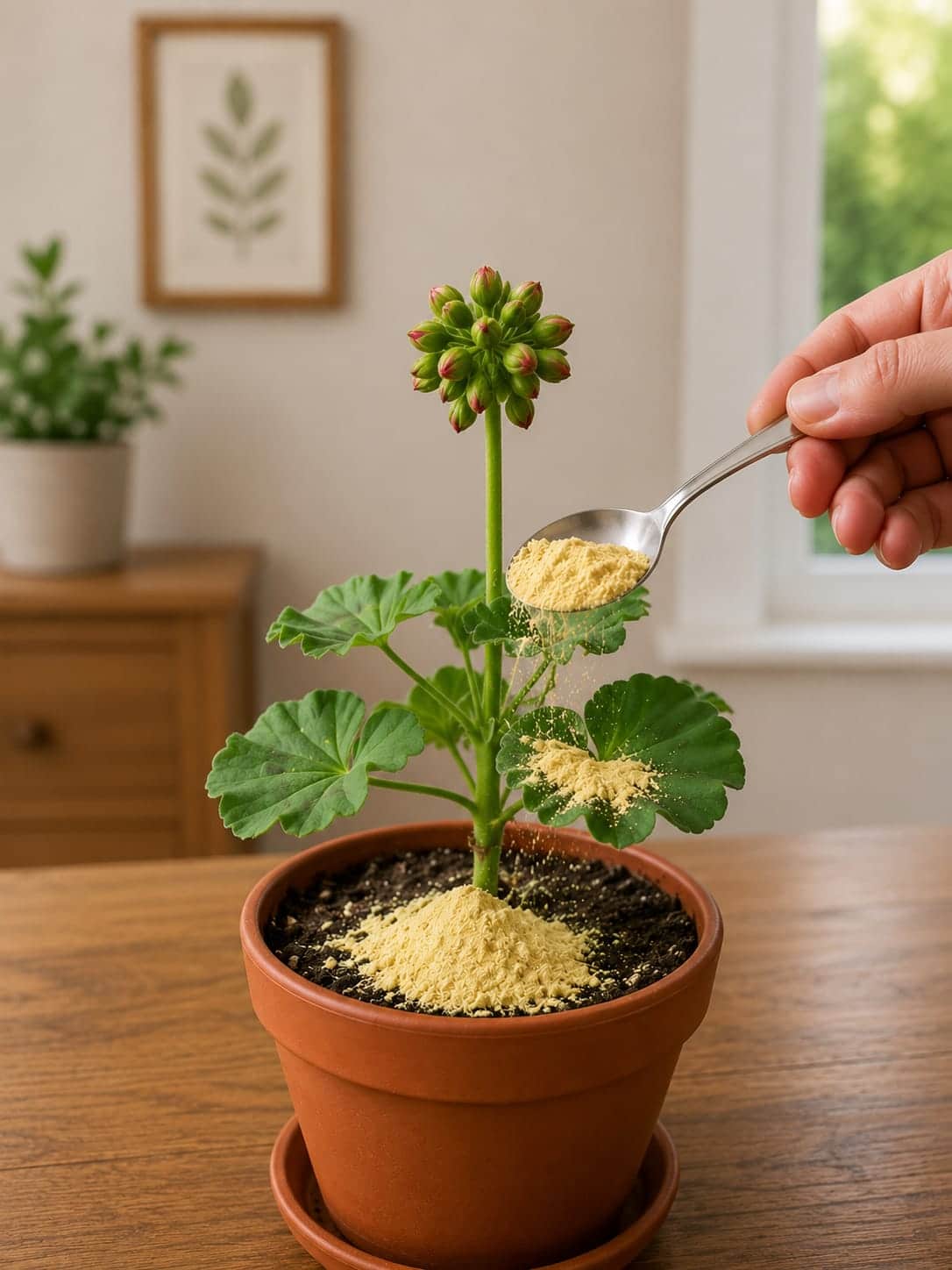
The image shows a potted geranium with fresh green leaves and a tight flower bud cluster. A spoon is sprinkling a pale yellow powder over the plant and soil. This kind of visual suggests a popular homemade garden trick: using a tiny amount of nutritional yeast, baker’s yeast, or dried yeast-based powder as a gentle natural plant booster. Many gardeners talk about yeast water or yeast powder as a way to support flowering plants because yeast contains B vitamins, amino acids, and small amounts of minerals. When used carefully, yeast-based mixtures may help feed soil microbes and gently support plant vigor. This how to get more geranium blooms naturally guide will show you exactly what to do.
But this trick must be handled with care. The image shows a heavy mound of yellow powder around the stem, but in real plant care, that is too much. Geranium roots do not need a pile of dry powder sitting against the crown. Too much organic powder can mold, attract fungus gnats, create sour smells, and disturb the soil. The safest method is to use a very diluted yeast water or sprinkle only a tiny pinch on the soil surface before watering it in. This trick should be used rarely, not every week. This organic geranium care method is gentle when done correctly.
Think of this as a gentle support treatment, not a miracle fertilizer. It cannot replace sunlight. It cannot replace a balanced bloom fertilizer. It cannot fix root rot or poor drainage. It cannot make a shaded geranium bloom like one growing in full sun. The real power comes from combining this mild homemade trick with proper geranium care: bright light, correct watering, deadheading, pruning, airy soil, and steady feeding. This how to make geraniums bloom more guide will help you succeed.
In this guide, you will learn exactly how to use the yellow powder trick safely, how to make a gentle yeast water for geraniums, when to apply it, what mistakes to avoid, how to encourage more buds, and how to keep your geranium blooming strongly all season. Follow these professional geranium care secrets for stunning results.
What Is the Yellow Powder Geranium Trick? – Natural Yeast Fertilizer Explained
The yellow powder trick is usually based on yeast. Some people use baker’s yeast, while others use nutritional yeast. Both are yellowish or beige powders, and both are often shown in homemade plant-care videos as a natural boost for flowering plants. The idea is that yeast may support beneficial microbial activity in the soil and provide small amounts of organic compounds that help the plant’s root environment. This best homemade yeast fertilizer for geraniums is popular among organic gardeners.
However, geraniums do not directly “eat” yeast powder the way people eat food. Plants absorb nutrients in dissolved mineral forms through their roots. Yeast must break down in the soil before it can become useful. That breakdown depends on moisture, temperature, oxygen, and microbes. If you add too much yeast powder to a small pot, it can decompose in an unpleasant way. Instead of helping the plant, it may create mold or attract insects.
That is why the safest version of the trick is not a thick pile of powder. The safest version is a weak solution applied to the soil occasionally. A tiny amount is enough.
Why Gardeners Use Yeast for Geraniums – Potential Benefits
Yeast is popular in homemade gardening because it is inexpensive, easy to find, and associated with fermentation and growth. In the kitchen, yeast helps dough rise. In the garden, people imagine it “waking up” tired soil. While it is not a complete fertilizer, it may support the soil environment when used sparingly. This natural soil activator for geraniums is best used as a supplement.
Gardeners use yeast-based tricks for geraniums because they hope to encourage:
- Stronger stems
- Greener leaves
- More active root growth
- Better soil microbial activity
- More flower buds during the growing season
- Faster recovery after pruning or repotting
These benefits are most likely when the geranium is already receiving good light, has healthy roots, and is growing in proper soil. Yeast is not a rescue treatment for a badly neglected or rotting plant. It is a gentle supplement for a plant that is already close to doing well.
What This Trick Can and Cannot Do – Realistic Expectations
Before using any homemade treatment, it is important to be realistic. A geranium does not bloom because of one ingredient alone. It blooms because the whole growing environment supports flower production. This geranium bloom booster reality check sets realistic expectations.
What the Yeast Trick May Help With
- Supporting soil microbial life in small amounts
- Giving the plant a mild organic boost during active growth
- Helping a healthy geranium recover after light pruning
- Encouraging a more active root zone when conditions are right
- Complementing a normal geranium care routine
What the Yeast Trick Cannot Do
- Force flowers overnight
- Replace sunlight
- Replace balanced fertilizer
- Fix soggy soil
- Save rotten roots
- Repair dead leaves
- Stop pests by itself
- Make a geranium bloom in deep shade
- Correct a pot with no drainage hole
The trick should be treated as one small helper. If your geranium is not blooming, check sunlight first. If the leaves are yellowing, check watering and drainage. If the plant is leggy, check pruning and light. If the soil smells bad, check the roots. Do not reach for homemade powder before understanding the real problem.
The Safest Yeast Water Recipe for Geraniums – Gentle Homemade Tonic
The best way to use this trick is to dissolve a small amount of yeast powder in water and apply it to the soil. This spreads the treatment evenly and reduces the risk of powder clumping around the stem. This easy homemade geranium fertilizer recipe is perfect for beginners.
Ingredients
- 1 liter of lukewarm water
- 1/4 teaspoon dry baker’s yeast or nutritional yeast
- Optional: 1/4 teaspoon sugar to activate baker’s yeast
The sugar is optional. If you use sugar, keep the amount very small. Too much sugar in potted soil can encourage fungus gnats and microbial imbalance.
Instructions
- Pour 1 liter of lukewarm water into a clean bottle or jar.
- Add 1/4 teaspoon yeast powder.
- If using baker’s yeast, add 1/4 teaspoon sugar and stir.
- Let it sit for 20 to 30 minutes.
- Dilute this mixture with another 1 liter of plain water.
- Water the geranium soil lightly with the diluted mixture.
- Let the pot drain fully.
- Use plain water for the next several waterings.
This creates a gentle solution. Do not make it thick. Do not pour a foamy, strong yeast mixture into a small pot. A weak solution is safer for container plants.
Even Simpler: Tiny Dry Powder Method – Safe Application
If you prefer to use the powder dry, use only a very small amount. The image shows a large mound, but that is not recommended. This how to use dry yeast on geraniums safely guide will help.
Safe Dry Method
- Use only a tiny pinch for a small pot.
- Use no more than 1/8 teaspoon for a medium pot.
- Sprinkle it lightly over the outer soil surface.
- Keep it away from the stem and crown.
- Water lightly afterward.
Do not pile powder against the base of the plant. The crown of a geranium should stay clean and airy. Organic material packed around the stem can hold moisture and invite rot.
How Often Should You Use Yeast on Geraniums? – Best Feeding Schedule
Use this trick rarely. Once every 4 to 6 weeks during active growth is enough. Active growth usually means spring and summer, when the plant is producing new leaves and buds. Following a natural geranium feeding schedule prevents overuse.
Do not use yeast water every week. Do not add powder every time you water. Too much organic material in a container can create problems, especially indoors where airflow is limited.
If the plant is blooming well, you may not need the trick at all. Sometimes the best care is simply continuing what already works.
When Not to Use the Yellow Powder Trick – Critical Safety Warnings
There are times when yeast is not helpful. Adding organic matter to a stressed pot can make problems worse. Knowing when to avoid homemade geranium tonics is as important as knowing how to use them.
Do not use this method if:
- The soil is already wet
- The pot has no drainage hole
- The plant smells sour or rotten
- Fungus gnats are present
- There is mold on the soil
- The geranium is newly repotted and stressed
- The plant is in deep shade
- The weather is cold and growth has slowed
- The roots are damaged or rotting
If you see mold, gnats, or soggy soil, fix those issues first. Yeast works best only in a healthy, airy, active growing environment.
Step-by-Step: How to Use the Trick Safely – Complete Guide
Step 1: Check the Plant’s Condition
Look closely at your geranium. Is it actively growing? Are there new leaves or buds? Are the stems firm? Does the soil smell fresh? If the answer is yes, the plant may be a good candidate for a gentle yeast treatment.
If the plant is limp, yellow, mushy, or sitting in wet soil, do not feed it yet. A weak plant usually needs care correction before extra nutrients or homemade treatments.
Step 2: Check the Light
Geraniums need strong light to bloom. Before using any trick, ask whether the plant receives enough sun. A geranium that gets only weak indoor light may stay green but produce few flowers.
For best blooming, geraniums usually need at least 4 to 6 hours of bright sunlight per day. Outdoors, morning sun is excellent. Indoors, a south-facing or west-facing window is often best. Providing optimal light for geranium blooming is essential.
Step 3: Check the Soil Moisture
Touch the top inch of soil. If it is wet, wait. If it is slightly dry, the plant can be watered. Yeast solution should be applied only when the plant actually needs water.
Geraniums prefer a wet-dry rhythm. They dislike constantly wet soil. Overwatering is one of the fastest ways to weaken them.
Step 4: Clean the Plant
Remove yellow leaves, dead stems, and old flower clusters. This helps the plant direct energy into new growth. It also improves airflow and reduces disease risk.
Deadheading is especially important for geraniums. If spent flowers stay on the plant, the geranium may put energy into seeds instead of producing new buds.
Step 5: Prepare the Yeast Solution
Mix 1/4 teaspoon yeast with 1 liter of lukewarm water. Let it sit briefly, then dilute with another liter of water. Keep it weak. If the mixture smells sour or alcoholic, do not use it. Fresh, mild solution is best.
Step 6: Apply to the Soil
Pour the solution slowly onto the soil, not onto the leaves. Water around the outer root zone rather than directly against the stem. You do not need to drench the pot heavily. Use enough to lightly moisten the soil and let extra liquid drain.
Step 7: Let the Pot Drain Completely
Never let a geranium sit in a saucer of leftover liquid. After watering, empty the saucer. Good drainage keeps roots healthy.
Step 8: Return the Plant to Bright Light
After the treatment, place the geranium back in strong light. The plant needs light to use any nutrients effectively. Feeding a plant in poor light often leads to weak, soft growth.
Step 9: Watch the New Growth
Do not judge the treatment by old leaves. Watch new leaves and buds over the next few weeks. If the plant is responding well, new growth should look firm, green, and energetic.
Why the Image Shows Too Much Powder – Common Misconception
The photo is visually dramatic because the powder is easy to see. But for real geranium care, that much powder around the stem is not ideal. A thick mound can hold moisture, crust over, mold, or attract insects. It may also prevent airflow around the base of the plant. Avoiding this common geranium care mistake is essential.
Plants do not need dramatic amounts of homemade treatments. They need balance. A small pinch used correctly is better than a spoonful used carelessly.
The Real Secret to More Geranium Blooms – Sunlight and Care
If you want flowers, focus on the main bloom triggers. Yeast may support the plant, but flowers come from the right growing conditions. This how to get more geranium blooms guide will help you.
1. Strong Light
Geraniums bloom best with strong light. If your plant is indoors, place it in the brightest window possible. If it is outdoors, give it morning sun or several hours of direct sun. In very hot climates, afternoon shade can protect the leaves from scorching.
2. Regular Deadheading
Remove old flower stalks as soon as they fade. This encourages the plant to keep producing buds.
3. Moderate Feeding
Use a balanced fertilizer or bloom fertilizer during the growing season. Yeast is not complete nutrition. Geraniums still need nitrogen, phosphorus, potassium, and trace minerals.
4. Proper Watering
Let the top of the soil dry slightly between waterings. Avoid both bone-dry stress and soggy soil.
5. Light Pruning
Pinch long stems to encourage bushier growth. More branches can mean more bloom points.
Best Light for Geraniums – Optimal Placement for Flowers
Light is the foundation of flowering. A geranium in low light may survive for months, but it will not bloom generously. If your geranium has many leaves and few flowers, move it to a brighter location before trying any fertilizer trick. Providing optimal light for geranium health is essential.
Outdoor Geraniums
Outdoor geraniums usually need 4 to 6 hours of sun daily. In mild climates, they can enjoy more sun. In very hot climates, morning sun and afternoon shade may be better.
Indoor Geraniums
Indoor geraniums need a bright window. A south-facing window is often ideal. If the plant stretches toward the light, turns pale, or stops blooming, it needs more brightness.
Signs of Not Enough Light
- Long weak stems
- Few or no buds
- Pale leaves
- Leaves growing larger but flowers disappearing
- Plant leaning strongly toward the window
Signs of Too Much Harsh Sun
- Scorched leaf edges
- Dry crispy patches
- Wilting during hot afternoons
- Flowers fading very quickly
Balance is key. Bright sun encourages flowers, but extreme heat can stress container plants.
How to Water Geraniums Correctly – Moisture Management
Geraniums prefer to dry slightly between waterings. They are not swamp plants. Their roots need air. A common mistake is watering every day indoors or keeping the saucer full. This can lead to yellow leaves, root rot, and poor blooming. This geranium watering guide for beginners will help.
Simple Watering Rule
- Touch the top inch of soil.
- If it feels dry, water deeply.
- If it feels damp, wait.
- Water until liquid drains from the bottom.
- Empty the saucer after 10 to 15 minutes.
In hot outdoor weather, pots may dry quickly and need frequent watering. Indoors, the same plant may need water much less often. Always check the soil rather than following a strict schedule.
Best Soil for Potted Geraniums – Well-Draining Potting Mix
A geranium needs soil that drains well but still holds enough moisture for steady growth. Heavy garden soil is not ideal in pots. It can compact, hold water, and reduce oxygen around the roots. Choosing the best potting mix for geraniums is half the battle.
Good Geranium Soil Mix
- 2 parts quality potting mix
- 1 part perlite
- 1 part compost or fine bark
This mix gives roots air and moisture. If your climate is rainy, add extra perlite. If your climate is very hot and dry, use a mix that holds a little more moisture but still drains well.
Why Drainage Matters – Preventing Root Problems
No homemade trick can overcome poor drainage. If the pot has no drainage hole, the geranium is always at risk. Water collects at the bottom, roots suffocate, and the plant weakens. Using a pot with drainage for geraniums is non-negotiable.
Always use a pot with drainage holes. Terracotta pots are excellent because they breathe and help soil dry. Plastic pots can work too, but they hold moisture longer, so watering must be more careful.
How to Deadhead Geraniums for Constant Flowers – Essential Bloom Trick
Deadheading is more powerful than many homemade fertilizers. It tells the plant to keep blooming instead of making seeds. This how to deadhead geraniums for continuous blooms method is simple and effective.
Deadheading Steps
- Find a flower cluster that has faded.
- Follow the flower stem down to the main stem.
- Snap or cut off the entire flower stalk.
- Remove fallen petals from the soil.
- Repeat every few days during bloom season.
Do not just remove the petals. Remove the whole spent flower stem. This keeps the plant tidy and productive.
How to Pinch Geraniums for Bushier Growth – Pruning for More Flowers
If your geranium grows tall with only a few stems, it may need pinching. Pinching encourages side shoots and creates a fuller plant. This how to pinch geraniums for fullness guide will help.
Pinching Steps
- Choose a long stem.
- Find a leaf node.
- Pinch or cut just above the node.
- Wait for new side shoots to form.
- Repeat lightly as needed.
A bushier geranium often produces more flower stems because it has more growing points.
Continue to Page 2
Continue to page 2 for more details about this article and the key points many readers miss on the first page.