Orchids are the kind of houseplant that can transform a room without trying too hard. A single blooming orchid on a coffee table, windowsill, kitchen counter, or sideboard can make the whole space feel cleaner, calmer, and more luxurious. Their flowers look delicate, their leaves look polished, and their upright stems give the plant a graceful shape that fits almost every interior style.
But orchids can also make homeowners nervous. They look expensive. They look fragile. And because their roots do not behave like the roots of ordinary houseplants, many people are unsure how to feed, water, or support them once the flowers begin to fade. One week the plant looks perfect, and the next week the buds are dropping, the leaves look dull, or the roots seem dry and strange.
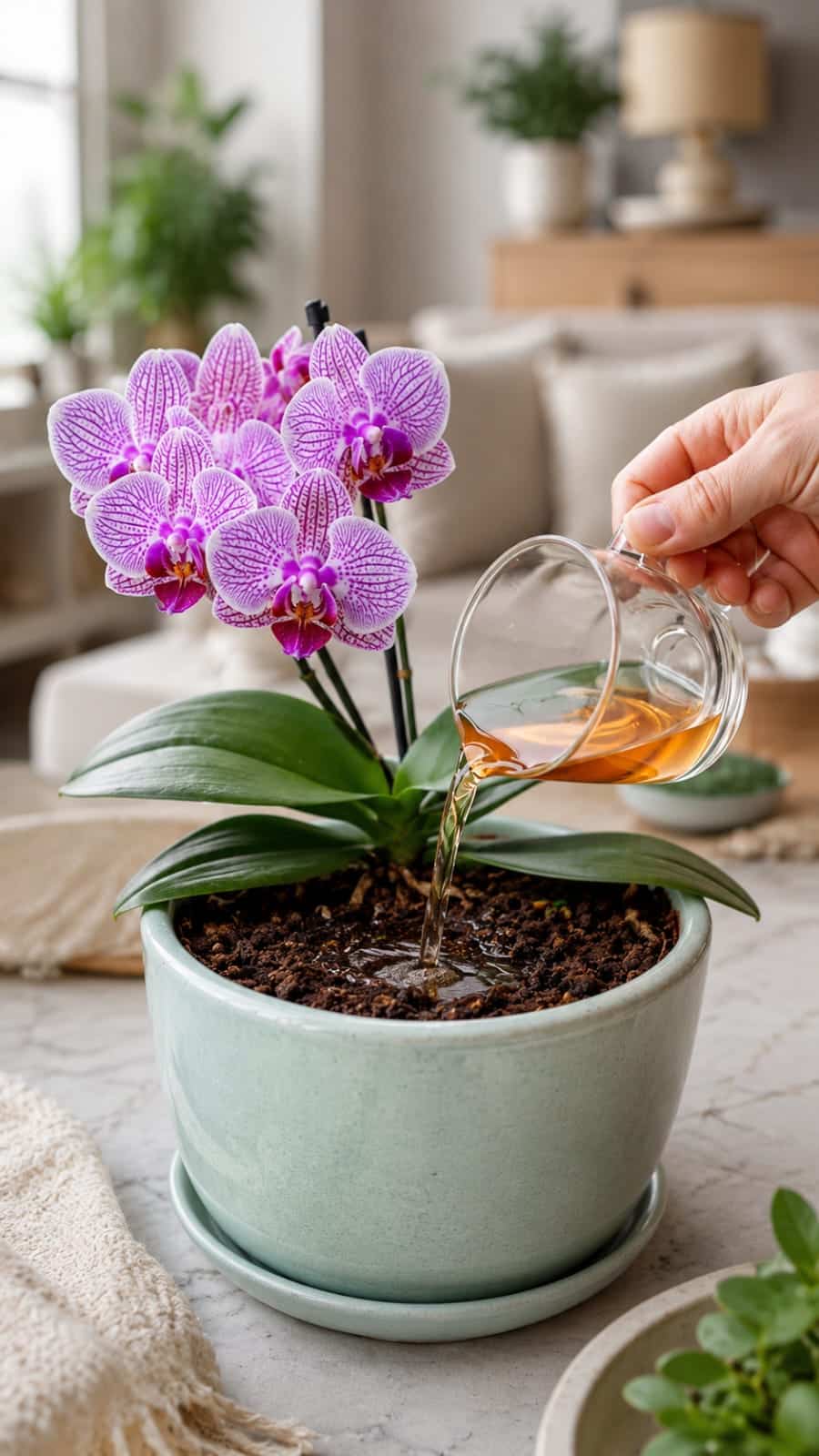
In the image, a healthy pink orchid is sitting in a pale ceramic pot while a hand pours a warm amber-colored liquid into the potting medium. The flowers are full and bright, the leaves are broad and glossy, and the liquid looks like a gentle homemade tea. This suggests a popular orchid-care trick: using a mild golden tonic to support the root zone and help the orchid stay strong during growth and blooming.
The safest way to understand this trick is not as a miracle cure, but as a careful, occasional orchid root tonic. This golden liquid can be made from very diluted banana peel tea, weak rice water, or a mild compost-style plant tea that has been strained completely. The goal is to give the orchid a gentle support drink without overwhelming its roots.
Orchids are not heavy feeders. They do not want thick kitchen mixtures, sugary liquids, strong fermented brews, or food scraps left in the pot. Their roots need air, drainage, and a wet-dry rhythm. If the tonic is too strong, too sticky, or used too often, it can cause sour smells, mold, fungus gnats, and root stress. But when it is weak, clean, strained, and used at the right time, it can become a beautiful part of a smart indoor orchid routine.
What Is the Golden Liquid Being Poured on the Orchid?
The golden liquid in the image looks like a homemade plant tea. For orchids, the most practical version is a very diluted banana peel and rice water tonic. Banana peel water often has a light amber color, especially when soaked for a short time. Rice water can add a faint cloudiness, but when diluted, the mixture can look like pale golden tea.
Some plant lovers use banana peel water because banana peels are associated with potassium, a nutrient often linked with general plant strength and flowering support. Rice water is popular because it is easy to make and mild when used fresh and diluted. Together, they create a gentle kitchen-based tonic that feels natural and simple.
However, it is important to be realistic. This tonic is not a complete fertilizer. It does not contain perfectly measured nutrients. It does not replace orchid fertilizer forever. It does not force flowers overnight. It simply works as a mild occasional supplement for orchids that are already growing in suitable conditions.
Why Orchids Need a Gentle Approach
Many common indoor orchids, especially Phalaenopsis orchids, are epiphytes. In nature, they often grow attached to trees, not buried in dense soil. Their roots cling to surfaces, absorb moisture from rain and humidity, and then dry again. This is why orchids are often grown in bark, not normal potting soil.
Orchid roots need three things:
- Moisture when watered
- Air around the roots
- Time to dry slightly before the next watering
This is very different from many leafy houseplants that grow in soil and prefer more even moisture. If you pour thick homemade liquid into orchid bark too often, the bark can stay wet, the roots can suffocate, and the pot can begin to smell sour. That is why a golden tonic must always be weak and watery.
What This Golden Tonic May Help With
A gentle orchid tonic may support the plant during active growth, especially when new roots, leaves, or flower spikes are forming. It can also encourage homeowners to pay closer attention to watering, drainage, and root health.
This trick may help:
- Lightly refresh the root zone
- Support healthy root activity during active growth
- Encourage stronger-looking leaves
- Provide a mild occasional nutrient boost
- Support orchids during the blooming season
- Make plant care feel more consistent and intentional
The key word is support. This tonic supports good care. It does not replace the basic care orchids actually need.
What This Tonic Cannot Do
It is easy to exaggerate homemade plant tricks, but orchids need honest care. A golden tonic cannot fix every problem.
This tonic cannot:
- Heal rotten roots
- Repair dead flower spikes
- Reverse crown rot
- Make an orchid bloom overnight
- Save an orchid in soggy soil
- Replace bright indirect light
- Replace drainage
- Replace proper orchid fertilizer forever
- Turn yellow leaves green again
If your orchid is weak, always check the roots first. If the roots are mushy, hollow, black, or smelly, a tonic will not fix the problem. The plant may need repotting into fresh orchid bark.
The Safest Golden Orchid Tonic Recipe
This recipe is gentle, diluted, and suitable for occasional use. The finished liquid should look like pale tea, not syrup, juice, or thick plant soup.
Ingredients
- 1 small piece of banana peel, about 2 inches long
- 1 tablespoon uncooked rice
- 3 cups room-temperature water
- A clean jar
- A fine strainer or cheesecloth
- Extra plain water for dilution
Step 1: Rinse the Banana Peel
Rinse the banana peel under clean water before using it. This helps remove dust or residue. Use only a small piece. More banana peel does not mean better results. For orchids, weaker is safer.
Step 2: Rinse the Rice
Place the rice in a small bowl, add a little water, swirl it, and discard that first rinse if it looks dirty. Then add fresh water for the actual soak.
Step 3: Soak the Ingredients Briefly
Place the banana peel and rice in a jar with 3 cups of water. Let them soak for 2 to 4 hours. Do not leave the mixture fermenting for days. Long fermentation can create sour liquid that may be too harsh for indoor orchids.
Step 4: Strain Completely
Strain the liquid through a fine strainer or cheesecloth. Remove every piece of banana peel and every grain of rice. Never pour food pieces into orchid bark. Food scraps can rot, smell bad, and attract pests.
Step 5: Dilute the Tonic
Mix 1 part strained tonic with 2 parts plain water. For example, mix 1/2 cup tonic with 1 cup plain water. This creates a weak, safe, golden solution.
Step 6: Use It Fresh
Use the tonic the same day. Do not store it for a week. Homemade plant liquids can spoil quickly, especially when made from organic kitchen ingredients.
How to Apply the Golden Tonic Step by Step
Step 1: Check Whether the Orchid Needs Water
Do not use the tonic just because the plant looks pretty or because it has flowers. Check the potting medium first. If the bark is still damp, wait. If the roots are green and the pot feels heavy, wait. Orchids should not be watered when they are already wet.
Step 2: Look at the Roots
If the orchid is in a clear pot, check the roots. Dry roots often look silvery or pale. Wet roots often look green. Water only when the roots and bark are approaching dryness.
Step 3: Pour Slowly Around the Bark
Pour the diluted golden tonic around the bark surface, not into the crown of the plant. Let the liquid move through the potting medium naturally.
Step 4: Keep the Crown Dry
The crown is the central area where the leaves meet. Water trapped there can lead to crown rot. If any liquid gets into the crown, blot it gently with a paper towel.
Step 5: Let the Pot Drain Completely
This is one of the most important steps. After pouring the tonic, allow the pot to drain fully. Do not let the orchid sit in a saucer of liquid. Standing water can damage roots.
Step 6: Return the Orchid to Bright Indirect Light
After watering, place the orchid back in bright indirect light. Avoid harsh direct sun, especially if the leaves are wet or the room is hot.
Step 7: Wait Before Watering Again
Do not water again until the bark has dried properly. The tonic should fit into the normal watering rhythm, not add extra wetness between waterings.
How Often Should You Use This Tonic?
Use the golden tonic rarely. Once every 4 to 6 weeks during active growth is enough. Active growth usually means the orchid is producing new roots, new leaves, or a flower spike.
Do not use it every week. Orchids do better with gentle consistency than with constant feeding experiments. Most waterings should still be plain water.
Can You Use It While the Orchid Is Blooming?
Yes, but carefully. The orchid in the image is blooming beautifully, which means it should not be shocked with strong mixtures or sudden changes. A very weak tonic can be used if the orchid is due for watering, but keep the liquid away from flowers and buds.
When an orchid is blooming:
- Do not move it constantly
- Keep the temperature stable
- Avoid cold drafts
- Avoid strong fertilizer
- Do not wet the flowers
- Do not let the pot sit in water
Blooming orchids appreciate stability more than drama.
Can This Tonic Make Orchids Bloom More?
The tonic can support a healthy orchid, but it cannot force blooms by itself. Orchid blooming depends on several factors working together.
To encourage blooming, orchids need:
- Healthy roots
- Bright indirect light
- Proper watering
- Fresh bark
- Stable temperatures
- Enough energy stored in the leaves
- Sometimes a slight nighttime temperature drop
If an orchid is not blooming, the first thing to check is light. Many orchids survive in lower light but bloom better in bright indirect light.
Continue to Page 2
Continue to page 2 for more details about this article and the key points many readers miss on the first page.